
Circular No. 16/2019/TT-NHNN stipulates the issuance of State Bank bills applicable to the State Bank and credit institutions. The bills have a maximum term of 364 days, face value of VND 100,000 or multiples thereof, with interest rates determined by the State Bank.
Scope of application
The State Bank, credit institutions (including commercial banks, foreign bank branches, finance companies, cooperative banks, policy banks), and the Vietnam Deposit Insurance Corporation
Key points
- The State Bank issues State Bank bills to credit institutions holding settlement accounts in Vietnamese dong at the State Bank, with a maximum term of 364 days, face value of VND 100,000 or multiples thereof, and interest rates determined by the State Bank.
- State Bank bills are issued through auction or mandatory methods, with the selling price determined based on a formula.
- The State Bank settles State Bank bills for credit institutions when they mature, and handles cases where credit institutions fail to pay or pay insufficient amounts for purchasing State Bank bills.
- State Bank bills may be used in transactions of the State Bank according to the Governor's decision.
- The State Bank and credit institutions may buy, sell, or pledge State Bank bills to each other.
🌐 Social impact of this document
- Positive impact: Strengthening monetary policy tools of the State Bank; supporting credit institutions in effectively managing capital flows.
- Negative impact: May impose financial burdens on some credit institutions if they fail to pay or pay insufficient amounts for purchasing State Bank bills.
❓ Frequently asked questions
How does the State Bank issue State Bank bills?
State Bank bills are issued to credit institutions holding settlement accounts in Vietnamese dong at the State Bank, with a maximum term of 364 days, face value of VND 100,000 or multiples thereof, and interest rates determined by the State Bank.
How is the selling price of State Bank bills determined?
The selling price of one (01) State Bank bill is determined by the formula: G = MG - (MG x L x t / 365), where G is the selling price, MG is the face value, L is the interest rate (% per annum), and t is the term of the bill (number of days).
Through which methods are State Bank bills issued?
State Bank bills are issued through auction or mandatory methods. Auctions are conducted according to the State Bank's regulations, while mandatory issuance is based on monetary policy objectives and actual conditions.
What penalties apply if a credit institution fails to pay or pays insufficient amounts for purchasing State Bank bills?
By the end of the payment date, the State Bank automatically deducts from the credit institution's settlement account until the full amount is recovered. If the account balance is insufficient, the credit institution must bear late payment penalties at the overnight lending rate in inter-bank electronic payment transactions.
How can State Bank bills be utilized?
State Bank bills are used in transactions of the State Bank according to the Governor's decision, and credit institutions may also buy, sell, or pledge State Bank bills to each other.
Full text
CIRCULAR
Regulations on the issuance of State Bank bills
Based on the Law on the State Bank dated June 16, 2022 2010;
Based on the Law on Credit Institutions dated June 16, 2010 and the Law Amending and Supplementing Certain Provisions of the Law on Credit Institutions dated November 20, 2017;
Pursuant to Government Decree No. 16/2017/NĐ-CP dated February 17, 2017 on the functions, tasks, powers, and organizational structure of the State Bank of Vietnam;
At the request of the Head of the Monetary Policy Department;
The Governor of the State Bank of Vietnam issues this Circular to regulate the issuance of State Bank bills.
PART I
GENERAL PROVISIONS
Article 1. Scope of Regulation
This Circular stipulates the issuance of State Bank bills by the State Bank of Vietnam (hereinafter referred to as the State Bank) for implementing national monetary policy.
Article 2. Applicability
1. The State Bank.
3. Deposit Insurance Corporation of Vietnam.
Article 3. Explanation of Terms
1. State Bank bill is a short-term negotiable instrument issued by the State Bank to implement national monetary policy.
2. Payment date of State Bank bill is the date when credit institutions must transfer funds to purchase State Bank bills to the State Bank.
3. Issuance date of State Bank bill is the payment date of the State Bank bill and serves as the basis for determining the due date of the State Bank bill.
4. Term of State Bank bill is the period calculated from the day following the issuance date of the State Bank bill to the due date of the State Bank bill.
Chapter II
SPECIFIC PROVISIONS
Article 4. Basic conditions and terms of State Bank bills
1. Object: State Bank bills are issued to credit institutions with settlement accounts denominated in Vietnamese dong at the State Bank.
2. Currency of issue: State Bank bills are issued, recorded, and settled in Vietnamese dong.
3. Term: The term of State Bank bills is determined by the State Bank and does not exceed 364 days.
4. Face value: State Bank bills have a face value of VND 100,000 (one hundred thousand dong) or multiples thereof.
5. Form: State Bank bills are issued in book-entry form.
6. Interest rate: The interest rate on State Bank bills is determined by the State Bank, in line with market money supply trends and monetary policy objectives during each period.
7. State Bank bills are issued at a price lower than their face value and are paid once at face value on the due date of the State Bank bill.
Article 5. Sale price of State Bank bills
1. The sale price of one (01) State Bank bill is determined according to the following formula:
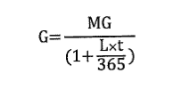
(tonnes CO
G: Sale price of one (01) State Bank bill;
MG: Face value of State Bank bill;
L: Interest rate on State Bank bill (% per annum);
t: Term of State Bank bill (number of days).
2. The amount sold of State Bank bills is determined according to the following formula:
GG = G x N
Where:
GG: Amount sold of State Bank bills;
G: Sale price of one (01) State Bank bill;
N: Number of State Bank bills issued.
Article 6. Methods of Issuing State Bank Treasury Bills
1. State Bank Treasury Bills shall be issued through auction methods or mandatory methods.
2. Issuance through auction method: The issuance of State Bank bills through the auction method shall be carried out in accordance with the State Bank's regulations on auctions through open market operations.
3. Issuance through Mandatory Method:
a) Based on monetary policy objectives during each period and actual conditions, the State Bank decides to issue State Bank bills compulsorily to credit institutions. Credit institutions must purchase State Bank bills issued compulsorily according to the Governor's Decision of the State Bank.
b) In case of necessity, the State Bank may consider purchasing back before maturity State Bank bills issued compulsorily. The Governor of the State Bank decides on the early redemption of State Bank bills issued compulsorily.
Article 7. Settlement of State Bank Treasury Bills
1. Credit institutions settle the amount for purchasing State Bank bills issued through the auction method in accordance with the State Bank's regulations on open market operations.
2. Credit institutions settle the amount for purchasing State Bank bills issued compulsorily as follows: Credit institutions must transfer the money for purchasing State Bank bills into the account designated by the State Bank on the bill settlement date. Credit institutions must ensure that all required information is fully recorded on the payment order as requested by the State Bank.
3. On the due date of State Bank bills, the State Bank settles the amount equal to the face value of State Bank bills to credit institutions. If the due date of State Bank bills falls on a weekend or public holiday, the settlement of State Bank bills will be carried out on the next working day following the holiday.
Article 8. Costs of Issuance and Interest Payment on State Bank Treasury Bills
The costs of issuing and paying interest on State Bank Treasury Bills shall be accounted for as operational expenses of the State Bank.
Article 9. Use of State Bank Treasury Bills in Transactions of the State Bank
State Bank Treasury Bills shall be used in transactions of the State Bank according to the Governor's decision for each period.
Article 10. Purchase, Sale, and Pledge of State Bank Treasury Bills
1. Credit institutions may purchase, sell, and pledge State Bank Treasury Bills among themselves in compliance with relevant laws.
2. The Deposit Insurance Corporation may purchase State Bank Treasury Bills from credit institutions based on agreements between the Deposit Insurance Corporation and credit institutions.
Article 11. Custody of State Bank Treasury Bills
State Bank Treasury Bills shall be custodied at the State Bank in accordance with the State Bank's regulations on custody and use of securities at the State Bank.
Article 12. Handling cases where credit institutions fail to pay or pay insufficient amounts for purchasing State Bank bills
1. The handling of credit institutions that fail to settle or settle insufficiently the amount for purchasing State Bank bills issued through the auction method shall be carried out in accordance with the State Bank's regulations on open market operations.
2. The handling of credit institutions that fail to pay or pay insufficient amounts for purchasing State Bank bills issued compulsorily shall be carried out as follows:
a) By the end of the bill settlement date, the State Bank (Trading Center, State Bank branch in provinces and centrally-administered cities) automatically deducts from the credit institution's settlement account at the State Bank until the full amount of the purchased State Bank bills is recovered and notifies the credit institution in writing.
b) In case the credit institution's settlement account at the State Bank does not have sufficient funds to settle the remaining amount of purchased State Bank bills, the credit institution must bear late payment penalties on the remaining amount of purchased State Bank bills at the overnight interbank lending rate. The daily late payment penalty amount is calculated as follows:
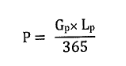
Where:
P: Daily late payment penalty amount;
Gp: The remaining amount of purchased State Bank bills as of the end of the day;
Lp: The overnight interbank lending rate as decided by the Governor of the State Bank at the time of calculating the late payment penalty (% per annum);
c) Within five consecutive working days following the settlement date, the State Bank (Trading Center, State Bank branch in provinces and centrally-administered cities) automatically deducts from the credit institution's settlement account at the State Bank until the full remaining amount of purchased State Bank bills and the unpaid late payment penalties are recovered; recover the remaining amount of purchased State Bank bills first, then recover the late payment penalties;
d) Upon expiration of the deduction period specified in point c Clause herein: (i) Credit institutions failing to settle the full amount of purchased State Bank bills will be subject to administrative fines under the regulations on administrative sanctions in the field of currency and banking; (ii) The State Bank (Trading Center, State Bank branch in provinces and centrally-administered cities) shall: cancel the uncollected portion of State Bank bills according to their face value and round up to multiples of the face value of State Bank bills; stop calculating late payment penalties; simultaneously, continue to automatically deduct from the settlement account or collect from other sources (if any) of the credit institution to recover the full amount of late payment penalties;
đ) The State Bank (Trading Center, State Bank branch in provinces and centrally-administered cities) shall determine the remaining amount of purchased State Bank bills and the unpaid late payment penalties at the end of each working day and automatically deduct from the settlement account to recover these amounts on the next working day; simultaneously, notify the credit institution in writing.
Chapter III
IMPLEMENTATION
Article 13. Responsibilities of units under the State Bank of Vietnam
1. The Monetary Policy Department shall take the lead and coordinate with relevant units to submit to the Governor of the State Bank decisions regarding the issuance of State Bank bills: volume, interest rate, term, settlement date, issuance method, and other related matters; early redemption of State Bank bills issued compulsorily.
2. Trading Department
a) Implement responsibilities as currently prescribed regarding State Bank bill auctions through open market operations;
b) For the issuance of State Bank bills through mandatory methods: (i) Notify credit institutions about the issuance of State Bank bills through mandatory methods according to the Decision of the Governor of the State Bank; (ii) Carry out the issuance, collect proceeds from sales, calculate late payment penalties, and settle State Bank bills when due for credit institutions, accounting in accordance with regulations; (iii) Handle cases where credit institutions fail to pay or pay insufficient amounts for State Bank bills issued through mandatory methods as stipulated in Clause 2, Article 12 of this Circular; Send a document to the Banking Supervisory Authority listing credit institutions that have not paid sufficient amounts for State Bank bills issued through mandatory methods immediately after the deduction period expires; (iv) Serve as the focal point for addressing difficulties and issues arising during the process of issuing State Bank bills through mandatory methods;
c) Carry out registration and procedures for transferring ownership rights of State Bank bills; Serve as the focal point for advising the Governor of the State Bank on decisions to allow the Vietnam Deposit Insurance Corporation to open a registration account for State Bank bills at the State Bank;
d) Summarize and report to the Governor of the State Bank, and send copies to the Monetary Policy Department, the results of State Bank bill issuance after each issuance round.
3. Branches of the State Bank in provinces and centrally-administered cities
a) Notify credit institutions about the compulsory issuance of State Bank bills according to the Governor's Decision;
b) Carry out the issuance, collect proceeds from sales, calculate late payment penalties, and settle State Bank bills issued through mandatory methods when due for credit institutions, accounting in accordance with regulations;
c) Handle cases where credit institutions fail to pay or pay insufficient amounts for State Bank bills issued through mandatory methods as stipulated in Clause 2, Article 12 of this Circular; Send a document to the Banking Supervisory Authority listing credit institutions that have not paid sufficient amounts for State Bank bills issued through mandatory methods immediately after the deduction period expires;
d) Prepare reports on the issuance and payment of State Bank bills issued compulsorily and send them to the Trading Department immediately after each issuance round;
d) The entity responsible for handling difficulties and obstacles arising during the implementation of mandatory issuance of central bank bills.
4. The Financial Accounting Department shall guide accounting entries for transactions involving State Bank bills.
Article 14. Effective Date
1. This Circular takes effect from December 9, 2019.
2. This Circular replaces Decision No. 362/1999/QĐ-NHNN dated October 8, 1999 of the Governor of the State Bank of Vietnam on the issuance of regulations on the issuance of central bank bills.
3. Repeal the provisions of Clause 2, Article 13 of Circular No. 24/2014/TT-NHNN dated September 6, 2014 guiding certain contents regarding deposit insurance activities.
Article 15. Implementation Organization
The Director of the Office, Heads of the Monetary Policy Department, Heads of relevant units under the State Bank, Governors of State Bank branches in provinces and centrally-administered cities, Chairmen of the Board of Directors, Chairmen of the Board of Members, and General Managers (Directors) of credit institutions, Chairmen of the Board of Directors, and General Managers of the Vietnam Deposit Insurance Corporation are responsible for organizing the implementation of this Circular./.
DEPUTY DIRECTOR
Original document (PDF)
Relations map
Click a document to open. A red border = a relation that changes validity.
Translations
This document is available in the following languages: