
Decision No. 192/2006/QĐ-TTg approves the Project on economic and social development of Lai Chau Province until 2010, with the goal of accelerating economic growth, improving infrastructure, and reducing poverty. The main driving force is the development of agriculture, industry, services, and eco-tourism.
Đối tượng áp dụng
People's Committee of Lai Chau Province; central ministries and sectors; enterprises and people in Lai Chau Province.
Các điểm cốt lõi
- The Project aims to double the average GDP per capita compared to 2005, reaching 7 million VND in 2010.
- Strive to reduce the poverty rate below 30% according to the new poverty standard by 2010.
- Build and improve transportation infrastructure, electricity, clean water supply, and Internet access.
- Develop agriculture focusing on tea, cinnamon, aquaculture, and livestock breeding.
- Increase investment in education, healthcare, culture, sports, and eco-tourism development.
🌐 Tác động xã hội từ văn bản này
- Economic growth drivers will create many job opportunities and higher income.
- Improved infrastructure systems will promote trade and connectivity with other regions.
- Reducing the poverty rate will enhance the quality of life for residents.
- Strengthening education and healthcare will improve both material and spiritual living standards of the people.
- Developing eco-tourism can generate new income from the service sector.
❓ Câu hỏi thường gặp
What period does this Project apply to?
The Project is approved for implementation until 2010, but its goals and solutions may extend beyond if necessary.
What is the target GDP per capita in 2010?
The target GDP per capita in 2010 is 7 million VND (2006 prices).
What are the agricultural targets of the Project?
The Project focuses on developing agriculture, particularly tea and cinnamon, as well as aquaculture and livestock breeding.
How many infrastructure construction projects are mentioned?
The Project mentions building rural roads, clean water supply systems, Internet networks, and national-standard health stations.
How many educational targets are there?
The Project sets the target of completing junior secondary school universalization by 2009, increasing the number of students attending school annually, and developing vocational training for workers.
Toàn văn
Pursuant to …;
Approving the Project "Economic and Social Development of Lai Chau Province until 2010"
_________________________
PRIME MINISTER
Pursuant to the Law on Organization of the Government dated December 25, 2001;
Pursuant to Resolution No. 37/NQ-TW dated July 1, 2004 of the Politburo (Term IX) on the Direction of Economic and Social Development and National Defense and Security in the Midland and Northern Mountainous Region until 2010;
Pursuant to Decision No. 87/2006/QĐ-TTg dated April 20, 2006 of the Government approving the Master Plan for Comprehensive Economic and Social Development of Lai Chau Province during the Period 2006-2020;
Considering the proposal of the People's Committee of Lai Chau Province at Report No. 230/TTr-UBND dated May 16, 2006 and that of the Ministry of Planning and Investment at Circular No. 3065/BKH-TĐ&GSĐT dated May 3, 2006 and Circular No. 4141/BKH-TĐ&GSĐT dated June 7, 2006,
DECISION:
Article 1. Approves the Project "Economic and Social Development of Lai Chau Province until 2010" with the main contents as follows:
1. Development Goals until 2010
General Objective:
Accelerate the rate of economic growth, bring Lai Chau out of its particularly difficult situation, narrow the development gap compared to other provinces in the region and nationwide.
Significantly improve the socio-economic infrastructure system. Leverage advantages such as border gates, mineral resources, hydropower, land, and climate to develop various economic sectors; focus on poverty reduction, basically complete定居点建设;保护和发展森林资源;保护和发扬各民族的文化特色,提高人民的物质和精神生活水平。
Link economic development with national defense and security assurance, political stability, and the firm protection of national sovereignty along the border.
Some key indicators until 2010:
- Regarding economy:
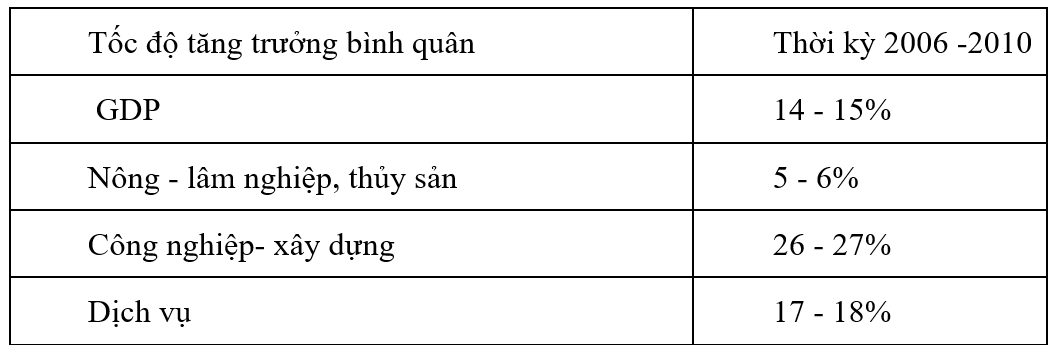
The economic structure of Lai Chau Province by 2010 will be: agriculture, forestry, fishery - industry - services 32 - 35 - 33%. By 2010, the average GDP per capita (at 2006 prices) will reach 7 million VND (double that of 2005, equivalent to 45% of the national average). Local state budget revenue will reach 160 billion VND. The total value of locally produced exported goods will reach 10 million USD. Total food grain production will exceed 150,000 tons, with an average annual per capita food grain consumption of about 400 kg/person/year, tea plantation area reaching 4,500 hectares, including newly planted 500 hectares, grass fruit plantation area reaching 3,000 hectares, including newly planted 1,000 hectares, livestock population increase rate of 6 - 7%.
- Regarding society: the average annual population growth rate for the period 2006-2010 will be 2.2%/year; the population scale by 2010 will be 368,000 people. The annual average decline in birth rate will be 1.02 ‰. Consolidate and maintain the results of universal primary education, illiteracy eradication, achieving the standard of universal primary education for children of school age by 2008, completing universal secondary education by 2009, developing preschool education. By 2010, 50% of communes will have health stations meeting national standards, striving to achieve 5 doctors/10,000 people, 50% of commune health stations having doctors. There will be no more households in hunger, reducing the poverty rate below 30% (according to new poverty standards); providing employment for 4,000 - 4,500 people/year, the labor force training rate reaching 25%; drug rehabilitation for 1,000 people/year. Each year, 100 villages, hamlets, and neighborhoods will register to build cultural facilities, of which at least 30% will be recognized at district and provincial levels; 90% of families will achieve the title of civilized family; strengthen and consolidate Party organizations, enhance the effectiveness of activities of local authorities at all levels, and build strong mass organizations.
- Regarding security and defense: basically complete the task of bringing people back to the border; maintain political stability, social order, and safety in the border area, build a peaceful, friendly, cooperative, and mutually beneficial Sino-Vietnamese border; prioritize synchronized investment in essential infrastructure to serve production and people's livelihoods in projects relocating people to the border, and residential areas near border markers.
- Regarding infrastructure: by 2007, strive for 100% of communes (currently existing) to have roads accessible by automobiles to the commune center, by 2010, over 70% of rural roads will be passable throughout the year. By 2010, 100% of communes and 80% of households will have access to electricity; 100% of communes will have internet access to the commune center; 100% of market towns will be covered by mobile phone signals; over 80% of urban residents and 30% of rural residents will have access to clean water; over 90% of households will be able to listen to radio broadcasts, over 80% of households will be able to watch television in ethnic languages.
- Regarding environment: forest coverage will reach over 45% by 2010.
- Relocation and resettlement: implement resettlement for households located in the inundation areas of the Son La Hydropower Project and other hydropower projects; ensure that resettled households have a better life than their previous locations.
2. Orientation for the Development of Industries and Fields
a) Agriculture, Forestry, Fishery, and Rural Development: accelerate the transformation of the agricultural economic structure, select some crops and animals with advantages to concentrate on development, shift towards commodity production, link with industrial processing and domestic and export markets.
- Agriculture: ensure food security within the province, reaching an average of 400 kg/person/year by 2010. Intensify cultivation, increase cropping intensity, widely apply advanced seed technology and farming techniques to increase rice and corn yields. Form high-yield concentrated food production areas. Develop tea towards intensive cultivation to increase yield and quality, reaching 4,500 hectares by 2010. Develop grass fruit, encourage the development of short-cycle industrial crops suitable for the province such as cotton, peanuts, soybeans, etc., provide high-quality breeding stock, do well in veterinary work, mobilize ethnic groups to change grazing habits to farm-based animal husbandry. Increase the number of cattle and buffalo herds, reaching 111,500 cattle and 20,700 buffalo by 2010, supplying about 8-10 thousand tons of fresh beef and buffalo meat to the market annually. Appropriate mechanisms and solutions are needed to promote the consumption of agricultural products by farmers.
- Fisheries: develop aquaculture, moving towards large-scale centralized aquaculture when the Son La, Lai Chau, Huoi Quang, Ban Chat, etc. hydropower reservoirs come into use.
- Forestry: carry out well the work of protecting and developing forests, striving to increase forest coverage from 37.5% in 2005 to over 45% by 2010 to enhance the protective function of upstream forests, regulating water sources for hydropower projects. Develop concentrated tree planting, especially large timber and industrial raw material trees, high-yield and economically valuable forest products serving the domestic processing and consumption industry and export such as paper, particleboard, household wooden goods. During the period of 2006-2010, strive to plant 10,000 hectares and regenerate another 100,000 hectares of forest. Conserve primary forest areas, establish natural conservation zones on the southwestern slope of the Hoàng Liên Son range, and develop eco-tourism. Implement appropriate investment policies for particularly difficult mountainous and border communes lacking agricultural land, transitioning to livelihoods based on planting, nurturing, and protecting protective forests. Consider developing rubber plantations in border communes under Phong Thổ, Sìn Hồ, and Mường Tè districts.
- Rural construction: plan and rearrange residential areas, stabilize and improve the living conditions of ethnic minorities. Construct irrigation works, resettlement sites, reclaim 3,000 hectares of paddy fields during the period of 2006-2010. Build rural infrastructure including electricity, transportation roads, potable water, irrigation systems, school systems, health stations... forming additional craft villages and farmsteads in agriculture and forestry.
b) Industry - Construction: develop advantageous industries such as hydropower, processing of agricultural and forestry products, production of building materials, mining, traditional small-scale handicrafts, and industrial facilities serving the resettlement program of hydropower projects. Strive to form the Phong Thổ Industrial Zone (producing cement, mineral processing, building materials) and several industrial clusters in Lai Châu town, Nậm Hàng (Mường Tè), Pu Sam Cáp (Sìn Hồ), Than Uyên township by 2010.
- Hydropower: along with the implementation of the construction of the Lai Châu, Bản Chát, and Huổi Quảng hydropower plants, conduct surveys, planning, and investment in medium and small hydropower projects.
- Mining: explore and exploit gold mines at Pu Sam Cáp. Investigate and explore rare earth, copper, lead, zinc mines, organize the exploitation and collection of small mines, encourage enterprises to invest in mining and processing of minerals within the area.
- Production of building materials: expand black stone quarry capacity at Nậm Ban (Sìn Hồ), study and explore the exploitation and processing of colored and white stones for construction and export. Construct tunnel kiln brick factories and cement plants with suitable capacities in the Muong So junction area to meet the demand for civilian construction, civil works, and hydropower projects in the province.
- Processing of agricultural and forestry products: improve the production and business efficiency of the Lai Châu paper factory, diversifying its product range. Increase the capacity and quality of tea factories in Tam Duong and Thien Thuoc. Gradually establish processing bases in concentrated production areas such as animal feed processing, livestock slaughterhouses, etc.
- Other industries: develop mechanical manufacturing of hand tools and encourage the establishment of private-owned mechanical workshops.
c) Trade - Services: accelerate the development of service sectors to become high-weight industries in the GDP of the Province.
Develop a comprehensive trade infrastructure, commercial centers in towns, market towns, market quarters, and village clusters. Expand various forms of trade services to exploit border gate advantages such as temporary import and re-export, transit cargo transport and handling, warehousing, bonded warehouses, border markets. In the short term, prioritize the construction of some border area markets. Ensure the supply of essential goods for highland ethnic groups and stabilize market prices.
Develop resort, ecological, and cultural tourism, making tourism one of the important industries, driving economic and social development of the Province, implementing poverty reduction programs, maintaining national defense and public security.
Develop cargo and passenger transportation services on inter-provincial and intra-provincial routes, aiming for international multimodal transport when conditions permit, utilizing inland waterway routes when hydropower reservoirs are formed.
d) Transportation, Irrigation, Potable Water Supply, Electricity:
- Construct bypasses and upgrade National Highway 4D, National Highway 12, National Highway 32 (Phase 2). Construct bypasses for flood-prone sections of National Highway 12, National Highway 32, Provincial Road 127, National Highway 279, etc., ensuring continuous transportation within the province and region during the construction of hydropower projects; construct connecting roads between provincial roads and national highways with resettlement areas due to hydropower construction. Prioritize investment in border road rings: Pa Tan - Hua Bum - Mường Tè - Pac Ma connecting to the Pac Ma - A Pa Chai - Chung Chai - Mường Nhe route of Dien Bien Province and the Pa Tan - Phong Tho - Bat Xat route of Lao Cai Province. Construct some interconnecting roads. Upgrade and maintain provincial roads. Invest in roads to the centers of communes without motorable roads. Improve and ensure that 70% of rural roads are passable year-round.
- Conduct surveys and construct some river ports on the Da River to develop inland waterway transportation when large hydropower projects in the area are constructed.
- Irrigation: during the period of 2006-2010, construct and upgrade irrigation works, serving stable irrigation for 8,805 hectares of double-crop rice. Prioritize investment in four reservoirs (Dong Pao, Pa Khoa, Hoang Ho, Nam Madao); eight irrigation clusters at Muong Kim, Muong Than, Thien Thuoc (Than Uyen), Binh Lu (Tam Duong), Phong Tho, Dao San, Sin Ho, and Muong Mo - Nam Hang.
- Invest in constructing clean water supply systems for Lai Chau town and Tam Duong, Phong Tho, Sin Ho, Muong Te, Thien Thuoc market towns. Develop potable water supply systems for rural areas including centralized and small-scale water supply facilities.
- Promote investment in hydropower projects and power grid systems according to the approved Power Development Plan. Strive to achieve 100% electrification for communes in the province by 2010; 80% of households using electricity; proactively implement the construction of medium and small hydropower stations to provide local electricity and combine with water supply for daily use and production for ethnic groups.
d) Urban system:
Focus on investing in urban transportation systems, water supply and drainage, land leveling, urban lighting... invest in Lai Chau town with a scale of about 1000 hectares; Phong Tho and Tam Dao market towns each with a scale of about 60 hectares; Ma Lu Thang border gate with a scale of about 45 hectares and other cities.
e) Develop social infrastructure systems:
Construct secondary schools and provincial, district Tam Dao and Phong Tho boarding schools for ethnic minorities; develop boarding schools at commune centers and district centers to meet needs. Strengthen equipment for teaching and learning under the new general education program. Invest in building housing for cadres and teachers, especially those in remote, border areas. Construct a Community College, Provincial Political Academy, Provincial Vocational Training Center and some district-level vocational training centers with appropriate scales.
+ Health: invest in constructing a provincial general hospital with 300 beds; prepare procedures to start construction of Phong Tho and Tam Dao general hospitals; upgrade and repair Sìn Hồ and Muong Te general hospitals. Build new centers for preventing social diseases and health centers in Lai Chau town. Speed up upgrading village health stations to meet standards.
+ Culture: invest in constructing library centers, cultural centers, museums at provincial and district levels. Renovate historical relics and preserve cultural heritage around the Lai Chau hydropower reservoir. Build village and community cultural facilities suitable with the traditions of each ethnic group.
+ Office systems: promptly complete infrastructure for Party, mass organizations, and administrative agencies at all levels with appropriate scales to meet requirements and enhance management capacity.
g) Resettle hydropower projects:
The People's Committee of Lai Chau Province shall take the lead and coordinate with investors to complete the resettlement of people affected by Son La, Ban Chat, Houy Quang hydropower projects according to the planning and schedule. At the same time, prepare conditions to implement the relocation of people affected by the Lai Chau hydropower project according to the required schedule. Combine population resettlement, restructuring production, developing infrastructure with implementing support policies for ethnic minority groups in difficult areas to ensure better living conditions for resettled people in their new locations.
h) Culture and society:
+ Education and training: strive to complete universal secondary education by 2009. Increase the number of students attending school by 4.47% annually. Improve cadre training for grassroots levels, particularly ethnic minority cadres and female cadres, and increase the labor force with training. Develop vocational training for workers, rural laborers, and young ethnic people, especially those in areas undergoing land use purpose conversion due to hydropower resettlements and economic structure adjustments to shift labor structures.
+ Health and public health care: consolidate the healthcare network and public health services. Basically control malaria, tuberculosis, and effectively prevent HIV/AIDS. Reduce malnutrition rates among children under five years old to 25% by 2010. Lower the rate of low birth weight infants below 8%, ensuring that over 96% of children receive vaccinations for six types of vaccines. Expand health insurance and support forms for ethnic minorities in remote and mountainous areas. Ensure land funds for cultural and information facilities and cultural heritage preservation. All communes have telephones and postal and cultural service points to provide books and information to the people. Construct a provincial radio and television station to expand broadcast coverage, develop VTRO television relay stations in villages with electricity conditions. Widen sports activities throughout the population, striving to win medals in regional and national ethnic sports congresses. Establish sports training and competition venues in provincial capitals, district towns, and communes, ensuring activity spaces and land funds for physical exercise and sports.
+ Population development: implement family planning programs and reproductive health programs to improve population quality. Encourage residents from other regions to settle according to provincial planning and plans. The population size in 2010 is approximately 368,000 people (with an average annual natural growth rate of about 1.8%, mechanical growth of 0.4%).
+ Regarding culture and information: improve cultural and information consumption levels, preserve and promote the values of ethnic minority cultures. Ensure land funds for cultural and information facility construction and cultural heritage preservation. All communes have telephones and postal and cultural service points to provide books and information to the people. Construct a provincial radio and television station to expand broadcast coverage, develop VTRO television relay stations in villages with electricity conditions. Widen sports activities throughout the population, striving to win medals in regional and national ethnic sports congresses. Establish sports training and competition venues in provincial capitals, district towns, and communes, ensuring activity spaces and land funds for physical exercise and sports.
+ Poverty reduction and employment: is a crucial and continuous task throughout the socio-economic development period. Concentrate resources on poverty reduction in extremely difficult highland and border communes and ethnic minority groups (Mang, La Hu, Khmu...) to basically eliminate hunger and reduce the poverty rate below 30% (according to the new poverty standard) by 2010. Annually create jobs for 4,000 to 5,000 people. Accelerate the transformation of the labor structure to solve employment issues, increase labor productivity, raise the proportion of rural labor time to 78-80%, and reduce urban unemployment below 3%.
+ Properly address the issue of insufficient residential and production land, and rural infrastructure in highland areas to stabilize farming and settlement, eradicate shifting cultivation and free migration practices among certain ethnic groups.
i) Religious issues and social evils prevention:
+ Strengthen propaganda, mobilization, and education of believers to implement religious policies well; resolutely combat illegal proselytism.
+ Strengthen propaganda and mobilization to encourage ethnic minority groups to preserve and promote their national cultural traditions. Measures must be taken to prevent schemes and actions that exploit religious freedom to incite and divide national solidarity.
+ Continue to thoroughly implement eradication efforts for opium plants, strictly control and severely punish acts of storing, trading, and consuming narcotics. Organize rehabilitation programs effectively and address employment issues for individuals post-rehabilitation to prevent relapse.
+ Enhance inspection and training activities to maintain traffic order and safety, and strictly handle violations.
k) Economic development based on geographical space: based on natural characteristics, economic and social conditions, develop Lai Chau Province according to three economic zones as follows:
- The economic driving zone along National Highway 32 and National Highway 4D (including Lai Chau city, Phong Tho district, Tam Dao district, and Than Uyen district): this region has significant potential for comprehensive development in agriculture, forestry, mining industry, and trade services. The main direction of development is to promote border trade, develop commercial agricultural production and processing industries with key products such as tea, rice, chestnut, beef, milk; extract and process mineral resources and produce construction materials...
- The ecological agriculture and forestry economic zone along the Da River (including Muong Te district and lowland communes of Sin Ho district): this area is a special protective zone for the Da River, located along its course. The primary direction of development is to conserve existing natural forests, intensify protective forest planting combined with cattle breeding; cultivate medicinal herbs; utilize the transportation advantages of the Da River, Nam Na River, Nam Ma River, and National Highway 12, Provincial Road 127 to develop waterway transport, cargo circulation, eco-tourism, and forestry product processing industries. Develop plans for aquaculture, exploitation, and processing of aquatic products, and efficiently utilize the surface areas of Son La and Lai Chau hydroelectric reservoirs.
- The eco-tourism, ethnic culture, and high-quality agriculture economic zone includes nine highland communes of Sin Ho district: Tu Va Sin Chai, Lang Mo, Ta Ngao, Xa De Phin, Ta Phin, Phang So Lin, Hong Thu, Phin Ho, and Sin Ho town. The main direction of development is to transform the region into an eco-tourism and cultural tourism destination, linked with high-quality agricultural development, cultivation of medicinal herbs, flowers, and temperate fruit trees.
l) Adjust administrative boundaries:
During the period from 2006 to 2010, study the division of large communes with areas over 100 square kilometers, aiming to stabilize at a scale of 130 communes, wards, and towns.
3. Solutions:
a) Review, adjust, and supplement planning for economic regions of the province and infrastructure construction planning for various sectors to ensure alignment with overall planning of ministries and agencies and the direction of socio-economic development throughout the region. Improve the quality of market research and forecasting in planning projects to ensure proactive and sustainable development. Accelerate the progress of planning construction and enhance the quality of overall socio-economic development planning and sectoral planning... improve investment planning and preparation work.
b) Human resource development: effectively implement policies for human resource training and development, prioritizing local training, female cadres, and ethnic minority cadres; establish special incentive policies for cadres working in border communes and particularly difficult communes. Form provincial and district vocational training centers of high quality to train skilled labor forces to meet the requirements of economic and social development... Increase the number of education, health, agricultural extension, border guard officers... leverage the role of village elders and community leaders to mobilize the people to implement state policies well.
c) Promote the application of scientific and technological advancements (in forestry, industry, information technology...).
d) Solutions for mobilizing resources for investment
- Investment capital needs: the total social investment demand in the province during the period from 2006 to 2010 requires approximately 23 trillion VND, including capital for developing production and business operations in various economic sectors; capital for building social infrastructure; technical infrastructure construction capital (transportation, irrigation, power grid, drinking water, telecommunications); urban infrastructure construction capital; capital for constructing office systems of Party and State agencies, political and social organizations; capital for developing trade and tourism infrastructure; capital for implementing resettlement programs for hydropower projects; capital for poverty reduction programs; capital for implementing forest protection restoration programs; capital for implementing cadre training programs; capital for export development and leveraging border economic advantages programs; capital for socio-economic development programs combined with national defense and security assurance.
- Sources of capital: alongside focusing on state budget investment, domestic credit investment capital must also be vigorously mobilized; attract direct foreign investment and ODA funds.
- Financing solutions for capital investment: review and supplement preferential policies to encourage investment in the province to mobilize all resources for development. Prioritize infrastructure investment in new urban areas, key economic programs, border regions, and areas with potential for tourism development to attract investment. Improve project preparation work to allocate state investment funds for technical infrastructure development, socio-economic infrastructure, and support from national programs aimed at poverty reduction. Utilize foreign investment sources, ODA funds. Implement policies combining provincial budget support with incentives for districts and communes to enhance internal resource mobilization for rural infrastructure development. Continue integrating investment programs and projects to improve economic and social development efficiency within the province. Develop and promote investment projects in advantageous sectors to enhance capital utilization efficiency and create a reasonable investment structure that facilitates rapid economic restructuring. Call for projects related to natural resource protection, biodiversity conservation, land fund protection, water resources, and the integration of tourism and other service industries.
Strengthen the development of enterprises and entrepreneurs, and call for and attract businesses to invest in the province.
d) Consolidate and expand production relations. Enhance the role of state economy, develop, encourage, and create conditions for various economic components to grow. Establish cooperatives providing production, processing, and product marketing services for farmers.
e) Review, supplement, and issue mechanisms and policies for development: administrative reform, ethnic policies, production and business development policies, preferential policies to encourage market development and improve commercial operation mechanisms; policies to encourage tourism development within the province.
g) Strengthen management, exploitation, and effective use of resources while protecting the environment: land resources, mineral resources, forest resources, water resources.
h) Consolidate defense and security, diplomacy: enhance national defense and security education; build a solid people's defense foundation. Prioritize construction of border roads, patrol routes, and border posts. Develop comprehensive cooperation relations with Yunnan Province (China), actively seek foreign investment and international organization funding to develop the province's economy and society.
i) Investigate and evaluate the cadre and civil servant workforce, on this basis plan and build training, retraining, and cadre management plans, especially local cadres, female cadres, and ethnic minority cadres. Improve recruitment, training, and cadre attraction systems, rotate cadres to grassroots levels. Build political systems and cadre teams at all levels to meet requirements and improve state management efficiency. Continue implementing the movement to rectify the Party.
Article 2. The approved proposal will serve as a guiding direction for the economic and social development of Lai Chau Province until 2010, serving as a basis for five-year and annual planning; establish and propose development programs and specific investment projects within the province.
Article 3. The People's Committee of Lai Chau Province is tasked with:
1. Establishing a Steering Committee to implement the Proposal, headed by the Chairman of the People's Committee, with the Department of Planning and Investment as the permanent body. The Steering Committee is responsible for organizing and directing the implementation of the approved Proposal.
2. Studying and concretizing objectives and implementing them through economic and social development programs and projects. During implementation, regularly update information. When there is a need to supplement or adjust the Proposal, report promptly to the competent authority for decision.
3. Review and clearly define priorities for industry and sector development and project portfolios to ensure targeted investment and avoid dispersion. Direct focused investment to quickly achieve practical results, prioritizing urban infrastructure, technical infrastructure for production, and social infrastructure, creating impetus for industry and sector development.
4. Proactively coordinate with central ministries and agencies to study and recommend to the Prime Minister the issuance of mechanisms and policies suitable for the province's conditions to encourage various economic components to invest in production and service development, expand markets, actively integrate into the economy, and protect national defense and security.
5. Implement organizational reforms, management improvements, and administrative reforms. Gradually create a favorable environment to encourage domestic and foreign investment. Fully leverage the province's potential and strengths, gradually promote positive factors, and limit negative aspects of the market mechanism during development.
6. Enhance the effectiveness of local government operations at all levels, along with the renewal of cadre arrangement, rotation, job assignment, decentralization, and individual and organizational responsibility in management structures.
Article 4. Ministries, agencies equivalent to ministries, and government-affiliated bodies shall, based on their functions and tasks, be responsible for coordinating with the People's Committee of Lai Chau Province to concretize the approved "Economic and Social Development Plan for Lai Chau Province until 2010" through investment and development programs within Lai Chau Province.
Ministries: Planning and Investment, Finance, Transport, Industry, Agriculture and Rural Development, Labor, Invalids and Social Affairs, Natural Resources and Environment, Defense, and related ministries and agencies shall focus on resolving urgent issues in Lai Chau Province as follows:
1. The Ministry of Finance, the Ministry of Planning and Investment, the Ministry of Labor, Invalids and Social Affairs, the Ministry of Home Affairs, and related ministries and agencies continue to study and propose more preferential policies for Lai Chau in cadre training and development, particularly ethnic minority cadres from the province to the grassroots level; mechanisms and policies to attract skilled labor to work in Lai Chau.
2. The Ministry of Finance, the Ministry of Planning and Investment, the Ministry of Transport, and relevant ministries and sectors shall prioritize allocating funds in accordance with regulations to construct flood-avoidance routes for the Son La, Lai Chau, Ban Chat, Houei Khua hydropower projects, and the border ring road from Paten to Muong Te to Pac Ma to serve the relocation work. The Ministry of Transport shall take the lead and coordinate with the province and relevant ministries and sectors to study incorporating the Chan Nuoi - Sin Ho - Nam Long route into the flood-avoidance route for the Son La hydropower project; the Muong Kim - Muong La route into the flood-avoidance route for the Ban Chat - Houei Khua - Son La hydropower project, thereby creating an interconnected transportation network when the water reservoirs are completed.
3. The Ministry of Natural Resources and Environment shall take the lead and coordinate with the Ministry of Industry and relevant ministries and sectors to establish a分级制度,以便省管理并开采小型矿产资源;考虑按照规定安排资金进行调查、勘探和绘制本省的矿产地图,为莱州主动制定采矿、加工和出口计划创造条件。
4. Implementation Program of Resolution No. 37-NQ/TW: annually, increase investment capital to help Lai Chau Province alleviate difficulties and achieve its goals and tasks in the spirit of Resolution No. 37-NQ/TW of the Politburo, specifically:
- Provide capital to complete automobile roads to the centers of existing communes in 2006-2007, patrol and border roads, fundamentally address rural transportation issues, and ensure convenient travel throughout the four seasons.
- Entrust the Ministry of Health to take the lead and coordinate with the Ministry of Planning and Investment to examine and approve according to current regulations the projects for constructing the provincial general hospital and the two newly divided district hospitals.
- Entrust relevant ministries and sectors to research and support the construction of educational facilities: Community College, Provincial Political School, vocational training centers at the provincial and district levels, provincial and district-level lifelong education centers, and provincial military school.
- Entrust the Ministry of Planning and Investment to take the lead and coordinate with the Ministry of Finance to examine and submit to the Prime Minister for approval the increase in capital support for constructing essential infrastructure in the provincial border economic zone.
5. Regarding the budget allocation standards for local governments:
For regular expenditures: entrust the Ministry of Finance to establish allocation standards for Lai Chau Province based on criteria such as natural area, population density, ethnic structure, number of particularly difficult communes and villages, poverty rate, mountainous border province status, strategic location for national defense and security, distance from major economic centers, newly divided province status, etc., following the principle that during the period 2007-2010, the standards will be increased by 1.5 times compared to the period 2004-2006.
Article 5. This Decision shall take effect fifteen days after its publication in the Official Gazette.
The Chairman of the People's Committee of Lai Chau Province, Ministers, Heads of ministerial-level agencies, and Heads of central government agencies shall be responsible for implementing this Decision./.
Bản đồ quan hệ
Bấm vào một văn bản để mở. Viền đỏ = quan hệ làm thay đổi hiệu lực.