
These regulations specify technical requirements and testing methods for customer edge routers (CE Routers) using Internet Protocol version 6 (IPv6). They include network configuration requirements for WAN and LAN, support for transition technologies such as 6rd and DS-Lite, as well as management and responsibility provisions for related organizations and individuals.
Đối tượng áp dụng
These regulations apply to all IPv6 customer edge routers produced or imported into Vietnam.
Các điểm cốt lõi
- Technical requirements for WAN and LAN network configurations.
- Support for transition technologies such as 6rd and DS-Lite.
- Testing methods for technical requirements.
- Management and responsibility provisions for related organizations and individuals.
- chudecanban
🌐 Tác động xã hội từ văn bản này
- Ensuring the quality and compatibility of IPv6 customer edge routers.
- Supporting the transition from Internet Protocol version 4 (IPv4) to IPv6.
- Providing a legal basis for managing and inspecting these devices.
❓ Câu hỏi thường gặp
Does this regulation apply to all types of customer edge routers?
No, this regulation only applies to customer edge routers using IPv6 protocol.
Are all contents of the referenced documents in this regulation required to be complied with?
No, only those requirements marked with keywords 'PHẢI', 'KHÔNG ĐƯỢC' (in TCVNs) and 'REQUIRED', 'MUST', 'SHALL', 'MUST NOT', 'SHALL NOT' (in RFCs) are mandatory to comply with.
Toàn văn
|
BỘ INFORMATION AND COMMUNICATION Number: 20/2015/TT-BTTTT |
SOCIALIST REPUBLIC OF VIET NAM Hanoi, July 21, 2015 |
CIRCULAR
Issuing "National Technical Regulations on IPv6 for Customer Edge Routers"
The Minister of Information and Communications issues this Circular to stipulate National Technical Regulations on IPv6 for Customer Edge Routers.
----------------------
Pursuant to the Law on Standards and Technical Regulations dated June 29, 2006;
Pursuant to the Law on Telecommunications dated November 23, 2009;
WHEREAS, Decree No. 127/2007/NĐ-CP dated August 1, 2007 of the Government detailing and guiding the implementation of certain provisions of the Law on Technical Standards and Regulations;
Based on Decree No. 132/2013/ND-CP dated October 16, 2013 of the Government on the functions, tasks, powers, and organizational structure of the Ministry of Information and Communications;
Pursuant to the proposal of the Director of the Science and Technology Department,
Along with this Circular, National Technical Regulations on IPv6 for Customer Edge Routers (QCVN 90:2015/BTTTT) are issued.
Article 1. The Heads of the Office, Department of Science and Technology, Heads of agencies and units under the Ministry of Information and Communications, Directors of Provincial Departments of Information and Communications, and relevant organizations and individuals shall be responsible for implementing this Circular.
Article 2. Pham Vu Luan
Article 3. QCVN 90:2015/BTTTT
|
THE MINISTER |
SOCIALIST REPUBLIC OF VIET NAM
ON IPV6 FOR CUSTOMER EDGE ROUTERS
AMENDMENT 1:2025 QCVN 07:2023/BXD
IPV6 FOR CUSTOMER EDGE ROUTERS
CUSTOMER
National technical regulation
on IPv6 Customer Edge Routers
Table of Contents
Chapter 1. GENERAL PROVISIONS
1.1. Scope of Application
1.2. Applicability
1.3. Referenced Documents
1.4. Terms and Definitions
1.5. Abbreviated Terms
Chapter 2. TECHNICAL PROVISIONS
2.1. General Requirements
2.2. Network WAN Configuration Requirements
2.2.1. WAN Side Requirements
2.2.2. Link Layer Requirements
2.2.3. Address Allocation Requirements
2.2.4. Prefix Delegation Requirements
2.3. Network LAN Configuration Requirements
2.3.1. ULA Requirements
2.3.2. LAN Requirements
2.4. Support for Transition Technologies
2.4.1. 6rd
2.4.2. DS-Lite
3. MEASUREMENT METHODS
5. RESPONSIBILITIES OF ORGANIZATIONS AND INDIVIDUALS
5. RESPONSIBILITIES OF ORGANIZATIONS AND INDIVIDUALS
6. IMPLEMENTATION ORGANIZATION
LIST OF REFERENCES
Foreword
QCVN 90:2015/BTTTT is based on the document RFC 7084 of the Internet Engineering Task Force (IETF).
QCVN 90:2015/BTTTT was compiled by the Institute of Post and Telecommunications Science and Technology, reviewed by the Department of Science and Technology, and promulgated by the Ministry of Information and Communications through Circular No. 20/2015/TT-BTTTT dated July 21, 2015.
AMENDMENT 1:2025 QCVN 07:2023/BXD
ON IPV6 FOR CUSTOMER EDGE ROUTERS
National technical regulation
on IPv6 Customer Edge Routers
Chapter 1. GENERAL PROVISIONS
1.1. Scope of Application
These regulations specify technical requirements and measurement methods for IPv6 Customer Edge Routers (referred to as CE Router IPv6).
1.2. Applicability
These regulations apply to organizations and individuals engaged in production, importation, use, and operation of IPv6 Customer Edge Routers in Vietnam.
1.3. Referenced Documents
QCVN 89:2015/BTTTT, "National Technical Regulations on IPv6 for Nodes".
TCVN 9802-3:2015, "Internet Protocol version 6 (IPv6) - Part 3: Neighbor Discovery Protocol".
RFC 1122, "Requirements for Internet Hosts - Communication Layers", October 1989.
RFC 2464, "Transmission of IPv6 Packets over Ethernet Networks", December 1998.
RFC 3315, "Dynamic Host Configuration Protocol for IPv6 (DHCPv6)", July 2003.
RFC 3633, "IPv6 Prefix Options for Dynamic Host Configuration Protocol (DHCP) version 6", December 2003.
RFC 3646, "DNS Configuration options for Dynamic Host Configuration Protocol for IPv6 (DHCPv6)", December 2003.
RFC 3704, "Ingress Filtering for Multihomed Networks", March 2004.
RFC 3736, "Stateless Dynamic Host Configuration Protocol (DHCP) Service for IPv6", April 2004.
RFC 4191, "Default Router Preferences and More-Specific Routes", November 2005.
RFC 4193, "Unique Local IPv6 Unicast Addresses", October 2005.
RFC 4443, "Internet Control Message Protocol (ICMPv6) for the Internet Protocol Version 6 (IPv6) Specification", March 2006.
RFC 4862, "IPv6 Stateless Address Autoconfiguration", September 2007.
RFC 5072, "IP Version 6 over PPP", September 2007.
RFC 5942, "IPv6 Subnet Model: The Relationship between Links and Subnet Prefixes", July 2010.
RFC 5969, "IPv6 Rapid Deployment on IPv4 Infrastructures (6rd) - Protocol Specification", August 2010.
RFC 6106, "IPv6 router Advertisement Options for DNS Configuration", November 2010.
RFC 6333, "Dual-Stack Lite Broadband Deployments Following IPv4 Exhaustion", August 2011.
RFC 6334, "Dynamic Host Configuration Protocol for IPv6 (DHCPv6) Option for Dual-Stack Lite", August 2011.
RFC 7083, "Modification to Default Values of SOL_MAX_RT and INF_MAX_RT", November 2013.
IPv6 READY - Conformance Test Scenario CE Router - Technical Document - Revision 1.0.0b2, IPv6 Forum, March 12, 2015.
1.4. Terms and Definitions
1.4.1. Service Provider
An Internet service provider as defined by law. In these regulations, it refers to a service provider supporting Internet access using IPv6, and may also support Internet access using IPv4.
1.4.2. End User Network
A network with one or more connections linking IPv6 Hosts to the CE Router IPv6.
1.4.3. IPv6 Customer Edge Router (CE Router IPv6)
A node device for home or office use designed to forward IPv6 packets. The CE Router IPv6 connects the end user network to the service provider's network.
1.4.4. IPv6 Host
A device that implements an IPv6 stack and connects to IPv6 via the CE Router IPv6. In these regulations, the IPv6 Host belongs to the end user network.
The position and relationship between the service provider's network, the end user network, the CE Router IPv6, and the IPv6 Host are illustrated in Figure 1.
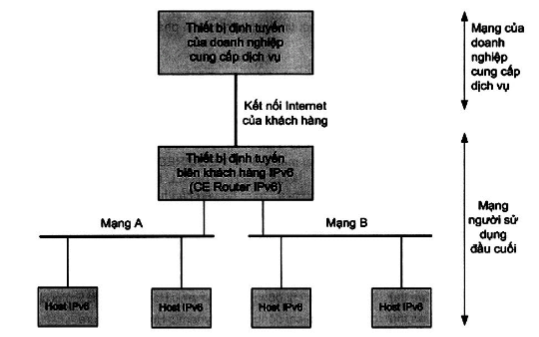
Figure 1 - Typical End User Network Model
1.4.5. LAN Interface
The interface of the CE Router IPv6 connected to a link in the end user network. A CE Router IPv6 can have one or more LAN interfaces.
1.4.6. WAN Interface
The interface of the CE Router IPv6 connected to a link providing connection to the service provider's network.
1.4.7. Dual Stack Lite (DS-Lite)
A technology allowing continued support for IPv4 services while encouraging IPv6 deployment. DS-Lite enables service providers to share IPv4 addresses among customers by combining two known technologies: IPv4-in-IPv6 and NAT.
1.4.8. Unique Local Address (ULA)
A globally unique address used for local communication. It is not used for global Internet routing but can be used for routing within a limited area such as a site. It may also be routed between a limited set of sites.
1.4.9. ICMPv6 Destination Unreachable Message
A message reporting errors in response to packets that cannot be delivered to the destination due to reasons other than congestion.
1.4.10. 6rd
A protocol mechanism to deploy IPv6 to sites through the service provider's IPv4 network.
1.4.11. Level of Requirement Terminology
The capitalized terms "PHẢI", “NÊN”, “CÓ THỂ", “KHÔNG NÊN”, “KHÔNG ĐƯỢC” used in the TCVNs mentioned in Section 1.3 and “REQUIRED”, “MUST”, “SHALL”, “SHOULD”, “MAY”, “SHOULD NOT”, “MUST NOT”, “SHALL NOT” used in the RFCs mentioned in Section 1.3 indicate the level of requirement for compliance with technical specifications and technical requirements set forth in these documents.
1.5. Abbreviated Terms
|
6rd |
IPv6 Rapid Deployment |
IPv6 Triển khai nhanh |
|
CE |
Biên khách hàng |
Customer Edge |
|
DHCP |
Giao thức cấu hình địa chỉ động |
Dynamic Host Configuration Protocol |
|
DHCPv6 |
Giao thức cấu hình địa chỉ động phiên bản 6 |
Dynamic Host Configuration Protocol version 6 |
|
DNS |
Hệ thống tên miền |
Domain Name System |
|
DNSSL |
Danh sách tìm kiếm DNS |
DNS Search List |
|
DUID |
Định danh duy nhất DHCP |
DHCP Unique Identifier |
|
DS |
Chế độ hoạt động song song cả IPv4 và IPv6 |
Dual stack |
|
DS-Lite |
Công nghệ cho phép hỗ trợ liên tục các dịch vụ IPv4 và khuyến khích triển khai IPv6 |
Dual stack Lite |
|
IA_NA |
Kết hợp định danh cho địa chỉ không tạm thời |
Identity Association for Non-temporary Address |
|
IA_PD |
Kết hợp định danh cho chuyển giao tiền tố |
Identity Association for Prefix Delegation |
|
ICMP |
Giao thức bản tin điều khiển Internet |
Internet Control Message Protocol |
|
IETF |
Nhóm đặc trách về kỹ thuật Internet |
Internet Engineering Task Force |
|
IPCP |
Giao thức điều khiển IP |
IP Control Protocol |
|
IPv4 |
Giao thức Internet phiên bản 4 |
Internet Protocol version 4 |
|
IPv6 |
Giao thức Internet phiên bản 6 |
Internet Protocol version 6 |
|
IPv6CP |
Giao thức điều khiển IPv6 |
IPv6 Control Protocol |
|
LAN |
Mạng cục bộ |
Local Area Network |
|
NAT |
Biên dịch địa chỉ mạng |
Network Address Translation |
|
NCP |
Giao thức điều khiển mạng |
Network Control Protocol |
|
ORO |
Tùy chọn yêu cầu tùy chọn |
Option Request Option |
|
PD |
Chuyển giao tiền tố |
Prefix Delegation |
|
PPP |
Giao thức điểm tới điểm |
Point to Point Protocol |
|
RA |
Quảng bá router |
Router Advertisement |
|
RD |
Phát hiện router |
Router Discovery |
|
RDNSS |
Máy chủ DNS đệ quy |
Recursive DNS Server |
|
RFC |
Tài liệu RFC của IETF |
Request For Comments |
|
RS |
Thăm dò router |
Router Solicitation |
|
SLAAC |
Tự động cấu hình địa chỉ không giữ trạng thái |
Stateless Address Autoconfiguration |
|
TCVN |
National standard |
National Standard |
|
ULA |
Địa chỉ IPv6 cục bộ duy nhất |
Unique Local IPv6 Address |
|
WAN |
Mạng diện rộng |
Wide Area Network |
Chapter 2. TECHNICAL PROVISIONS
2.1. General Requirements
A CE Router IPv6 must perform IPv6 routing and ensure that traffic using the ULA address of that CE Router IPv6 does not transmit outside the WAN interface, nor originate from the WAN interface.
2.1.1. A CE Router IPv6 is also an IPv6 node device. The CE Router IPv6 must comply with the Technical National Standard QCVN 89:2015/BTTTT on IPv6 for node devices.
2.1.2. The CE Router IPv6 must implement ICMP as specified in RFC 4443. Specifically, point-to-point connections must be controlled as described in Section 3.1 of RFC 4443.
2.1.3. The CE Router IPv6 shall not forward any IPv6 traffic between LAN interfaces and WAN interfaces until it successfully completes the prefix delegation receipt process and IPv6 address configuration.
2.1.4. When the CE Router IPv6 does not have a default router on the WAN interface, the CE Router IPv6 shall not advertise it as a default router on its LAN interfaces, meaning the Router Lifetime field is set to 0 in all router advertisement messages RA it initiates (as specified in TCVN 9802-3:2015).
2.1.5. If the CE Router IPv6 is advertising and loses (one or more) default IPv6 routers of the CE Router IPv6 or detects a WAN interface disconnection, the CE Router IPv6 must send one or more RA messages with the Router Lifetime field set to 0.
2.2. Network WAN Configuration Requirements
2.2.1. WAN Side Requirements
2.2.1.1. When the CE Router IPv6 connects to the WAN interface connection, the CE Router IPv6 must act as an IPv6 Host for the purpose of assigning stateful or stateless interface addresses according to RFC 3315 or RFC 4862 respectively.
2.2.1.2. The CE Router IPv6 must create a link-local address and complete the duplicate address detection process as specified in RFC 4862 before sending an RS message on the interface. The source address used in the next RS message must be the link-local address on the WAN interface.
2.2.1.3. In the absence of routing information, the CE Router IPv6 must perform RD as specified in TCVN 9802-3:2015 to discover the default router and establish a default route in the CE Router IPv6's routing table with the discovered router as the next hop.
2.2.1.4. The CE Router IPv6 must act as a requesting router for the purpose of DHCPv6 prefix delegation as specified in RFC 3633.
2.2.1.5. The CE Router IPv6 must use a consistent DUID for DHCPv6 messages. The DUID shall not change between interface restarts or CE Router IPv6 reboots.
2.2.2. Link Layer Requirements
2.2.2.1. If the WAN interface of the CE Router IPv6 supports Ethernet encapsulation, the CE Router IPv6 must support IPv6 packet transmission over Ethernet as specified in RFC 2464.
2.2.2.2. If the WAN interface of the CE Router IPv6 supports PPP encapsulation, the CE Router IPv6 must support IPv6 packet transmission over PPP as specified in RFC 5072.
2.2.2.3. If the WAN interface of the CE Router IPv6 supports PPP encapsulation, in a dual-stack environment where IPCP and IPv6CP run on a single logical PPP link, the network control protocols NCP must be treated independently and started and stopped separately.
2.2.3. Address Allocation Requirements
2.2.3.1. The CE Router IPv6 must support SLAAC address autoconfiguration as specified in RFC 4862.
2.2.3.2. The CE Router IPv6 must follow the recommendations in Section 4 of RFC 5942 and the processing of the L flag in the prefix information option of the RA message.
2.2.3.3. The CE Router IPv6 must support the client pool in DHCPv6 as specified in RFC 3315.
2.2.3.4. The CE Router IPv6 must support the following DHCPv6 options: IA_NA, accept reconfiguration as specified in RFC 3315, and DNS_SERVERS as specified in RFC 3646.
2.2.3.5. If the CE Router IPv6 receives an RA message with the M flag set to 1, the CE Router IPv6 must perform address allocation via DHCPv6 (requiring an IA_NA option).
2.2.3.6. If the CE Router IPv6 does not receive a global IPv6 address from SLAAC or DHCPv6, the CE Router IPv6 MUST generate a global IPv6 address from the delegated prefixes and configure them on one of the internal virtual network interfaces, unless a global IPv6 address has been configured on the WAN interface.
2.2.3.7. The CE Router IPv6 must support the SOL_MAX_RT option as specified in RFC 7083 and require the SOL_MAX_RT option in an ORO.
2.2.3.8. The CE Router IPv6 must follow the "weak host" model as specified in RFC 1122. When packets originate from an interface, that packet shall use a source address from another interface if the outgoing interface does not have an address within the appropriate range.
2.2.4. Prefix Delegation Requirements
2.2.4.1. The CE Router IPv6 must support the router's requirement to transfer the DHCPv6 prefix delegation option as specified in RFC 3633 (option IA_PD).
2.2.4.2. If the CE Router IPv6 suggests a prefix size for the transfer router, then the CE Router IPv6 must request a prefix large enough to assign /64 to each of its interfaces, rounded up to the nearest four bits.
2.2.4.3. The CE Router IPv6 must accept a transferred prefix with a different size than the size suggested in the hint.
2.2.4.4. By default, the CE Router IPv6 must initiate DHCPv6 prefix delegation when it receives a RA message containing the M flag or the O flag set to 1.
2.2.4.5. When the CE Router IPv6 receives a packet with a destination address having a prefix belonging to the delegated prefix but not assigned by the CE Router IPv6 to the LAN, such packet must be discarded.
2.2.4.6. If the CE Router IPv6 requests both options IA_NA and IA_PD in DHCPv6, then the CE Router IPv6 must accept option IA_PD in the advertisement and reply messages, even if they contain no addresses, unless configured to only receive WAN IPv6 addresses via DHCPv6.
2.2.4.7. By default, the CE Router IPv6 must not initiate any dynamic routing protocol on the WAN interface.
2.3. Network LAN Configuration Requirements
2.3.1. ULA Requirements
2.3.1.1. The CE Router IPv6 must maintain consistent ULA prefix after each restart.
2.3.1.2. By default, the CE Router IPv6 must act as a border router according to section 4.3 of RFC 4193 and filter packets with IPv6 source and destination addresses that are local.
2.3.1.3. The CE Router IPv6 must not advertise itself as a default router if all configured and delegated prefixes of the CE Router IPv6 are ULA prefixes.
2.3.2. LAN Requirements
2.3.2.1. The CE Router IPv6 must support the router's capability to discover neighboring network nodes for IPv6 as specified in TCVN 9802-3:2015.
2.3.2.2. The CE Router IPv6 must assign a distinct /64 prefix from the delegated prefixes of that router to each LAN interface.
2.3.2.3. The CE Router IPv6 must advertise itself as a router with delegated prefixes using the Route Information Option as specified in section 2.3 of RFC 4191. This advertisement is independent of whether there is an IPv6 connection on the WAN interface.
2.3.2.4. The CE Router IPv6 must not advertise itself as a default router if the CE Router IPv6 has no configured or delegated prefix.
2.3.2.5. The CE Router IPv6 must create a link-local advertising interface on each LAN interface as specified in TCVN 9802-3:2015.
2.3.2.6. By default, the A and L flags in the Prefix Information Options of the RA message must be set to 1.
2.3.2.7. The CE Router IPv6 must support a stateless DHCPv6 server for IPv6 address assignment as specified in RFC 3315 or a stateless DHCPv6 server as specified in RFC 3736 on LAN interfaces.
2.3.2.8. The CE Router IPv6 must support providing DNS information in the DNS_SERVERS IPv6 and DOMAIN_LIST IPv6 options of DHCPv6 as specified in RFC 3646.
2.3.2.9. The CE Router IPv6 must support providing DNS information in the RDNSS and DNSSL options as specified in RFC 6106.
2.3.2.10. If the delegated prefix changes, the CE Router IPv6 must immediately advertise the old prefix with a Preferred Lifetime of 0 and a Valid Lifetime of 0 or less than the current Valid Lifetime and 2 hours in the RA message as described in section 5.5.3 of RFC 4862.
2.3.2.11. The CE Router IPv6 must send an ICMPv6 Destination Unreachable message with a Code field value of 5 for packets received at the CE Router IPv6 that use an address from an invalid prefix.
2.4. Support for Transition Technologies
2.4.1. 6rd
If the CE Router IPv6 supports 6rd, then 6rd must be implemented as specified in RFC 5969. The following requirements for the CE Router IPv6 also apply:
2.4.1.1. The CE Router IPv6 must support 6rd configuration through the 6rd DHCPv4 option code 212.
2.4.1.2. If the CE Router IPv6 supports automatic IPv4 configuration via IPCP, then the CE Router IPv6 must support user-configured 6rd.
2.4.1.3. If the CE Router IPv6 supports other mechanisms for configuring 6rd besides the 6rd DHCPv4 option code 212, then the CE Router IPv6 must support 6rd in a hub-and-spoke model.
2.4.1.4. A CE Router IPv6 must allow pure IPv6 WAN interfaces and 6rd to operate independently as well as simultaneously.
2.4.1.5. Each packet sent on a pure IPv6 WAN interface or 6rd interface must have a source address derived from the combination of the delegated prefix with a specific interface, as specified in section 4.3 of RFC 3704.
2.4.1.6. The CE Router IPv6 must allow different or identical prefixes to be configured on each WAN interface (6rd or pure).
2.4.1.7. If there are forwarding rules between 6rd and pure IPv6, by default, the CE Router IPv6 must prioritize pure IPv6.
2.4.2. DS-Lite
If the CE Router IPv6 supports DS-Lite, then DS-Lite must be implemented as specified in RFC 6333. The following requirements for the CE Router IPv6 apply:
2.4.2.1. The CE Router IPv6 must support DS-Lite configuration through the DHCPv6 DS-Lite option specified in RFC 6334.
2.4.2.2. The CE Router IPv6 must not perform NAT on encapsulated IPv4 traffic using DS-Lite.
3. MEASUREMENT METHODS
The testing methods for the technical requirements stated in section 2 are carried out according to the document "IPv6 READY - Conformance Test Scenario CE Router - Technical Document - Revision 1.0.0b2".
5. RESPONSIBILITIES OF ORGANIZATIONS AND INDIVIDUALS
4.1. Customer Edge IPv6 routers within the scope defined in section 1.1 must comply with the technical regulations stipulated in this standard.
4.2. When applying the referenced materials stated in Section 1.3, at places where terms indicating the level of requirement are used, only the levels of requirement "PHẢI", "KHÔNG ĐƯỢC" (in TCVNs) and "REQUIRED", "MUST", "SHALL", "MUST NOT", "SHALL NOT" (in RFCs) shall be mandatorily applied.
5. RESPONSIBILITIES OF ORGANIZATIONS AND INDIVIDUALS
Relevant organizations and individuals are responsible for implementing the declaration of conformity for IPv6 customer edge routing devices that comply with this Technical Standard and are subject to inspection by state management agencies according to current regulations.
6. IMPLEMENTATION ORGANIZATION
6.1. The Telecommunications Department, the Vietnam Internet Network Information Center, and Provincial Departments of Information and Communications are responsible for organizing guidance and implementation of management of IPv6 customer edge routing devices according to this Technical Standard.
6.2. In cases where the provisions stated in this Technical Standard are changed, supplemented, or replaced, they shall be implemented according to the new document./.
LIST OF REFERENCES
[1] RFC 7084, "Basic Requirements for IPv6 Customer Edge Routers," November 2013.
Văn bản gốc (PDF)
Bản đồ quan hệ
Bấm vào một văn bản để mở. Viền đỏ = quan hệ làm thay đổi hiệu lực.