
This Circular details the procedures for recalling, destroying, and handling unsafe drugs. Specifically, it includes contents such as: recalling drugs upon discovery of violations; destroying drugs when they have expired or are damaged; handling information on drugs showing signs of being unsafe.
적용 범위
This Circular applies to production facilities, importers, distributors, users of drugs, and other related organizations in the pharmaceutical sector in Vietnam.
핵심 사항
- Recall drugs when quality or safety violations are discovered
- Destroy drugs when they have expired or are damaged
- Handle information on drugs showing signs of being unsafe for users
- Require relevant entities to carry out recalls, destructions, and handling in accordance with regulations.
- Measures to temporarily halt sales, use, and seal storage of drugs showing signs of being unsafe.
🌐 이 문서의 사회적 영향
- Minimize risks affecting consumer health
- Ensure the quality and safety of drugs in the market
- Strengthen the responsibility of all parties involved in product quality control
❓ 자주 묻는 질문
When should drugs be recalled?
Drugs must be recalled when quality or safety violations are discovered, including cases where there is suspicion of containing harmful impurities.
What measures are taken to handle drugs that have exceeded their expiration date?
Drugs that have exceeded their expiration date must be destroyed according to regulations and may not be circulated or used anymore.
How should the temporary suspension of sales and use of unsafe drugs be announced?
Information must be submitted to the Ministry of Health (Drug Administration Department) through formal means such as written documents or via the electronic document management system of the Ministry.
전문
|
MINISTRY OF HEALTH |
SOCIALIST REPUBLIC OF VIET NAM |
|
Number: 30/2025/TT-BYT |
Hanoi, July 1, 2025 |
CIRCULAR
Guidelines for applying quality standards, testing
of drugs, drug ingredients, and recalling and handling non-compliant drugs
Pursuant to the Medicine Law 2016;
Pursuant to the Law Amending and Supplementing Certain Provisions of the Medicine Law 2024;
Pursuant to Decree No. 42/2025/NĐ-CP dated February 27, 2025 of the Government stipulating the functions, tasks, powers, and organizational structure of the Ministry of Health;
Pursuant to Decree No. 163/2025/NĐ-CP dated June 29, 2025 of the Government detailing certain provisions and implementing measures of the Medicine Law;
At the proposal of the Director of the Drug Administration Department.
The Minister of Health issues this Circular guiding the application of quality standards, testing of drugs, drug ingredients, and recalling and handling non-compliant drugs.
PART I
GENERAL PROVISIONS
Article 1. Scope of Regulation
This Circular provides detailed guidance on the application of quality standards for drugs (chemical medicines, herbal medicines, vaccines, biological products) and drug ingredients (excluding herbal medicines and traditional Chinese medicine ingredients); the testing of drugs, drug ingredients, direct contact packaging materials, and the recall and handling procedures for non-compliant drugs.
Article 2. Interpretation of Terms
In this Circular, certain terms are understood as follows:
1. Quality standards for drugs and drug ingredients are documents specifying technical characteristics, including quality criteria, quality levels, testing methods, and other management requirements related to the quality of drugs and drug ingredients.
2. Drugs meeting quality standards are drugs that meet the registered quality standards with competent state authorities.
3. GLP is the abbreviation for the English phrase "Good Laboratory Practices," which translates to "Good Laboratory Practices for Medicines" in Vietnamese.
4. WHO is the abbreviation for the English phrase "World Health Organization," which translates to "World Health Organization" in Vietnamese.
5. ICH is the abbreviation for the English phrase "International Conference on Harmonisation of Technical Requirements for Registration of Pharmaceuticals for Human Use," which translates to "International Conference on Harmonization of Technical Requirements for the Registration of Pharmaceuticals for Human Use" in Vietnamese.
Chapter II
APPLICATION OF QUALITY STANDARDS FOR DRUGS AND DRUG INGREDIENTS
Article 3. General Provisions
1. Pharmaceutical business establishments and compounding facilities may choose to publish and apply quality standards for drugs and drug ingredients according to the Vietnamese Pharmacopoeia or apply according to the enterprise standards prescribed in Clause 2, Article 102 of the Medicine Law and as stipulated in Articles 4 and 5 of this Circular.
2. Pharmaceutical business establishments and compounding facilities must conduct an evaluation and assessment of the testing methods recorded in the quality standards for drugs and drug ingredients published by the manufacturing facility. The evaluation of testing methods shall be carried out in accordance with the guidelines for evaluating analytical procedures of the Association of Southeast Asian Nations or ICH as prescribed in the Circular on the registration of drugs and drug ingredients issued by the Minister of Health.
3. The Ministry of Health shall organize the review of applications and approve quality standards for drugs and drug ingredients in accordance with regulations on drug registration, drug ingredient registration, and import permit issuance for drugs and drug ingredients without a circulation registration certificate.
Article 4. Application of the Pharmacopoeia
1. Application of the Vietnamese Pharmacopoeia and reference pharmacopoeias:
a) For chemical medicines, vaccines, and biological products, pharmaceutical business establishments and compounding facilities may apply the Vietnamese Pharmacopoeia or one of the following reference pharmacopoeias: European Pharmacopoeia, British Pharmacopoeia, United States Pharmacopeia, International Pharmacopoeia, Japanese Pharmacopoeia;
b) For herbal medicines, pharmaceutical business establishments and compounding facilities may apply the pharmacopoeia specified in sub-clause a of this clause or the pharmacopoeia of the country of origin of the medicine;
c) For medicines and drug ingredients that have monographs in at least one of the pharmacopoeias such as the Vietnamese Pharmacopoeia or reference pharmacopoeias, it is encouraged that pharmaceutical business establishments and compounding facilities apply the quality standards specified in sub-clause a of this clause. The application of standards in these pharmacopoeias must include all provisions regarding quality criteria, quality levels, and testing methods specified in the corresponding monograph of the applied pharmacopoeia; general provisions regarding quality criteria, quality levels, and testing methods for the dosage form of the medicine as specified in the corresponding appendices of the pharmacopoeia;
d) In cases where the manufacturing facility publishes the application of one of the pharmacopoeias specified in sub-clause a of this clause but uses a different testing method from the method recorded in the specific monograph of the medicine or drug ingredient in the selected pharmacopoeia, in the drug registration dossier, the manufacturing facility must prove the equivalence between its testing method and the method recorded in the pharmacopoeia. The test results using the method recorded in the pharmacopoeia serve as the basis for concluding the quality of the medicine.
In cases where the influence of the formula components or the preparation/manufacturing method of the medicine affects the accuracy of the test method recorded in the pharmacopoeia, the manufacturing facility must provide an explanation and information in the drug registration dossier/user guide. The test results using the method recorded in the approved quality standard in the registration dossier serve as the basis for concluding the quality of the medicine.
2. When applying foreign pharmacopoeias other than those specified in sub-clause a of Article 1 of this Circular, the minimum quality standards applied must meet the following requirements:
a) They must meet the requirements for quality criteria and quality levels specified in the corresponding monograph of the Vietnamese Pharmacopoeia or one of the current reference pharmacopoeias;
b) The general testing methods applied must be consistent with the corresponding general testing methods recorded in the Vietnamese Pharmacopoeia or one of the reference pharmacopoeias specified in sub-clause a of Article 1 of this Circular.
Article 5. Application of enterprise standards established by pharmaceutical production facilities, raw material manufacturing facilities, and compounding facilities
1. Enterprise standards for pharmaceuticals and raw materials must comply with the provisions set out in point b, Clause 2, Article 102 of the Medicine Law, specifically as follows:
a) They must meet the requirements for quality criteria and levels specified in the corresponding monographs of the Vietnamese Pharmacopoeia or reference pharmacopoeia, and the quality criteria, levels, and general testing methods stipulated in the Appendices of the Vietnamese Pharmacopoeia or reference pharmacopoeia;
b) In cases where the Vietnamese Pharmacopoeia or reference pharmacopoeia does not have corresponding monographs on medicines or raw materials as provided in point a, Clause 1, Article 4 of this Circular, the enterprise shall establish standards based on scientific research results (including product development results) or according to the regulations of foreign pharmacopoeias.
2. Enterprise standards for compounded and manufactured drugs at medical examination and treatment facilities shall be established, evaluated for suitability, and issued by the facility's management.
Article 6. Updating quality standards and applying updated pharmacopoeias
1. For medicines and raw materials seeking registration for circulation: At the time the pharmaceutical business entity submits the registration application, the quality standards for medicines and raw materials must comply with one of the following pharmacopoeias:
a) The current version of the pharmacopoeia;
b) Previous versions of the pharmacopoeia up to two years prior to the effective date of the current version.
2. For medicines and raw materials that have already been approved for circulation:
a) Within a maximum period of two years from the effective date of the latest pharmacopoeia version, the registering entity and the manufacturing entity are responsible for automatically updating and applying the quality standards for medicines and raw materials as prescribed in that version of the pharmacopoeia;
b) Within a maximum period of two years from the date of the first circulation permit issuance for medicines and raw materials, the registering entity and the manufacturing entity must update the quality standards according to the current version of the pharmacopoeia if the quality standards in the registration dossier are based on a previous version of the pharmacopoeia;
c) If there are changes in quality criteria and levels in the corresponding monographs in the pharmacopoeia that become stricter and improve quality, the registering entity must follow the procedures for changing registration as stipulated in the Circular on the Registration for Circulation of Medicines and Raw Materials.
3. During the circulation of medicines and raw materials, if the manufacturing entity or the registering entity discovers factors seriously affecting the quality, safety, and efficacy of the medicines, or upon request from the Ministry of Health (the Drug Administration Department), the manufacturing entity must update the quality standards to control such influencing factors.
Chapter III
TESTING OF MEDICINES AND RAW MATERIALS IN QUALITY MANAGEMENT WORK
IN QUALITY MANAGEMENT WORK
Article 7. General Provisions
1. Application of quality standards in testing medicines and raw materials:
a) Testing must be conducted according to the approved and updated quality standards for medicines and raw materials.
If the quality standards for medicines and raw materials have not been updated, the testing entity shall apply the corresponding pharmacopoeia as stipulated in Clauses 1 and 2 of Article 6 of this Circular, calculated from the production date of the batch of medicines and raw materials being tested.
Testing of compounded and manufactured drugs at medical examination and treatment facilities shall be carried out according to the quality standards established and issued by the facility;
b) In cases where there are doubts about the origin or quality of medicines and raw materials as provided in points a, b, c, d, and e of Clause 3, Article 18 of this Circular, or errors in the test methods specified in the quality standards for medicines and raw materials that do not ensure accuracy or specificity, or if there are suspicions of additional drug substances/chemical substances in medicinal herbs (drugs with side effects or unusual effects), or information about medicines and raw materials containing impurities from foreign drug regulatory authorities, state testing entities for medicines may apply analytical/testing methods specified in the pharmacopoeia or those reviewed according to the guidelines for method validation specified in the Circular on the Registration for Circulation of Medicines and Raw Materials to conduct tests and issue test results on the quality of medicines. The head of the testing entity is responsible for the test results of their entity under the law.
2. Sampling of medicines and raw materials for testing shall be carried out in accordance with the provisions of Appendix I attached to this Circular, and the sampling record shall be made according to Model 01 of Appendix III attached to this Circular.
3. Reporting test results for medicines and raw materials:
a) Test results for samples of medicines and raw materials are reflected on the test report or analysis form specified in Models 02 and 03 of Appendix III attached to this Circular;
b) Within a maximum period of 15 days from the date of receiving the medicine sample, the testing entity must provide the test and analysis results for samples taken by the quality inspection agency in the following cases:
- Medicines with serious adverse reaction information;
- Medicines from entities that seriously violate Good Manufacturing Practices;
- Medicines sampled for supplementary testing as provided in points b of Clause 1 and point b of Clause 2, Article 14 of this Circular;
c) Within a maximum period of 20 days from the date of receiving the medicine sample, the testing entity must provide the test and analysis results in the following cases:
- Medicines that must be tested before circulation as stipulated in Clause 1, Article 8 of this Circular, except for vaccines and blood-derived products containing antibodies, derivatives of human blood and plasma as stipulated in Clause 2, Article 10 of this Circular;
- Medicines not covered by the provisions of point b and point d of this clause.
d) Within a maximum period of thirty days from the date of receiving the drug sample or raw material for drug production, the testing facility must provide the test results and analysis of the samples in the following cases:
- The drug or raw material for drug production requires extended testing time for certain tests;
- The drug or raw material for drug production requires re-evaluation or reassessment of the test results due to quality standards needing verification;
- There is suspicion regarding the composition or quality of the drug or raw material for drug production, necessitating the application of a different testing method than that specified in the registered quality standard;
- The drug or raw material for drug production requires a test that the testing facility does not have the necessary conditions to conduct (for example, lacking equipment, chemicals, reagents, reference materials);
đ) For drug samples where the testing methods prescribed in the approved quality standards require more than thirty days to complete (such as sterility testing, biological testing...), the maximum period for providing the test results shall not exceed twice the required time for conducting the tests;
e) In cases where the deadlines for providing test and analysis results as stipulated in points b, c, d, and đ of this clause cannot be met, the testing facility must explain the reasons in the accompanying test report or analysis report;
g) Within twenty-four hours from the issuance of the test report or analysis report, the testing facility must send the test report or analysis report to the quality control authority, the manufacturing facility, the importing entity, and the entity from which the sample was taken;
If the drug or raw material for drug production does not meet the quality standards, within twenty-four hours from the issuance of the analysis report or test report, the testing facility must send a notification letter about the non-compliance of the drug or raw material for drug production along with the test report or analysis report to the Department of Health where the drug or raw material for drug production was sampled and the Ministry of Health (Medicine Administration Department) through administrative documents and electronic documents (scanned copies);
h) For drug or raw material for drug production samples sent by pharmaceutical business entities, users, organizations, or individuals for analysis, testing, or quality standard verification, the time to provide the analysis and test results shall be agreed upon by the parties;
4. Complaints and resolution of test result complaints:
a) In case of disagreement with the test results of the sample, within five working days from the date of receipt of the notification of the test results of the drug or raw material for drug production, the pharmaceutical business entity has the right to request the state quality control authority to designate another testing facility to conduct further analysis and testing to determine the quality test results of the drug or raw material for drug production;
b) The retesting of the disputed quality index shall be conducted at a testing facility designated by the Ministry of Health in accordance with Clause 2 of Article 105 of the Drug Law;
5. Sample retention:
a) After being tested and having their quality determined, drugs and raw materials for drug production must be retained as samples. Retained drug and raw material samples must be sealed and stored according to the conditions indicated on the label;
b) Sample storage period:
- For manufacturing facilities and importing entities of drugs and raw materials for drug production: finished drug product samples must be retained for at least twelve months after the expiration date of the drug; active ingredient raw material samples used for drug production must be retained for at least twelve months after the expiration date of the finished product produced from such raw materials;
- For drug and raw material for drug production testing facilities: the retention period for samples shall be until the expiration date of the drug, except in cases of disputes over the quality of the drug sample or when there is a requirement for extended sample retention by competent authorities;
6. Record and document retention:
a) Records and documents related to drug and raw material for drug production quality control must be retained in accordance with the Law on Archives, Decree guiding the Law on Archives, and Circulars of the Ministry of Health specifying the retention periods for professional and technical records in the health sector;
b) When the retention period expires, records and documents must be disposed of in accordance with the laws on archives.
Article 8. Pre-market testing for drugs is prescribed in Clause 3 of Article 103 of the Medicine Law.
1. Drugs falling under any of the following cases must be tested by a testing facility designated by the Ministry of Health (the Drug Administration Department) before being put into circulation:
a) Drugs specified in points a and b of Clause 3 of Article 103 of the Medicine Law;
b) Blood derivatives and human plasma products;
c) Imported drugs as stipulated in Article 58 of Decree No. 163/2025/NĐ-CP dated June 29, 2025 of the Government detailing certain provisions and measures to implement the Medicine Law (hereinafter referred to as Decree No. 163/2025/NĐ-CP);
d) Drugs produced by foreign drug manufacturing facilities listed in the list of foreign drug manufacturing facilities whose drugs have quality violations and require 100% batch testing of imported drugs. In case a facility has only one batch violating level 3, the testing requirement applies only to batches of imported drugs with quality violations.
The list of foreign drug manufacturing facilities whose drugs have quality violations and require 100% batch testing of imported drugs shall be published on the Ministry of Health's (Drug Administration Department) electronic information website according to point b of Clause 6 of Article 13 of this Circular.
2. Provisions regarding quality determination testing for drugs specified in Clause 1 of this Article:
a) Sampling of drugs:
- For samples of drugs specified in points a, b, and c of Clause 1 of this Article, sampling is carried out by the manufacturer (for domestically produced drugs) or the importer (for imported drugs);
- For drugs specified in point d of Clause 1 of this Article, the importer requests the quality control agency or state testing facility to take samples. Within a maximum of five working days, the quality control agency or state testing facility will conduct sampling, sealing, and returning the samples to the importer. Sampling is conducted in accordance with Clause 2 of Article 7 of this Circular;
b) The importer sends the collected samples along with a copy of the original test certificate from the manufacturer to the designated drug testing facility as specified in Clause 3 of this Article for quality determination testing according to approved drug quality standards;
c) Manufacturers and importers of vaccines, blood derivatives, and serum containing antibodies, as specified in points a and b of Clause 1 of this Article, shall send samples in accordance with Articles 10 and 11 of this Circular;
d) Within the time limit specified in Clause 3 of Article 7 of this Circular, the testing facility must provide the test results for the received drug samples.
3. Testing facilities designated by the Ministry of Health (Drug Administration Department) to perform testing for drugs specified in Clause 1 of this Article must meet one of the following conditions:
a) Testing facilities specified in Clause 1 of Article 35 of the Medicine Law that comply with Good Laboratory Practice (GLP), including state testing facilities that comply with GLP;
b) Drug testing service facilities holding a Business Registration Certificate for pharmaceutical activities with a scope of drug testing;
c) Testing facilities complying with Good Laboratory Practice (GLP) within Strict Regulatory Authorities (SRA) or regulatory authorities recognized by the Ministry of Health based on WHO classification or designated by these authorities to perform drug and raw material testing for drug quality management purposes;
d) National public testing facilities evaluated and announced by WHO under the Prequalification of Laboratories program.
4. The Ministry of Health (Drug Administration Department) shall publish and update the list of designated testing facilities as specified in Clause 3 of this Article on the Drug Administration Department's electronic information website.
5. Monthly, designated testing facilities shall report drug testing results to the Ministry of Health (Drug Administration Department) according to Form No. 07 of Appendix III issued together with this Circular.
6. Manufacturers and importers of drugs are responsible for:
a) Paying for the cost of quality determination testing for their own manufactured or imported drugs as prescribed;
b) Providing reference materials, controls, and impurity standards to the testing facility if the testing facility has not established them;
c) Only releasing batches of drugs for circulation and distribution if they have passed quality standards;
d) Selecting testing facilities meeting the requirements of point a of Clause 3 of this Article to send samples for quality determination testing. If the testing facility lacks the capability to test one or more quality criteria, they shall cooperate with the testing facility to send sealed samples to another testing facility or laboratory meeting ISO/IEC 17025 standards and having the necessary testing capabilities for these criteria.
7. Testing of vaccines, serum containing antibodies, and blood derivatives shall be carried out in accordance with Articles 10 and 11 of this Circular.
Article 9. The time limit for testing imported drug batches by establishments listed in the List of Foreign Drug Manufacturing Establishments with Quality Violating Drugs shall be to test 100% of imported drug batches and updating the implementation deadline and removing from this list.
Clause 1. The testing period starts from the date of the first imported batch after the Ministry of Health (Medicine Administration Department) publishes the List of Foreign Drug Manufacturing Establishments with Quality Violating Drugs as follows:
Point a) Six months for manufacturing establishments with no more than two batches violating quality at level 3;
Point b) Twelve months for manufacturing establishments with one batch violating quality at level 2 or three or more batches violating quality at level 3;
Point c) Twenty-four months for manufacturing establishments with one batch violating quality at level 1 or two or more batches violating quality at level 2;
Point d) In case the manufacturing establishment continues to have quality-violating drugs, the testing period will be extended cumulatively.
Clause 2. A manufacturing establishment can be removed from the List of Foreign Drug Manufacturing Establishments with Quality Violating Drugs that must test 100% of imported drug batches when it meets the following requirements:
Point a) The importing establishment fully implements drug testing before circulation according to the time limit specified in Clause 1 of this Article;
Point b) The manufacturing establishment does not have quality-violating drugs (including voluntary drug recalls due to quality reasons) during the implementation period specified in Clause 1 of this Article.
Clause 3. Within seven working days from the expiration date of the requirement to test 100% of imported drug batches of foreign manufacturing establishments, the Ministry of Health (Medicine Administration Department) reviews the results of handling quality-violating drugs, reports from participating testing establishments as stipulated in Article 8 of this Circular, and reports from the manufacturing establishment and the drug registration establishment (if any), to update the time required for testing imported drug batches or remove manufacturing establishments meeting the requirements of Clause 2 of this Article from the List of Foreign Drug Manufacturing Establishments with Quality Violating Drugs that must test 100% of imported drug batches.
Article 10. Testing of vaccines, serums containing antibodies, and human blood derivatives before circulation
Clause 1. Manufacturing establishments and importing establishments must send samples and production files of vaccines, serums containing antibodies, and human blood derivatives (hereinafter referred to as vaccines and biological products) to vaccine testing establishments announced by the Ministry of Health (Medicine Administration Department) in the List of Vaccine and Biological Product Testing Establishments for testing and evaluation before circulation (hereinafter referred to as Vaccine and Biological Product Testing Establishments). The sample submission file is regulated in Article 11 of this Circular.
Manufacturing establishments and importing establishments are only permitted to circulate and use batches of vaccines, serums containing antibodies, and human blood derivatives after receiving a Batch Release Certificate issued by the Vaccine and Biological Product Testing Establishment confirming that the batch of vaccines and biological products has been produced, tested, stored, and meets quality standards, ensuring safety and efficacy consistent with the drug registration dossier.
Clause 2. Within a maximum of sixty days from the date of receipt of samples and files as stipulated in Article 11 of this Circular, the Vaccine and Biological Product Testing Establishment shall proceed with:
Point a) Reviewing the summary file on production activities and quality control of the manufacturer for the batch of vaccines and biological products; Batch Release Certificate (Quality Certificate) issued by the competent authority of the country of origin or the stringent regulatory authority (SRA) or the drug regulatory authority recognized by the Ministry of Health based on WHO classification for imported vaccines and biological products (if any);
Point b) Conducting testing of the sent vaccine and biological product samples. Exemptions, reductions, or full exemptions of certain tests during the sample testing process are carried out according to Article 12 of this Circular;
Point c) Issuing a Batch Release Certificate according to Model No. 08 of Appendix III attached to this Circular, which includes conclusions on the quality, safety, and efficacy of the batch of vaccines and biological products;
Point d) Notifying the testing results to the Ministry of Health (Medicine Administration Department).
Clause 3. Based on Clause 4 of Article 103 of the Medicine Law and Article 12 of this Circular, the Ministry of Health issues Guidelines on Testing and Releasing Vaccines and Biological Products Containing Antibodies and Human Blood Derivatives, including the following contents:
Point a) General policies on testing and releasing, including policies on exemptions and reductions of tests for vaccines and biological products determined to meet quality standards during circulation and use based on risk assessment and quality trend assessment during importation, circulation, and use;
Point b) Test criteria required for issuing quality certificates, the time limit for issuing quality certificates for each vaccine and biological product. Among them, the exemption of one or several or all tests during the testing process at the announced drug testing establishment for vaccines and biological products is regulated in Article 12 of this Circular;
Point c) Summary Production and Quality Control File of the batch of vaccines and biological products for each type of vaccine and biological product;
Point d) Guidelines are reviewed and updated annually when there are changes in the quality trends of vaccines and biological products or new vaccines and biological products are granted registration for circulation.
Clause 4. The Ministry of Health (Medicine Administration Department) designates vaccine and biological product testing establishments within the List of Testing Establishments stipulated in Clause 4 of Article 10 of this Circular to test and evaluate the quality of vaccines and biological products before circulation when such establishments meet the following requirements:
Point a) National testing establishments meeting Good Laboratory Practice (GLP) standards for the scope of vaccine and medical biological product testing;
Point b) Being evaluated and announced by WHO as meeting the Prequalification Program for Pharmaceutical Testing Laboratories (Prequalification) or having been accepted through the Regulatory Authority Assessment (NRA or WLA) program for the scope of vaccine and biological product testing.
5. For vaccines and biological products imported to meet urgent defense, security needs, to address the consequences of accidents, natural disasters, catastrophes, and to prevent and control diseases, the vaccine and biological product testing facility shall conduct a review and issue a Certificate of Batch Quality as follows:
a) Review the batch test report from the manufacturer; the Batch Release Certificate (Quality Certificate) issued by the competent authority of the exporting country (if available);
b) Review information on storage and transportation conditions (Temperature Monitoring Data during Transportation);
c) Conduct analysis of certain quality and sensory criteria to determine the stability of the product during transportation.
Article 11. Documents and Sample Testing Protocols for Evaluating the Quality, Safety, and Efficacy of Vaccines and Biological Products Containing Antibodies and Blood Derivatives
1. For domestically produced vaccines and biological products containing antibodies and blood derivatives, the manufacturer must submit production documents and samples of the batch (finished or semi-finished products) to the announced vaccine and biological product testing facility including:
a) The sample submission form for testing;
b) Samples of vaccines and biological products for testing (the number of samples for each type of vaccine and biological product as specified in the Ministry of Health's Guidelines on Testing for Vaccine and Biological Product Release Containing Antibodies and Blood Derivatives);
c) A summary production and quality inspection report of the batch of vaccines and biological products (a certified copy stamped by the manufacturer);
d) The batch test report from the manufacturer.
2. For imported vaccines and biological products containing antibodies and blood derivatives, the importer must submit production documents and samples of the batch to the announced vaccine and biological product testing facility including:
a) The sample submission form for testing;
b) Samples of vaccines and biological products for testing (the number of samples for each type of vaccine and biological product as specified in the Ministry of Health's Guidelines on Testing for Vaccine and Biological Product Release Containing Antibodies and Blood Derivatives);
c) A summary production and quality inspection report of the imported batch of vaccines and biological products (a certified copy stamped by the manufacturer or the importer);
d) The Batch Release Certificate (Quality Certificate) from the competent authority of the exporting country and the batch test report from the manufacturer accompanying each imported batch of vaccines and biological products (a certified copy stamped by the importer);
đ) Temperature Monitoring Data (cold chain) during the transportation of the imported batch (stamped confirmed by the importer) from temperature recording devices and freeze indicator results (if available).
3. The manufacturer and importer are responsible for the legal validity of the documents provided by their facilities.
In cases where it is necessary to ensure the supply of medical vaccines and biological products to meet urgent defense, security needs, to address the consequences of accidents, natural disasters, catastrophes, and to prevent and control diseases, the importer may be exempted from submitting the summary production and quality inspection report of the batch as stipulated in point c, Clause 2 of this Article and the Batch Release Certificate (Quality Certificate) from the competent authority of the exporting country as stipulated in point d, Clause 2 of this Article (the batch test report from the manufacturer and Temperature Monitoring Data during transportation are mandatory).
4. The summary production and quality inspection report of the batch of vaccines and biological products shall be conducted according to the WHO Model Form No. 09 Appendix III issued together with this Circular.
Article 12. Provisions on the exemption from one or several or all tests of the pre-release testing process at the pharmaceutical testing facility for vaccines and biological products.
1. The exemption from one or several or all tests of the pre-release testing process at the vaccine and biological product testing facility shall not apply to batches of vaccines and biological products imported for the first time.
2. Imported vaccines and biological products are exempted from testing in the following cases:
a) Vaccines and biological products imported from countries with which Vietnam has mutual recognition agreements regarding pharmaceutical testing and test results, and the release of vaccines and biological products;
b) Vaccines and biological products (excluding injectable vaccines and biological products) imported from countries where the drug regulatory authority of the exporting country is a stringent regulatory authority (SRA) or recognized by the Ministry of Health based on the classification of the World Health Organization (WHO) and have been issued a Batch Release Certificate (Quality Certificate) by one of the competent authorities of that country;
c) Vaccines and biological products (excluding injectable vaccines and biological products) that have been evaluated (Prequalification) by WHO and supplied through the United Nations Procurement Programme, and have been issued a Batch Release Certificate (Quality Certificate) by a competent authority;
d) Batches of vaccines and biological products imported multiple times (two or more times), which have been tested and issued a Batch Release Certificate (Quality Certificate) during the first importation. The interval between imports does not exceed twelve months.
3. Imported vaccines and biological products may be exempted from one or several quality criteria tests (excluding tests for physical characteristics, sensory criteria, and specific safety criteria) in the following cases:
a) Injectable vaccines and biological products imported from countries where the drug regulatory authority of the exporting country is a stringent regulatory authority (SRA) or recognized by the Ministry of Health based on the classification of the World Health Organization (WHO) and have been issued a Batch Release Certificate (Quality Certificate) by one of the competent authorities of that country;
b) Injectable vaccines and biological products that have been evaluated (Prequalification) by WHO and supplied through the United Nations Procurement Programme, and have been issued a Batch Release Certificate (Quality Certificate) by a competent authority;
c) Blood-derived biological products and human serum containing antibodies that have been issued a Batch Release Certificate (Quality Certificate) by a competent authority.
4. The exemption from one or several tests of the testing process at the vaccine and biological product testing facility for other vaccines and biological products (excluding medical vaccines and biological products specified in Clause 2 and Clause 3 of this Article) is based on the summary of the testing results of vaccines and biological products and the assessment of the quality trend of these vaccines and biological products.
5. The vaccine and biological product testing facility shall conduct additional testing of one, several, or all quality criteria in the following situations:
a) During file review, if deviations outside the trend are detected in the production, testing, or storage processes;
b) If quality control checks during the circulation and use phase reveal that the product does not meet quality standards due to production reasons.
Chapter IV
PROVISIONS ON THE WITHDRAWAL OF DRUGS AND THE HANDLING OF VIOLATIVE DRUGS
Article 13. Compulsory Drug Recall Procedure
1. Receiving information on violating drugs from the Ministry of Health (Medicine Administration Department)
a) Information on drug evaluation not ensuring treatment efficacy and safety by the Advisory Council for Drug Registration or the Post-Vaccination Adverse Event Handling Advisory Council;
b) Information on drug quality not meeting standards from testing facilities;
c) Information on violating drugs discovered by the Medicine Administration Department or inspection agencies;
d) Notification of violating drugs from production establishments, management agencies, and state quality control agencies of foreign countries;
đ) Information on violating drugs (including counterfeit drugs and drugs of unknown origin) discovered by public security agencies, customs, and market management agencies;
2. Receiving information on violating drugs from provincial-level Health Departments
a) Information on drugs not meeting quality standards from testing facilities;
b) Information on violating drugs discovered by the Medicine Administration Department or inspection agencies within their jurisdiction;
c) Information on violating drugs (including counterfeit drugs and drugs of unknown origin) discovered by public security agencies, customs, and market management agencies within the province or city;
3. Determining the level of violation
a) Within 24 hours from the time of receiving information on violating drugs as stipulated in points a, c, d, and đ of Clause 1 and Clause 2 of this Article, the Ministry of Health (Medicine Administration Department) and provincial-level Health Departments shall determine the level of violation of the drugs and conclude on the recall of violating drugs based on the assessment of risks to users' health, including in cases of complaints about testing results;
In cases where opinions from the Advisory Council for Drug Registration are required to determine the level of violation according to Section IV of Appendix II issued together with this Circular, the deadline for determining the level of violation of the drugs must be completed within seven working days;
b) The level of violation of drugs is defined in Appendix II issued together with this Circular;
c) For information on violating drugs as stipulated in point b of Clause 1 of this Article, the handling process shall be carried out according to Article 14 of this Circular;
4. Provincial-level Health Departments' handling of violating drugs within their jurisdiction:
a) Within 24 hours from the time of receiving information on violating drugs as stipulated in Clause 2 of this Article, provincial-level Health Departments shall compare the level of violation of the drugs as defined in Appendix II issued together with this Circular and issue a handling decision, recalling violating drugs at levels 2 or 3 according to Article 14 of this Circular;
b) Inspect and supervise the recall, sampling, and quality testing of drugs within their jurisdiction;
5. Ministry of Health (Medicine Administration Department)'s handling of violating drugs:
a) Within no more than 24 hours from the time of concluding on the recall of drugs for violations as stipulated in Clause 1 of Article 65 of the Medicine Law, the Ministry of Health (Medicine Administration Department) shall issue a decision to recall drugs;
b) The recall decision must include the following information (if applicable): drug name, registration certificate number or import permit number, active ingredient name, concentration, dosage, formulation, batch number, expiration date, manufacturing establishment, importing establishment, recall level, responsible entity for recalling the drug;
Drugs recalled pursuant to a decision by the Ministry of Health (Medicine Administration Department) may be a single batch or multiple batches or all batches of one or more drugs;
6. Announcing the recall decision:
a) The Ministry of Health (Medicine Administration Department)'s recall decision shall be announced through mail, fax, email, telephone, or mass media. The scope of the announcement of the recall decision is as prescribed in Clause 3 of Article 63 of the Medicine Law;
b) Immediately upon issuing the recall decision, the Ministry of Health (Medicine Administration Department) shall publish the recall decision on the Ministry of Health's website, the Medicine Administration Department's website, and the national pharmaceutical database of the Ministry of Health; update and publish on the Ministry of Health's website (Medicine Administration Department) lists of domestic production establishments with quality-violating drugs and foreign production establishments with quality-violating drugs that require 100% batch testing for imported drugs (accompanied by information on the level of violation, number of violations, and testing period for imported drugs by the production establishment) for foreign production establishments whose drugs have been recalled due to non-compliance with quality standards;
Provincial-level Health Departments shall announce information on the recall decision on their websites immediately upon receipt of the recall decision;
Domestic drug production establishments and importing establishments must notify information on recalled drugs to purchasing and using establishments;
c) In cases of recalling drugs at level 1, in addition to implementing the provisions in point b of this clause, the recall decision must be announced by the Ministry of Health on Vietnam Television and Voice of Vietnam Radio;
7. Implementing the recall of drugs:
a) Drug trading and using establishments must stop supplying and using; store remaining drugs at their premises; compile a list of trading and using establishments, individuals (if any) who purchased the drugs, contact and accept returned drugs; return the drugs to the supplying establishment;
b) Production establishments (for domestically produced drugs) and importing establishments must cooperate with entrusted import establishments or primary distribution establishments (for imported drugs) to take responsibility for recalling violating drugs. The recall record shall be conducted according to Model No. 04 of Appendix III issued together with this Circular;
If drug trading and supplying establishments fail to recall drugs or do not accept returned drugs, buyers and users of drugs shall report to the provincial-level Health Department for handling according to regulations;
c) The recall of drugs must be completed within the time limit prescribed in Clause 3 of Article 63 of the Medicine Law;
8. Reporting the results of the recall, evaluating the effectiveness of the recall, and supplementary handling:
a) Within one working day for level 1 recall, and three working days for levels 2 and 3 recalls from the date of completion of the recall, the entity responsible for implementing the recall must report in writing the results of the recall to the Ministry of Health (Drug Administration Department), the Health Department where the recalled medicine was sold, and the Health Department where the entity's headquarters is located. The report shall include the following documents:
- A summary report on the recalled medicine according to Model No. 05 attached as Appendix III to this Circular;
- A list of medicine trading and using entities (including entities directly supplied by the entity responsible for recalling the non-compliant medicine and entities supplied by other wholesale distributors) along with information about their addresses, phone numbers, emails (if available), quantities supplied, and quantities of medicine already recalled;
- Delivery and receipt records, return invoices, or other evidence demonstrating the recall of the medicine;
- An internal assessment report on the effectiveness of the medicine recall;
- Investigation and evaluation results regarding the causes and risk assessments for other batches of the non-compliant medicine and/or other medicines produced on the same production line.
b) The Ministry of Health (Drug Administration Department) will review the report on the recall results as stipulated in point a of this clause, conduct an assessment or instruct the Health Department to assess the effectiveness of the recall. If the effectiveness of the recall is assessed as insufficient, and there is a possibility that the product may continue to be circulated and used, posing a risk of adverse effects on users' health, the Drug Administration Department will coordinate with the Health Department and relevant authorities to enforce the recall.
Article 14. Handling Non-Conforming Medicines According to Sampling Location
1. In cases where the non-conforming medicine sample is taken from a retail pharmacy or primary healthcare facility (hereinafter referred to as a retail establishment) by a quality control agency:
a) Within 24 hours from the time of receiving the test report or analysis certificate sent by the testing facility, the Health Department must seal the non-conforming medicine at the sampling location.
b) Within 48 hours from the time of receiving the test report or analysis certificate sent by the testing facility, the Health Department issues a written request to the registration entity, the manufacturer, or the importer to cooperate with the wholesale distributor:
- To report the distribution situation of the medicine to the wholesale distributor and basic healthcare facilities (production and import quantities; names, addresses of purchasing entities, purchase quantities, and remaining stock at each entity) to the Ministry of Health (Drug Administration Department) and the local Health Department within a maximum of seven working days from the date the Ministry of Health (Drug Administration Department) issues the request;
- To request and cooperate with the quality control agency to take additional samples at the manufacturing facility for domestic medicines or at the importing facility for imported medicines, and at least two trading and using entities as stipulated in Clause 4 of this Article; to submit the report on the implementation results to the Ministry of Health (Drug Administration Department) and the local Health Department within a maximum of fifteen days from the date the Health Department issues the request;
- Sending the collected samples to central-level testing facilities for quality control on non-conforming criteria.
c) Based on the test results of the additional samples taken, the Drug Administration Department will handle the matter according to the provisions of Clause 5 of this Article.
2. In cases where the non-conforming medicine sample is taken from a wholesale distributor or a basic healthcare facility or higher by a quality control agency (hereinafter referred to as a wholesale distributor):
a) Within 24 hours from the time of receiving the test report or analysis certificate sent by the testing facility, the Health Department must seal the non-conforming medicine at the sampling location.
b) Within 48 hours from the time of receiving the test report or analysis certificate sent by the testing facility, the Health Department determines the level of violation and concludes on the recall of the non-conforming medicine according to Appendix II issued together with this Circular, and issues a document:
- Announcing the recall of the medicine in the province or centrally-administered city where the sample was taken and among trading and using entities supplied by the wholesale distributor taking the sample according to Clauses 3 and 4 of Article 12 of this Circular;
- Requesting the registration entity, the manufacturer, or the importer to cooperate with the wholesale distributor:
+ To report the distribution situation of the medicine to the wholesale distributor (production and import quantities; names, addresses of purchasing entities, purchase quantities, and remaining stock at each entity) to the Ministry of Health (Drug Administration Department) and the local Health Department within a maximum of seven working days from the date the Health Department issues the request;
+ To request and cooperate with the quality control agency to take additional samples of at least two medicines at trading and using entities as stipulated in Clause 4 of this Article; to submit the report on the implementation results to the Ministry of Health (Drug Administration Department) within a maximum of fifteen days from the date the Health Department issues the request;
+ To send the taken samples to the central-level testing facility for quality testing on non-conforming criteria.
c) Based on the test results of the additional samples taken, the Drug Administration Department will handle the matter according to the provisions of Clause 5 of this Article.
3. In cases where the medicine sample is taken from a manufacturing facility, an importing facility, a medicine storage service provider, or the sample is determined to be non-conforming due to reasons during the production process, or when a batch of medicine is sampled simultaneously from two wholesale distributors, the Ministry of Health (Drug Administration Department) will determine the level of violation and conclude on the recall of the non-conforming medicine according to Appendix II issued together with this Circular, and issue a decision to recall the medicine according to Clause 3 of Article 12 of this Circular. The scope and time of the recall shall be carried out according to the provisions of Clause 3 of Article 63 of the Medicine Law.
4. Requirements for Taking Additional Samples for Quality Testing as stipulated in Clauses 1 and 2 of this Article:
The medicine quality control agency shall determine the sampling plan based on the distribution reports from the manufacturing facility and the importing facility; priority shall be given to sampling in the following order:
a) Samples taken from wholesale distributors in different provinces or centrally-administered cities, including those that have supplied medicine to the sampled entity and were found to be non-compliant;
b) Samples taken from wholesale distributors in different provinces or centrally-administered cities;
c) Samples taken from wholesale distributors in the same province or centrally-administered city;
d) Samples taken from both wholesale distributors and retail establishments.
d) Samples of medicines shall be taken from retail establishments when the manufacturing or importing entity proves that the medicines are no longer stored at the wholesale establishment;
e) No additional samples shall be taken for the quantity of medicines that have been recalled.
5. Handling the results of testing supplementary medicine samples.
a) In cases where supplementary medicine samples meet quality standards, the Ministry of Health (Medicine Administration Department) shall issue a directive to the Health Departments to handle medicines from retail establishments that were initially sampled under Clause 1 of this Article, or from wholesale establishments and medicines that have been recalled within the province or city as stipulated in Clause 2 of this Article;
b) In cases where at least one supplementary sample taken from a retail establishment does not meet quality standards, the Ministry of Health (Medicine Administration Department) shall assess the risk, determine the level of violation, identify the responsible entity, and instruct the Health Departments to handle medicines from the sampled retail establishments while warning about storage conditions and medicine quality;
c) In cases where at least one supplementary sample taken from a wholesale establishment or all supplementary samples taken from retail establishments as provided for in Point d, Clause 4 of this Article do not meet quality standards, the Ministry of Health (Medicine Administration Department) shall determine the level of violation and conclude on the recall of non-compliant medicines according to Appendix II issued together with this Circular, and issue a decision to recall medicines according to Clause 3 of Article 12 of this Circular;
d) In cases where the manufacturing or importing entity reports that there are no remaining circulating or used samples, or the quality management and inspection agency reports that supplementary samples cannot be taken or insufficient samples are taken, but the taken samples meet quality standards, the Ministry of Health (Medicine Administration Department) shall issue a warning to the Health Departments and the testing system to review and take supplementary samples as required. The manufacturing or importing entity must pay for the cost of taking/purchasing samples and testing fees.
Article 15. Voluntary Medicine Recall Procedure
1. Pharmaceutical business entities (manufacturing or importing entities) shall implement voluntary medicine recalls in the following circumstances:
a) The pharmaceutical business entity discovers and concludes that the medicine violates regulations or has signs of violations, does not ensure the quality, safety, and therapeutic effectiveness of the medicine;
b) The pharmaceutical business entity recalls medicine for commercial reasons;
c) The pharmaceutical business entity takes samples, tests quality, or sends samples for quality testing and issues a voluntary recall decision before the regulatory or quality inspection agency takes samples for quality testing.
2. Cases that are not considered voluntary recalls:
a) Medicines that have been sampled and tested for quality by the regulatory or quality inspection agency and concluded to violate quality standards;
b) Medicines that cause serious adverse reactions or harmful reaction chains reported by the National Center for Drug Information and Adverse Reaction Monitoring;
c) Medicines that do not ensure safety and therapeutic effectiveness according to the conclusion of the advisory board issuing the drug circulation permit.
3. After discovering that the medicine violates regulations or has signs of quality violations, pharmaceutical business entities (manufacturing or importing entities) shall:
a) Self-assess and determine the level of violation of the medicine according to Clause 2 of Article 63 of the Medicine Law;
b) Issue a recall decision for the recalled medicine and send it to the distribution and usage entities that have received the medicine. The scope of the recall announcement shall cover one, several provinces/cities, or the entire country based on the risk assessment and violation causes;
c) Report to the Ministry of Health (Medicine Administration Department) regarding the violating medicine, including information related to the violation, self-assessment results of the violation level, and the extent and scope of the recall;
d) Organize the recall and receipt of the recalled medicine;
đ) Issue a replacement recall decision if the Ministry of Health provides comments that the level and scope of the recall are inappropriate and do not ensure the safety and therapeutic effectiveness of the medicine;
e) Report the results of the recall and the handling of the recalled medicine; investigation and evaluation results to determine the cause and measures to ensure the quality of manufactured and imported medicines.
Pharmaceutical business entities may only recycle or re-export recalled medicines after reporting and obtaining the opinion of the Ministry of Health (Medicine Administration Department) as stipulated in Clauses 3 and 4 of Article 16 of this Circular.
4. Responsibilities of the Ministry of Health (Medicine Administration Department) in voluntary medicine recalls.
a) Review the report on the decision to recall medicines by pharmaceutical business entities. If the level and scope of the recall are deemed inappropriate, issue a directive requiring the pharmaceutical business entity to adjust the level and scope of the recall to ensure user safety;
b) Provide opinions on proposals for recycling or re-exporting recalled medicines;
c) Conduct inspections of corrective actions by manufacturers in cases of Level 1 violations or repeated violations as stipulated in the Circular on Good Manufacturing Practices for Medicines and Active Pharmaceutical Ingredients.
Article 16. Handling Violating Medicines
1. Violating medicines may be allowed to be rectified or re-exported in the following cases:
a) Medicines violating level 3 and not falling under the cases stipulated at point đ and e clause 1 Article 17 of this Circular;
b) Medicines violating labeling and user instruction requirements;
c) Medicines packaged in outer packaging from component medicines packaged in different direct packaging (kits) where one or some component medicines do not meet quality standards. Based on the degree of violation of the component medicines, such component medicines may be allowed to be recycled, re-exported, or destroyed according to regulations. Other components meeting quality standards may be allowed to be recycled and repackaged appropriately.
2. Procedure for requesting rectification of recalled medicines
a) The entity with recalled medicines that requests rectification must submit a written document to the Ministry of Health (Department of Medicine Management) along with the rectification process, risk assessment regarding the quality and stability of the medicine, and a monitoring program for the quality, safety, and efficacy of the medicine during circulation;
b) Within a maximum period of 60 days from the date of receipt of the rectification request document from the entity, the Ministry of Health (Department of Medicine Management) must review and provide a written response agreeing or disagreeing with the rectification. In case of disagreement, the reasons must be clearly stated;
c) If additional information related to rectification needs to be supplemented or clarified, within a maximum period of 60 days from the date of receipt of the document from the Ministry of Health (Department of Medicine Management), the entity must submit supplementary materials and explanations. After this period, if the entity does not submit supplementary materials and explanations, the rectification request will lose its validity.
3. Procedure for requesting re-exportation of recalled medicines
a) The entity with recalled medicines or violating medicines must submit a written document to the Ministry of Health (Department of Medicine Management) along with a re-export plan specifying the time and country of re-export;
b) Within a maximum period of 15 days from the date of receipt of the re-export request document from the entity, the Ministry of Health (Department of Medicine Management) must provide a written response agreeing or disagreeing with the re-export. In case of disagreement, the reasons must be clearly stated.
4. Rectification and re-exportation of recalled medicines can only be carried out after receiving a written approval from the Ministry of Health (Department of Medicine Management).
Article 17. Destruction of Medicines
1. Medicines must be destroyed when they fall under any of the following circumstances:
a) Medicines have exceeded their expiration date;
b) Medicines have been damaged during production, storage, or transportation;
c) Medicines are samples that have exceeded the retention period as prescribed;
d) Medicines have been recalled due to violations at level 1 or level 2;
đ) Medicines have been recalled due to violations at level 3, which have been reviewed by the Ministry of Health (Department of Medicine Management) according to the provisions of clause 3 and clause 4 Article 15 of this Circular and concluded as not being able to be rectified or re-exported;
e) Medicines have been recalled due to violations at level 3, which have been permitted by the Ministry of Health (Department of Medicine Management) to be rectified or re-exported but the entity has failed to carry out such actions;
g) Fake medicines, smuggled medicines, medicines of unknown origin, and medicines containing prohibited substances;
h) Medicines that must be destroyed according to the provisions of the Decree on Administrative Penalties in the Field of Health;
i) Medicines produced from raw materials that do not meet quality standards, except in cases where non-conformities are addressed during production and do not affect the production process and the quality of the medicine (for example: moisture content...).
2. Destruction of medicines at manufacturing, importing, wholesaling entities, testing laboratories, hospitals, and institutes with hospital beds:
a) The head of the manufacturing, importing, wholesaling entity, testing laboratory, hospital, or institute with hospital beds having medicines to be destroyed must issue a decision to establish a Destruction Committee to organize the destruction process, decide on the method of destruction, and supervise the destruction. The committee must consist of at least three people, including one representative who is responsible for the technical management of the entity;
b) The destruction of medicines must ensure safety for people and animals and prevent environmental pollution in accordance with current laws on environmental protection;
c) The entity with medicines to be destroyed must bear full responsibility for the destruction process. A report accompanied by a destruction record must be submitted to the local Department of Health for cases of destruction specified in points d, đ, e, g, and h clause 1 of this Article. The destruction record must comply with model number 06 Appendix III issued together with this Circular.
3. Regulations on the destruction of vaccines:
a) At least seven working days before implementing vaccine destruction, the entity with vaccines to be destroyed must notify the local Department of Health of the destruction plan, including information about the name, quantity, concentration, or content of each vaccine to be destroyed, the reason for requesting destruction, the time and location of destruction, and the method of destruction. The Department of Health is responsible for supervising the destruction of vaccines;
b) The destruction process and the destruction of vaccines must be carried out in accordance with current regulations on medical waste management and hazardous waste management. The entity with vaccines to be destroyed must submit a report on vaccine destruction accompanied by a destruction record to the local Department of Health and the Department of Medicine Management. The destruction record must comply with model number 06 Appendix III issued together with this Circular.
4. The destruction of medicines requiring special control must be carried out in accordance with Article 37 of Decree No. 163/2025/NĐ-CP.
5. Destruction of medicines at retail outlets and clinics:
a) The destruction of medicines must be carried out in accordance with a contract with an entity responsible for industrial waste disposal;
b) The person responsible for technical management at the retail outlet and the head of the clinic must be responsible for the destruction of medicines and supervise the destruction process; store documentation related to the destruction of medicines.
6. The handling of recalled medicines must be completed within twelve months from the completion date of the recall as stipulated in points a, b, and c clause 3 Article 63 of the Drug Law.
Article 18. Suspension of business operations, use, and sealing for storage of drugs showing signs of being unsafe for users.
1. The Ministry of Health (the Drug Administration Department) shall receive information along with related files and documents (if any) concerning drugs showing signs of being unsafe for users from:
Information along with related files and documents (if any) concerning drugs showing signs of being unsafe for users from:
a) Relevant authorities (including police, customs, market management, inspection, diplomatic missions of Vietnam abroad, foreign diplomatic missions in Vietnam);
b) WHO, foreign drug regulatory agencies, or foreign health regulatory agencies;
c) Provincial Departments of Health;
d) The National Center for Medicines Information and Adverse Drug Reaction Monitoring;
đ) Drug manufacturing, trading, and using organizations, and other relevant agencies and individuals;
2. Forms of information on drugs showing signs of being unsafe for users:
a) Official documents from the agencies specified in point a, c, and d of Clause 1 of this Article shall be sent directly or through official mail to the Ministry of Health or via the electronic document management system of the Ministry of Health;
b) In addition to the forms prescribed in point a of this clause, official documents from the agencies specified in point b of Clause 1 of this Article may be sent via email or posted on the official portal or website of the agency;
c) Complaints or direct presentations at competent authorities according to the laws on complaints and denunciations by agencies, organizations, and individuals specified in point đ of Clause 1 of this Article;
3. Drugs showing signs of being unsafe for users include:
a) Drugs with serious or recurring adverse reaction reports that are related to the drug but not previously known adverse reactions of the drug;
b) Suspected drugs containing harmful substances or impurities exceeding safe limits for users;
c) Suspected substandard quality drugs;
d) Suspected counterfeit drugs or those with incorrect origin or place of manufacture;
đ) Drugs produced from raw materials of unknown origin or substandard quality;
e) Drugs produced at domestic manufacturing facilities that seriously violate production conditions according to information from relevant authorities (Inspection, Police, Market Management) or reports from provincial Departments of Health;
g) Drugs produced at overseas manufacturing facilities that seriously violate Good Manufacturing Practices for drugs and active pharmaceutical ingredients, and have been recalled or temporarily suspended from circulation and use due to violations, as reported by foreign drug regulatory agencies or health regulatory agencies;
4. Responsibilities of the Ministry of Health (Drug Administration Department) in handling information and announcing suspension of business operations, use, and sealing for storage of drugs showing signs of being unsafe for users:
a) Within no more than seven working days from receiving information as stipulated in Clause 1 and Clause 2 of this Article, the Ministry of Health (Drug Administration Department) shall review received information, coordinate with at least one of the specialized agencies (Advisory Council for Drug Registration; Advisory Council for Vaccine Usage; Central Institute for Drug Control; Ho Chi Minh City Institute for Drug Control; National Institute for Vaccine and Biomedical Control; Specialized Hospital Drug and Treatment Advisory Council) or inspection, police, customs, and market management agencies if necessary, to assess the risk of impact on user health, determine the scope of suspending business operations, use of drugs showing signs of being unsafe for users as defined in Clause 3 of this Article;
b) Within no more than three working days from the conclusion that the drug poses a risk to user health, the Ministry of Health (Drug Administration Department) shall issue a notice to suspend production, importation, distribution, use, and sealing of one or several batches of drugs or drug items showing signs of being unsafe for users;
c) The period for suspending business operations, use, and sealing for storage of drugs showing signs of being unsafe for users for verification purposes shall be as follows:
The suspension period shall not exceed two months from the date of issuance of the notice. In complex cases or due to insufficient domestic technical conditions for drug analysis and testing, the suspension period may be extended by no more than two additional months;
If the period exceeds the above, and if the police, market management, customs, or inspection agencies issue a request to continue suspending business operations and use to serve the investigation and verification process, the suspension period will be extended based on current regulations and the requirements of these agencies;
d) Within three working days from the conclusion that the drug does not violate regulations or exceeds the suspension notice period as stipulated in point c of this clause without concluding that the drug violates regulations, the Ministry of Health (Drug Administration Department) shall issue a notice allowing the facility to continue producing, importing, distributing, and using drugs or batches of drugs meeting quality standards and still within their shelf life;
In case of a conclusion that the drug violates regulations and is unsafe for users, the Ministry of Health (Drug Administration Department) shall issue a notice recalling the suspended distributed and used drugs and stop production and importation of unsafe drugs; impose administrative penalties or transfer to competent authorities for criminal responsibility according to regulations;
5. Responsibilities of the Provincial Department of Health in handling information and announcing suspension of business operations, use, and sealing for storage of drugs showing signs of being unsafe for users:
a) The Provincial Department of Health shall disseminate the conclusions of the Ministry of Health to drug trading and using establishments within its jurisdiction and supervise the suspension of business operations, use, and sealing for storage of drugs showing signs of being unsafe for users.
b) Publicize the notification conclusion of the Ministry of Health (Drug Administration Department) allowing the entity to continue operating, continuing to use the drug, or recalling the drug; supervise the entity's business and use to implement the recall as prescribed;
c) Coordinate with competent agencies on the territory to conduct inspections, examinations, and verify information related to drugs that show signs of not ensuring safety as mentioned above occurring on the territory or at the request of the Ministry of Health; report the results to the Ministry of Health (Drug Administration Department).
6. Responsibilities of pharmaceutical business entities and entities using drugs:
a) Report fully and promptly to the Ministry of Health (Drug Administration Department) or the Department of Health about cases where drugs show signs of not ensuring safety for users;
b) Implement the suspension of business, use, and sealing for storage of drugs showing signs of being unsafe for users according to the notification conclusion of the Ministry of Health (Drug Administration Department); self-seal and store drugs in accordance with the storage conditions stated on the label;
c) Coordinate with competent agencies during the verification process of drugs showing signs of being unsafe for users (providing files, documents, evidence to serve the verification process);
d) Continue operating and using drugs according to the notification of the Ministry of Health (Drug Administration Department) concluding that the drug meets regulations or implement the recall of drugs not ensuring safety for users according to the drug recall document of the Ministry of Health (Drug Administration Department) in cases where drugs must be recalled as prescribed;
7. Specific provisions regarding coordination between the Ministry of Health (Drug Administration Department) and relevant competent agencies, organizations, and individuals to conduct verifications and issue conclusions on drug quality and the level of safety for drug users:
a) For cases of drug information specified in Clause 3 of this Article (excluding cases specified in d, đ, and e), the Ministry of Health (Drug Administration Department) reports to the Advisory Council for Drug Registration or the Advisory Council for Vaccine Use (for vaccines) for consideration and issuance of a conclusion;
b) For cases of drug information specified in Point c and Point đ Clause 3 of this Article, the Ministry of Health (Drug Administration Department) directs and coordinates with the Central Institute for Drug Testing, Ho Chi Minh City Institute for Drug Testing, and National Institute for Vaccine and Biological Product Control to conduct analysis, testing, and issuing conclusions on drug quality and raw materials;
c) For cases of drug information showing signs of being counterfeit, drugs, or raw materials from incorrect or unknown sources specified in Point d and Point đ Clause 3 of this Article, the Ministry of Health (Drug Administration Department) issues a document transferring information to the competent authority with jurisdiction (Police/Market Management/Customs/Inspectorate) along with relevant files and documents for investigation and verification according to their functions and as prescribed by law;
d) For cases of drug information specified in Point e Clause 3 of this Article, the Ministry of Health (Drug Administration Department) organizes surprise inspections and audits of production facilities to ensure compliance with drug production conditions as prescribed for domestic pharmaceutical production and business facilities;
đ) For cases of drug information specified in Point g Clause 3 of this Article, the Drug Administration Department contacts and exchanges with the drug management agency or health management agency of the country of origin, the drug management agency that issued the violation notice, and conducts an assessment of Good Manufacturing Practices at the facility if conditions permit;
e) In cases requiring sufficient grounds for issuing a conclusion, the central state drug testing laboratory is responsible for conducting analysis and testing to determine drug quality. The testing of certain or all quality criteria according to the drug quality standards set by the Ministry of Health (Drug Administration Department) in coordination with specialized agencies as specified in Point a Clause 4 of this Article will be determined based on risk assessment and relevance to signs of being unsafe for users, information on drug quality, usage situation, and adverse reaction monitoring information.
Article 19. Responsibility for recalling drugs
1. Responsibilities of pharmaceutical business establishments, medical examination and treatment facilities, and users:
a) Implement provisions at Clauses 1, 2, and 3 of Article 64 of the Drug Law;
b) Regularly check and update information on drug recalls on the Ministry of Health's electronic portal, the Drug Administration of Vietnam’s website, and the Department of Health's website.
2. Responsibilities of the Drug Administration Department:
a) Receive information, determine the level of violation of the drug, and issue a decision to recall the drug;
b) Announce the decision to recall the drug according to point a, Clause 4, Article 12 of this Circular, publish information about recalled drugs on the Ministry of Health's electronic portal and the Drug Administration of Vietnam’s website after issuing the recall decision. Coordinate with Vietnam Television and Voice of Vietnam to announce information about the recall of drugs violating Level 1;
c) Review reports from drug manufacturing facilities and drug importing facilities regarding voluntary recalls; provide opinions requiring adjustments in the level and scope of recall when assessing that voluntary recalls do not ensure safety for users. Supervise voluntary recalls by these facilities.
d) Review and provide opinions on proposals for recycling/reexporting recalled drugs from pharmaceutical business establishments.
đ) Coordinate with relevant units (Inspection, Department of Health, Health sectors) to inspect and supervise the organization and implementation of drug recalls; handle violative entities according to the law;
e) Issue detailed guidelines on the procedures for handling, recalling drugs, and evaluating the effectiveness of recall notifications issued by drug manufacturing and trading establishments.
3. Responsibilities of the Health Departments:
The Department of Health shall be responsible according to the provisions of the Drug Law and the following specific provisions:
a) Issue decisions to recall drugs within its jurisdiction in cases where drugs violate Levels 2 and 3. Publish information on the recall decision/temporary suspension of distribution and use on the Department of Health's website;
b) Organize announcements and dissemination of information to drug manufacturing and trading establishments, medical examination and treatment facilities within its jurisdiction about drug recall information/temporary suspension of distribution and use of drugs;
c) Conduct or direct testing centers to cooperate with violative drug facilities to take additional samples of drugs according to point b, Clause 1 or point b, Clause 2 of Article 14 of this Circular;
d) Organize supervision of drug recalls within its jurisdiction; handle and penalize violative entities according to its authority; Report results of handling and penalizing to the Ministry of Health (Drug Administration);
đ) Participate or conduct evaluations of the effectiveness of drug recalls by pharmaceutical business establishments within its jurisdiction according to the directives of the Ministry of Health (Drug Administration). Report to the Ministry of Health (Drug Administration) on cases where manufacturing facilities, importing facilities, and wholesale distributors fail to implement or inadequately implement drug recalls;
e) Organize or participate in forced drug recalls.
Chapter V
IMPLEMENTING PROVISIONS
Article 20. Transitional Provisions
From the date this Circular takes effect, files containing content related to drug quality standards, raw materials for drugs, and the recall and handling of violative drugs received before the effective date of this Circular but still under processing shall be applied according to relevant provisions of this Circular or previous regulations in a manner convenient for enterprises, organizations, and individuals.
Article 21. Effective Date
1. This Circular takes effect from July 1, 2025.
2. The following circulars and regulations shall cease to be effective from the date this Circular takes effect:
a) Circular No. 11/2018/TT-BYT dated May 4, 2018, issued by the Minister of Health on drug quality and raw materials for drugs;
b) Circular No. 03/2020/TT-BYT dated January 22, 2020, issued by the Minister of Health amending and supplementing certain articles of Circular No. 11/2018/TT-BYT dated May 4, 2018, issued by the Minister of Health on drug quality and raw materials for drugs;
c) Circular No. 45/2024/TT-BYT dated December 24, 2024, issued by the Minister of Health amending and supplementing certain articles and appendices attached to Circular No. 11/2018/TT-BYT dated May 4, 2018, issued by the Minister of Health on drug quality and raw materials for drugs;
d) Clause 2, Article 1 of Circular No. 23/2021/TT-BYT dated December 9, 2021, issued by the Minister of Health amending and supplementing certain legal normative documents issued by the Minister of Health.
Article 22. Implementation organization
1. The Drug Administration Department shall be responsible for:
a) Taking the lead and coordinating with relevant units to organize publicity, dissemination, and implementation of this Circular;
b) Take the lead and coordinate with the Central Institute for Pharmaceutical Inspection, Ho Chi Minh City Institute for Pharmaceutical Inspection, National Institute for Vaccine and Biomedicine Quality Control to develop plans for sampling drugs for quality inspection at production, compounding, import, export, storage, wholesale, retail, and usage facilities nationwide, submit the plan to the Ministry of Health for consideration, approval, and allocation of budget to implement the plan according to its authority.
Implement sampling of drugs for quality inspection according to the approved plan and update the Ministry of Health's system of quality inspection data with information on sampled drugs and raw materials (including information such as drug name, raw material name, concentration, dosage, formulation, batch number, expiration date, registration certificate number or import permit number, production facility, import facility, sampling facility) and the results of quality inspections for sampled drugs and raw materials.
c) Provide scientific and technical information related to ensuring drug quality and raw materials for drugs.
Provide the Central Institute for Pharmaceutical Inspection, Ho Chi Minh City Institute for Pharmaceutical Inspection with labels and quality standards of drugs and raw materials for drugs that have been granted circulation registration certificates or import permits, updates in case of changes. For vaccines and biological products, labels and quality standards are transferred to the National Institute for Vaccine and Biomedicine Quality Control.
Organize reviews and appraisals and submit to the Ministry of Health for issuance of the Ministry of Health's Guidelines on quality control of vaccine and biological product releases containing antibodies, blood derivatives, and human plasma derivatives.
d) Organize quality control inspections for drugs and drug raw materials produced, compounded, circulated, and used nationwide. Direct and supervise the national drug testing system. Conclude on the quality of drugs based on the results of state drug testing institutions and related files;
đ) Take the lead and coordinate to implement state inspection functions, conduct audits, and handle violations of laws regarding drug quality within their authority;
e) Take the lead and coordinate with relevant functional agencies to be responsible for translating, publishing, and updating on the electronic information page of the Drug Administration Department the World Health Organization's (WHO) guidelines on drug disposal for reference by establishments during the selection and implementation of disposal methods;
2. The Department of Health shall be responsible for:
a) Organize the implementation of drug quality inspections in their jurisdiction and handle violations according to the provisions of the law;
b) Develop plans to collect samples of drugs and drug raw materials for quality testing at production, compounding, import, export, storage, wholesale, retail, and usage sites within the province/city, submit these plans for consideration and approval by the provincial/municipal People's Committees and arrange the budget for plan implementation within their authority;
c) Update the Ministry of Health's drug quality inspection information database with details about collected drug and drug raw material samples (including information such as drug name, drug raw material name, concentration, dosage, formulation, batch number, expiration date, circulation permit number or import permit, production facility, import facility, sampling facility) and the quality test results for drug and drug raw material samples;
3. Central-level drug testing facilities (Central Institute of Pharmaceutical Inspection, Ho Chi Minh City Institute of Pharmaceutical Inspection, National Institute of Vaccine and Biological Product Control) shall be responsible for:
a) Conducting analysis and testing of samples to determine the quality of drugs and drug raw materials produced, circulated, and used; reporting test results to the Ministry of Health (Drug Administration Department) and the Provincial Health Departments where samples were taken;
b) Researching, establishing, and publishing on the electronic information pages of the Institutes and the Drug Administration Department lists of standards, reference substances, and standard impurities for the analysis and testing of domestically produced, imported, circulated, and used drugs and drug raw materials;
c) The Central Institute of Pharmaceutical Inspection and Ho Chi Minh City Institute of Pharmaceutical Inspection shall provide copies or electronic documents of drug and drug raw material quality standards to provincial municipal central-level pharmaceutical inspection centers within their assigned areas;
d) The National Institute of Vaccine and Biological Product Control, as the focal point, annually reviews and evaluates trends in vaccine and biological product quality, drafts the Ministry of Health's guidance on vaccine and biological product quality control before release, including serum containing antibodies and blood derivatives; transfers this draft to the Drug Administration Department for review and submission to the Ministry of Health for issuance. Updates information on the issuance of certificates for batches of vaccines and biological products containing serum with antibodies and blood derivatives on the electronic information pages of the Institute and the Drug Administration Department;
Other designated vaccine and biological product testing facilities shall be responsible for providing reports on the quality control of released vaccines and biological products to the focal institute and the Ministry of Health (Drug Administration Department);
4. Provincial/Municipal Central-level Testing Centers:
a) Conduct analysis and testing of samples to determine the quality of drugs and drug raw materials produced, circulated, and used;
b) Report test results to the Provincial Health Departments and the Ministry of Health (Drug Administration Department);
5. Business establishments shall be responsible for:
a) Organizing research and implementing regulations on drug and drug raw material quality issued under this Circular;
b) Implementing regulations on drug and drug raw material quality inspection, origin verification, and quality management activities to ensure drug and drug raw material quality throughout the establishment's operations;
c) Establishing documentation systems to track the circulation process of drugs and drug raw materials. Monitor and supervise the quality of drugs and drug raw materials sold by the business establishment; promptly identify and handle non-compliant drugs and report to the management and quality inspection authorities;
d) Comply with sample collection for quality checks by quality control authorities and issue invoices for payment of tested samples according to regulations;
đ) Provide standard substances, placebo samples, solvents, and chemicals to serve the analysis and testing activities to determine drug quality when they are not available on the market;
6. During the period when quality control officers at all levels have not been appointed, the Ministry of Health assigns:
a) The Central Institute of Pharmaceutical Inspection, Ho Chi Minh City Institute of Pharmaceutical Inspection, and the National Institute of Vaccine and Biological Product Control, according to their functions, tasks, and operational scope:
- Develop plans for collecting drug samples for quality monitoring and supervision; estimate and accept annual funding for sample collection and testing activities;
- Collect drug and drug raw material samples according to approved plans at pharmaceutical business establishments and drug user facilities;
- Update information on collected drug and drug raw material samples and their quality test results into the Ministry of Health's drug quality inspection information database;
- Report test results to the Ministry of Health (Drug Administration Department) and the Provincial Health Departments for drug and drug raw material samples that do not meet quality standards as stipulated in Clause 3, Article 7 of this Circular;
- The Central Institute of Pharmaceutical Inspection shall establish the Ministry of Health's drug quality inspection information database;
- Recover fees for sample collection from business establishments and testing costs for drug and drug raw material samples that do not meet quality standards according to the law.
b) The Provincial Drug Testing Center has the responsibility to:
- Develop plans for sampling to monitor and check the quality of drugs and drug raw materials; estimate and accept annual funding for sampling and testing activities related to drug samples and drug raw material samples;
- Carry out sampling of drugs and drug raw materials for quality checks according to approved plans at drug business and usage facilities;
- Update information on drug and drug raw material samples taken for quality checks and test results into the Ministry of Health's drug quality inspection data system;
- Report test results to the Ministry of Health (Department of Drug Management) and provincial health departments for drug and drug raw material samples that do not meet quality standards as stipulated in Clause 3, Article 7 of this Decree;
- Recover fees for sample collection from business establishments and testing costs for drug and drug raw material samples that do not meet quality standards according to the law.
Article 23. Responsibility for Implementation
The Director of the Department of Drug Management, the Head of the Ministry’s Office, the Heads of units under and affiliated with the Ministry of Health, provincial health departments, pharmaceutical business establishments, and other relevant agencies, organizations, and individuals are responsible for implementing this Circular;
During implementation, if there are any issues or difficulties, agencies, organizations, and individuals are advised to report them to the Ministry of Health (Department of Drug Management) for review and resolution;
|
Place of Receipt: |
DEPUTY MINISTER |
ANNEX I
GUIDELINES FOR SAMPLING DRUGS AND DRUG RAW MATERIALS
TO DETERMINE QUALITY
(Attached to Circular No. /2025/TT-BYT dated / /2025 of the Ministry of Health)
I. Sampling Procedure and Sampling Techniques
1. Sampling Tools for Drugs and Drug Raw Materials
Sampling tools and sample containers must be made of inert materials suitable for each type of sample, ensuring they do not affect the quality of the sample, introduce contaminants, cause cross-contamination, and guarantee safety for the sampler (refer to Section III).
2. Quantity of Samples to Be Collected
2.1. The quantity of samples required for analysis and storage depends on the inspection requirements, drug and drug raw material quality standards applicable, and the testing methods of the sample, but it must be sufficient for at least three analyses or enough to perform tests to ensure accurate and reliable results.
2.2. Typically, two samples are collected from each production batch (one for analysis and one for storage at the testing agency). In special cases, more than two samples may be collected for analysis and storage at relevant agencies and organizations.
3. Sampling Techniques
3.1. Principles of Sampling:
- Depending on the inspection purpose and product type, the sampler decides on the appropriate sampling method.
- The sampling process must be supervised and fully documented. All inconsistencies and damages to the drug and packaging must be recorded.
- The sampling procedure must allow timely detection of inconsistencies within each sampling unit and throughout the entire batch. Inconsistencies include differences in shape, size, or color of crystalline, granular, or powdered solid particles; moisture layers on hygroscopic substances; sedimentation of solid drug components in liquid or semi-solid preparations; layer separation in liquid preparations.
- Do not mix or combine samples taken from parts showing different signs or from packages suspected of having quality issues, as mixing can obscure contamination signs, low concentrations, or other quality problems. Separate samples must be created from these parts and packages.
- For finished drug products, the sampling procedure should consider both primary and supplementary tests for each drug form (e.g., tablets, injections). Supplementary tests include those to identify counterfeit drugs, adulterated drugs, and drugs containing unauthorized substances.
- Do not remix drugs removed from packaging directly with those still in packaging.
3.2. Sampling Procedure:
- Physically inspect the batch: separate by product type and production batch, isolate damaged or unhygienic cartons for individual inspection and sampling. Discard packages without labels.
- From the production batch, take initial samples, open packages to collect initial samples, and immediately reseal the sampled packages. The amount of raw material in the initial sample should be sufficient for subsequent sample preparation.
- Mix the initial samples separately for each sampling unit.
- Mix the separate samples into a single composite sample.
- Create final samples: divide the composite sample equally to create final samples for analysis and storage.
3.3. Analysis samples and storage samples must be placed in containers, sealed, and labeled. The container label must clearly state the drug name, manufacturer name, batch number, expiration date, carton number sampled, sampling location, quantity of sample taken (if the sample is narcotic, psychotropic, precursor, or radioactive raw material, the quantity must be written in words), sampling date, and appropriate storage conditions as per the sampling record.
3.4. After sampling, members involved in the sampling must individually seal the analysis and storage samples to ensure their safety during transportation from the sampling site to the delivery site. The seal must clearly indicate the sampling date and have at least the signatures of the sampler and a representative of the sampled facility.
If necessary, the remaining portion after sampling should also be sealed to prevent drug or raw material substitution.
3.5. Sampling record: The sampling record must clearly state the batch number, sampling date, sampling location, storage conditions, any other relevant observations, and anomalies during the sampling process. It must include at least the name and signature of the sampler and the representative of the sampled entity.
In cases where the quality inspection team conducts sampling, there must also be the signature of the Team Leader.
If the representative of the sampled entity does not sign the record, then the record shall bear the signatures of the sampler and the witness.
The record must be made in at least three copies: one copy to be kept at the sampled entity, one copy to be kept at the testing agency, and one copy to be kept at the drug quality management and inspection agency.
4. Sampling of raw materials for drugs
4.1. Case of single packaging:
a) Sampling of solid raw materials: Initial samples should be taken from different positions within the package (top, middle, and bottom). If the initial samples do not show any sensory differences, they should be mixed thoroughly to form a separate sample.
b) Sampling of liquid or semi-solid raw materials: If the material is not uniform, it must be mixed thoroughly before sampling. For example, if a liquid preparation stratifies, it must be stirred thoroughly before sampling, or if there is sediment in the liquid, the sediment must be dissolved or evenly dispersed before sampling, which can be done by warming or thorough stirring.
4.2. Case of multiple packages in a batch:
Depending on the purpose of the sampling, the degree of uniformity, and the quality of the drug batch, the appropriate sampling method should be selected according to Clause 9 of Section I of this Appendix.
5. Sampling of unfinished products not yet packaged
These products include powdered drugs, liquid drugs, syrup, ointment, granules, tablets, injectable drugs, etc., contained in large packages for transfer to individual packaging facilities. Each production batch is sampled as follows:
1. If the product batch consists of only 1-2 packages, both packages should be opened. If the batch consists of 3 or more packages, three packages should be opened. At least three initial samples should be taken from different positions within each package.
2. Mix the initial samples together to form a common sample, then create a final sample consisting of an analysis sample and a retention sample.
6. Sampling of packaging materials
Sampling of packaging materials is carried out according to Clause 9 of Section I of this Appendix.
7. Sampling of finished drug products
7.1. Sampling of finished drug products for quality testing or monitoring:
a) Sampling should follow the principle of random sampling and should be conducted at different positions within the batch.
b) Based on the drug quality standards, the quantity of samples should be sufficient for testing and retention. In cases where there is insufficient information to accurately calculate the required quantity of samples, refer to the minimum quantity of finished drug products to be sampled as specified in Section V of this Appendix.
c) The sampling procedure should be based on the guidelines provided in Section II of this Appendix.
7.2. Sampling for sensory testing upon drug receipt: The quantity of samples for sensory testing is determined according to the provisions of Section IV of this Appendix.
8. Sampling of medicinal herbs
1. Medicinal herbs or partially processed herbs, including animal, plant (dried herbs and parts of plants), and mineral materials, are considered non-uniform raw materials and should be sampled according to Clause 9, Diagram r of Section I of this Appendix.
2. Sampling for quality monitoring of medicinal herbs by the national drug quality inspection agency: Follow the provisions of the "Guidelines for Quality Control of Herbal Materials" issued by the World Health Organization in 2011 (Quality control methods for herbal materials 2011). In cases where the herb batch is non-uniform, sampling should be conducted according to the provisions of Point 1 of this Clause.
9. Diagram for initial raw material and packaging material sampling
9.1. Before conducting sampling, the sampler must check the integrity and level of damage of the container, and the uniformity of the product inside each sampling unit.
9.2. Sampling may be carried out according to one of the three sampling diagrams recorded in Table 1 below.
Table 1: Values of n, p, or r for N units of packaging
|
Value of n, p, r |
Value of N |
||
|
Diagram n |
Diagram p |
Diagram r |
|
|
2 |
Up to 3 |
Up to 25 |
Up to 2 |
|
3 |
4 - 6 |
25 - 56 |
3 - 4 |
|
4 |
7 - 13 |
57 - 100 |
5 - 7 |
|
5 |
14 - 20 |
101 - 156 |
8 - 11 |
|
6 |
21 - 30 |
157 - 225 |
12 - 16 |
|
7 |
31 - 42 |
|
17 - 22 |
|
8 |
43 - 56 |
|
23 - 28 |
|
9 |
57 - 72 |
|
29 - 36 |
|
10 |
73 - 90 |
|
37 - 44 |
a) Diagram n
Use "Diagram n" when the raw material batch to be sampled is considered uniform and supplied from a defined source. Samples can be taken from any part of the raw material batch (usually from the top layer). "Diagram n" is based on the formula 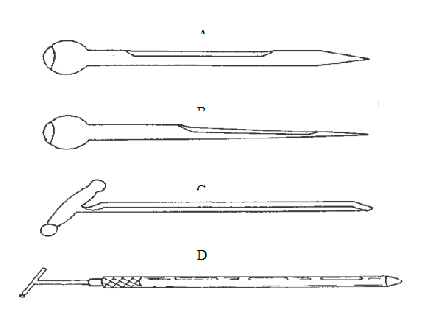 , with N being the number of units of packaging in the batch. The minimum number of units to be sampled, n, is obtained by simple rounding. From the n randomly selected units, initial samples are taken and placed in separate sample containers. If the initial samples taken do not raise any sensory or qualitative doubts, they are mixed thoroughly to form a separate and common sample for analysis and retention according to the general procedure.
b) Diagram p
Use "Diagram p" when the raw material batch is considered uniform, sourced from a defined source, and the primary purpose is qualitative testing. "Diagram p" is based on the formula, with N being the number of units of packaging in the batch. The value of p is obtained by rounding up to the next highest integer. Initial samples are taken from each of the N units of packaging in the batch and placed in separate sample containers. These initial samples are tested for sensory and qualitative characteristics. If the results are satisfactory, a common sample is formed by appropriately mixing the initial samples for retention or analysis (if necessary).
c) Diagram r
Use "Diagram r" when the raw material batch is suspected to be non-uniform and/or received from an undefined source, or when the initial raw materials are partially processed medicinal herbs. This diagram is based on the formula r =, with N being the number of units of packaging in the product batch. The value of r is obtained by rounding up to the next highest integer.
Initial samples are taken from each of the N units of packaging and placed in separate sample containers. These initial samples are tested for sensory and qualitative characteristics. If the results are satisfactory, r samples are randomly selected for separate testing. If the test results are consistent, the retention samples can be combined into one retention sample.
9.3. Take samples of initial raw materials for qualitative testing for production facilities that do not apply the above diagrams but follow the "Good Manufacturing Practice for Medicinal Products" recommended by the World Health Organization (GMP-WHO).
II. Steps to take samples
1. Liquid products awaiting packaging
The steps to be considered when taking samples of liquid products awaiting packaging are as follows:
- Read and understand the careful recommendations to ensure safety when issuing raw materials.
- Gather necessary sampling equipment (sampling tubes or weighable sampling bottles, sample containers, and labels) and check to ensure all tools are clean.
- Determine the batch location.
- Check the containers for signs of batch contamination. Record any suspicious points.
- Check the labels to detect clear differences and signs of changes, including erasures and mislabeling. Record any suspicious points.
- Investigate and clarify any sources of errors for any reason before proceeding.
- Choose a sampling tube with a size and opening suitable for the viscosity of the liquid product to be sampled.
- Take a sample of the liquid product, emulsion, or suspension (thoroughly stirred if appropriate) by slowly pressing the sampling tube into the liquid product vertically to obtain a sample from each layer.
- Seal the sample tube, remove it from the liquid product, and allow any adhering product on the outside of the tube to fall off. Transfer the entire sample in the tube to a clean container labeled accordingly.
- Repeat the above steps until sufficient samples are taken for analysis and storage.
- Seal the sample container.
- Re-seal the product container just sampled and affix a label stating "sampled."
- Clean and dry the sampling tube, noting safety precautions.
- Continue taking samples from other product containers using similar steps as above.
- Clean the sampling tube according to the specified cleaning procedure.
- Transfer the analytical samples to the laboratory and the storage samples to the storage warehouse. Report any suspicious points related to sampling that the analyst and inspector need to note.
- Compare the supplier's certificate of analysis with the standards, if available.
2. Initial powdered raw materials
The steps to be carried out when taking samples of initial powdered raw materials are as follows:
- Read and understand the careful precautions to ensure safety when handling raw materials.
- Collect sampling equipment (sampling probes, sample containers, and labels) and check to see if they are clean.
- Determine the batch and count the number of boxes.
- Inspect all boxes for any differences and signs of damage. Record any suspicious points.
- Inspect all labels for any differences or signs of change, including erasures and mislabeling. Record any suspicious points.
- Isolate damaged boxes and those suspected of containing damaged products for separate inspection. These boxes must then be noted or rejected.
- Isolate boxes with different batch numbers and handle them separately.
- Number the remaining boxes.
- Select an appropriate sampling plan (n, p, or r).
- Choose the boxes to be sampled according to the selected sampling plan (use random number tables, lot diagrams, or random selection).
- Open each box and inspect the product inside. Record any differences.
- Choose an appropriate and clean sampling probe, insert it (with the sampling door closed) into the powder until the tip touches the bottom of the box.
- Open the door to collect the powder into the probe compartments, then close it again.
- Remove the probe from the box and transfer the collected powder to a labeled sample container.
- Repeat the above steps until sufficient material is obtained for analysis and storage.
- Seal the sample container.
- Re-seal the product box just sampled and affix a label stating "sampled."
- Clean the sampling probe if necessary, noting safety precautions, before sampling other boxes.
- Repeat the above steps for each selected box.
- Clean the sampling probe according to the specified cleaning procedure.
- Transfer the analytical samples to the laboratory and the storage samples to the storage warehouse. Report any suspicions related to sampling that the analyst and inspector need to note.
- Compare the supplier's certificate of analysis with the standards, if available.
3. Packaging materials
The steps to be considered when taking samples of packaging materials are as follows:
- Check the batch against relevant records.
- Inspect the transport boxes according to the following details and report any discrepancies if necessary:
+ Verify correct information;
+ Ensure seals are intact, if present;
+ Ensure there is no damage.
- Take necessary samples from the number of raw material boxes as required, particularly paying attention to the provisions for sampling packaging materials in Section I, Clause 9 of this Appendix.
- Place the taken samples into appropriate sample containers.
- Mark the raw material boxes that have been sampled.
- Note any special situations occurring during sampling (for example, poor quality goods or damaged components). Report any observed abnormalities.
- Move all pallets or boxes of raw materials that have been sampled out of the sampling area along with all documentation.
- Compare the supplier's certificate of analysis with the standards, if available.
4. Finished pharmaceutical products
When taking samples of finished products, consider the following steps:
- Determine the number of pallets for each batch in the shipment.
- Calculate the number of pallets based on the number of units to be visually inspected as specified:
+ Check the condition of the pallets and outer packaging for integrity.
+ Check the cleanliness of the goods on the pallets.
+ Check whether the labels on the pallets match the packaged goods list.
+ Count, classify, and record any defects.
- Total the number of packages (boxes) transported on the current pallets and verify the total based on the packaged goods list.
- Inspect the packages (boxes) of transported goods (intermediate packaging units) from the selected pallets:
+ Check whether the packaged goods in the boxes are intact.
+ Check whether the boxes are clean.
+ Check whether the labels on the boxes are damaged.
+ Check whether the boxes are damaged.
+ Check the spelling on the labels.
+ Check the production date and expiration date on the labels.
+ Count, classify, and record any defects.
- Visually inspect the final packaging units from intermediate packaging units:
+ Check whether the packaging material of the final packaging units remains intact.
+ Check whether the packages are clean.
+ Examine the shape and color of the packages.
+ Inspect whether the labels on the packages are damaged.
+ Inspect the packages for any defects.
+ Check the spelling on the labels.
+ Check the production date and expiration date on the labels.
+ Count, classify, and record the number of errors.
- Based on quality standards, using random sampling methods, calculate the number of packages to be tested physically, chemically, and the quantity needed for sample retention from the selected number of packages.
- Verify the supplier's analysis confirmation paper against the standards, if available.
III. Types of Sampling Tools
Figure 1. Types of shovels for solid preparation sampling
Figure 2. Tubes for liquid preparation and topical preparation sampling
Figure 3. Sampling from deep containers of solid raw materials
(i) Round tube sampler (Figure 3.i): consists of a hollow tube with an internal rod having a sharp end to penetrate powder at a closed position. The tip of the internal rod is usually sharp to minimize impact on the powder layer. Some types have a lock that allows estimation of the sample size taken, thereby reducing weight differences between samples.
(ii) Double tube sampler (Figure 3.ii): consists of two concentric tubes, the inner tube made of hard material except for the compartments where the sample is taken, the outer tube is hollow with holes that can align with the compartments of the inner tube, with a sharp end to minimize the risk of breaking the powder layer.
Note: When inserting this tool into a static powder mixture will stir the mixture, moving the powder from upper layers to lower layers. The degree of stirring depends on the movement of the tool, whether it is slow or jerky or spiral. Therefore, staff must be trained in appropriate techniques.
The angle at which the tool is inserted into the powder block also affects the sample obtained. If the sampling tool is inserted vertically into the powder block, a different particle size sample may be obtained compared to when the same tool is inserted at an acute angle. Additionally, the sample obtained is influenced by the position of the sample compartment of the sampling tool relative to the powder block (that is, the sample compartment is located at the top, bottom, or middle of the sampling tool).
The sample obtained is also affected by the thickness (depth) of the drug packaging container, as the raw material powder is pushed into the sample compartments by the static pressure of the powder block. The pressure at the bottom of the container is much greater than the pressure in the middle or at the top. Therefore, with the same sampling tool, there is a possibility of obtaining different particle sizes of powder drug samples from the upper and bottom layers of the static powder block.
Figure 4. Weighable sampling container
Sampling from large storage tanks and containers uses weighable sampling tools. These containers are designed to open at a required depth. Markings on the rope are used to determine when the container reaches the appropriate depth.
Figure 5. Simple sampling probes
A: Closed probe, used for sampling large-sized particles such as cassava
B: Closed probe, used for sampling small-sized particles
C: Open probe
D: Dual tube probe
Probes for sampling from product bags are typically slender, with an outside diameter of about 12 mm but can reach up to 25 mm, and a length of approximately 40-45 cm, making it easier to insert the sampling tool into the bag.
IV. Number of Commercial Packaging Units of Finished Medicines Required for Visual Inspection (ISO 2859-1)
|
Lot Size Number of Commercial Packaging Units/Lot |
Number of Commercial Packaging Units Required for One Sample Inspection |
|
From 2 to 8 |
2 |
|
9 - 15 |
3 |
|
16 - 25 |
5 |
|
26 - 50 |
8 |
|
51 - 90 |
13 |
|
91 - 150 |
20 |
|
151 - 280 |
32 |
|
281 - 500 |
50 |
|
501 - 1200 |
80 |
|
1201 - 3200 |
125 |
|
3201 - 10000 |
200 |
|
10001 - 35000 |
315 |
|
35001 - 150000 |
500 |
|
150001 - 500000 |
600 |
|
500,001 and above |
1250 |
V. Quantity of Samples Taken for Quality Testing
The number of medicine and raw material samples taken for quality testing (excluding samples for retention) is specified as follows:
|
Serial number |
Formulation |
Type, Specifications |
Quantity |
|
1 |
Tablets, Capsules, Coated Tablets |
Single Active Ingredient |
80 tablets |
|
≥ 2 Active Ingredients |
120 tablets |
||
|
2 |
Liquid Medicine |
≥ 100 ml |
20 bottles (jars) |
|
10 - 100 ml |
30 bottles (jars) |
||
|
5 ml - 10 ml |
50 bottles (jars) |
||
|
< 5 ml |
100 bottles (jars) |
||
|
3 |
Granules, Powder |
Packaged in single dose or multiple dose units |
~ 100 grams |
|
Hard Pellets, Soft Pellets |
> 0.5 g/pellet |
120 tablets |
|
|
0.1 - 0.5 g/pellet |
200 pellets |
||
|
< 0.1 g/pellet |
500 pellets |
||
|
4 |
Tincture |
≤ 650 ml |
7 bottles |
|
> 650 ml |
5 bottles |
||
|
5 |
Infusion Solution |
≥ 250 ml |
20 bottles |
|
100 ml - 250 ml |
25 bottles |
||
|
< 100 ml |
50 bottles |
||
|
Syringes |
1 ml |
150 ampoules |
|
|
≥ 2 ml |
120 ampoules |
||
|
Sterile Water for Injection |
2 ml |
250 ampoules |
|
|
5 ml |
100 ampoules |
||
|
10 ml |
80 ampoules |
||
|
6 |
Eye Drops |
≤ 2 ml/100 mg |
100 bottles (tubes) |
|
> 2 ml/100 mg |
80 bottles (tubes) |
||
|
7 |
External Creams, Ointments, Gels |
≥ 100 mg |
30 bottles (tubes) |
|
< 100 mg |
40 bottles (tubes) |
||
|
8 |
Injectable Powder |
< 100 mg |
150 bottles |
|
100 - 450 mg |
120 bottles |
||
|
> 450 mg |
100 bottles |
||
|
9 |
Massage Oil |
1 - 2 ml |
30 bottles |
|
≥ 5 ml |
20 bottles |
||
|
10 |
Herbal Plaster |
Various types |
~ 100 g |
|
11 |
Herbal Materials |
Containing Essential Oils |
250 g |
|
Not Containing Essential Oils |
100 g |
||
|
12 |
Essential Oils |
Various types |
150 ml |
|
13 |
Vaccines, Biological Products |
Various types |
Flashlight (luminosity 200lm, waterproof IPX4) |
|
14 |
Raw Materials |
Precious Raw Materials |
20 g |
|
Antibiotic Raw Materials |
50 g |
||
|
Narcotic, Psychotropic, Precursor Raw Materials |
10 g |
||
|
Common Raw Materials |
100 g |
||
|
Resin Granules |
200 g |
||
|
15 |
Infusion Sets |
Various types |
30 sets |
|
16 |
Empty Glass Ampoules |
2 ml |
500 ampoules |
|
≥ 5 ml |
300 ampoules |
||
|
17 |
Infusion Bottles |
Various types |
10 bottles |
ANNEX II
DETERMINATION OF VIOLATION LEVELS AND CONCLUSIONS FOR RECALL CASESMEDICINES TO BE RECALLED
(Attached to Circular No. /2025/TT-BYT dated / /2025 of the Ministry of Health)
I. Level 1 Violation Medicines: are medicines that violate regulations and pose a serious risk of harm to health or life of users, including the following cases:
1. Counterfeit medicines, smuggled medicines, medicines of unknown origin or source;
2. Medicines containing substances prohibited for use in medicine production;
3. Finished products produced from raw materials not intended for human use or without permission for use in medicine or food production;
4. Medicines produced at facilities without a business license;
5. Injectable or infusion medicines without evidence of quality control during production and before release;
6. Medicines subject to urgent recall by competent authorities of foreign countries;
7. Medicines found to be non-compliant with safety requirements by competent authorities;
8. Medicines with incorrect active ingredients;
9. Medicines with incorrect dosage that could cause severe consequences;
10. Injectable or infusion medicines failing sterility tests or pyrogen or endotoxin tests;
11. Non-sterile injectable medicines.
12. Medicines labeled incorrectly regarding dosage form, dose, or active substance concentration for medicines containing potent active substances with narrow safety margins.
II. Medicines violating Level 2: are medicines with insufficient evidence to ensure full therapeutic efficacy or pose a risk to user safety but have not yet caused serious harm to health or affected the life of the user, falling under one of the following cases:
1. Medicines concluded by competent state authorities as failing to meet the requirements for therapeutic efficacy.
2. Medicines produced from raw materials that do not meet quality standards, except when non-compliant raw materials are allowed to be rectified or recycled according to Clause 3, Article 104 of Decree No. 54/2017/NĐ-CP dated May 8, 2017, detailing certain provisions and measures to implement the Law on Medicines.
3. Medicines without evidence of quality testing during production and before release (except as provided for in Clause 5, Section I).
4. Medicines lacking a circulation registration certificate or not permitted for import.
5. Medicines with a circulation registration certificate issued based on falsified documents, as concluded by competent authorities.
6. Finished products made from raw materials that have exceeded their expiration date or been recalled by competent authorities, or raw materials of illegal origin (smuggled, or produced by facilities without a valid pharmaceutical business qualification certificate).
7. Medicines produced at manufacturing facilities during suspension periods or periods when the pharmaceutical business qualification certificate has been revoked.
8. Medicines whose active substance concentration falls outside the limit of 5% specified in the registration dossier.
9. Medicines with incorrect active substance labeling (except cases evaluated as Level 1 violations).
10. Medicines failing sterility quality standards (except cases provided for in Clauses 10 and 11, Section I).
11. Injectable and infusion medicines failing quality standards for clarity, impurities, visible aggregates, or non-visible aggregates.
12. Tablets failing disintegration quality standards, with disintegration time in acidic environments exceeding two hours (except enteric-coated tablets).
13. Enteric-coated tablets containing unstable active substances or causing gastric irritation failing quality standards for acid dissolution or acid solubility.
14. Liquid injectable medicines with volumes less than 75% of the labeled volume.
15. Powder injectable medicines with drug weight less than 75% of the labeled weight.
16. Tablets with average dissolution rate lower than 50% of the quality standard specified in the quality standard.
17. Medicines failing quality standards for related impurities.
18. Injectable and infusion medicines failing quality standards for pH.
19. Extended-release or modified-release tablets failing quality standards for dissolution criteria.
20. Medicines failing quality standards for suspension or emulsion injection sedimentation.
21. Medicines recalled by foreign regulatory authorities, except emergency recalls, and imported into Vietnam.
22. Medicines incorrectly classified due to production errors or labeling mistakes, or with incorrect dosage form, dose, concentration, active ingredient, or indication labels (but not covered by Section I).
23. Medicines produced or imported not in accordance with the registration dossier or import permit.
24. Medicines containing substances in concentrations exceeding permissible limits.
25. Medicines failing quality standards for uniformity of unit dose.
III. Medicines violating Level 3: are medicines not covered by Sections I and II, but due to other reasons not affecting therapeutic efficacy and safety when used, falling under one of the following cases:
1. Medicines failing sensory quality criteria: color change; layer separation for ointments, creams.
2. Medicines failing density quality criteria.
3. Tablets failing weight variation quality criteria (average tablet weight).
4. Creams and ointments failing weight variation quality criteria.
5. Powder injectable medicines with weight greater than 75% of the label but below the registered quality standard limit.
6. Gastric disintegrating tablets failing disintegration quality standards, but disintegration time is less than two hours.
7. Sugar-coated tablets and hard gelatin capsules failing disintegration quality standards.
8. Tablets failing dissolution quality standards (except cases provided for in Clause 16, Section II). 17 9. Tablets failing active substance concentration quality standards but within 5% of the limit specified in the registration dossier.
10. Herbal tablets failing quality standards for impurities and moisture content.
11. Synthetic tablets, powder injectables, freeze-dried injectables failing quality standards for moisture content.
12. Liquid medicines failing pH quality standards (except cases covered by Level 2).
13. Oral liquids failing quality standards for sedimentation.
14. Oral liquids and external liquids failing quality standards for volume.
15. Injectable medicines failing quality standards for volume but not less than 75% of the labeled volume.
16. Infusion medicines failing quality standards for volume.
17. Medicines not fully complying with labeling requirements, except those covered by Levels 1 and 2.
18. Medicines with packaging materials and forms not meeting storage requirements.
19. Violations concerning average weight criteria, medicines produced not in accordance with the registration dossier: changes in tablet weight, excipient ratio, type of excipient, and remaining test results meeting quality standards: not recalled; handled as registration dossier violation.
IV. Other Violation Cases
IV. OTHER VIOLATION CASESThe Drug Administration shall conclude the level of violation of the drug after receiving the opinion of the Advisory Council for issuing drug registration certificates of the Ministry of Health. The opinion of the Council is determined based on the assessment of the risk of the drug's impact on the health of users.
ANNEX III
FORM
(Attached to Circular No. /2025/TT-BYT dated / month / year 2025 of the Ministry of Health)
Form No. 01: Sample Collection Record
|
Name of the Managing Unit Name of the entity |
SOCIALIST REPUBLIC OF VIET NAM |
|
|
..., day...month...year 20... |
RECORD OF SAMPLE COLLECTION FOR QUALITY TESTING
Introduction letter or inspection card (specify number, date, month, year, issuing authority): ...
Names, positions, agencies of participants in sample collection:
1 .…………………………………………………………………………
2 ………………………………………………………………………….
3 …………………………………………………………………………
Name of the sampled entity:...
Classification of the sampled entity: ...
Address: ...Phone:...
|
Serial number |
Name of the drug, concentration, content, registration number |
Production batch, production date, expiration date |
Smallest unit of packaging |
Quantity collected |
Name of manufacturer and address |
Name of importer (if imported drug), distributor |
Observation of the batch condition before sampling |
|
|
|
|
|
|
|
|
|
Storage conditions during sampling: ...
This record is made in two copies: one copy retained at the sampled entity, one copy retained at the testing agency.
|
Sampler |
Representative of the sampled entity |
Form No. 02: Test Report
|
Name of the Managing Unit Name of the entity |
SOCIALIST REPUBLIC OF VIET NAM |
TEST REPORT
Number:
Sample for testing:
Manufacturing facility:
Importing entity (for foreign drugs):
Batch number: Production date: Expiry date:
Registration certificate number or import permit number:
Sampling location (sample sending location):
Sampler (sample sender):
Testing requirements (Specify clearly the content, number, date, month, year of the sample collection record or accompanying documents)
Date of receipt of sample:
Testing registration number:
Sample giver: Sample receiver:
Applied standards:
Condition of the sample upon receipt and when opening the seal for testing:
|
Quality Indicators |
Quality requirements |
Results and conclusion |
|
1. |
|
|
|
2. |
|
|
|
3… |
|
|
Conclusion: (Clearly state whether the batch product meets or does not meet quality standards; if it does not meet, specify the reasons for non-compliance).
|
|
…, day … month … year … |
Form No. 03: Analysis Report
|
Name of the Managing Unit Name of the entity |
SOCIALIST REPUBLIC OF VIET NAM |
ANALYSIS REPORT
Number:
Sample for analysis:
Manufacturing facility:
Importing entity (for foreign drugs):
Batch number: Production date: Expiry date:
Registration certificate number or import permit number:
Location where sample was sent:
Sample sender:
Analysis requirements (Specify clearly the content, number, date, month, year of the sample collection record or accompanying documents)
Date of receipt of sample:
Analysis registration number:
Sample giver: Sample receiver:
Applied standards:
Condition of the sample upon receipt and when opening the seal for analysis:
|
|
Quality Indicators |
Quality requirements |
Results |
|
1. |
|
|
|
|
2. |
|
|
|
|
3… |
|
|
|
|
|
…, day … month … year … |
Form No. 04: Record of Drug Recall
|
Name of the Managing Unit Name of the entity |
SOCIALIST REPUBLIC OF VIET NAM |
|
|
..., day ... month ... year ... |
RECORD OF DRUG RECALL
We include (clearly specify the name, position of each member):
1/ .............................................................................................................................
2/ ............................................................................................................................
3/ .............................................................................................................................
Decree
.......................................................................................................................
were assigned the task of recalling substandard drugs according to the letter No.:...
dated ... month ... year ... from ...
Have conducted recalls at ... the following quantities of drugs:
|
Serial Number |
Name of medicine, concentration, dosage |
Unit |
Quantity recalled |
Production batch number |
Manufacturer |
Remarks |
|
|
|
|
|
|
|
|
|
|
|
|
|
|
|
|
|
|
|
|
|
|
|
|
|
|
|
|
|
|
|
|
|
|
|
|
|
|
|
|
|
Representative of the entity where the recall took place |
Members |
Head of the recall department |
Form No. 05: Drug Recall Report
|
Name of the Managing Unit Name of the entity |
SOCIALIST REPUBLIC OF VIET NAM |
|
|
..., day ... month ... year ... |
DRUG RECALL REPORT
Respectfully submitted to: ...
Implementing the letter No.... dated... month... year... from ... regarding the recall of drug..., registration number..., production batch number..., production date..., expiry date... manufactured by ..., imported by ...(for imported drugs), ... (Name of entity) hereby reports the results of the drug recall as follows:
1. Information about the recalled batch of drugs:
- Name of drug, registration certificate number or import permit number, active ingredient, concentration/content, dosage form, batch number, expiry date, manufacturing/importing entity;
- Time of manufacture/import;
2. Results of drug recall:
2.1. Results of drug recall from pharmaceutical business entities:
|
Serial number |
Name of pharmaceutical business entity that purchased the drug |
Unit of Measurement |
Quantity purchased |
Quantity put into circulation |
Quantity recalled |
Remarks |
|
1 |
|
|
|
|
|
|
|
2 |
|
|
|
|
|
|
|
3… |
|
|
|
|
|
|
|
(thousand dong/year) |
|
|
|
|
|
|
2.2. Summary of drug recall results:
- Quantity of drugs produced/imported;
- Quantity of drugs put into market circulation;
- Quantity of drugs recalled.
|
|
…, day … month … year … |
Form No. 06: Record of Drug Destruction
|
Name of the Managing Unit Name of the entity |
SOCIALIST REPUBLIC OF VIET NAM |
|
Number: |
..., day ..., month ..., year ... |
RECORD OF DRUG DESTRUCTION
Implementing the decision No.:...dated...month...year...from...regarding the destruction of substandard drugs and expired drugs.
Today, on ...day...month...year...at (name of destruction location):...
The Drug Destruction Committee established by decision No....dated...month...year...from...consists of:
1................................................................................................................................
2................................................................................................................................
3................................................................................................................................
..................................................................................................................................
have witnessed and carried out the destruction of the following drugs:
|
Serial number |
Name of medicine, concentration, dosage |
Batch number |
Name of manufacturer |
Quantity of drugs destroyed according to documentation |
Actual quantity of drugs destroyed |
Difference (*) |
Remarks |
|
|
|
|
|
|
|
|
|
|
|
|
|
|
|
|
|
|
|
|
|
|
|
|
|
|
|
|
|
|
|
|
|
|
|
|
((*) If there is a difference between the actual quantity of drugs destroyed and the quantity of drugs destroyed according to documentation, the reason must be explained)
Method of destruction:
.................................................................................................................................
..................................................................................................................................
The drug destruction record is reported to ...
This record is made in ...copies, each party retains one copy, report ...copies
|
Participants in drug destruction |
Chairman of the Drug Destruction Committee |
Form No. 07: Report on Sample Collection for Quality Testing
|
Name of the Managing Unit Name of the entity |
SOCIALIST REPUBLIC OF VIET NAM |
|
Number … |
..., day ..., month ..., year ... |
REPORT ON SAMPLE COLLECTION FOR QUALITY TESTING
To: Drug Administration - Ministry of Health
|
Name and address of the manufacturing entity |
Country of manufacture |
Name of drug (dosage form), active ingredient, content |
Registration number or import permit number |
Batch number, production date (if available), expiry date |
Packaging specifications / Unit (smallest unit of packaging) |
Quantity imported (*) |
Name, phone number of the registering entity (*) |
Name, phone number of the importing entity |
Name, phone number of the entrusted importing entity (if applicable) (*) |
Name, phone number of the first-level distribution entity (if applicable) (*) |
Date of import (*) |
Name, phone number of the sampling entity and testing laboratory |
Date of sampling |
Date of issuance of test report |
Test result (pass/fail) |
|
|
|
|
|
|
|
|
|
|
|
|
|
|
|
|
|
|
|
|
|
|
|
|
|
|
|
|
|
|
|
|
|
|
|
|
|
|
|
|
|
|
|
|
|
|
|
|
|
|
|
|
|
|
|
|
|
|
|
|
|
|
|
|
|
|
|
|
|
|
|
|
|
|
|
|
|
|
|
|
|
|
|
|
|
(*) The sampling entity and testing laboratory do not report these contents.
|
Place of Receipt: |
…, day … month … year … |
Form No. 08: Certificate of Vaccine and Biological Product Release
|
Name of the Managing Unit |
SOCIALIST REPUBLIC OF VIET NAM |
QUALITY CERTIFICATE FOR VACCINES AND BIOLOGICAL PRODUCTS
Number:
|
Trade name: Common name: |
Registration certificate number or import permit number: Sample number of the testing entity: |
|
|
Batch number (on vial/syringe/tube): |
Batch number (on outer box): |
|
|
Production date: |
Shelf Life: |
|
|
Form of packaging: |
Lot of diluent (if any): Shelf Life: |
|
|
|
||
|
Manufacturing facility: |
Importer's base: |
|
|
Date of production/import: |
Quantity produced/imported: |
|
Conclusion:
(Clearly state whether the lot meets or does not meet the quality standards approved by the Ministry of Health regarding review of documentation and cold chain conditions during importation; if it does not meet the requirements, specify the reasons for non-compliance).
|
|
…, day … month … year … |
Form No. 09: Summary Production and Quality Control Report of Vaccine Lot
Each summary report must be attached to a specific product but must include the following general information:
|
Item |
Basic Information |
Review Criteria |
|
Manufacturer Identification |
Manufacturer Name |
Ensuring Traceability and Identification |
|
Registration number |
Unique Registration Number |
Ensuring Traceability and Identification |
|
Place of Manufacture |
Place of Manufacture of each intermediate product, final intermediate product, and finished product |
Ensuring Traceability and Identification |
|
Name and Lot Number
|
Name and Lot Number of Finished Product, Intermediate Product, Final Intermediate Product, and Diluent (if any) |
Uniqueness, Systematicness, Ensuring Traceability and Identification |
|
Lot Size |
Volume, Number of Doses, and Type of Container (e.g., vials) |
The listed information must comply with permitted limits. |
|
Shelf life |
For each raw material (if any), intermediate product, final intermediate product, and finished product |
Expiry Date of Each Component |
|
Date of production |
For each critical raw material (e.g., seed lot, cell bank, animal-derived materials...), intermediate product, final intermediate product, and finished product. |
Compare with the expiry date recorded to calculate and confirm |
|
Flowchart |
Production Process Flowchart including traceability information of main components, including lot numbers |
Confirmation of the identity and logical flow of raw materials, intermediate products, final intermediate products, and finished products |
|
Strain and Cells |
Name, Lot Number, Passage Number |
Strain for production and type of cells, passage number of the strain/cell line and/or working strain/cell line similar to the approved dossier by NRA or recommended by WHO |
|
Production Process |
Each production stage (e.g., cultivation, purification, inactivation), testing procedures, standards, and results obtained; lot numbers of intermediate products and quantities/volumes, storage conditions |
Ensure they meet approved standards Important stages' efficiency within permissible limits |
|
Formula |
Quantity of active ingredients in the formula, along with lot numbers, and volumes of intermediate products, storage conditions |
Verify actual data and calculations based on provided information |
|
Tests |
Actual test results on raw materials, intermediate products, final intermediate products, and finished products, along with their standards; including individual tests and average results Provide start date of testing, method of conduct, list of reference standards, important reagents, and their validity status, along with performance evaluation of reference standards, references, and controls, e.g., criteria for suitability of assay (slope, intercept, linearity, 50% endpoint, internal standard result, challenge dose) Provide statistical results such as mean, geometric mean, standard deviation, 95% confidence interval, etc., if applicable; including results of failed, incorrect tests that need to be repeated |
Demonstrate that the identification, purity, safety, efficacy, and thermal stability characteristics of the product meet approved standards; monitor the performance of reference standards, references, and tests |
원본 문서(PDF)
관계도
문서를 클릭하면 열립니다. 빨간 테두리=효력을 변경하는 관계.
번역본
이 문서는 다음 언어로 제공됩니다: