
This standard sets out the quality requirements for state reserve rice and technical requirements during the storage process. It includes criteria for rice quality, methods for quality inspection, procedures for receiving, storing, and releasing rice, as well as the responsibilities of relevant organizations and individuals.
Đối tượng áp dụng
This standard applies to the supply, delivery, and storage of state reserve rice at units directly managed under the State Reserve General Department.
Các điểm cốt lõi
- The quality of rice must meet standards regarding the percentage of damaged grains, moisture content, mold, and pest infestation.
- Quality checks and records of changes in rice quality must be conducted regularly during storage, with samples taken every three months to determine quality indicators.
- In case of quality issues or safety hazards, the custodian and the direct management department must identify the cause and take measures to ensure warehouse safety.
- The State Reserve General Department is responsible for guiding and supervising the implementation of this standard.
- If new regulations are issued, they shall be followed according to the new documents.
🌐 Tác động xã hội từ văn bản này
- Ensures the quality and safety of strategic state reserve rice, safeguarding national security and social stability.
- Standardizes the rice storage management process, improving work efficiency.
- Promotes the development and application of related technologies, enhancing rice storage technology levels.
- Clarifies the responsibilities of all parties, facilitating accountability and improvement of work.
❓ Câu hỏi thường gặp
Why was this standard established?
To ensure the quality and safety of strategic state reserve rice, standardize the rice storage management process, improve work efficiency, and promote the development and application of related technologies.
Which entities and individuals does this standard apply to?
It applies to the State Reserve General Department and its subordinate direct management departments, custodians, and other relevant personnel responsible for state rice reserves.
What should be done if problems arise during rice storage?
The cause must be identified and measures taken to ensure warehouse safety; if necessary, report to higher authorities for solutions.
Toàn văn
|
MINISTRY OF FINANCE |
SOCIALIST REPUBLIC OF VIET NAM |
|
Number: 53/2014/TT-BTC |
Hanoi, April 24, 2014 |
CIRCULAR
REGARDING NATIONAL TECHNICAL STANDARDS
FOR PADDY FOR STATE RESERVE
Pursuant to the Law on Construction number 50/2014/QH13 amended and supplemented by Law number 03/2016/QH14, Law number 35/2018/QH14, Law number 40/2019/QH14 and Law number 62/2020/QH14;
Pursuant to Law on State Reserve No. 22/2012/QH13 dated November 20, 2012;
Pursuant to Decree No. 127/2007/NĐ-CP dated August 1, 2007 of the Government detailing implementation of certain provisions of the Law on Standards and Technical Regulations;
Pursuant to Decree No. 94/2013/NĐ-CP dated August 21, 2013 of the Government detailing implementation of the Law on State Reserve;
Pursuant to Decree No. 215/2013/NĐ-CP dated December 23, 2013 of the Government stipulating the functions, tasks, powers, and organizational structure of the Ministry of Finance;
At the request of the Director General of the State Reserve Administration,
The Minister of Finance hereby issues this Circular regarding the National Technical Standards for paddy for state reserve.
Article 1. Attached herewith are the National Technical Standards for paddy for state reserve.
Article 2. This Circular takes effect from November 3, 2014 and replaces Circular No. 204/2011/TT-BTC dated December 30, 2011 promulgating the National Technical Standards on national reserves for paddy.
Article 3. The Director of the State Reserve General Department, heads of agencies, organizations, and individuals related to the management, import, export, and storage of paddy for state reserve shall be responsible for implementing this Circular.
During the implementation, if there are any difficulties, agencies, organizations, and individuals shall promptly report to the Ministry of Finance for study, amendment, and supplementation.
|
Place of Receipt: |
DEPUTY MINISTER |
QCVN 14: 2014/BTC
AMENDMENT 1:2025 QCVN 07:2023/BXD
FOR PADDY FOR STATE RESERVE
National technical regulation on paddy for state reserve
Foreword
QCVN 14: 2014/BTC replaces QCVN 14: 2011/BTC;
QCVN 14: 2014/BTC is prepared by the drafting team of the National Technical Standards for paddy for state reserve and reviewed by the State Reserve General Department and issued together with Circular No. 53/2014/TT-BTC dated April 24, 2014 of the Ministry of Finance.
AMENDMENT 1:2025 QCVN 07:2023/BXD
FOR PADDY FOR STATE RESERVE
National technical regulation on paddy for state reserve
Chapter 1. GENERAL PROVISIONS
1.1. Scope of Application
This standard specifies technical requirements, storage procedures, and management practices for paddy for state reserve.
1.2. Applicability
This standard applies to agencies, organizations, and individuals involved in managing paddy for state reserve.
1.3. Definitions
In this regulation, the following terms are understood as follows:
1.3.1. Paddy is the grain of the species Oryza sativa Oryza sativa
1.3.2. that has not been de-husked. Fresh paddy
is paddy harvested within a period before the harvest time of the next consecutive crop. 1.3.3. Very long grain
1.3.4. is a grain of paddy with a length of the flattened rice kernel greater than 7 mm. Long grain
1.3.5. is a grain of paddy with a length of the flattened rice kernel from 6 mm to 7 mm. Short grain
1.3.6. Policy for educational institutions is a grain of paddy with a length of the flattened rice kernel less than 6 mm.
1.3.7. Brown rice is the remaining part of the paddy after removing all husks.
1.3.8. Yellow grain is a grain of rice with a portion or the entire endosperm changed to a distinct yellow color.
1.3.9. Damaged grain is a grain of rice whose quality has significantly deteriorated due to moisture, mold, insect damage, and/or other causes.
1.3.10. Greenish immature grain is a grain of rice from unripe or incompletely developed rice grains.
1.3.11. Imperfect grain includes damaged grain (1.3.9) and greenish immature grain (1.3.10).
1.3.12. White chalky grain is a grain of rice (except glutinous rice) with more than three-quarters of its surface area having a milky white color like chalk.
1.3.13. Shrunken grain is a grain of paddy without a core or with an incomplete core of rice.
1.3.14. Mixed grain is grain of different varieties, sizes, and shapes from the required variety.
1.3.15. Impurities includes materials that are not paddy, including:
1.3.15.1. All material passing through a sieve with dimensions 1.60 mm x 20.00 mm.
1.3.15.2. Inorganic impurities include soil, sand, stone, gravel, metal fragments...
1.3.15.3. Organic impurities include shrunken grains, completely damaged grains, weeds, seeds of other crops, straw, trash, insect carcasses...
1.3.16. Moisture content of paddy is the amount of water and volatile substances in the paddy, expressed as a percentage by weight, determined according to the method specified in ISO 712:2009 Cereals and cereal products - Determination of moisture content - Routine reference (Grains and cereal products. Determination of moisture content - Reference method) by drying the sample at a temperature of 130 0°C to 133 0°C for a duration of (120 ± 5) minutes.
1.3.17. Batch of paddy is a quantity of paddy of uniform quality stored in a warehouse compartment or arranged in a batch as prescribed.
1.3.18. Method of storing loose paddy under low pressure conditions involves storing loose paddy sealed in Polyvinylchloride (PVC) bags and maintaining a water column height difference of 10 mm (minimum negative pressure of 98 Pa) throughout the storage period.
1.3.19. Method of storing bagged paddy under low pressure conditions involves storing paddy in bags arranged in batches; the entire batch is sealed in a Polyvinylchloride (PVC) bag and maintained at a water column height difference of 10 mm (minimum negative pressure of 98 Pa) throughout the storage period.
2. TECHNICAL REQUIREMENTS
2.1. Quality of paddy entering the warehouse
Paddy entering the state reserve warehouse must be fresh paddy. Depending on production circumstances and annual seasons, authorized persons decide the season and quality of paddy entering the warehouse:
2.1.1. Sensory requirements
- Color: The paddy should have a characteristic color of the variety.
- Odor: It should have a natural odor of fresh paddy, without any unusual smell.
- Condition: The grains should be plump, with husks not cracked or open.
2.1.2. Quality requirements
Paddy entering the state reserve warehouse must meet the quality requirements set out in Table 1.
Table 1: Quality criteria for paddy entering the state reserve warehouse
|
Index |
Quality |
|
1 |
2 |
|
1. Moisture content, % by weight, not exceeding For provinces in the Mekong Delta and Ho Chi Minh City |
14,0 15,5 |
|
2. Impurities, % by weight, not exceeding |
3,0 |
|
3. Imperfect grains, % by weight, not exceeding |
6,5 |
|
4. Yellow grains, % by weight, not exceeding |
0,5 |
|
5. White chalky grains, % by weight, not exceeding |
7,0 |
|
6. Mixed grains, % by weight, not exceeding |
10,0 |
2.1.3. Biological pests
Paddy entering the warehouse should not contain yeast, mold, live insects, or other visible pests.
2.2. Quality of paddy leaving the warehouse
2.2.1. Sensory criteria
- Color: The paddy should have a characteristic color of the variety.
- Odor: It should have a natural odor of paddy, without any unusual smell.
- Condition: The grains should be plump, with husks not cracked or open.
2.2.2. Quality criteria
The quality criteria for paddy leaving the warehouse are set out in Table 2.
Table 2: Quality criteria for paddy leaving the state reserve warehouse
|
Index |
Quality |
|
1 |
2 |
|
1. Moisture content, % by weight, not exceeding For provinces in the Mekong Delta and Ho Chi Minh City |
14,0 15,5 |
|
2. Impurities, % by weight, not exceeding |
5,0 |
|
3. Imperfect grains, % by weight, not exceeding |
10,0 |
|
4. Yellow grains, % by weight, not exceeding |
1,25 |
|
5. White chalky grains, % by weight, not exceeding |
10,0 |
|
6. Mixed grains, % by weight, not exceeding |
10,0 |
3. TESTING METHODS
3.1. Sampling
3.1.1. Sampling
According to TCVN 9027: 2011 (ISO 24333:2009) Grains and cereal products - Sampling.
Specifically, the sampling model applied to loose paddy storage compartments is as follows:
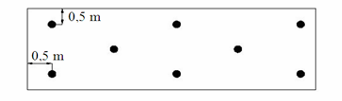
* Up to 150 tons: Minimum 8 sampling points, 0.5 meters away from walls and edges
* Over 150 tons to 400 tons: Minimum 11 sampling points, 0.5 meters away from walls and edges
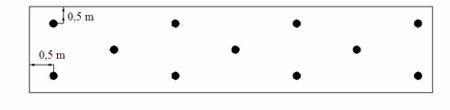
Sampling points must be at least 0.5 meters away from the lining layer and sampling depth should reach 2 meters. Use a sampling drill with a minimum of three sampling points. For large bulk samples, take an initial sample every 2 meters corresponding to the depth. Repeat the process if necessary. Mark and fix the positions of the sampling points throughout the storage period.
3.1.2. Sample Preparation
From the initial samples taken according to point 3.1.1, extract 3 kilograms of combined samples. Use a sample divider to take 1.5 kilograms for testing, and keep the remaining 1.5 kilograms as backup samples.
3.2. Testing Methods for Quality Indicators of Rice
Conduct the test sample determination according to Appendix I Diagram of Rice Analysis Procedure.
3.2.1. Sensory Evaluation
During sample preparation, observe the color, smell the rice, check for insects and other harmful organisms, and record all observations.
3.2.2. Moisture Content Determination
The contents of the moisture content determination method comply with ISO 712:2009 Cereals and cereal products - Determination of moisture content - Routine reference (Grains and grain products - Moisture content determination - Reference method) Alternatively, other methods that provide equivalent or higher accuracy can be used.
3.2.2.1. Equipment and Instruments
- Analytical balance, accurate to ± 0.001 g.
- Metal or glass weighing dish with a tight lid.
- Oven capable of controlling temperature at 130°C. 0°C to 133 0- Desiccator.
- Mill, with the following characteristics:
+ Made of non-hygroscopic material;
+ Easy to clean, with capacity suitable for the weighed sample;
+ Capable of rapid grinding, producing uniform particle size without significant heat generation and enclosed (no contact with external air);
+ Adjustable to allow particles to pass through a square sieve opening of 1.7 mm x 1.7 mm.
3.2.2.2. Procedure
Adjust the mill to obtain particles passing through a square sieve opening of 1.7 mm x 1.7 mm. Grind a small amount of sample and discard it. Then quickly grind about 5 grams of the test sample and weigh it accurately to 0.001 g. Place the ground sample in a weighing dish with a lid (the dish and lid have been previously dried to a constant weight and weighed accurately to 0.001 g). Open the lid of the weighing dish and place it in the oven (lid placed beside the oven). Dry the sample at 130°C for 120 minutes ± 5 minutes from when the oven reaches 130°C.
Quickly remove the weighing dish from the oven, cover it, and place it in the desiccator. After approximately 30 to 45 minutes, when the dish cools to room temperature, reweigh it accurately to 0.001 g. 0°C to 133 0The moisture content of the rice (W) expressed as a percentage is determined by the formula: 0°C to 133 0- Desiccator.
where W is the mass of the sample before drying, in grams.
Wd is the mass of the sample after drying, in grams.
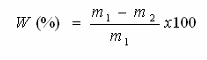
Where:
m1 The test result has permissible error.
m2 If the difference in moisture content results between two repetitions does not exceed 0.2%, the average result of the two repetitions is reported.
If the results of the two repetitions exceed this permissible error, the test must be repeated.
+ If the results of the two repetitions of the second test fall within the permissible error, the average result of these two repetitions is reported.
+ If the results of these two repetitions still exceed the permissible error, check whether the average result of the two tests falls within the permissible error (0.2%). If the average results of the two tests fall within the permissible error, report this average result; otherwise, recheck the equipment, procedures, and repeat the test from the beginning.
3.2.3. Determination of Impurities
3.2.3.1. Equipment
- Glass cup, dry and clean brush.
- Sieve with mesh size 1.60 mm x 20.00 mm with a bottom receiver and lid.
3.2.3.2. Procedure
From the portion of the test sample, weigh 500 grams of sample accurately to 0.01 g and pour it onto the sieve tray already installed with a sieve bottom and covered with a lid. Hand-sieve for 2 minutes. Pour the entire remaining portion on the sieve into a white porcelain plate. Pick up inorganic and organic impurities on the sieve and combine them with the remaining small impurities under the sieve bottom into a dry and clean glass cup known for its mass. Weigh the total mass of impurities accurately to 0.01 g.
3.2.3.3. Calculation and Reporting Results
The impurity content of the rice (Xtc), expressed as a percentage by mass, is determined by the formula:
where X is the mass of impurities, in grams;
m is the mass of the test sample, in grams.The test result is the arithmetic mean value of two parallel determinations on the same test sample when their difference does not exceed 1% of the mean value. Report the result to one decimal place.3.2.4. Determination of Foreign Matter
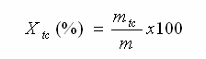
Wherein:
mThe test result is the arithmetic mean value of two parallel determinations on the same test sample when their difference does not exceed 1% of the mean value. Report the result to one decimal place. 3.2.4.1. Equipment
Laboratory mill.
3.2.4.2. Procedure
Weigh 200 grams of clean rice sample (after removing impurities) obtained according to 3.2.3, accurately to 0.01 g, and dehusk using a laboratory mill. Separate unhusked grains and regrind them. Then separate intact rice grains and weigh them accurately to 0.01 g. Separately pick out grains of different sizes and shapes from those in the main group and weigh them accurately to 0.01 g.
3.2.4.3. Reporting Results
Foreign matter (XLL) is expressed as a percentage by mass and calculated by the formula:
where Xg is the mass of intact rice grains, in grams;
Xd is the mass of different types of grains, in grams.
3.2.5. Classification of Rice
3.2.5.1. EquipmentGrain size measuring instrument, capable of measuring accurately to 0.01 mm.3.2.4. Determination of Foreign Matter
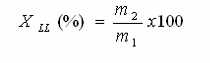
Where:
m1 3.2.5.2. Procedure
m2 Randomly select 100 intact rice grains obtained from 3.2.4. Use the grain size measuring instrument to measure the length of each grain in millimeters. Calculate the average length value to classify the rice according to the definition at 1.3.3, 1.3.4, 1.3.5.
3.2.4.2. Procedure
3.2.6. Determination of Broken, Incomplete, and Yellow Grains
3.2.6.1. Equipment
- Laboratory mill.
- White porcelain plate.
- Laboratory polishing equipment.
3.2.6.2. Procedure
3.2.6.1. Equipment
- Laboratory grinder.
- White yeast tray.
- Laboratory milling equipment.
3.2.6.2. Procedure
From Part 2 of the sample, weigh 100 grams of rice, accurate to 0.01 grams, spread the sample thinly on a white ceramic tray to remove inorganic impurities. Use a laboratory mill to separate the husk. Evenly distribute the milled rice sample on a white ceramic tray, pick out all incomplete grains and set them aside separately. Continue to polish the remaining milled rice at normal levels using a laboratory polishing machine, place it on a white ceramic tray for observation, and sort the grains into clean glass cups with known weights for each type of grain: silver powder grains, yellow grains. Weigh each type of grain separately with accuracy to 0.01 grams.
3.2.6.3. Calculation and Presentation of Results
The percentage of each type of grain is calculated according to the formula:
Incomplete grains X1. Yellow grains / Silver powder grains XANNEX I.A[31], expressed as a percentage of weight, determined by the formula:

Where:
m is the weight of the milled rice sample, in grams;
a1 is the weight of incomplete grains, in grams;
aANNEX I.A[31] is the weight of yellow grains / weight of silver powder grains, in grams;
m1 is the weight of the polished white rice obtained after normal polishing, in grams;
3.2.4.2. Procedure
4. REGULATIONS ON HANDOVER AND STORAGE
4.1. Transportation
Before loading rice onto transportation vehicles or storing it in warehouses, ensure that all equipment and tools are prepared, instruct workers accordingly, and guarantee the safety of both personnel and goods. Transportation vehicles must be clean and capable of protecting against rain and sun. Rice should not be transported together with chemicals or other goods that can cause contamination affecting its quality.
4.2. Storage Methods
This National Technical Regulation stipulates two storage methods: Loose rice storage under low pressure conditions and Bagged rice storage under low pressure conditions.
4.3. Requirements for Materials, Equipment, and Tools
4.3.1. For materials, equipment, and tools used in rice storage
- Lining materials and tools must meet the requirements: Dry, clean, sturdy, able to withstand the weight of the grain, prevent rice from falling through, and not adversely affect the quality of the rice.
- Other tools and equipment: Sampling probes, temperature and moisture measuring devices for rice lots... suitable for use under rice storage conditions.
- Air extraction equipment: Usually a vacuum cleaner with sufficient power to extract air from the rice lot to achieve a minimum negative pressure of 1000 Pa (Pascal).
- Air tightness testing equipment: Using a manometer consisting of a clear glass or plastic tube bent in the shape of a U. Each branch is 30 cm to 35 cm long, with a hole diameter of 5 mm. Between the two branches is a ruler marked in millimeters. Fill the tube with water up to the middle; the water level balance between the two branches corresponds to the zero mark on the ruler (color should be added to the water for easier observation). The entire tube and ruler are fixed on a wooden board with a support or a hook for hanging.
4.3.2. Main Storage Bags
- Main storage bags used to wrap the rice lot are made from PVC (Polyvinylchloride) film. The film thickness requirement is (0.5 ± 0.03) mm; it must be transparent, free of bubbles, defects (blistering, contaminants, scratches), and streaks. The PVC film is bonded together using PVC adhesive or specialized bonding equipment based on the size of the rice lot, ensuring airtight seals during the bonding process of the PVC sheets.4.3.3. Protective Bags (For loose rice) - Protective bags consist of two layers (outer protective bag in contact with the warehouse walls and floor; inner protective bag in contact with the rice) to keep the main storage bag from being scratched or torn during handling, storage, and removal of rice. They are made from soft, flexible materials that are lightweight and do not negatively impact the quality of the rice during storage. The dimensions of the outer and inner protective bags match those of the main storage bag, with the height of the protective bag equal to the height of the rice lot. 4.3.4. Air Extraction Pipe System
- Air extraction pipes: Used to transfer air within the rice mass to the outside. The air extraction pipe is made of rigid PVC pipe; one end of the pipe connects to the air duct via a coupling, the external part of the pipe forms an air intake port about 30 cm long with a valve installed 10 cm to 15 cm away from the intake port. The air intake port has a diameter suitable for airtight connection with the air extraction equipment. Depending on the size of the warehouse and the amount of rice stored, one or two air intake ports may be arranged for one rice lot.
- Air ducts for loose rice storage under low pressure conditions: Placed within the rice lot to create spaces for ventilation and air circulation when extracting air. The air ducts are typically made of rigid PVC pipe with a diameter of 10 cm to 20 cm; vent holes are created along the length of the pipe (by drilling or cutting grooves) at appropriate density and size to facilitate air extraction while preventing rice grains from entering the pipe.
The air extraction pipe system must not break, flatten, or deform under the influence of handling, storage, and removal processes; it should be easy to fabricate (cutting, drilling holes, joining...).
4.3.5. Packaging Bags for Low Pressure Bagged Rice Storage
- National reserve rice imported from Northern, Central, and Western Highlands regions is packed in 45 kg bags. The rice bags are made of white polypropylene (PP) fiber bags; they must be new, durable, dry, clean, free from mold, pests, chemicals, and have no unusual odors; the weight of one bag: (120 ± 10) grams.
- National reserve rice imported from Southern provinces and Ho Chi Minh City is packed in 70 kg bags. The rice bags are made of rattan; they must be durable, dry, clean, free from mold, pests, chemicals, and have no unusual odors; the weight of one bag: (1000 ± 10) grams.
4.4. Import Procedures
4.4.1. Warehouse Preparation
- Renovate the warehouse to suit the shaping of the rice lot.
- Smooth the warehouse floor and walls.
- Complete the bird and rodent prevention system.
- Clean and disinfect the warehouse.
4.4.2. Processing Techniques for Main Storage Bags and Protective Bags for Low Pressure Rice Storage
4.4.2.1. For bagged rice
- The main storage bag wrapping the rice lot is made from PVC film including a cover (including the top surface and four sides around the rice lot) and a base. The length and width of the bag are larger than the size of the rice lot by 15 cm, and the height of the bag is higher than the height of the rice lot by 20 cm to 30 cm.
4.4.2. Technique for shaping processing main bags and protective bags for low-pressure rice storage
4.4.2.1. For bagged rice
- The main preservation bag enclosing the rice bundle is made from PVC film including a cover (including the top surface and four sides around the rice bundle) and a base. The length and width of the bag are each 15 cm larger than the dimensions of the rice bundle, and the height of the bag is 20 cm to 30 cm higher than the height of the rice bundle.
- The cover sheet is attached to the floor slab to seal the grain pile after completing the full loading procedure, marked with predetermined sampling points. One end of the plastic tube for connecting to the pressure gauge is pre-installed at the midpoint on the outer top of the pile.
- Installation of air suction pipe
Installation of air suction pipe: placed centrally in front of the warehouse door, elevated from the warehouse floor by 10 cm to 30 cm, made of a rigid plastic tube with a diameter of about 3 cm passing through the cover sheet. The part of the tube outside the grain pile is 30 cm to 40 cm long, equipped with an air valve 10 cm to 15 cm away from the tube mouth, the remaining 2 meters inside the grain pile are drilled with staggered holes along the length of the tube, each hole having a diameter of 0.5 cm, spaced 10 cm apart between two adjacent holes in the same row to facilitate rapid air suction.
The PVC film contacting the tube must be sealed and not peel off during the entire storage period.
4.4.2.2. For loose grain
- Main storage bag:
+ The PVC film is processed into a five-sided bag or processed into separate parts (including the surrounding and bottom surfaces of the grain pile) for easy adjustment. The length and width of the main bag correspond to the size of the grain mass; the height of the bag exceeds the height of the grain mass by 20 cm to 30 cm.
+ The cover sheet is tightly attached after the grain pile has completed the full loading procedure. The size of the cover sheet matches the surface area of the grain mass, marked with predetermined sampling points. One end of the plastic tube for connecting to the pressure gauge is pre-installed at the midpoint on the outer top of the pile.
- The protective bag consists of five sides with two layers (outer layer in contact with the wall and floor of the warehouse; inner layer in contact with the grain). The dimensions of the outer protective bag and the inner protective bag match those of the main bag, ensuring that the main bag fits snugly in the middle, with the height of the protective bag equal to the height of the grain pile.
-Adjusting and fixing the bag layers
+ Outer protective bag: Suspended and fixed to the warehouse wall (leaving the front side for convenience in loading grain).
+ Main storage bag: placed inside the outer protective bag; adjust and fix the opening of the main bag to the predetermined position on the wall (seal the bottom face to the wall if previously separated into parts). Check the overall sealing of the main bag and handle any gaps, tears, or scratches.
+ Inner protective bag: placed inside the main bag and fixed according to corresponding positions of the main bag.
- Installation of air ducts and air suction pipes
Depending on the placement of the air suction pipes and air ducts, they can be installed before or after the grain is loaded to the predetermined height.
Air ducts and air suction pipes can be installed within one-third of the height from the bottom of the grain pile. The number of air ducts and air suction pipes depends on the size and type of warehouse corresponding to the amount of grain loaded.
There are two types of air duct installation: Parallel type and Fishbone type (refer to the illustration).
+ Parallel type: The air ducts are placed parallel to the warehouse wall facing outward towards the door. Each tube is shorter than the length of the grain pile by 2 m (1 m from each end of the wall). The air suction pipe is placed 1 m to 1.5 m from the wall, with tubes spaced approximately 3 m apart.
+ Fishbone type (less common): Requires the tubes to be evenly distributed across the horizontal plane.
- Installation of air suction pipes and creation of air intake ports: The air suction pipe is connected to the air duct using a coupling. Install an air valve on the part of the suction pipe outside the pile, 10 cm to 15 cm away from the intake port. Grain piles with a volume of 200 tons or more may arrange two air intake ports for convenient air extraction and moisture release during storage.
Model of the air duct and suction pipe system in warehouses:
Figure 3: Model of a single parallel air intake port
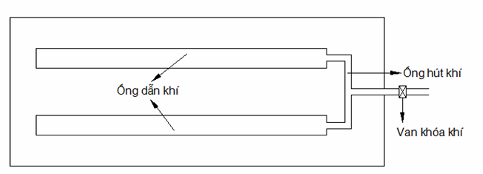
Figure 4: Model of two parallel air intake ports
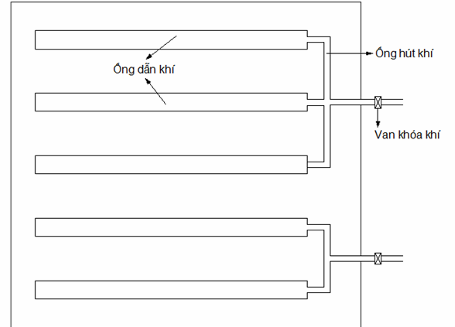
Figure 5: Model of the fishbone type for various types of warehouses
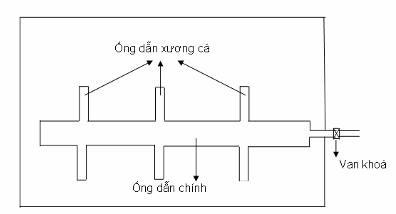
4.4.3. Weighing upon entry
- Grain entering the warehouse must be weighed at 100%. The grain should be lifted onto the scale gently, and the weight of each load must not exceed the permissible capacity of the scale (the scale must have a valid calibration certificate).
- The warehouse keeper must monitor and record accurately the weight of the grain being weighed according to regulations.
- Grain that has been weighed is transferred directly into the warehouse, paying attention to avoid contamination and damage to the film. Loading/unloading must follow guidelines to ensure compliance with specifications.
4.4.4. Stacking grain in the warehouse
- Loose grain storage: Maximum height of the grain mass is 3.5 m; the height of the top of the grain mass must be at least 1.7 m from the warehouse ceiling. During loading, it is required to maintain the grain mass without being compacted or compressed. The quantity of grain in one compartment should not exceed 400 tons.
- Grain stored in bags: Bags of grain are neatly arranged to form a pile, consisting of 5 or 6 layers of bags stepped back by 0.3 m to form a level, with bags in each layer interlocked to ensure the stability of the grain pile during storage, with a maximum height not exceeding 4 m (according to the design of the warehouse), the quantity of one pile should not exceed 400 tons. The grain pile must be at least 0.5 m from the wall, the top of the pile must be at least 1.7 m from the ceiling, and piles must be at least 1 m apart. Create ventilation shafts and trenches while stacking. Piles under 100 tons do not require ventilation shafts; piles from 100 tons to 250 tons require one ventilation shaft; piles from 250 tons to 400 tons require two ventilation shafts. Ventilation shafts are created from the first layer of bags to the top of the pile, with a size of 1 m x 1 m. According to the height of the grain pile, three evenly spaced trench levels need to be created. Trenches are created in both the width and length directions of the pile, connecting to the ventilation shafts, with a size of 0.3 m x 0.3 m.
4.5. Storage of grain in the warehouse
4.5.1. Sealing the grain pile
- At the marked sampling points on the cover sheet, drill holes and place rigid plastic tubes 25 cm to 30 cm long for loose grain (for bagged grain, sampling points are not required). Ensure convenience for sampling and inspection when the grain pile experiences issues. One end of the tube is inserted into the grain pile, with the other end protruding about 5 cm above the cover sheet, fitted with a cap or threaded fitting, ensuring air tightness.
- Seal the main bag (adhere the cover sheet to the surrounding surfaces), carefully check all seals.
- Install the pressure gauge (manometer).
- Install the test tube to check air tightness. One end is attached to the center of the top of the grain pile, the other end is at the base of the pile to connect to the pressure gauge when measuring pressure and extracting air from the grain pile.
- After fully loading the warehouse, the grain pile needs to continue to be ventilated both before and after sealing to prevent the grain pile from overheating.
- For rice stored in warehouses in southern provinces and Ho Chi Minh City with moisture content of 15.5%, it is necessary to increase ventilation to stabilize the moisture content of the grain mass at ≤ 14.5% and temperature at ≤ 35°C before proceeding to cover and seal the warehouse to prevent the occurrence of hot spots. 0Immediately proceed to cover with film and seal to prevent the rice bundle from overheating.
- For rice stored in warehouses in northern, central, and Central Highlands regions with moisture content of 14%, once the entire grain mass stabilizes at ≤ 14% moisture content and temperature at ≤ 35°C, sealing should be carried out to limit environmental influence and prevent hot spots from occurring. 0Immediately proceed to seal to limit environmental impact and prevent overheating.
4.5.2. Method for testing the tightness of the stored rice under low pressure conditions
- Attach a pressure gauge to a plastic tube (which has been connected to the top of the rice pile and extended to the bottom), ensuring that the tube diameter is appropriate to ensure a tight fit when attached to the pressure gauge branch.
- Activate the air pump and continuously monitor the water level on the pressure gauge. Draw air from the rice pile until the water column difference on the pressure gauge reaches 100 mm (negative pressure of 980.7 Pa), then close the intake valve and turn off the machine.
- Record observations:
+ After closing the valve, wait 5 minutes for stabilization, record the water column level on the pressure gauge and start timing the movement of the water column.
+ Determine the time period during which the water column difference on the pressure gauge decreases to 85 mm (negative pressure of 833.6 Pa). If this time period is 40 minutes or more, the rice pile is considered to meet the tightness requirement; if less than 40 minutes, further inspection and treatment measures are required.
The tightness test of the rice pile should be repeated three times.
- Inspection and handling of perforations and gaps: To detect leakage points, choose a quiet time; draw air until the water column difference on the pressure gauge reaches 100 mm (negative pressure of 980.7 Pa); concentrate on listening or use common sound amplification devices to check and handle. First, re-inspect all visible positions around the rice pile (pay attention to inspecting the bonding joints, air intake and exhaust ports, valves).
In case no leakage point can be detected after inspection, partially unload the rice pile to find and handle the gaps.
4.5.3. Air extraction during storage
- During the first three months of storage (counted from the date of sealing the rice pile): Draw air from the rice pile until the water column difference on the pressure gauge reaches 100 mm (negative pressure of 980.7 Pa) and maintain the minimum pressure inside the rice pile at a water column difference of 20 mm (negative pressure of 196 Pa) continuously.
- From the fourth month until the time of removal from storage: Draw air from the rice pile until the water column difference on the pressure gauge reaches 100 mm (negative pressure of 980.7 Pa); when the pressure inside the rice pile drops to a water column difference of 10 mm (negative pressure of 98 Pa), continue drawing air as above.
Note:
+ From the time the pile is fully loaded until it is sealed, forced ventilation must be strengthened to reduce the direct contact time between the rice pile and the ambient air, thereby quickly reducing the temperature and moisture caused by the physiological activities of the rice.
+ Maintain the minimum water column difference on the pressure gauge at 10 mm (minimum negative pressure inside the rice pile at 98 Pa) continuously.
+ For rice stored in southern delta provinces and Ho Chi Minh City, implement as follows:
Every day, under dry weather conditions (relative humidity of the air below 80%), open the warehouse doors for ventilation. Ventilation should be conducted under suitable conditions:
Relative humidity of the air inside the warehouse is higher than the relative humidity of the outside air (RHtr > RHenergy);
Temperature of the grain mass is higher than the air temperature (Th > Tkk).
In addition to natural ventilation, industrial fans may be used to enhance ventilation when necessary.
4.5.4. Some basic criteria for evaluating safe storage of rice
- Moisture content of the grain mass
+ Moisture content of loose-stored rice does not exceed 14%;
+ Moisture content of rice does not exceed 14.0% for bagged rice in northern, central, and Central Highlands regions (outer layers of bags along the edges of the pile, ventilation shafts);
+ Moisture content of rice does not exceed 14.5% for bagged rice in southern delta provinces and Ho Chi Minh City (outer layers of bags along the edges of the pile, ventilation shafts).
- Average temperature of the grain mass does not exceed 32°C (For newly stored rice piles, from the first month to the end of the third month, the average temperature of the grain mass does not exceed 35°C). 0- Pests: No live pests visible to the naked eye. 03.3.1. Survival rate testing:
- No live insects visible to the naked eye.
4.5.5. Sanitation regime
- Cleaning the pile: Wipe the film clean with soft cloths.
- Regular cleaning in the warehouse: Ceilings, walls, doors, ventilation openings.
- External cleaning: Sweep the warehouse floor and yard daily; trim grass around the warehouse weekly. Clean gutters and drainage systems around the warehouse.
4.5.6Inspection work
4.5.6.1. Periodic inspection
- Continuously monitor the tightness of the rice pile; record the water column difference before each air extraction.
- Monthly monitoring and recording of external and internal air temperature and humidity levels.
- Quarterly sampling and analysis to assess rice quality according to sensory, moisture, and yellow grain ratio criteria. In the first three months, take samples to determine moisture content once a month.
4.5.6.2. Abnormal inspection
4.5.6.2. Unusual inspections
Inspect quality and storage work when incidents occur or upon request from superior management authorities.
The results of periodic and sudden inspections are recorded by the unit head, technical department, or working group; the results are entered into the storage work log (or a report is prepared as required).
4.5.7. Measures to prevent condensation and mold during storage
- Prevent condensation and mold during storage: Prevent sudden drops in environmental temperature, before cold winds arrive, seal all warehouse doors (ventilation and entry doors), find ways to increase the temperature inside the warehouse while intensifying the extraction of warm, humid air from within the rice pile.
- Regularly inspect and promptly address to prevent prolonged dew accumulation causing mold growth. In case rice exhibits signs of mold, immediately isolate the moldy rice and apply technical measures to restore the entire batch to a safe state.
- For bagged rice, upon detecting hot spots, cut the film at the hot spot, enhance ventilation until stabilized, then reseal and return to initial storage conditions. If the entire batch shows signs of overheating, remove the covering film, increase ventilation to stabilize the batch, then reseal and store according to regulations.
4.5.8. Pest Prevention and Control for Grain Batches
Implement comprehensive preventive measures throughout the storage period including:
4.5.8.1. Preventive Measures
- Within the same warehouse or row of warehouses, limit intermixing old and new rice batches; ensure partitions between compartments minimize insect contamination.
- Do not store packaging materials and containers with rice in the same compartments or batches. Maintain cleanliness both inside and outside the warehouse.
- Keep the moisture level within safe limits to restrict favorable conditions for insect and microorganism development.
- Spray pesticides monthly on warehouse doors and empty spaces within the warehouse.
- Mix pesticides with grains during or after entry using contact types. The list of pesticides and dosages follow regulations.
4.5.8.2. Fumigation of Stored Rice
Throughout the storage cycle (from entry to exit): Conduct one preventive treatment against insects using chemicals. Select appropriate chemical types and timing based on insect infestation levels:
- Apply contact pesticide sprays or mixes to loose rice from entry to sealing, and around bags and batches for bagged rice before sealing. Follow prescribed lists and dosages.
- Or fumigate when insect infestations occur during storage. Ensure adequate holding times as per each pesticide's instructions. Follow prescribed lists and dosages.
4.5.9. Prevention and Control of Rodents and Other Pests (termites, birds...)
- For rodents and other pests (termites, birds...), primary measures include prevention. Storage warehouses must have systems to prevent pest intrusion, minimizing their presence. Specialized warehouses with solid ceilings and rodent-proof systems should be free of rodents.
- Upon detection of pests, employ all methods to eliminate them. Ensure environmental hygiene and food safety when using extermination methods.
4.6. Warehouse Exit Procedures
- Open air valves to equalize pressure inside and outside the rice batch.
- Cut the PVC film:
For low-pressure loose rice storage, cut around the warehouse walls covering the top of the batch (along the sealed edges).
For low-pressure bagged rice storage, cut around the base near the floor of the batch (close to the sealed edges).
- Remove rice following the principle: From top to bottom, from outside to inside, clear out each batch completely, only uncovering the batch for two hours before exiting.
- During removal, protect the bag layers and air ducts from damage. Clean and carefully store main bags if reused.
4.7. Report on Rice Quality
- One month after completing entry, the Head of the National Reserve Unit directs specialized departments to report on the quality of entered rice to the National Reserve Management Agency.
- Monthly, subordinate units report to the Head of the National Reserve Unit on the quality of stored rice.
- Quarterly, compile and report to the National Reserve Management Agency on the quality of stored rice by the 20th of the last month of the quarter. In emergencies, send separate reports.
- No later than one month after completing exit, the Head of the National Reserve Unit reports on the quality of exited rice and losses to the National Reserve Management Agency.
5. MANAGEMENT REQUIREMENTS
5.1. Warehouse Requirements
- National reserve rice storage warehouses must be sturdy, preventing direct weather impacts on grain batches, including cylindrical, type A1, Czech, improved, and house-type warehouses.
- Warehouse walls and floors must be impermeable, dry, and free from condensation during rainy seasons; floors must be flat and smooth.
- Warehouse doors must be tight, preventing pest entry, well-ventilated, and convenient for natural airflow.
- Warehouses must be kept clean, odor-free; surroundings must be open, well-drained, isolated from contaminants and chemicals.
5.2. Inspection of Entered Rice Quality
- National reserve entered rice must meet quality standards specified in Clause 2.1.
- Before weighing, technicians collaborate with warehouse keepers to take representative samples for quality checks. Only batches meeting standards are admitted; non-compliant batches are rejected.
5.3. Entry Procedures
- Technicians prepare quality inspection forms for compliant batches (content per regulations). Warehouse keepers use these forms for weighing. During weighing, they quickly check quality indicators. If discrepancies arise, the keeper may request a halt for re-inspection.
Upon completion of the specified quantity of rice imported, the head of the national reserve unit shall organize sampling for quality inspection and issue a quality test report according to the full-lot import procedures (the content of the quality test report shall comply with the regulations) and shall be responsible for the results recorded on the test report in accordance with the provisions of the law.
The quality test report for each lot shall be made in four copies as prescribed, including:
- One copy retained at the national reserve unit;
- Three copies kept at the subordinate national reserve unit (one copy attached to the warehouse entry completion record, stored in the file by the warehouse keeper in the storage compartment (lot); one copy kept by the technical staff of the subordinate national reserve unit for monitoring; one copy handed over to the accounting department of the subordinate national reserve unit).
The storage period shall be calculated from the time the compartment/lot of rice is fully entered (as per the warehouse entry completion record).
5.4. Issuing Warehouse Entry Completion Records
Each compartment/lot of rice, upon completion of the entry process and before being put into storage, must have a warehouse entry completion record issued in accordance with the law.
The warehouse entry completion record shall be made in four copies, all signed by the warehouse keeper, the warehouse manager, the technical inspector, the accountant of the subordinate national reserve unit, and the leader of the subordinate national reserve unit as prescribed, including:
- One copy sent to the national reserve unit (Technical Storage Department);
- Three copies kept at the subordinate national reserve unit (one copy retained by the warehouse keeper in the file at the compartment (lot) warehouse; one copy kept by the technical staff of the subordinate national reserve unit; one copy handed over to the accounting department of the subordinate national reserve unit).
5.5. Lot Identification Cards
Each lot must have an identification card containing the following information:
- Storage location: Name of the lot of rice, warehouse compartment, type of warehouse, warehouse point;
- Type of rice, grain shape;
- Total weight of rice, number of bags (for bagged rice storage);
- Date of entry:
+ Start date of entry;
+ Date of full lot entry.
- Storage method;
- Name of the warehouse keeper.
5.6. Record Keeping System for Monitoring Storage
After completing the warehouse entry, the national reserve unit shall establish a monitoring record book. Through the monitoring results and inspections, the changes in quality indicators of the compartment/lot of rice over time, the contents of the storage work performed, measures taken to address and rectify any issues, and any recommendations (if any) shall be recorded.
5.7. Warehouse Exit Procedures
5.7.1When there is an order to exit goods, the warehouse keeper must prepare all records, files, and certificates for the lot.
5.7.2. Organize sampling and inspect quality indicators, report the current status of the lot to the head of the unit. For loose rice prior to warehouse exit, within five days, samples must be taken for quality testing of the compartment being exited. For bagged rice, sampling should be conducted immediately before exiting the rice to customers.
5.7.3. After completing the exit of goods, all procedures and certificates for handover must be completed in accordance with the regulations. After all rice has been exited, remove all padding materials, tools, and clean the warehouse thoroughly.
5.8. Storage Period
- Loose rice stored under low pressure conditions: Storage period up to thirty months;
- Bagged rice stored under low pressure conditions:
+ Bagged rice stored under low pressure conditions in Northern, Central, and Central Highlands regions: Storage period up to thirty months;
+ Bagged rice stored under low pressure conditions in Southern Plain provinces and Ho Chi Minh City: Storage period up to eighteen months.
5.9. Fire Prevention and Explosion Control
Develop plans for fire prevention, explosion control, firefighting, and rescue forces in case of emergencies. Equip and organize fire prevention and explosion control work in accordance with Decree No. 35/2003/ND-CP dated April 4, 2003, detailing the implementation of certain articles of the Law on Fire Prevention and Fighting, Circular No. 04/2004/TT-BCA dated March 31, 2004, guiding the implementation of Decree No. 35/2003/ND-CP dated April 4, 2003, detailing the implementation of certain articles of the Law on Fire Prevention and Fighting, Decree No. 46/2012/ND-CP dated May 22, 2012, amending and supplementing certain articles of Decree No. 35/2003/ND-CP dated April 4, 2003, detailing the implementation of certain articles of the Law on Fire Prevention and Fighting, and Decree No. 130/2006/ND-CP dated November 8, 2006, stipulating compulsory fire and explosion insurance.
5.10. Occupational Safety
5.10.1. The warehouse keeper must be equipped with complete personal protective equipment in accordance with the regulations.
5.10.2. Immediately after fumigation, air evacuation must be warned and people must not approach the gas release area.
6. RESPONSIBILITIES OF ORGANIZATIONS AND INDIVIDUALS
6.1. Organizations and individuals providing national reserve rice are responsible for supplying rice that meets the quality requirements set out in Section 2 of this Standard.
6.2. The head of the national reserve unit is responsible for directing the implementation of rice receipt, delivery, and storage operations in accordance with the provisions of Sections 4 and 5 of this Standard. During the storage period, the direct management unit is responsible for regularly checking the quality of rice and taking samples every three months to determine and compare quality indicators in accordance with the regulations.
6.3. In cases where rice stored under low pressure conditions does not ensure airtightness or shows signs of deterioration in quality indicators (increased yellow grain ratio, insect density exceeding allowable limits, moisture and mold), or abnormal weight, the warehouse keeper and the direct management unit must take responsibility for investigating the cause, addressing and rectifying the situation to ensure the safety of the compartment/lot of rice in accordance with the regulations. If the incident exceeds the capacity to handle, the unit must promptly report to higher authorities to discuss solutions.
7. IMPLEMENTATION
7.1The State Reserve General Corporation is responsible for guiding and supervising the implementation of this Standard.
7.2. In cases where standards and guidelines prescribed in this Standard are changed, supplemented, or replaced, they shall be implemented in accordance with the new document.
ANNEX 1
DIAGRAM OF RICE ANALYSIS PROCEDURE
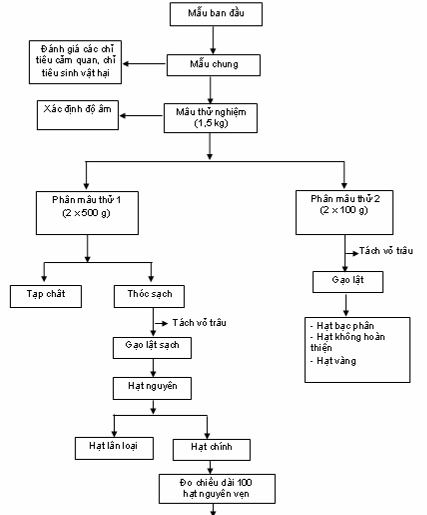
Hardware Product
ANNEX 2
DIAGRAM OF LOW-PRESSURE STORAGE PROCEDURE FOR LOOSE RICE
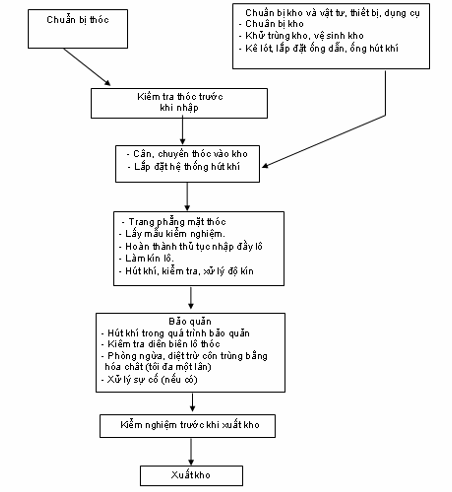
PHANNEX 3
DIAGRAM OF LOW-PRESSURE STORAGE PROCEDURE FOR BAGGED RICE
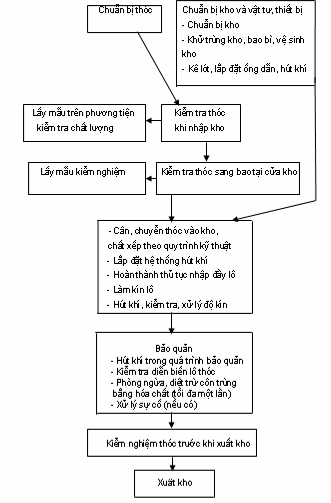
Văn bản gốc (PDF)
Bản đồ quan hệ
Bấm vào một văn bản để mở. Viền đỏ = quan hệ làm thay đổi hiệu lực.
Bản dịch
Văn bản này có sẵn ở các ngôn ngữ sau: