
This Circular guides the method for calculating the number of workers used as prescribed in Article 54 of Decree No. 12/CP of 1997, applicable to foreign-invested enterprises. The calculation includes the average annual and monthly number of workers used, with the principle of rounding off odd numbers.
Scope of application
Foreign-invested enterprises under Decree No. 12/CP of 1997.
Key points
- the calculation method for foreign-invested enterprises
- The average annual number of workers used is calculated by dividing the total number of workers in all months of the year by the number of months, with the condition of rounding off according to specific principles.
- The average monthly number of workers used is calculated from the total number of workers in all days of the month divided by the number of days.
- The calculation applies to both workers with contracts and those not subject to contract formation.
- For odd numbers, rounding up if it is 0.5 or above, and not rounding if it is below 0.5.
🌐 Social impact of this document
- The positive impact is that unifying the calculation method helps enterprises easily implement and comply with legal regulations.
- The negative impact may be the burden on labor management for enterprises, especially during the process of rounding off odd numbers.
❓ Frequently asked questions
How is the average annual number of workers used calculated?
The average annual number of workers used is calculated by dividing the total number of workers in all months of the year by the number of months, with the condition of rounding off according to specific principles (Clause 2).
How is the average monthly number of workers used calculated?
The average monthly number of workers used is calculated from the total number of workers in all days of the month divided by the number of days (Clause 2).
Is there any provision regarding rounding off odd numbers?
Odd numbers from 0.5 are rounded up to 1, and those below 0.5 are not counted (Clause 3).
When does this Circular take effect?
This Circular takes effect from the date of issuance and applies to units that have not yet calculated the number of workers used in 1999 (Clause 3).
What reports do enterprises need to submit to the Department of Labor, Invalids, and Social Affairs?
Enterprises are responsible for reporting the number of workers used quarterly to the local Department of Labor, Invalids, and Social Affairs (Clause 3).
Full text
CIRCULAR
Guidelines on the method for calculating the number of workers used as prescribed
in Article 54 of Decree No. 12/CP dated February 18, 1997 of the Government
_______________________
Implementing Decree No. 12/CP dated January 18, 1997 of the Government detailing the implementation of the Law on Foreign Investment in Vietnam, following the opinions of relevant ministries and sectors, the Ministry of Labor - Invalids and Social Affairs provides guidelines on the method for calculating the number of workers used as follows:
Production facilities under the Vietnam Import-Export Construction Corporation (Ministry of Construction) producing building components and materials for housing sold to households in flood-prone areas in the Mekong Delta on deferred payment terms (as per Decision No. 105/2002/QD-TTg dated August 2, 2002) and to ethnic minority households in place in the Central Highlands provinces on deferred payment terms (as per Announcement No. 144/TB-VPCP dated September 12, 2002 of the Government Office).
The application of the method for calculating the number of workers used applies to entities subject to the provisions of the Law on Foreign Investment in Vietnam as detailed in Decree No. 12/CP dated February 18, 1997 of the Government detailing the implementation of the Law on Foreign Investment in Vietnam.
II. METHOD FOR CALCULATING THE NUMBER OF WORKERS USED:
1. The average annual number of workers used is calculated according to the following formula:
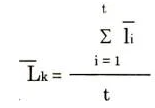
Where:
Lk: is the average annual number of workers used in year k;
k: is the year;
li: is the average monthly number of workers used in month i of year k;
t å li: is the total of the average monthly number of workers used throughout year k;
i =1
t: is the number of months in year k.
Example 1: Enterprise A began operations in March 2002 and had the following average monthly number of employees in 2002:
2. The average monthly number of workers used is calculated according to the following formula:
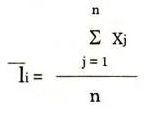
In which: li: is the average monthly number of workers used in month i of the year;
Xj: is the number of workers on day j of the month, including: the actual number of workers (under labor contracts and those not under labor contracts) present at work and absent due to illness, maternity leave, child illness, workplace accidents, annual leave, study leave arranged by the unit, personal leave with pay as recorded in the unit's attendance records, including management staff and staff of organizational bodies. For days off, the number of workers is taken from the attendance record of the working day immediately preceding the days off.
n
å xj: is the total number of workers on all days of the month;
j=1
n: is the number of calendar days in the month (regardless of whether the unit has worked the full number of days in the month);
i: is the month of the year;
j: is the day of the month.
3. Calculation for fractional numbers: When calculating the average annual number of workers used according to the above formula, if there is a fractional number, it should be rounded according to the principle that fractions of 0.5 or more are rounded up to 1, and less than 0.5 are not counted (for example: 499.51 is rounded up to 500; 499.45 is rounded to 499). For the average monthly number of workers used with a fractional number, it is kept as two decimal places without rounding.
III. IMPLEMENTATION
1. Each quarter, units are responsible for reporting the number of workers currently employed to the provincial Department of Labor - Invalids and Social Affairs.
2. This Circular takes effect from the date of signature. For units that have not yet calculated the number of workers employed in 1999, this calculation method shall apply.
During the implementation of this Circular, any difficulties encountered should be reported to the Ministry of Labor - Invalids and Social Affairs for consideration and resolution.
Relations map
Click a document to open. A red border = a relation that changes validity.
Translations
This document is available in the following languages: