
This regulation specifies conformity assessment certification and the responsibilities of organizations and individuals in producing and trading packaged frozen pangasius fillets for domestic consumption. It also provides methods to determine ice coating ratios and acceptable levels of sensory defects.
Đối tượng áp dụng
This regulation applies to organizations and individuals producing and trading packaged frozen pangasius fillets for domestic consumption in Vietnam.
Các điểm cốt lõi
- Organizations and individuals must declare conformity in accordance with the technical regulations set forth in this regulation.
- Methods for determining ice coating ratios and acceptable levels of sensory defects are provided in Appendices A and B of this regulation.
- The responsibility of relevant state agencies is to evaluate, designate conformity assessment bodies, and manage declaration records.
- Frozen pangasius fillet products must comply with the technical standards cited in this regulation.
- This regulation is issued and may be amended when necessary by the Ministry of Agriculture and Rural Development.
🌐 Tác động xã hội từ văn bản này
- Ensuring the quality of packaged frozen pangasius fillets for domestic consumption.
- Helping consumers trust the safety and quality of the product.
- Creating a fair competitive environment for organizations and individuals in the aquaculture industry.
❓ Câu hỏi thường gặp
What must organizations and individuals do to comply with this regulation?
They must conduct conformity assessment or self-assessment and declare conformity according to Circular No. 55/2012/TT-BNNPTNT.
What is the purpose of Appendix A in this regulation?
Appendix A sets out acceptable levels of sensory defects for batches of products with different net weights of smallest packaging units.
Which state agency is responsible for managing declaration records?
Provincial Departments of Agriculture and Rural Development under central authorities are responsible for receiving and managing declaration records.
When does this regulation take effect?
The effective date of this regulation depends on its official issuance by the Ministry of Agriculture and Rural Development.
Toàn văn
|
MINISTRY OF AGRICULTURE AND RURAL DEVELOPMENT |
SOCIALIST REPUBLIC OF VIET NAM |
|
Number: 07/2017/TT-BNNPTNT |
Hanoi, March 21, 2017 |
CIRCULAR
Issuing National Technical Regulations "Fishery Product - Frozen Tra Fish Fillets"
_______________________
Decree No. 15/2017/NĐ-CP The Minister of Agriculture and Rural Development issues this Circular guiding certain provisions of the Livestock Law on management of livestock breeds and breeding products.
Pursuant to the Law on Standards and Technical Regulations dated June 29, 2006;
Pursuant to the Food Safety Law dated June 17, 2010;
At the request of the Director of the Directorate for Quality Assurance of Agricultural Products, Forestry Products and Aquatic Products and the Director of the Department of Science, Technology and Environment,
The Minister of Agriculture and Rural Development issues this Circular on the National Technical Regulation "Fishery Product - Frozen Tra Fish Fillets".
Article 1. This Circular promulgates the National Technical Regulation "Fishery Product - Frozen Tra Fish Fillets"
Designation: QCVN 02 - 27: 2017/BNNPTNT
Article 2. This Circular takes effect from May 5, 2017.
Article 3. The Director of the Directorate for Quality Assurance of Agricultural Products, Forestry Products and Aquatic Products, Heads of agencies, organizations and individuals concerned shall be responsible for implementing this Circular.
During the implementation process, if there are difficulties, agencies, organizations, and individuals shall promptly report to the Ministry of Agriculture and Rural Development for study, amendment, and supplementation./.
|
VICE MINISTER
DEPUTY MINISTER
(Signed)
VU VAN TAM
|
QCVN 02-27: 2017/BNNPTNT
AMENDMENT 1:2025 QCVN 07:2023/BXD
FISHERY PRODUCT - FROZEN TRA FISH FILLETS
National technical regulation
Fishery product - Frozen Tra fish fillets
Preamble:
QCVN 02-27: 2017/BNNPTNT was compiled by the Directorate for Quality Assurance of Agricultural Products, Forestry Products and Aquatic Products, reviewed by the Department of Science, Technology and Environment, and issued pursuant to Circular number 07/2017/TT-BNNPTNT dated 21 the 3 2017 of the Ministry of Agriculture and Rural Development.
AMENDMENT 1:2025 QCVN 07:2023/BXD
FISHERY PRODUCT - FROZEN TRA FISH FILLETS
Fishery product - Frozen Tra fish fillets
1. General Provisions
1.1. Scope of Application
This standard specifies technical requirements and management requirements for frozen Tra fish fillets (Pangasius hypophthalmus send a text message Pangasianodon hypophthalmus) .
1.2. Applicability
This standard applies to organizations and individuals producing, trading frozen Tra fish fillets as food and relevant regulatory authorities.
1.3. Definitions
1.3.1. Frozen Tra Fish Fillets
Frozen Tra fish fillets are pieces of boneless fish taken from the body of Tra fish by cutting along the spine, with or without skin, trimmed or untrimmed, frozen in appropriate equipment such that the maximum freezing point temperature is rapidly passed through and ends when the core temperature of the product reaches -18 °C or lower.
1.3.2. Gross weight
The weight of the product after removing packaging material.
1.3.3. Net weight
The weight of the product after removing packaging material and ice glazing layer.
2. Technical Provisions
2.1. Quality criteria
2.1.1. Ice glazing ratio
The ice glazing ratio must not exceed 20% of the gross weight of the product.
2.1.2. Water content
The water content must not exceed 86% of the net weight of the product.
2.1.3. Sensory criteria
a) Defect determination
A sample unit is considered defective if it has one or more of the following characteristics:
- Frost burn:
More than 10% of the surface area of a single product unit shows excessive moisture loss, appearing as white or unusual yellow color on the surface obscuring the meat color and penetrating deeply into the product, difficult to remove with a knife or other sharp tool without affecting the external appearance of the product.
- Foreign matter:
Any substance present in the sample unit that is not a component of the product (excluding packaging materials and ice glazing water) easily detectable, indicating non-compliance with production standards and good hygiene practices.
- Bone fragments:
In 1 kg of sample product, there are more than one bone fragment with a length greater than or equal to 10 mm or diameter greater than or equal to 1 mm; bone fragments smaller than or equal to 5 mm in length and less than 2 mm in diameter are not considered bone fragments. Bone fragments (cut from the spine) are disregarded if they have a width of less than or equal to 2 mm or can be easily removed with fingernails.
- Red spots:
The flesh of the Tra fish fillet exhibits blood clots due to disease or mechanical damage during raw material transportation or production.
- Parasites:
Presence of parasites with cyst diameters larger than 3 mm or non-cystic parasites longer than 10 mm.
- Unusual odor or taste:
The product is affected by unwanted odors or tastes, persistent and easily recognizable, indicative of spoilage or rancidity.
b) Acceptance level for sensory defects
The number of samples determined to be defective (as stated in point a, section 2.1.3) must not exceed the acceptable level specified in Appendix A.
2.2. Food safety criteria
2.2.1. Microbiological criteria according to the National Technical Regulation QCVN 8-3: 2012/BYT.
2.2.2. Chemical criteria
a) Residues of veterinary drugs according to Circular number 24/2013/TT-BYT August 14, 2013 of the Ministry of Health.
b) Heavy metal content according to the National Technical Regulation QCVN 8-2: 2011/BYT.
c) Food additive content according to Circular number 27/2012/TT-BYT November 30, 2012 and Circular number 08/2015/TT-BYT May 11, 2015 of the Ministry of Health.
2.3. Labeling
The product must be labeled in accordance with Decree 89/2006/NĐ-CP August 30, 2006 of the Government and Joint Circular number 34/2014/TTLT-BYT-BNNPTNT-BCT October 27, 2014 of the Ministry of Health, the Ministry of Agriculture and Rural Development and the Ministry of Industry and Trade.
2.4. Packaging and storage of products
2.4.1. The product must be packaged in food-specific packaging suitable according to the National Technical Regulation QCVN 12-1:2011/BYT.
2.4.2. The product must be stored at a temperature not exceeding -18 °C.
3 Management Provisions
3.1.1. The boar semen production facility must obtain conformity certification regarding hygiene requirements as stipulated in this standard.
Evaluation of compliance with this National Technical Regulation is conducted using method 4 (typical sample testing combined with production process evaluation; monitoring through sampling at the place of production and on the market combined with production process evaluation).
3.2. Declaration of Conformity
3.2.1. Pre-packaged frozen Tra fish fillets circulating in the domestic market must be declared in compliance with the provisions of this regulation.
3.2.2. The methods, procedures, formalities, and declaration documents for conformity declaration are carried out according to Circular number 55/2012/TT-BNNPTNT October 31, 2012 of the Ministry of Agriculture and Rural Development guiding the procedures for designating conformity certification organizations and declaring conformity within the scope of management of the Ministry of Agriculture and Rural Development.
3.2.3. The assessment of conformity is conducted by a certification organization registered to operate in accordance with Decree Decision No. 107/2016/NĐ-CP July 1, 2016 of the Government and designated by the competent authority, or by the organization or individual producing or trading who conducts the assessment themselves and sends typical samples to a laboratory registered to operate in accordance with Decree Decision No. 107/2016/NĐ-CP July 1, 2016 of the Government and designated by the competent authority to analyze the criteria specified in Section 2 of this QCVN.
3.3. Testing methods, sampling methods
3.3.1. Sampling and preparing test samples according to TCVN 5276-90 Fisheries - Sampling and preparation of samples.
3.3.2. Sensory testing of state criteria (frost burn, foreign matter, bone fragments, red spots), odor and taste according to TCVN 5277-90 Aquatic products – Sensory testing method.
3.3.3. Check parasites according to TCVN 9217 : 2012 Fish – Detection of parasites in muscle tissue.
3.3.4. Determine the proportion of ice glaze according to Appendix B.
3.3.5. Determine moisture content according to AOAC 950.46 (2015), defrost samples for moisture content analysis as specified in Section B4 of Appendix B.
3.3.6. Determine food safety criteria according to corresponding national standards or equivalent international standards.
4.Liability of organizations and individuals
4.1.Liability of organizations and individuals
4.1.1. Organizations and individuals producing and trading frozen pangasius fillet packages for domestic consumption must declare conformity in accordance with technical regulations set forth in this standard.
4.1.2. Organizations and individuals producing and trading frozen pangasius fillet packages can only circulate their products on the domestic market after completing registration of the conformity declaration.
4.2.Liability of state agencies
4.2.1. The Directorate of Quality Assurance for Forestry, Agriculture, and Aquatic Products evaluates and designates Conformity Certification Organizations for this standard.
4.2.2. Provincial Departments of Agriculture and Rural Development under the central government have the responsibility:
a) To accept and manage conformity declaration files in accordance with Circular No. 55/2012/TT-BNNPTNT;
b) Quarterly, and at any time when required, to compile and report to the Ministry of Agriculture and Rural Development on the situation of conformity declarations under this standard.
5. Implementation organization
5.1.For organizations and individuals
Organizations and individuals producing and trading frozen pangasius fillets shall implement conformity certification or self-assessment and declaration of conformity in accordance with Circular No. 55/2012/TT-BNNPTNT.
5.2.For state agencies
5.2.1. The Ministry of Agriculture and Rural Development assigns the Directorate of Quality Assurance for Forestry, Agriculture, and Aquatic Products to lead and coordinate with relevant units to disseminate, guide, and inspect the implementation of this standard; submit proposals to the Ministry of Agriculture and Rural Development for adjustment and supplementation of this standard when necessary.
5.2.2. In cases where referenced provisions in this standard are adjusted, supplemented, or replaced, they shall be implemented according to new provisions; if the standards cited in this standard have corresponding national technical regulations or provisions of the Ministry of Agriculture and Rural Development, then they shall be implemented according to national technical regulations or provisions of the Ministry of Agriculture and Rural Development.
ANNEX A
LEVEL OF ACCEPTABLE DEFECTS FOR SENSORY CRITERIA
A1. Lot of product with the smallest package having a net weight of less than or equal to 1 kg
|
Minimum number of smallest packages (N) |
Number of samples (n) |
Acceptable level (c*) |
|
£ 4.800 |
6 |
1 |
|
4.801 - 24.000 |
13 |
2 |
|
24.001 - 48.000 |
21 |
3 |
|
48.001 - 84.000 |
29 |
4 |
|
84.001 - 144.000 |
38 |
5 |
|
144.001 - 240.000 |
48 |
6 |
|
> 240.000 |
60 |
7 |
A2. Lot of product with the smallest package having a net weight greater than 1 kg but not exceeding 4.5 kg
|
Minimum number of smallest packages (N) |
Number of samples (n) |
Acceptable level (c*) |
|
£ 2.400 |
6 |
1 |
|
2.401 - 15.000 |
13 |
2 |
|
15.001 - 24.000 |
21 |
3 |
|
24.001 - 42.000 |
29 |
4 |
|
42.001 - 72.000 |
38 |
5 |
|
72.001 - 120.000 |
48 |
6 |
|
> 120.000 |
60 |
7 |
A3. Lot of product with the smallest package having a net weight greater than 4.5 kg
|
Minimum number of smallest packages (N) |
Number of samples (n) |
Acceptable level (c*) |
|
£ 600 |
6 |
1 |
|
601 - 2.000 |
13 |
2 |
|
2.001 - 7.200 |
21 |
3 |
|
7.201 - 15.000 |
29 |
4 |
|
15.001 - 24.000 |
38 |
5 |
|
24.001 - 42.000 |
48 |
6 |
|
> 42.000 |
60 |
7 |
* c is the number of samples determined to be defective according to point a, section 2.1.3.
Provisions on the HS Code of Terrestrial Mobile Radio Equipment and Terrestrial Radio Relay Equipment
METHOD FOR DETERMINING ICE GLAZE PROPORTION
B1. Principle
Frozen pangasius fillet samples, after determining gross weight, are placed directly under a gentle cold water spray or put into a tank of water until the ice layer on the surface of each unit product melts completely. When the surface no longer has ice adhering, the sample is taken out to drain and dried with soft paper towels or cloths, then weighed to determine the net weight of the product. From the net weight and gross weight of the product, the ice glaze proportion is determined.
B2. Preparation
- Scale with accuracy up to 1 gram.
- Tank of water (preferably temperature-controlled), the amount of water used for thawing in the tank should be about ten times the sample weight, the water temperature in the tank should be approximately from 15 °C to 35 °C.
C.
- Basket suitable for holding samples, mesh size from 1 to 3 mm.
- Soft paper towels or cloths capable of absorbing water.
B3. Determination of Gross Weight (A)
Frozen pangasius fillet samples, after removing packaging, are weighed to determine gross weight (A).
B4. Determination of Net Weight (B)
B4.1 For individually quick-frozen (IQF) products
After determining gross weight, the sample is placed in a basket under a gentle cold water spray, carefully turned to prevent product breakage until the ice layer on the surface melts completely (use a finger to check the surface changes from smooth to rough).
After completely removing the ice layer on the surface, the sample is placed in a tilted basket at about 30 degrees to drain water, ensuring individual units separate. Use soft paper towels or cloths to absorb remaining water on the surface, then immediately weigh to determine the net weight of the product (B).
B4.2 For block-frozen products
B4.2.1 For block-frozen samples that can be separated into individual units while frozen
Separate individual units and proceed to determine net weight (B) similarly to IQF products (section B4.1).
B4.2.2 For block-frozen samples that cannot be separated into individual units while frozen
Place the sample, after determining gross weight, into a suitable basket and immerse it in the prepared water tank (section B2). Hold the sample submerged, gently turning it carefully. Use fingers to gently separate parts of the block into individual units, being careful not to break the sample. If the ice layer remains, continue immersing the product in the water tank until the ice layer on the surface melts completely (use a finger to check the surface changes from smooth to rough).
After completely thawing, place the sample in a tilted basket at about 30 degrees to drain water. Use specialized soft paper towels or cloths to absorb remaining water on the surface, then immediately weigh to determine the net weight of the product (B).
B5. Determination of Ice Glaze Proportion (C)
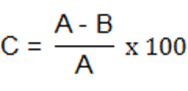
Where:
The ice glaze proportion (% relative to the gross weight of the product) is calculated using the formula:
A: Gross weight
Văn bản gốc (PDF)
Tải văn bản
Bản đồ quan hệ
Bấm vào một văn bản để mở. Viền đỏ = quan hệ làm thay đổi hiệu lực.