
Decree No. 103/2016/NĐ-CP stipulates conditions for infrastructure, equipment, personnel, and biosafety practices in laboratories. It also provides for issuing biosafety certificates to laboratories meeting standards and procedures for self-declaration of compliance with biosafety standards.
Đối tượng áp dụng
Entities with laboratories
Các điểm cốt lõi
- Conditions for infrastructure, equipment, personnel, and biosafety practices.
- Procedures for issuing biosafety certificates.
- Procedures for self-declaration of compliance with biosafety standards.
- Ensuring biosafety in laboratories.
- Handling waste and wastewater from testing activities.
🌐 Tác động xã hội từ văn bản này
- Ensuring community safety during testing activities.
- Improving healthcare quality through compliance with biosafety regulations.
❓ Câu hỏi thường gặp
What do I need to prepare to apply for a biosafety certificate?
You need to prepare an application form, copies of professional qualifications, a list of laboratory personnel and equipment, a floor plan of the laboratory, and documents proving the establishment and operation of the entity with the laboratory.
What do I need to do to self-declare compliance with biosafety standards?
You need to submit a self-declaration to the receiving authority with full information about the entity's name, address, head, and commitment to comply with regulations.
How long is a biosafety certificate valid?
A biosafety certificate is valid for one year from the date of issuance.
Does this decree provide for waste management?
Yes, the Decree stipulates the design of wastewater and liquid waste treatment systems using chemicals that meet national technical standards for the environment.
Toàn văn
|
THE GOVERNMENT |
SOCIALIST REPUBLIC OF VIET NAM |
|
Number: 103/2016/NĐ-CP |
Hanoi, July 1, 2016 |
DECREE
REGULATIONS ON BIOLOGICAL SAFETY AT LABORATORIES
Pursuant to the Law on Government Organization dated June 19, 2015;
Pursuant to the Law on Prevention and Control of Infectious Diseases dated November 21, 2007;
Pursuant to the Investment Law dated November 26, 2014;
Considering the proposal of the Minister of Health;
The Government promulgates this Decree on biological safety at laboratories.
PART I
GENERAL PROVISIONS
Article 1. Scope of Regulation
This Decree stipulates conditions for ensuring biological safety at facilities conducting microbiological testing with pathogenic microorganisms that can cause infectious diseases in humans and samples potentially containing such microorganisms (hereinafter referred to as testing facilities), including: Classification of pathogenic microorganisms and testing facilities according to biosafety levels; conditions for ensuring biological safety at testing facilities; authorities, documents, procedures for issuing, reissuing, revoking Certificates of Biosafety Standards Compliance and announcing testing facilities meeting biosafety standards; biological safety inspections; prevention, handling, and remediation of biological safety incidents.
Article 2. Conditions for operation of facilities providing microbiological testing services
Facilities providing microbiological testing services for pathogenic microorganisms must meet the following conditions:
1. Legally established in accordance with the provisions of the law.
2. Have a laboratory meeting the conditions as prescribed in this Decree. In cases where the facility providing microbiological testing services for pathogenic microorganisms is a medical examination and treatment facility, it must also comply with the provisions of the Law on Medical Examination and Treatment in addition to the conditions stipulated in this Decree.
Chapter II
CLASSIFICATION OF MICROORGANISMS AND TESTING FACILITIES BY BIOSAFETY LEVELS
BIOSECURITY LEVEL TESTING FACILITY
Article 3. Classification of microorganisms by risk groups
1. Microorganisms are microscopic organisms that cannot be seen with the naked eye but can be observed under a microscope, including prions, viruses, bacteria, parasites, and fungi. Pathogenic microorganisms that can cause infectious diseases in humans are classified into four groups:
a) Group 1 includes those that pose little or no risk of infection to individuals and communities, comprising microorganisms not known to cause disease in humans;
b) Group 2 includes those posing moderate risk of infection to individuals but low risk to communities, comprising microorganisms capable of causing disease in humans but rarely causing severe illness, transmissible to humans, and for which effective measures for preventing, controlling, and treating infections exist;
c) Group 3 includes those posing high risk of infection to individuals but moderate risk to communities, comprising microorganisms capable of causing severe illness in humans, transmissible to humans, and for which effective measures for preventing, controlling, and treating infections exist;
d) Group 4 includes those posing high risk of infection to both individuals and communities, comprising microorganisms capable of causing severe illness in humans, transmissible to humans, and for which no effective measures for preventing, controlling, and treating infections exist.
2. The Minister of Health shall specify the list of pathogenic microorganisms by risk group.
Article 4. Classification of testing facilities according to biosafety levels
1. Testing facilities are classified into four biosafety levels as follows:
a) Biosafety level I testing facilities conduct tests on microorganisms belonging to group 1 as specified in point a, Clause 1, Article 3 of this Decree and products from microorganisms belonging to other groups but have been processed and no longer pose a risk of causing disease;
b) Biosafety level II testing facilities conduct tests on microorganisms belonging to groups 1 and 2 as specified in points a and b, Clause 1, Article 3 of this Decree and products from microorganisms belonging to groups 3 and 4 but have been processed appropriately for biosafety level II testing facilities;
c) Biosafety level III testing facilities conduct tests on microorganisms belonging to groups 1, 2, and 3 as specified in points a, b, and c, Clause 1, Article 3 of this Decree and products from microorganisms belonging to group 4 but have been processed appropriately for biosafety level III testing facilities;
d) Biosafety level IV testing facilities conduct tests on microorganisms belonging to the four groups as specified in Article 3 of this Decree.
2. The Minister of Health shall specify the appropriate biosafety level based on the testing technique.
Chapter III
BIOSAFETY CONDITIONS AT TESTING FACILITIES
Article 5. Conditions for biosafety level I testing facilities
The working area of the laboratory handling infectious agents that can cause disease transmission to humans and samples potentially containing such infectious agents (hereinafter referred to as the testing area) must meet the following conditions:
1. Physical conditions:
a) Floors, walls, and laboratory benches must be flat, waterproof, heat-resistant, resistant to corrosive chemicals, and easy to clean;
b) There must be hand washing sinks, emergency eye wash stations, and first aid kits;
c) There must be electricity with a grounding system and a backup power supply;
d) There must be clean water, and the water supply pipes directly connected to the testing area must have backflow prevention devices to protect the public water system;
đ) There must be fire and explosion prevention equipment;
e) There must be sufficient lighting to perform testing.
2. Equipment conditions:
a) Testing equipment suitable for the techniques and sample types or microorganisms being tested;
b) There must be packaging, containers, and equipment for storing medical waste as prescribed;
c) There must be equipment for sterilizing tools and samples;
d) Personal protective equipment appropriate for the type of testing technique performed at biosafety level I testing facilities.
3. Personnel conditions:
a) Number of staff: At least two testing technicians. Directly involved testing technicians (hereinafter referred to as testing technicians) must hold relevant educational certificates and training certificates corresponding to the type of testing conducted by the facility;
b) Facilities with laboratories must designate a person responsible for biosafety;
c) Testing technicians and persons responsible for biosafety must be trained in biosafety at level I or higher;
d) Other personnel working in the testing area must be instructed on biosafety appropriate to their tasks.
4. Conditions regarding operational procedures:
a) There must be regulations for entering and exiting the testing area;
b) There must be reporting procedures;
c) There must be procedures for storing records;
d) There must be testing procedures appropriate to the techniques and sample types or microorganisms being tested;
đ) There must be instructions for using equipment serving testing activities;
e) There must be procedures for decontamination and waste management;
g) There must be health monitoring and medical care regulations.
Article 6. Conditions for a Biosafety Level 2 Testing Facility
The testing area must meet the following conditions:
1. Physical conditions:
a) The conditions stipulated in Clause 1 of Article 5 of this Decree;
b) There must be a system for collecting and treating wastewater or equipment for treating wastewater. For testing facilities that were operating before the effective date of this Decree, they must have test results showing compliance with national technical standards on the environment for wastewater prior to discharging it into the common wastewater collection area;
c) It must be separate from other rooms within the testing facility;
d) There must be a biological hazard warning sign on the entrance door of the testing area according to Model No. 01 attached to this Decree.
2. Equipment conditions:
a) The equipment conditions stipulated in Point a and Point b of Clause 2 of Article 5 of this Decree;
b) There must be a biosafety cabinet;
c) There must be an autoclave for infectious medical waste or sterilization equipment;
d) Personal protective equipment appropriate for the type of testing technology performed at the Biosafety Level 2 testing facility.
3. Personnel conditions:
a) The conditions stipulated in Point a, Point b, and Point d of Clause 3 of Article 5 of this Decree;
b) Testing personnel and individuals responsible for biosafety must be trained in biosafety at Level II or higher.
4. Conditions regarding operational procedures:
a) The provisions stipulated in Clause 4 of Article 5 of this Decree;
b) There must be a training and instruction plan for staff working in the testing area;
c) There must be regulations for storing and preserving samples and infectious disease agents at the testing facility;
d) There must be a risk assessment plan for potential biosafety incidents at the testing facility and a plan for prevention, handling, and resolution of such incidents.
Article 7. Conditions for a Biosafety Level 3 Testing Facility
The testing area must meet the following conditions:
1. Physical conditions:
a) There must be a testing room and a buffer room;
b) The conditions stipulated in Point a, Point b, and Point d of Clause 1 of Article 6 of this Decree;
c) Separate from other testing rooms and areas within the testing facility;
d) The testing room must be sealed to ensure sterilization;
d) Windows and doors must use fire-resistant and load-bearing materials;
e) The entrance door system of the testing area must ensure that only the buffer room door or the testing area door can be opened at one time under normal conditions;
g) The testing room must have a clear glass window or observation equipment allowing viewing inside the testing area from outside;
h) The ventilation system must be designed with unidirectional airflow; air leaving the testing area must pass through high-efficiency particulate air filters;
i) There must be an alarm system when the pressure in the testing area does not meet standards; the pressure in the testing area must always be lower than the outside when the testing area is operating normally;
k) The air exchange rate in the testing area must be at least 6 times per hour;
l) The supply air system can only operate when the exhaust air system is operational and will automatically stop when the exhaust air system stops;
m) There must be emergency washing and decontamination equipment in the testing area;
n) The testing room must have two-way communication and alarm systems.
2. Equipment conditions:
a) The equipment conditions stipulated in Point a and Point b of Clause 2 of Article 5 of this Decree;
b) There must be a biosafety cabinet at Level II or higher;
c) There must be an autoclave for infectious medical waste or sterilization equipment located within the testing area;
d) Personal protective equipment appropriate for the type of testing technology performed in the Biosafety Level 3 testing area.
3. Personnel conditions:
a) Staffing: At least 02 testing personnel and 01 technical operation staff member. Testing personnel must hold relevant educational certificates and training certificates suitable for the type of testing, and technical operation staff must hold training certificates suitable for their job responsibilities;
b) The conditions stipulated in Point b of Clause 3 of Article 5 of this Decree;
c) Testing personnel, technical operation staff members, and individuals responsible for biosafety must be trained in biosafety at Level III or higher.
4. Conditions regarding operational procedures:
a) The provisions stipulated in Clause 4 of Article 6 of this Decree;
b) There must be a procedure for disinfecting materials, tools, equipment, and infectious substances before removing them from the testing area;
c) There must be a procedure for sterilizing the testing area;
d) There must be an emergency situation handling procedure in the testing area;
d) There must be a prevention plan, remediation plan, and incident handling plan for biosafety incidents.
Article 8. Conditions for a Biosafety Level 4 Testing Facility
1. Physical conditions:
a) The conditions stipulated in Points a, b, d, đ, e, g, and h of Clause 1, Article 7 of this Decree;
b) A changing room between the buffer zone and the testing area;
c) An independent ventilation system for Biosafety Level 3 cabinets;
d) An independent air supply system for protective clothing capable of providing an additional 100% air volume in case of biological safety incidents;
đ) Must be ensured to be separate, secure, and protected;
e) Must have a transport container for transporting infectious materials into and out of the testing area;
g) Air intake and exhaust from the testing area must be filtered through high-efficiency air filters;
2. Equipment conditions:
a) The equipment conditions stipulated in Point a and Point b of Clause 2 of Article 5 of this Decree;
b) Must have a Biosafety Level 3 cabinet or higher;
c) Must have a two-door medical waste autoclave;
d) Personal protective equipment suitable for the type of testing techniques performed at the Biosafety Level 4 testing facility;
3. Personnel conditions:
a) The personnel conditions stipulated in Points a and b of Clause 3, Article 7 of this Decree;
b) Laboratory staff, technical operation staff in the testing area, and the person responsible for biological safety must be trained in Biosafety Level 4;
4. Conditions regarding operational procedures:
a) The provisions set forth in Clause 4, Article 7 of this Decree;
b) There must be procedures for transporting materials and tools into and out of the testing area via transport containers or two-door medical waste autoclaves;
c) There must be procedures to ensure security in the testing area;
Article 9. Practices in Biosafety Testing Facilities
1. Biosafety testing facilities at Levels I, II, III, and IV must comply with conditions regarding infrastructure, equipment, personnel, and practices; maintain and calibrate testing equipment; monitor testing practices.
2. The Minister of Health shall issue guidelines on biosafety practices in laboratories;
Chapter IV
AUTHORITY, FILES, PROCEDURES FOR ISSUING NEW, RENEWING, SELF-PUBLISHING AND WITHDRAWING BIOSAFETY TESTING FACILITY CERTIFICATES
REACHING BIOSAFETY STANDARDS
Article 10. Authority to Issue New, Renew, Self-Publish, and Withdraw Biosafety Testing Facility Certificates Reaching Biosafety Standards
1. The Minister of Health shall review, issue new, renew, and withdraw Biosafety Testing Facility Certificates for Level III and IV testing facilities (hereinafter referred to as Biosafety Certificates), except for testing facilities under the management authority of the Ministry of National Defense;
2. The Minister of National Defense shall organize the implementation of reviews, issuance of new, renewal, and withdrawal of Biosafety Certificates for testing facilities under its management authority based on the provisions of this Decree;
3. Testing facilities at Levels I and II shall self-publish their achievement of biosafety standards. Based on the self-publication documents of the facilities, the Department of Health will publish on its electronic information website a list of testing facilities achieving biosafety standards at Levels I and II;
Article 11. Application Files for Issuing New and Renewing Biosafety Certificates
1. Application files for issuing new Biosafety Certificates:
a) Application form for Biosafety Certificate according to Model No. 02 attached to this Decree;
b) Personnel registration form according to Model No. 03 attached to this Decree, accompanied by individual employee files including certified copies of employment decisions or labor contracts and credentials of testing facility employees;
c) Equipment registration form according to Model No. 04 attached to this Decree;
d) Floor plan of the testing facility, including: Testing area; window and door systems; electrical system; water supply and drainage system; fire prevention equipment layout;
đ) Certified copies of documents proving the establishment and operation of the testing facility in accordance with the law;
e) Diagram of wastewater collection and treatment system or equipment records;
For testing facilities operating before the effective date of this Decree, there must be test results showing that the wastewater meets national technical standards for the environment before being discharged into common wastewater storage areas;
g) Maintenance and repair reports for testing equipment for testing facilities operating before the effective date of this Decree;
h) Design drawings accompanied by descriptions of the quality specifications of design materials for each type of equipment used in the ventilation system;
i) Prevention and response plans for biological safety incidents;
2. Application files for renewing Biosafety Certificates upon expiration:
a) Application form for renewing Biosafety Certificate according to Model No. 05 attached to this Decree;
b) Certified copy of the previously issued Biosafety Certificate;
c) Report on personnel changes (if any) accompanied by relevant documents as specified in Point b of Clause 1 of this Article;
d) Report on equipment changes: Clearly state the name of the equipment, quantity, and condition of newly added or replaced equipment as specified in Point c of Clause 1 of this Article;
đ) Report on infrastructure changes accompanied by descriptions of the quality specifications of design materials for each type of replaced equipment;
e) Report on biological safety incidents that occurred (if any). The report must clearly specify the time of occurrence, severity of the incident, measures taken to address and resolve the biological safety incident;
3. Application files for renewing Biosafety Certificates due to damage or loss: Application form for renewing Biosafety Certificate according to Model No. 05 attached to this Decree;
4. Application files for renewing Biosafety Certificates due to a change in the name of the testing facility:
b) Previously issued Biosafety Certificate;
b) Certified copy of the previously issued Biosafety Certificate;
c) Documents proving the change in the name of the testing facility: Certified copy of the establishment decision for public health facilities or certified copy of the business registration certificate for private health facilities or investment certificate for health facilities with foreign investment.
c) Documents proving the change of name of the testing facility: A certified copy of the establishment decision for state medical facilities or a certified copy of the Business Registration Certificate for private medical facilities or the Investment Certificate for medical facilities with foreign investment.
Article 12. Procedures and formalities for issuing and reissuing the Biosecurity Safety Certificate
1. The Minister of Health shall establish an inspection team to issue new and reissue the Biosecurity Safety Certificate, consisting of representatives from relevant units, experts, and designate a permanent unit of the inspection team (hereinafter referred to as the permanent unit).
2. Procedures and formalities for issuing the Biosecurity Safety Certificate:
a) A laboratory facility submits its application dossier to the permanent unit.
b) Upon receiving a valid dossier, the permanent unit issues a receipt for the application dossier to the requesting laboratory facility according to Model No. 06 attached to this Decree.
c) Within ten days from the date of receiving the dossier, the permanent unit must conduct an examination of the dossier. Examination of the dossier includes: Checking the conditions regarding infrastructure, equipment, human resources organization, and operational procedures of the requesting laboratory facility.
d) In case the dossier is incomplete, within five working days from the date of examination, the permanent unit must notify the requesting laboratory facility in writing to complete the dossier. The notification must specify the contents that need to be supplemented and modified.
đ) In case the dossier is complete, the permanent unit must organize an on-site examination at the laboratory facility within ten days from the date of dossier examination.
e) If the laboratory facility meets all conditions as recorded in the examination report, the permanent unit reports to the Minister of Health to issue the Biosecurity Safety Certificate within seven working days from the date of on-site examination.
g) If the laboratory facility does not meet all conditions as recorded in the examination report, the permanent unit must notify the requesting laboratory facility in writing within seven working days from the date of on-site examination.
3. Procedures and formalities for reissuing the Biosecurity Safety Certificate:
a) A laboratory facility must submit its dossier to the permanent unit no later than sixty days before the expiration of the validity period of the existing Biosecurity Safety Certificate. If the dossier is not submitted within this time frame, the facility must follow the procedures for issuing a new certificate.
b) Upon receiving a valid dossier, the permanent unit issues a receipt for the application dossier to the requesting laboratory facility according to Model No. 06 attached to this Decree.
c) Within ten days from the date of receiving the dossier, the permanent unit must examine the dossier and review the previously issued Biosecurity Safety Certificate dossier.
d) In case the dossier is incomplete, within five working days from the date of dossier examination, the permanent unit must notify the requesting laboratory facility in writing to complete the dossier. The notification must specify the contents that need to be supplemented and modified.
đ) In case necessary, an on-site examination at the laboratory facility will be conducted within ten days from the date of dossier examination. If the dossier is complete and there is no on-site examination required, the Biosecurity Safety Certificate will be reissued within ten days from the date of dossier examination.
4. Each laboratory facility may only be issued one Biosecurity Safety Certificate according to Model No. 07 attached to this Decree.
5. After issuing the Biosecurity Safety Certificate: The Ministry of Health shall send a notification letter to the People's Committee of the province and the Department of Health where the laboratory facility has its headquarters within fifteen days from the date of issuance of the new or reissued Biosecurity Safety Certificate.
6. The Biosecurity Safety Certificate of a laboratory facility is valid for one year from the date of issuance.
7. The authority responsible for issuing and reissuing the Biosecurity Safety Certificate as stipulated in Article 10 shall collect fees for the examination and issuance of the Biosecurity Safety Laboratory Certificate in accordance with the laws on fees and charges.
Article 13. Procedures and formalities for announcing laboratories meeting biosafety standards
1. The legal representative of the laboratory shall submit a self-declaration of meeting biosafety standards according to Model No. 08 attached to this Decree to the Department of Health for consolidation and management.
2. Laboratories may conduct testing within their scope of expertise after self-declaring compliance with biosafety standards.
3. Within three working days from the date of receipt of the self-declaration of meeting biosafety standards, the Department of Health must publish a list of laboratories that have self-declared compliance with biosafety standards on its electronic information website.
4. During inspections and checks of biosafety conditions of laboratories listed in paragraph 2 of this Article, if they fail to comply with the conditions stipulated in Articles 5 and 6 of this Decree, the Department of Health shall remove the laboratory's name from the list of laboratories that have self-declared compliance with biosafety standards published on its electronic information website.
Article 14. Revocation of Biosafety Certificate
1. Cases subject to revocation of the Biosafety Certificate:
a) Six months after issuance of the Biosafety Certificate, if the laboratory does not operate;
b) If the laboratory goes bankrupt, is dissolved, or merges;
c) Changes in the location of the testing area.
2. The authority issuing the Biosafety Certificate shall decide to revoke the Biosafety Certificate in any of the cases specified in paragraph 1 of this Article or based on the recommendation of the inspection agency.
Chapter V
BIOSAFETY INSPECTION
Article 15. Contents of Biosafety Inspection
1. Inspect the conditions ensuring biosafety as prescribed in Chapter III of this Decree.
2. Inspect compliance with regulations on biosafety practices in the laboratory.
Article 16. Responsibilities of Laboratories
Laboratories are responsible for establishing and implementing internal inspection regulations for biosafety including specific inspection contents as stipulated in Article 15 of this Decree, suitable for the characteristics of the laboratory, inspection procedures, and inspection timeframes.
Article 17. Responsibilities of Health Management Agencies
1. The Ministry of Health conducts periodic or surprise inspections of laboratories that have been issued Biosafety Certificates at Levels III and IV and laboratories that have self-declared compliance with biosafety standards at Levels I and II nationwide.
2. The Department of Health shall inspect and check laboratories that have been issued Biosafety Certificates and have self-declared compliance with biosafety standards at least once every three years within its jurisdiction.
3. During the inspection process, if a biosafety laboratory is found to be non-compliant with the conditions stipulated in this Decree, measures must be taken to address the issue or recommendations made to the competent state management agency for handling according to the law.
Chapter VI
PREVENTION, HANDLING AND REMEDIATION OF BIOSAFETY INCIDENTS
Article 18. Levels of Biosafety Incidents
1. A biosafety incident is a situation involving errors in technical operations or the functionality of safety equipment in the laboratory, causing leakage or spread of microorganisms within the laboratory or from the laboratory to the outside.
2. Levels of biosafety incidents include:
a) Minor biosafety incident is an incident occurring within the laboratory premises but with little risk of infecting laboratory staff and the laboratory has sufficient capacity to control it;
b) Serious biosafety incident is an incident occurring within the laboratory premises but with a high risk of infecting laboratory staff and the community or an incident where the laboratory lacks the capacity to control it.
Article 19. Prevention of Biological Safety Incidents
1. Biological safety testing facilities shall be responsible for:
a) Assessing the risk of biological safety incidents occurring at the testing facility;
b) Developing a prevention plan and response measures for biological safety incidents including the following main contents: Identifying and isolating areas with potential risks of biological safety incidents at the testing facility; measures, equipment, and personnel to handle and mitigate the incident; plans for cooperation with relevant agencies to respond to biological safety incidents;
c) Training and instructing staff of the testing facility on preventive and mitigation measures for biological safety incidents.
2. Annually, level III and level IV biological safety testing facilities must organize drills for prevention and mitigation of biological safety incidents.
Article 20. Handling and Mitigating Consequences of Biological Safety Incidents
1. When a biological safety incident occurs, the testing facility shall be responsible for:
a) Promptly mobilizing personnel and equipment to handle the incident according to the prevention and response plan for biological safety incidents stipulated in point b, Clause 1, Article 19 of this Decree;
b) For less serious biological safety incidents, the testing facility must prepare a record of handling and mitigating the incident and retain it at the facility;
c) For serious biological safety incidents, the testing facility must report the incident and the measures taken to handle and mitigate the biological safety incident to the Department of Health;
2. The Department of Health shall be responsible for directing specialized agencies where the testing facility is located to inspect the handling and mitigation of biological safety incidents by the testing facility;
3. In cases exceeding capacity, the Department of Health must report to the People's Committee of the province to mobilize local resources or request support from the Ministry of Health for handling and mitigating biological safety incidents;
4. In cases where a biological safety incident occurs at a level II, level III, or level IV testing facility and spreads widely, significantly affecting the community or national security, the handling and mitigation of the incident shall be carried out in accordance with the provisions of Section 2, Chapter IV of the Law on Prevention and Control of Infectious Diseases;
5. After handling and mitigating the consequences of the biological safety incident, the testing facility must conduct a review, analyze the causes of the incident, and revise and supplement the prevention and response plan for biological safety incidents.
Chapter VII
IMPLEMENTING PROVISIONS
Article 21. Effective Date
This Decree takes effect from July 1, 2016.
Decision No. 92/2010/NĐ-CP dated August 30, 2010 of the Government detailing the implementation of the Law on Prevention and Control of Infectious Diseases regarding ensuring biosafety in laboratories ceases to be effective from the date this Decree takes effect.
Article 22. Transitional provisions
1. New testing facilities or those undergoing renovation after the date this Decree takes effect must meet the biosafety conditions specified for each level in accordance with this Decree;
2. Testing facilities that were operating before the date this Decree takes effect but have not been issued a Biosafety Certificate must undergo renovation to comply with the biosafety conditions specified for each level in accordance with this Decree by December 31, 2018;
3. Testing facilities that were operating before the date this Decree takes effect and have been issued a Biosafety Certificate must continue to maintain the conditions stipulated during the validity period of the certificate and comply with the biosafety conditions specified for each level in accordance with this Decree.
Article 23. Responsibility for Implementation
1. The Minister of Health shall be responsible for guiding Clause 2, Article 3, Clause 2, Article 4, and Clause 2, Article 9, and monitoring the implementation of this Decree.
2. Ministers, Heads of ministerial-level agencies, Heads of government-affiliated agencies, Chairpersons of provincial People's Committees under central cities are responsible for implementing this Decree./.
|
|
PRIME MINISTER |
ANNEX
(Attached to Decision No. 103/2016/NĐ-CP dated July 1, 2016 of the Government)
|
Form No. 01 |
Biohazard Warning Sign |
|
Form No. 02 |
Application for Issuance of Biosafety Certificate |
|
Implementation Report of Production Projects of Supporting Industry Products Confirmed with Incentives |
Staff Declaration of Laboratory |
|
Form number 04 |
Medical Equipment Declaration of Laboratory |
|
Form number 05 |
Application for Reissuance of Biosafety Certificate |
|
Form number 06 |
Receipt Form for New and Reissued Biosafety Certificate Applications |
|
Form No. 07 |
Biosafety Certificate |
|
Form No. 08 |
Self-declaration of Laboratory Meeting Biosafety Standards |
Form No. 01
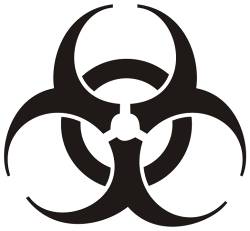
BIOHAZARD Biosafety Level: … Person Responsible for Biosafety: … Emergency Contact Number: … Office Phone Number: … Home Phone Number: … The person responsible named above has the authority to permit related parties to enter and exit the laboratory area. |
1. Color of the warning sign:
- Background color of the sign is yellow;
- Color of the text and symbol is black.
2. Size: A4 paper size.
Form No. 02
|
........1.......... ---------- |
SOCIALIST REPUBLIC OF VIET NAM |
|
Number: / |
.......2…, day … month … year 20… |
PETITION FOR APPLICATION
Issuing Biosafety Certificate
Respectfully submitted to: 3
Name of the entity with a laboratory:
Laboratory:
Fax: 4
Telephone: Email (if available):
Based on Decision No. /2016/NĐ-CP dated … month … year 20… of the Government on ensuring biosafety in laboratories, we have completed the physical infrastructure, equipment, personnel, operational procedures, and related documents required for issuance of a Biosafety Certificate at level …5..........
We respectfully request your consideration, evaluation, and issuance of a Biosafety Certificate at level …6… (please see attached related documents).
We hereby pledge to fully comply with all regulations on biosafety in laboratories and accept full responsibility under the law for our operations.
|
HEAD OF THE UNIT |
_______________
1 Entity with a laboratory
2 Place name
3 Authority Issuing Biosafety Certificate
4 Specific address of the entity with a laboratory
5,6 Specify the biosafety level for which the certificate is requested
Implementation Report of Production Projects of Supporting Industry Products Confirmed with Incentives
STAFF DECLARATION OF LABORATORY
|
Serial number |
Full Name |
Position |
Professional Qualification |
Assigned job responsibilities |
|
1 |
||||
|
2 |
||||
|
3 |
||||
|
4 |
||||
|
... |
|
REPRESENTATIVE OF THE ENTITY WITH A LABORATORY |
Form number 04
MEDICAL EQUIPMENT DECLARATION OF LABORATORY
|
Serial number |
Name of equipment |
Equipment Code (MODEL) |
Bayfidian |
Country of manufacture |
Year of manufacture |
Usage status |
Maintenance/ Calibration |
Remarks |
|
1 |
||||||||
|
2 |
||||||||
|
3 |
||||||||
|
… |
|
REPRESENTATIVE OF THE ENTITY WITH A LABORATORY |
Form number 05
|
..........1.......... ---------- |
SOCIALIST REPUBLIC OF VIET NAM |
|
Number: / |
........2…, day … month … year 20… |
PETITION FOR APPLICATION
Reissuance of Biosafety Certificate
Respectfully submitted to: 3
Name of the entity with a laboratory:
Fax: 4
Telephone: Email (if available):
Biosafety Certificate No.: … Date of Issue
Based on Decision No. /2016/NĐ-CP…/dated … month … year 2016 of the Government on ensuring biosafety in laboratories.
Request for reissuance of Biosafety Certificate due to:
|
Expiry: Damage: Loss: Name Change: |
□ □ □ □ |
We respectfully request your consideration, evaluation, and reissuance of a Biosafety Certificate at level …5… (please see attached related documents).
We hereby pledge to fully comply with all regulations on biosafety in laboratories and accept full responsibility under the law for our operations.
|
HEAD OF THE UNIT |
_______________
1 Name of the entity with a laboratory
2 Place name
3 Authority Issuing Biosafety Certificate
4 Specific address of the entity with a laboratory
5 Specify the biosafety level requested
Form number 06
|
..........1........... |
SOCIALIST REPUBLIC OF VIET NAM |
|
No.: /PTN-…2.... |
.......3…, day … month … year 20… |
1. Declaring entity:
Application for Issuance of New and Reissued Biosafety Certificate
Name of receiving unit:
Fax: 4
Email/Website:
Form of issuance: New issue □ Reissue □
Received application dossier for issuing, reissuing the Biosafety Certificate including:
|
1 |
Application form for new issuance, reissuance of certificate |
□ |
||
|
2 |
Certified copy of professional qualification certificates |
□ |
||
|
3 |
List of personnel in the laboratory |
□ |
||
|
4 |
List of equipment in the laboratory |
□ |
||
|
5 |
Floor plan of the laboratory |
□ |
||
|
6 |
Documents proving the establishment and operation of the facility with the laboratory |
□ |
||
|
7 |
Diagram of wastewater treatment system |
□ |
||
|
8 |
Wastewater testing results |
□ |
||
|
9 |
Description of material specifications for each type of entrance and window design |
□ |
||
|
10 |
Description of material specifications for each type of equipment used in the electrical system and water system |
□ |
||
|
11 |
Design of chemical waste liquid treatment system and testing results meeting national technical standards on environment |
□ |
||
|
12 |
Design accompanied by description of material specifications for each type of equipment used in the ventilation system |
□ |
||
|
13 |
Report on changes (in case of reissuance) |
□ |
||
|
Supplemental file received at attempt number:… |
day…month…year… |
Signature for receipt |
||
|
Supplemental file received at attempt number:… |
day…month…year… |
Signature for receipt |
||
|
Supplemental file received at attempt number:… |
day…month…year… |
Signature for receipt |
||
|
RECEIVER OF APPLICATION FILE |
_______________
1 Issuing authority of the certificate.
2 Abbreviation of the issuing authority
3 Place name
4 Specific address of the entity with a laboratory
Form No. 07
|
MINISTRY OF HEALTH |
SOCIALIST REPUBLIC OF VIET NAM |
|
Number: /GCNATSH |
CERTIFICATE OF INSURANCE OR OTHER FINANCIAL SECURITY
Laboratory name:
Fax:
Name of the entity with a laboratory:
Has met biosafety laboratory standard level
This Biosafety Certificate is valid for 01 year from the date of issuance./.
|
PERMIT FOR ESTABLISHING A REPRESENTATIVE OFFICE OF A FOREIGN COOPERATION AND RESEARCH ORGANIZATION IN VIETNAM THE MINISTER |
Form No. 08
|
........1......... .........2.......... |
SOCIALIST REPUBLIC OF VIET NAM |
|
Number …/…3… |
......4…, day … month … year 20… |
SELF-PUBLICATION STATEMENT
The testing facility has met biosafety standards
Respectfully submitted to: 5
Establishment name:
Fax: 6
Head of the facility:
Contact phone: Email (if available):
Based on the provisions of Article …7…Decree No. …/2016/ND-CP dated … month … year 2016 of the Government, we meet the conditions regarding physical facilities, equipment, personnel, and biosafety practices in the laboratory for biosafety level…8........
We respectfully request your esteemed agency to consider and publish the information as prescribed.
We commit to conducting tests within our scope of expertise and bear responsibility under the law for all activities of our unit./.
|
HEAD OF THE UNIT |
______________
1 Name of the managing authority of the self-declared facility that meets biosafety standards.
2 Name of the facility applying for announcement of meeting biosafety standards.
3 Abbreviation of the name of the self-declared facility that meets biosafety standards.
4 Place name.
5 Authority receiving the application dossier for self-declaration of meeting biosafety standards.
6 Specific address of the facility applying for self-declaration of meeting biosafety standards.
7 Biosafety Level I laboratory according to Article 5, Biosafety Level II laboratory according to Article 6.
8 Biosafety level.
Văn bản gốc (PDF)
Tải văn bản
Bản đồ quan hệ
Bấm vào một văn bản để mở. Viền đỏ = quan hệ làm thay đổi hiệu lực.
Bản dịch
Văn bản này có sẵn ở các ngôn ngữ sau: