
Resolution No. 1211/2016/QH13 of the National Assembly regarding the establishment, division, merger, and adjustment of provincial, district, town, and city administrative boundaries under provinces; classification of provincial, district, town, and city administrative units. This resolution sets standards for administrative units such as centrally-administered cities, cities under provinces, towns, and wards based on specific socio-economic indicators. Additionally, the resolution provides guidance on determining population size and the ratio of non-agricultural labor.
Scope of application
Provincial, district, town, and city administrative units
Key points
- Specifies criteria for the establishment, division, merger, and adjustment of provincial, district, town, and city administrative boundaries.
- Provides guidance on determining population size and the ratio of non-agricultural labor.
- Applies to administrative units established after the effective date of this resolution.
- Encourages the merger of administrative units to reduce management costs and improve operational efficiency.
- Ensures balanced budget revenues and expenditures, with an average economic growth rate over the past three years reaching the national average or that of the province/city directly under the central government.
🌐 Social impact of this document
- Enhances the effectiveness of state administration at all levels.
- Strengthens socio-economic development in administrative units.
- Reduces management costs and improves the quality of public services.
❓ Frequently asked questions
When does this resolution take effect?
Resolution No. 1211/2016/QH13 takes effect from the date of signature, which is May 25, 2016.
Do administrative units established before the effective date of this resolution have to comply with the standards set forth in this resolution?
No. Administrative units established before the effective date of this resolution will not apply the new standards stipulated in this resolution.
How is the ratio of non-agricultural labor in urban areas, towns, districts, and wards determined?
The ratio of non-agricultural labor is calculated using the formula K = (E0 / Et) * 100%, where E0 is the number of non-agricultural workers in urban areas, towns, districts, and wards; Et is the total number of workers in economic sectors within these areas.
Full text
RESOLUTION
On the criteria for administrative units and classification of administrative units
THE STANDING COMMITTEE OF THE NATIONAL ASSEMBLY
SOCIALIST REPUBLIC OF VIET NAM
Pursuant to the Constitution of the Socialist Republic of Vietnam;
Pursuant to the Law on the Organization of the National Assembly No. 57/2014/QH13;
WHEREAS, the Law on Local Administration No. 77/2015/QH13;
Considering the proposal of the Government at the Report No. 03/TTr-CP dated January 7, 2016,
RESOLUTION:
PART I
CRITERIA FOR ADMINISTRATIVE UNITS
Section 1
CRITERIA FOR RURAL ADMINISTRATIVE UNITS
Article 1. Criteria for provinces
1. Population size:
a) Provinces in mountainous areas and highlands from 900,000 people upwards;
b) Provinces not falling under point a of this clause from 1,400,000 people upwards.
2. Natural area:
a) Provinces in mountainous areas and highlands from 8,000 km2 upwards;
b) Provinces not falling under point a of this clause from 5,000 km2 upwards.
Article 2. Criteria for districts
1. Population size:
a) Districts in mountainous areas and highlands from 80,000 people upwards;
b) Districts not falling under point a of this clause from 120,000 people upwards.
2. Natural area:
a) Districts in mountainous areas and highlands from 850 km2 upwards;
b) Districts not falling under point a of this clause from 450 km2 upwards.
1. Population size:
a) Communes in mountainous areas and highlands from 5,000 people upwards;
b) Communes not falling under point a of this clause from 8,000 people upwards.
2. Natural area:
a) Communes in mountainous areas and highlands from 50 km2 upwards;
b) Communes not falling under point a of this clause from 30 km2 upwards.
Section 2
CRITERIA FOR URBAN ADMINISTRATIVE UNITS
Article 4. Criteria for centrally-administered cities
2. Natural area from 1,500 km2 upwards.
a) The number of district-level administrative units directly subordinate from 11 units upwards;
b) The ratio of the number of districts to the total number of district-level administrative units from 60% upwards.
4. Already recognized as a special-class city or class I city; or the area proposed to establish a centrally-administered city has been classified to meet the criteria of a special-class city or class I city.
Article 5. Criteria for provincial cities, cities within centrally-administered cities
1. Population size from 150,000 people upwards.
2. Natural area from 150 km2 upwards.
3. Administrative units directly subordinate:
a) The number of commune-level administrative units directly subordinate from 10 units upwards;
b) The ratio of the number of wards to the total number of commune-level administrative units from 65% upwards.
4. Already recognized as a class I city, class II city, or class III city; or the area proposed to establish a provincial city, city within a centrally-administered city has been classified to meet the criteria of a class I city, class II city, or class III city.
Article 6. Criteria for towns
1. Population size from 100,000 people upwards.
2. Natural area from 200 km2 upwards.
3. Administrative units directly subordinate:
a) The number of commune-level administrative units directly subordinate from 10 units upwards;
b) The ratio of the number of wards to the total number of commune-level administrative units from 50% upwards.
4. Already recognized as a class III town or class IV town; or the area proposed to establish a town has been classified to meet the criteria of a class III town or class IV town.
Article 7. Criteria for districts (urban)
1. Population size from 150,000 people upwards.
2. Natural area from 35 km2 upwards.
Article 8. Standards for wards
1. Population size:
a) Wards under districts with a population of 15,000 people or more;
b) Wards under provincial cities or centrally-administered city-level cities with a population of 7,000 people or more;
c) Wards under towns with a population of 5,000 people or more.
2. Natural area of at least 5.5 km².
4. Urban infrastructure system must meet the provisions set out in Appendix 2 attached to Resolution No. 1210/2016/UBTVQH13 on urban classification.
1. Population size of 8,000 people or more.
2. Natural area of at least 14 km².
3. Recognized as a fourth or fifth-class city; or the proposed town establishment area has been classified to meet the criteria of a fourth or fifth-class city.
4. Economic and social development structure and level must meet the provisions set out in Appendix 2 attached to this Resolution.
The population scale standards stipulated in Clause 1 of Articles from Article 1 to Article 9 are determined according to Appendix 2 attached to this Resolution.
Section 3
STANDARDS FOR ADMINISTRATIVE UNITS IN ISLANDS
The standards for administrative units in islands include population size, natural area, number of subordinate administrative units, economic and social development structure and level must reach 20% or more of the corresponding administrative unit standards prescribed in Sections 1 and 2 of Chapter I of this Resolution, and reach 50% or more of the infrastructure and architectural, landscape urban development standards of the corresponding city type prescribed in Resolution No. 1210/2016/UBTVQH13 on urban classification, except in cases provided for in point a, Clause 2, Article 31 of this Resolution.
Chapter II
CLASSIFICATION OF ADMINISTRATIVE UNITS
Section 1
STANDARDS FOR CLASSIFICATION AND POINT CALCULATION METHODS FOR RURAL ADMINISTRATIVE UNIT CLASSIFICATION
Article 12. Classification standards and point calculation methods for provincial administrative units
1. Population size:
a) Provinces with a population of up to 500,000 people are given 10 points; above 500,000 people, each additional 30,000 people adds 0.5 points, but not exceeding 30 points;
b) Mountainous and highland provinces apply a rate of 75% of the provision in point a of this clause.
2. Natural area of up to 1,000 km² is given 10 points; above 1,000 km², each additional 200 km² adds 0.5 points, but not exceeding 30 points.
3. Number of subordinate administrative units:
a) Having from 10 district-level administrative units or less is given 2 points; above 10 district-level administrative units, each additional administrative unit adds 0.5 points, but not exceeding 6 points;
b) Having a ratio of provincial cities and towns to the total number of district-level administrative units of 20% or less is given 1 point; above 20%, each additional 5% adds 0.5 points, but not exceeding 4 points.
4. Level of economic and social development:
a) Having a ratio of revenue redistribution to the central budget from 10% or less is given 8 points; above 10%, each additional 1% adds 0.25 points, but not exceeding 10 points.
In case there is no ratio of revenue redistribution to the central budget, if the local government revenue share according to the tiered fiscal system compared to the total balanced budget expenditure of the locality is 50% or less, it is given 3 points; above 50%, each additional 5% adds 0.5 points, but not exceeding 8 points;
b) The proportion of industry, construction, and services in the economic structure of 70% or less is given 1 point; above 70%, each additional 5% adds 0.25 points, but not exceeding 2 points;
c) Per capita income at or below the national average is given 1 point; above the national average, each additional 5% adds 0.25 points, but not exceeding 2 points;
d) Economic growth rate at or below the national average is given 1 point; above the national average, each additional 0.5% adds 0.25 points, but not exceeding 2 points;
đ) Having from 20% to 30% of counties meeting the new rural standard is given 1 point; above 30%, each additional 5% adds 0.25 points, but not exceeding 2 points;
e) The proportion of trained labor force at or below the national average is given 1 point; above the national average, each additional 5% adds 0.25 points, but not exceeding 2 points;
g) The number of hospital beds per ten thousand people at or below the national average is given 0.5 points; above the national average, each additional 5% adds 0.25 points, but not exceeding 1.5 points;
h) The number of doctors per ten thousand people at or below the national average is given 0.5 points; above the national average, each additional 5% adds 0.25 points, but not exceeding 1.5 points;
5. Special factors:
a) Having from 20% to 30% of the population being ethnic minorities is given 1 point; above 30%, each additional 5% adds 0.25 points, but not exceeding 3 points;
b) Having from 10% to 20% of district-level administrative units directly under the province bordering the national land boundary is given 1 point; above 20%, each additional 10% adds 0.25 points, but not exceeding 2 points.
Article 13. Classification criteria and method for calculating classification points for administrative units at the district level
1. Population size:
a) Districts with a population of up to 40,000 people are awarded 10 points; for every additional 3,000 people above 40,000, 0.5 points are added, but not exceeding a maximum of 30 points;
b) Mountainous and highland districts apply a rate of 75% of the provisions set out in point a of this clause.
2. Natural area from 100 km² or less is awarded 10 points; for every additional 15 km² above 100 km², 0.5 points are added, but not exceeding a maximum of 30 points.
3. Number of subordinate administrative units:
a) Having up to 10 administrative units at the commune level awards 2 points; for each additional administrative unit above 10, 0.5 points are added, but not exceeding a maximum of 6 points;
b) Having a ratio of towns to the total number of administrative units at the commune level of up to 20% awards 1 point; for each additional 5% above 20%, 0.5 points are added, but not exceeding a maximum of 4 points.
4. Level of economic and social development:
a) Achieving self-balancing of local government budget revenues and expenditures awards 10 points.
In cases where self-balancing of local government budget revenues and expenditures has not been achieved, if the share of local government budget revenue received according to the allocation compared to the total balanced budget expenditure of the locality is up to 40%, 3 points are awarded; for each additional 5% above 40%, 0.5 points are added, but not exceeding a maximum of 8 points;
b) The proportion of industry, construction, and services in the economic structure up to 50% awards 1 point; for each additional 5% above 50%, 0.5 points are added, but not exceeding a maximum of 3 points;
c) Having from 15% to 20% of communes meeting the new rural standard awards 1 point; for each additional 5% above 20%, 0.25 points are added, but not exceeding a maximum of 3 points;
d) The proportion of trained labor force up to 50% awards 1 point; for each additional 5% above 50%, 0.25 points are added, but not exceeding a maximum of 3 points;
đ) The proportion of administrative units at the commune level meeting the national health standards up to 50% awards 1 point; for each additional 5% above 50%, 0.25 points are added, but not exceeding a maximum of 3 points;
5. Special factors:
a) Having from 20% to 30% of the population being ethnic minorities awards 1 point; for each additional 5% above 30%, 0.25 points are added, but not exceeding a maximum of 2 points;
b) Having from 10% to 20% of administrative units at the commune level bordering the country on land awards 1 point; for each additional 5% above 20%, 0.25 points are added, but not exceeding a maximum of 2 points;
c) Poor districts are awarded 1 point.
Article 14. Classification criteria and method for calculating classification points for administrative units at the commune level
1. Population size:
a) Communes with a population of up to 3,500 people are awarded 10 points; for every additional 100 people above 3,500, 0.5 points are added, but not exceeding a maximum of 35 points;
b) Mountainous and highland communes apply a rate of 75% of the provisions set out in point a of this clause;
c) Communes bordering the country on land apply a rate of 30% of the provisions set out in point a of this clause.
2. Natural area from 10 km² or less is awarded 10 points; for every additional 0.5 km² above 10 km², 0.5 points are added, but not exceeding a maximum of 30 points.
3. Level of socio-economic development:
a) Achieving self-balancing of local government budget revenues and expenditures awards 10 points.
In cases where self-balancing of local government budget revenues and expenditures has not been achieved, if the share of local government budget revenue received according to the allocation compared to the total balanced budget expenditure of the locality is up to 30%, 3 points are awarded; for each additional 5% above 30%, 0.5 points are added, but not exceeding a maximum of 8 points;
b) Communes recognized as meeting the new rural standard are awarded 20 points.
In cases where communes have not met the new rural standard, if they meet any criterion within the system of criteria defined for the new rural standard, each criterion is awarded 1 point, but the total number of points for all criteria does not exceed 15 points;
c) Communes bordering the country on land apply a rate of 30% of the provisions set out in point a and point b of this clause.
4. Special factors:
a) Having from 20% to 30% of the population being ethnic minorities awards 1 point; for each additional 5% above 30%, 0.25 points are added, but not exceeding a maximum of 2 points;
b) Particularly difficult communes are awarded 1 point;
c) Safe zone communes are awarded 1 point;
d) Having a special national relic or a UNESCO-recognized heritage awards 1 point.
Section 2
CLASSIFICATION CRITERIA AND METHOD FOR CALCULATING CLASSIFICATION POINTS FOR URBAN ADMINISTRATIVE UNITS
Article 15. Criteria for classification and method of calculating points for administrative units of centrally governed cities
1. Population size from 1,000,000 people or less is calculated as 20 points; for more than 1,000,000 people, each additional 30,000 people is calculated as an additional 0.5 point, but not exceeding a maximum of 30 points.
2. Natural area from 1,000 km² or less is calculated as 20 points; for more than 1,000 km², each additional 50 km² is calculated as an additional 0.5 point, but not exceeding a maximum of 25 points.
3. Number of subordinate administrative units:
a) Having up to 10 district-level administrative units directly under it is calculated as 2 points; for more than 10 district-level administrative units, each additional unit is calculated as an additional 0.5 point, but not exceeding a maximum of 6 points;
b) Having a ratio of districts to the total number of district-level administrative units at 40% or less is calculated as 1 point; for more than 40%, each additional 5% is calculated as an additional 0.5 point, but not exceeding a maximum of 4 points.
4. Level of economic and social development:
a) Having a ratio of revenue redistribution to the central budget at 20% or less is calculated as 10 points; for more than 20%, each additional 1% is calculated as an additional 0.25 point, but not exceeding a maximum of 15 points;
b) The proportion of industry, construction, and services in the economic structure of 70% or less is given 1 point; above 70%, each additional 5% adds 0.25 points, but not exceeding 2 points;
c) Per capita income at or below the national average is given 1 point; above the national average, each additional 5% adds 0.25 points, but not exceeding 2 points;
d) Economic growth rate at or below the national average is given 1 point; above the national average, each additional 0.5% adds 0.25 points, but not exceeding 2 points;
d) The ratio of non-agricultural labor force at 65% or less is calculated as 1 point; for more than 65%, each additional 5% is calculated as an additional 0.25 point, but not exceeding a maximum of 2 points;
e) The proportion of trained labor force at or below the national average is given 1 point; above the national average, each additional 5% adds 0.25 points, but not exceeding 2 points;
g) The number of hospital beds per ten thousand people at or below the national average is given 0.5 points; above the national average, each additional 5% adds 0.25 points, but not exceeding 1.5 points;
h) The number of doctors per ten thousand people at or below the national average is given 0.5 points; above the national average, each additional 5% adds 0.25 points, but not exceeding 1.5 points;
5. Special factors: the converted temporary resident population from 10% to 20% of the permanent resident population is calculated as 1 point; for more than 20%, each additional 5% is calculated as an additional 0.5 point, but not exceeding a maximum of 5 points.
Article 16. Criteria for classification and method of calculating points for administrative units of districts
1. Population size from 60,000 people or less is calculated as 10 points; for more than 60,000 people, each additional 5,000 people is calculated as an additional 0.5 point, but not exceeding a maximum of 30 points.
2. Natural area from 10 km² or less is calculated as 10 points; for more than 10 km², each additional 1 km² is calculated as an additional 0.5 point, but not exceeding a maximum of 25 points.
3. Number of directly subordinate administrative units from 8 wards or less is calculated as 5 points; for more than 8 wards, each additional ward is calculated as an additional 0.5 point, but not exceeding a maximum of 10 points.
4. Level of economic and social development:
a) Achieving self-balancing of local government budget revenues and expenditures awards 10 points.
In cases where local government revenues and expenditures have not yet been balanced, if the proportion of local government revenue received according to the allocation compared to the total balanced expenditure of the local government budget is 50% or less is calculated as 3 points; for more than 50%, each additional 5% is calculated as an additional 0.5 point, but not exceeding a maximum of 8 points;
b) The proportion of industry, construction, and services in the economic structure at 70% or less is calculated as 1 point; for more than 70%, each additional 5% is calculated as an additional 0.5 point, but not exceeding a maximum of 4 points;
c) The ratio of trained labor force at 60% or less is calculated as 1 point; for more than 60%, each additional 5% is calculated as an additional 0.5 point, but not exceeding a maximum of 4 points;
d) The ratio of wards meeting national health criteria at 70% or less is calculated as 1 point; for more than 70%, each additional 5% is calculated as an additional 0.5 point, but not exceeding a maximum of 4 points;
d) The ratio of households using clean water at 70% or less is calculated as 1 point; for more than 70%, each additional 5% is calculated as an additional 0.5 point, but not exceeding a maximum of 4 points;
5. Special factors: the converted temporary resident population from 10% to 20% of the permanent resident population is calculated as 1 point; for more than 20%, each additional 5% is calculated as an additional 0.5 point, but not exceeding a maximum of 5 points.
Article 17. Criteria for classification and method of calculating points for administrative units of provincial cities and cities within centrally governed cities
1. Population size from 50,000 people or less is calculated as 10 points; for more than 50,000 people, each additional 4,000 people is calculated as an additional 0.5 point, but not exceeding a maximum of 30 points.
2. Natural area from 50 km² or less is calculated as 10 points; for more than 50 km², each additional 5 km² is calculated as an additional 0.5 point, but not exceeding a maximum of 25 points.
3. Number of subordinate administrative units:
a) Having up to 10 administrative units at the commune level awards 2 points; for each additional administrative unit above 10, 0.5 points are added, but not exceeding a maximum of 6 points;
b) Having a ratio of wards to the total number of commune-level administrative units at 35% or less is calculated as 1 point; for more than 35%, each additional 5% is calculated as an additional 0.5 point, but not exceeding a maximum of 4 points.
4. Level of economic and social development:
a) Achieving self-balancing of local government budget revenues and expenditures awards 10 points.
In cases where local government revenues and expenditures have not yet been balanced, if the proportion of local government revenue received according to the allocation compared to the total balanced expenditure of the local government budget is 50% or less is calculated as 3 points; for more than 50%, each additional 5% is calculated as an additional 0.5 point, but not exceeding a maximum of 8 points;
b) The proportion of industry, construction, and services in the economic structure at 70% or less is calculated as 1 point; for more than 70%, each additional 5% is calculated as an additional 0.5 point, but not exceeding a maximum of 4 points;
c) The ratio of non-agricultural labor force at 60% or less is calculated as 1 point; for more than 60%, each additional 5% is calculated as an additional 0.5 point, but not exceeding a maximum of 4 points;
d) The ratio of trained labor force at 55% or less is calculated as 1 point; for more than 55%, each additional 5% is calculated as an additional 0.5 point, but not exceeding a maximum of 3 points;
d) The ratio of commune-level administrative units meeting national health criteria at 60% or less is calculated as 1 point; for more than 60%, each additional 5% is calculated as an additional 0.5 point, but not exceeding a maximum of 3 points;
e) The ratio of households using clean water at 60% or less is calculated as 1 point; for more than 60%, each additional 5% is calculated as an additional 0.25 point, but not exceeding a maximum of 3 points;
5. Special factors:
a) Converted temporary resident population from 10% to 20% of the permanent resident population is calculated as 1 point; for more than 20%, each additional 5% is calculated as an additional 0.25 point, but not exceeding a maximum of 2 points;
b) Provincial city in highland areas is calculated as 1 point; provincial city in mountainous areas is calculated as 0.5 point;
c) Having from 10% to 20% of commune-level administrative units with national land borders is calculated as 0.5 point; for more than 20%, each additional 5% is calculated as an additional 0.25 point, but not exceeding a maximum of 1 point;
d) Having from 20% to 30% of the population being ethnic minorities is calculated as 0.5 point; for more than 30%, each additional 5% is calculated as an additional 0.25 point, but not exceeding a maximum of 1 point.
Article 18. Criteria for classification and method of calculating classification points for municipal administrative units
1. Population size of up to 50,000 people is calculated as 10 points; for more than 50,000 people, each additional 3,000 people is calculated as an additional 0.5 point, but not exceeding a maximum of 30 points.
2. Natural area of up to 70 km² is calculated as 10 points; for more than 70 km², each additional 5 km² is calculated as an additional 0.5 point, but not exceeding a maximum of 25 points.
3. Number of subordinate administrative units:
a) Having from 8 or fewer commune-level administrative units is calculated as 2 points; for more than 8 commune-level administrative units, each additional unit is calculated as an additional 0.5 point, but not exceeding a maximum of 6 points;
b) The ratio of wards to the total number of commune-level administrative units at or below 30% is calculated as 1 point; for more than 30%, each additional 5% is calculated as an additional 0.5 point, but not exceeding a maximum of 4 points.
4. Level of economic and social development:
a) Achieving self-balancing of local government budget revenues and expenditures awards 10 points.
In cases where local government revenues and expenditures have not yet been balanced, if the proportion of local government revenue received according to the allocation compared to the total balanced expenditure of the local government budget is 50% or less is calculated as 3 points; for more than 50%, each additional 5% is calculated as an additional 0.5 point, but not exceeding a maximum of 8 points;
b) The proportion of industry, construction, and services in the economic structure of up to 65% is calculated as 1 point; for more than 65%, each additional 5% is calculated as an additional 0.5 point, but not exceeding a maximum of 4 points;
c) The ratio of non-agricultural labor force of up to 55% is calculated as 1 point; for more than 55%, each additional 5% is calculated as an additional 0.5 point, but not exceeding a maximum of 4 points;
d) The ratio of trained labor force at 55% or less is calculated as 1 point; for more than 55%, each additional 5% is calculated as an additional 0.5 point, but not exceeding a maximum of 3 points;
d) The ratio of commune-level administrative units meeting national health criteria of up to 55% is calculated as 1 point; for more than 55%, each additional 5% is calculated as an additional 0.5 point, but not exceeding a maximum of 3 points;
e) The ratio of households using clean water at 60% or less is calculated as 1 point; for more than 60%, each additional 5% is calculated as an additional 0.25 point, but not exceeding a maximum of 3 points;
5. Special factors:
a) Converted temporary resident population from 10% to 20% of the permanent resident population is calculated as 1 point; for more than 20%, each additional 5% is calculated as an additional 0.25 point, but not exceeding a maximum of 2 points;
b) A highland town is calculated as 1 point; a mountainous town is calculated as 0.5 point;
c) Having from 10% to 20% of commune-level administrative units with national land borders is calculated as 0.5 point; for more than 20%, each additional 5% is calculated as an additional 0.25 point, but not exceeding a maximum of 1 point;
d) Having from 20% to 30% of the population being ethnic minorities is calculated as 0.5 point; for more than 30%, each additional 5% is calculated as an additional 0.25 point, but not exceeding a maximum of 1 point.
Article 19. Criteria for classification and method of calculating classification points for ward administrative units
1. Population size:
a) Wards with up to 5,000 people are calculated as 10 points; for more than 5,000 people, each additional 200 people is calculated as an additional 0.5 point, but not exceeding a maximum of 35 points;
b) Wards with national land borders apply the level of 30% as specified in point a of this clause.
2. Natural area of up to 2 km² is calculated as 10 points; for more than 2 km², each additional 0.1 km² is calculated as an additional 0.5 point, but not exceeding a maximum of 30 points.
3. Level of socio-economic development:
a) Achieving self-balancing of local government budget revenues and expenditures awards 10 points.
In cases where local budget revenue and expenditure are not self-balanced, if the share of local budget revenue received according to the tiered system compared to the total balanced local budget expenditure is up to 45% is calculated as 3 points; for more than 45%, each additional 5% is calculated as an additional 0.5 point, but not exceeding a maximum of 8 points;
b) The ratio of non-agricultural labor force of up to 55% is calculated as 1 point; for more than 55%, each additional 5% is calculated as an additional 0.5 point, but not exceeding a maximum of 5 points;
c) Meeting national health criteria is calculated as 5 points;
d) The ratio of households using clean water of up to 60% is calculated as 1 point; for more than 60%, each additional 5% is calculated as an additional 0.5 point, but not exceeding a maximum of 5 points;
e) Wards with national land borders apply the level of 30% as specified in points a, b, c, d, and d of this clause.
4. Special factors:
a) Converted temporary resident population from 10% to 20% of the permanent resident population is calculated as 0.5 point; for more than 20%, it is calculated as 1 point;
b) Highland wards are calculated as 1.5 points; mountainous wards are calculated as 1 point;
c) Safe area wards are calculated as 0.5 point;
d) Having from 20% to 30% of the population being ethnic minorities is calculated as 0.5 point; for more than 30%, each additional 5% is calculated as an additional 0.25 point, but not exceeding a maximum of 1 point;
d) Having a special national relic or a UNESCO recognized heritage is calculated as 1 point.
Article 20. Classification criteria and method for calculating classification points for administrative units of towns
1. Population size:
a) A town with a population of up to 5,000 people shall be awarded 10 points; for every additional 100 people over 5,000, 0.5 points shall be added, but not exceeding 35 points in total;
b) For a town located on the national border on land, the level specified in point a of this clause shall apply at 30%;
2. Natural area from 05 km² or less shall be awarded 10 points; for every additional 0.2 km² over 05 km², 0.5 points shall be added, but not exceeding 30 points in total;
3. Level of socio-economic development:
a) Achieving self-balancing of local government budget revenues and expenditures awards 10 points.
In cases where self-balancing of local government budget revenues and expenditures has not been achieved, if the share of local government budget revenue received according to the allocation compared to the total balanced budget expenditure of the locality is up to 40%, 3 points are awarded; for each additional 5% above 40%, 0.5 points are added, but not exceeding a maximum of 8 points;
b) The ratio of non-agricultural labor force at 50% or less shall be awarded 1 point; for every additional 5% over 50%, 0.5 points shall be added, but not exceeding 5 points in total;
c) Meeting national health criteria is calculated as 5 points;
d) The ratio of households using clean water at 60% or less shall be awarded 1 point; for every additional 5% over 60%, 0.5 points shall be added, but not exceeding 5 points in total;
e) For a town located on the national border on land, the levels specified in points a, b, c, d, and đ of this clause shall apply at 30%;
4. Special factors:
a) Converted temporary resident population from 10% to 20% of the permanent resident population is calculated as 0.5 point; for more than 20%, it is calculated as 1 point;
b) A mountainous town shall be awarded 1.5 points; a highland town shall be awarded 1 point;
c) A safe zone town shall be awarded 0.5 points;
d) Having from 20% to 30% of the population being ethnic minorities is calculated as 0.5 point; for more than 30%, each additional 5% is calculated as an additional 0.25 point, but not exceeding a maximum of 1 point;
d) Having a special national relic or a UNESCO recognized heritage is calculated as 1 point.
Section 3
CLASSIFICATION CRITERIA AND METHOD FOR CALCULATING CLASSIFICATION POINTS FOR ADMINISTRATIVE UNITS ON ISLANDS AND COASTAL AREAS
Article 21. Classification criteria and method for calculating classification points for administrative units on islands and coastal areas
1. The criteria for population size, natural area, number of directly subordinate administrative units, and economic and social development level shall apply at 30% of the corresponding administrative unit provisions set out in Section 1 and Section 2 of Chapter II of this Resolution;
2. In cases where a county-level administrative unit on an island does not organize directly subordinate village-level administrative units, it shall be awarded 10 points for the criterion regarding the number of directly subordinate administrative units;
3. The special factor criterion for administrative units on islands shall be awarded 5 points;
Section 4
FRAMEWORK OF POINTS, AUTHORITY, AND PROCEDURES FOR CLASSIFYING ADMINISTRATIVE UNITS
Article 22. Special category administrative units
Hanoi City and Ho Chi Minh City are special category administrative units as provided for in Clause 3, Article 3 of the Law on Local Administration Organization;
Article 23. Framework of points for classifying administrative units
2. An administrative unit at the provincial, district, or commune level shall be classified as Category I if it achieves a total of 75 points or more;
4. An administrative unit at the provincial, district, or commune level that does not meet the framework points for Categories I and II shall be classified as Category III;
Article 24. Authority to decide on the classification of administrative units
1. The Prime Minister decides to recognize the classification of provincial-level administrative units as Category I, Category II, and Category III;
2. The Minister of Interior decides to recognize the classification of district-level administrative units as Category I, Category II, and Category III;
3. The Chairman of the People's Committee of the province decides to recognize the classification of commune-level administrative units as Category I, Category II, and Category III;
Article 25. Documents and Budget for Classifying Administrative Units
1. Documents for classifying administrative units include:
a) The proposal of the People's Committee;
b) The resolution of the Provincial People's Council for the classification of provincial administrative units or the resolution of the District People's Council for the classification of district administrative units or the resolution of the Commune People's Council for the classification of commune administrative units;
c) A report presenting the evaluation of classification criteria for administrative units;
d) A statistical table of data serving as the basis for determining the criteria;
đ) A map identifying the location of the classified administrative unit;
e) Official documents from competent authorities deciding or confirming the special criteria.
The standard for local budget revenue and expenditure and economic growth rate is averaged over the three most recent years prior to the submission of documents for review.
3. The budget for classifying administrative units is guaranteed by the state budget.
Article 26. Procedures and Formalities for Classifying Provincial Administrative Units
1. The Provincial People's Committee directs specialized agencies to prepare the documents for classifying its own administrative units, which are then submitted to the Provincial People's Council for examination and approval.
2. The Provincial People's Committee sends the documents for classifying provincial administrative units to the Ministry of Home Affairs according to Clause 1 of Article 25 of this Resolution.
4. The Ministry of Home Affairs submits to the Prime Minister for examination and decision within fifteen days from the date of receiving the review results.ớThe Government shall examine and decide within fifteen days from the date of receipt of the results.rime Minister cb) Agencies assigned by Ministries and equivalent ministries to review environmental impact assessment reports and detailed environmental protection plans.
5. The Prime Minister examines and decides on the classification of provincial administrative units within fifteen days from the date of receipt of the documents submitted by the Ministry of Home Affairs.
Article 27. Procedures and Formalities for Classifying District Administrative Units
1. The District People's Committee directs specialized agencies to prepare the documents for classifying its own administrative units, which are then submitted to the District People's Council for examination and approval before sending them to the Provincial People's Committee.
2. The Department of Home Affairs advises and assists the Provincial People's Committee in checking the documents of the District People's Committee; collaborates with the District People's Committee to complete the documents and report to the Provincial People's Committee for examination.
3. The Provincial People's Committee sends the documents for classifying district administrative units to the Ministry of Home Affairs according to Clause 1 of Article 25 of this Resolution.
5. The Minister of Home Affairs examines and decides on the classification of district administrative units within fifteen days from the date of receiving the review results.
Article 28. Procedures and Formalities for Classifying Commune Administrative Units
1. The Commune People's Committee prepares the documents for classifying its own administrative units, which are then submitted to the Commune People's Council for examination and approval, and sent to the District People's Committee.
2. The Office of Home Affairs advises and assists the District People's Committee in checking the documents of the Commune People's Committee; collaborates with the Commune People's Committee to complete the documents and report to the District People's Committee.
3. The District People's Committee sends the documents for classifying commune administrative units to the Department of Home Affairs according to Clause 1 of Article 25 of this Resolution.
5. The Department of Home Affairs submits to the Chairman of the Provincial People's Committee for examination and decision on the classification of commune administrative units within fifteen days from the date of receiving the review results.
6. The Chairman of the Provincial People's Committee examines and decides on the classification of commune administrative units within fifteen days from the date of receipt of the documents submitted by the Department of Home Affairs.
Chapter III
IMPLEMENTATION AND EFFECTIVE DATE OF ENFORCEMENT
Article 29. Plan for the establishment, merger, division, and adjustment of administrative unit boundaries
a) Part One: Legal basis and necessity;
b) Part Two: Historical formation and current status of directly related administrative units concerning the establishment, merger, division, and adjustment of administrative unit boundaries.
c) Part Three: Scheme for the establishment, merger, division, and adjustment of administrative unit boundaries. This part includes the natural area and population (as of December 31 of the preceding year to the year when the plan is submitted to the competent authority for examination) of provincial-level administrative units and of related administrative units concerning the establishment, merger, division, and adjustment of administrative unit boundaries; scheme for the establishment, merger, division, and adjustment of administrative unit boundaries regarding natural area, population, and administrative boundaries; results after the establishment, merger, division, and adjustment of administrative unit boundaries concerning natural area, population, and number of administrative units at all levels;
d) Part Four: Impact assessment and development orientation of administrative units after the establishment, merger, division, and adjustment of administrative unit boundaries;
e) Part Five: Conclusions and recommendations;
f) Appendices accompanying the plan include tables of statistics on natural area and population (as of December 31 of the preceding year to the year when the plan is submitted to the competent authority for examination) of directly related administrative units concerning the establishment, merger, division, and adjustment of administrative unit boundaries; tables of statistics on key socio-economic indicators; maps of current administrative boundaries of related administrative units concerning the establishment, merger, division, and adjustment of administrative unit boundaries and maps of schemes for the establishment, merger, division, and adjustment of administrative unit boundaries; one documentary film (from 15 to 20 minutes) about the location, current socio-economic development, and infrastructure of the proposed area for the establishment, merger, division, and adjustment of administrative unit boundaries; comprehensive tables of administrative unit standards; tables and lists of data confirmed by the competent authority as the basis for determining administrative unit standards; dossier of plans for classifying cities, decisions of the competent authority recognizing mountainous and highland administrative units (if applicable);
This part includes history of formation; geographical location; function and role in establishing cities, towns, and townships; natural area and land structure; population and demographic composition (age; urban and town population; ethnic groups; agricultural and non-agricultural labor); economic, cultural, social development, infrastructure, national defense, security, and organizational staffing within the political system in the area; detailed evaluation of the level of achievement of administrative unit standards prescribed in this Resolution (if applicable);
This part includes economic and social impact assessment, environmental impact, national defense, and security; development orientation; budget and investment capital solutions; personnel allocation schemes and other solutions to implement the development orientation of administrative units;
Article 30. Names of newly established administrative units and renaming administrative units
1. The name shall be written using letters from the Vietnamese alphabet or the alphabet of ethnic minorities.
2. The name of a new provincial-level administrative unit shall not be identical to the name of an existing provincial-level administrative unit throughout the country.
The name of a new district-level administrative unit shall not be identical to the name of another district-level administrative unit within the same province.
The name of a new commune-level administrative unit shall not be identical to the name of another commune-level administrative unit within the same district.
3. In cases of necessity, an administrative unit may be renamed. The new name of the administrative unit shall comply with the provisions of Clause 1 and Clause 2 of this Article.
4. The procedures and formalities for renaming administrative units shall be carried out in accordance with the procedures and formalities for establishing, dissolving, merging, dividing, and adjusting the boundaries of administrative units.
1. The standards of administrative units prescribed in Chapter I of this Resolution shall not apply to administrative units established before the date on which this Resolution takes effect.
2. The establishment, division, and adjustment of the boundaries of administrative units must meet the corresponding standards of administrative units prescribed in Chapter I of this Resolution, except in the following cases:
a) In special cases to meet the requirements for national sovereignty protection, the establishment of an administrative unit may be decided by the competent authority before meeting the corresponding standards prescribed in Chapter I of this Resolution;
b) For the establishment of urban administrative units in mountainous areas, highlands, border regions, or areas with special value in cultural heritage, history, and tourism recognized at the national and international levels, the population size standard may be lower but must reach 50% or more, while other standards must comply with the provisions of Chapter I of this Resolution;
c) The establishment of urban administrative units based on one same-level administrative unit without increasing the number of administrative units shall not apply to Clause 2, Point a, Clause 3 of Articles 4, 5, and 6, Clause 2 and Clause 3 of Article 7, Clause 2 of Article 8, and Article 9 of this Resolution.
3. Encouragement is given to the merger of administrative units. The merger and adjustment of the boundaries of administrative units without increasing the number of administrative units shall not apply to the provisions of Chapter I of this Resolution.
4. Regarding the classification of administrative units:
a) Administrative units classified before the date on which this Resolution takes effect shall retain their original classification until reclassified according to the provisions of Points b and c of this clause;
b) Administrative units after establishment, merger, division, or boundary adjustment shall be classified according to the provisions of this Resolution;
c) In cases where there is a change in the classification criteria of administrative units necessitating reclassification, such reclassification shall be conducted in accordance with the provisions of this Resolution.
Article 32. Effectiveness
This Resolution shall take effect from the date of signature.
|
|
TM. STANDING COMMITTEE OF THE NATIONAL ASSEMBLY |
ANNEX
CRITERIA FOR STRUCTURE AND LEVEL OF ECONOMIC-SOCIAL DEVELOPMENT; DETERMINATION OF POPULATION SIZE AND NON-AGRICULTURAL LABOR RATIO
(Issued togethercoholic beveragespursuant to Resolution No. 1211/2016/UBTVQH13 dated May 25, 2016)
|
No. |
Index |
City under centraloenergy |
City under province, city under cityNo. under central Chapter |
CITY |
Towns |
District |
Method for determiningThis Resolution takes effect from the date it is adopted by the National Assembly.under district |
Part1. Fulfilling requirements stipulated in Article 13 of Decree No. 135/2021/NĐ-CP.under city under province, cityNo. under centrally-administered city |
Method for determiningtonunder township |
|
1 |
Budget revenue and expenditure balance |
Surplus |
Surplus |
Adequate |
Adequate |
Surplus |
Surplus |
Adequate |
Adequate |
|
2 |
Per capita income compared to the whole country (times) |
1,75 |
1,05 |
0,7 |
- |
1,05 |
- |
- |
- |
|
3 |
Average economic growth rate over the last three years (%) |
Reach the average of the whole country |
Reach the average of the province, centrally-administered city |
Reach the average of the province, centrally-administered city |
- |
Reach the average of the centrally-administered city |
- |
- |
- |
|
4 |
Average poverty rate over the last three years (%) |
Reach the average of the whole country |
Reach the average of the province, centrally-administered city |
Reach the average of the province, centrally-administered city |
Reach the average of the district |
Reach the average of the centrally-administered city |
Reach the average of the district |
Reach the average of the city |
Reach the average of the township |
|
5 |
Proportion of industry, construction, and services in the economic structure |
90% |
80% |
75% |
- |
90% |
- |
- |
- |
|
6 |
Ratio of non-agricultural labor in urban areas, towns, districts, and wards* |
90% |
80% |
75% |
65% |
90% |
85% |
80% |
70% |
* This indicator is determined according to Appendix 2.
2. Appendix 2: Method for determining population size and non-agricultural labor ratio
2.1. Method for determining population sizNo.
a) Population size includes registered permanent residents and temporary residents converted to equivalent permanent residents.
b) Temporary residents staying for six months or more are counted as permanent residents, those staying less than six months are converted to equivalent permanent residents using the following formula:
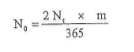
Where:
N |||0: Number of converted temporary residents (people);
N |||organize credit institutions, foreign bank branches are responsible for organizing the implementation of this Circular.: Total number of visitors staying temporarily for less than six months (people);
m: Average number of days stayed by each visitor (days).
2.2. Method for determining the non-agricultural labor ratio
a) Non-agricultural labor in urban areas, towns, districts, and wards refers to labor in the urban area, town, district, and ward sectors of the national economy excluding agricultural and fisheries production (salt workers, fishermen, forestry workers are considered non-agricultural labor).
b) The non-agricultural labor ratio in urban areas, towns, districts, and wards is calculated using the following formula:
Where:
K: Non-agricultural labor ratio in urban areas, towns, districts, and wards (%);
E0: Number of non-agricultural labor in urban areas, towns, districts, and wards (people);
Eorganize credit institutions, foreign bank branches are responsible for organizing the implementation of this Circular.: Total number of labor working in various sectors in urban areas, towns, districts, and wards (people).
Original document (PDF)
Relations map
Click a document to open. A red border = a relation that changes validity.
Translations
This document is available in the following languages: