
Decree No. 158/2025/NĐ-CP provides detailed regulations on mandatory social insurance, including participation conditions, contribution levels, retirement benefits, and death benefits, as well as the calculation method for allowances for workers who do not meet the conditions to receive pension.
적용 범위
Workers, employers, social insurance agencies, organizations, and individuals related to mandatory social insurance.
핵심 사항
- Participation in mandatory social insurance includes workers specified in points a, b, c, g, h, i, k, l, m, and n of Clause 1 and Clause 2 of Article 2 of the Social Insurance Law.
- The salary basis for contributing to mandatory social insurance is calculated based on the monthly salary, including the salary according to job or position, salary supplements, and other additional amounts.
- A worker meets the conditions to receive a pension when they have contributed to mandatory social insurance for at least 20 years and reach the retirement age stipulated in the Social Insurance Law.
- Death benefits apply to deceased workers, including funeral allowance and monthly or lump-sum survivor benefit.
- Workers who do not meet the conditions to receive a pension but wish to can still receive monthly allowances from the time they reach retirement age until they meet the conditions for receiving social pension.
🌐 이 문서의 사회적 영향
- Positive impact: Improving the rights of workers who do not meet the conditions to receive a pension but wish to receive monthly allowances.
- Negative impact: It may impose a financial burden on businesses experiencing economic difficulties, leading to temporary suspension of contributions to mandatory social insurance.
- Benefit: Workers enjoy more comprehensive social insurance benefits.
- Cost: Businesses may incur higher costs when paying social insurance for workers.
❓ 자주 묻는 질문
How can workers who do not meet the conditions to receive a pension but wish to receive monthly allowances proceed?
Workers can submit a request document in the format issued by the Vietnam Social Security for review and to receive monthly allowances.
What is the salary basis for contributing to mandatory social insurance?
The salary basis for contributing to mandatory social insurance is equal to the basic salary or as prescribed by the Government, depending on the period.
When can workers temporarily suspend contributions to mandatory social insurance?
Employers may consider suspending contributions to the retirement and death fund when facing economic difficulties or natural disasters, but must continue other contributions.
How is the social pension allowance calculated?
The social pension allowance is calculated by multiplying the percentage of the pension by the average salary basis for social insurance contributions.
If a worker dies before exhausting their monthly allowance period, can relatives receive a lump-sum payment?
Relatives of the worker can receive a lump-sum payment equivalent to the number of months not yet received multiplied by the monthly allowance amount.
전문
|
THE GOVERNMENT |
SOCIALIST REPUBLIC OF VIET NAM |
|
Number: 158/2025/NĐ-CP |
Hanoi, June 25, 2025 |
DECREE
Providing detailed regulations and guidance on implementing certain provisions of the Social Insurance Law regarding mandatory social insurance
On the basis of Law on Government Organization dated February 18, 2025;
On the basis of Law on Local Administration dated June 16, 2025;
On the basis of The Social Insurance Law dated June 29, 2024;
Pursuant to point 13 of Resolution No. 142/2024/QH15 dated June 29, 2024 of the National Assembly on the Resolution of the Seventh Session, the Fifteenth National Assembly;
||| Based on the proposal of the Minister of Home Affairs;
The Government issues this Decree providing detailed regulations and guidance on implementing certain provisions of The Social Insurance Law regarding mandatory social insurance.
PART I
GENERAL PROVISIONS
Article 1. Scope of Regulation
This Decree provides detailed regulations and guidance on implementing certain provisions of the Social Insurance Law regarding mandatory social insurance and the regime for workers who do not meet the conditions for retirement pay and have not reached the age for social pension benefits; point 13 of Resolution No. 142/2024/QH15 dated June 29, 2024 of the National Assembly on the Resolution of the Seventh Session, the Fifteenth National Assembly.
Article 2. Applicability
1. Workers as specified in points a, b, c, g, h, i, k, l, m, and n of Clause 1 and Clause 2 of Article 2 of the Social Insurance Law.
2. Beneficiaries of social insurance benefits as prescribed by the Social Insurance Law.
3. Employers as specified in Clause 3 of Article 2 of the Social Insurance Law.
4. Other agencies, organizations, and individuals related to mandatory social insurance.
Article 3. Subjects participating in mandatory social insurance
1. Workers belonging to the subjects participating in mandatory social insurance shall comply with the provisions set out in points a, b, c, g, h, i, k, l, m, and n of Clause 1 and Clause 2 of Article 2 of the Social Insurance Law.
Workers as specified in points a, b, c, i, k, l of Clause 1 and Clause 2 of Article 2 of the Social Insurance Law who are sent to study, intern, or work domestically and abroad while still receiving domestic salaries shall be considered subjects participating in mandatory social insurance.
2. The head of a household business of a registered business as specified in point m of Clause 1 of Article 2 of the Social Insurance Law participating in mandatory social insurance includes:
a) The head of a household business of a registered business that pays taxes through declaration;
b) The head of a household business of a registered business not falling under point a of this clause shall participate in mandatory social insurance from July 1, 2029.
Subjects as specified in Clause 2 of this Article and point n of Clause 1 of Article 2 of the Social Insurance Law simultaneously belong to multiple subjects as specified in Clause 1 of Article 2 of the Social Insurance Law, then participation in mandatory social insurance shall be carried out as follows:
a) Subjects as specified in Clause 2 of this Article simultaneously belong to one of the subjects as specified in points b, c, d, đ, e, i, a, l, k, n, h, and g of Clause 1 of Article 2 of the Social Insurance Law shall participate in mandatory social insurance according to the corresponding subject as specified in points b, c, d, đ, e, i, a, l, k, n, h, or g of Clause 1 of Article 2 of the Social Insurance Law in chronological order;
b) Subjects as specified in point n of Clause 1 of Article 2 of the Social Insurance Law simultaneously belong to one of the subjects as specified in points b, c, d, đ, e, i, a, l, and k of Clause 1 of Article 2 of the Social Insurance Law shall participate in mandatory social insurance according to the corresponding subject as specified in points b, c, d, đ, e, i, a, l, or k of Clause 1 of Article 2 of the Social Insurance Law in chronological order.
4. Subjects receiving social insurance benefits, monthly allowances not belonging to the subjects participating in mandatory social insurance as specified in point a of Clause 7 of Article 2 of the Social Insurance Law include:
a) Persons currently receiving monthly disability allowance;
b) Persons currently receiving monthly allowance as prescribed in Decree No. 09/1998/NĐ-CP dated January 23, 1998 of the Government amending and supplementing Decree No. 50/CP dated July 26, 1995 of the Government on the living expenses regime for village, ward, and town cadres (hereinafter referred to as Decree No. 09/1998/NĐ-CP);
c) Persons currently receiving monthly allowance as prescribed in Decision No. 91/2000/QĐ-TTg dated August 4, 2000 of the Prime Minister on monthly allowances for those who have reached the retirement age at the time of ceasing to receive monthly disability allowance; Decision No. 613/QĐ-TTg dated May 6, 2010 of the Prime Minister on monthly allowances for those with from 15 to less than 20 years of actual service who have ceased to receive monthly disability allowance;
d) Persons currently receiving monthly allowances as prescribed in Decision No. 142/2008/QĐ-TTg dated October 27, 2008 of the Prime Minister on the implementation of the regime for military personnel participating in the anti-American war to save the country with less than 20 years of service in the army who have been discharged and returned to their home areas; Decision No. 38/2010/QĐ-TTg dated May 6, 2010 of the Prime Minister on amending and supplementing Decision No. 142/2008/QĐ-TTg dated October 27, 2008 of the Prime Minister on the implementation of the regime for military personnel participating in the anti-American war with less than 20 years of service in the army who have been discharged and returned to their home areas; Decision No. 53/2010/QĐ-TTg dated August 20, 2010 of the Prime Minister on the regime for public security officers participating in the anti-American war with less than 20 years of service in the public security force who have stopped working and returned to their home areas; Decision No. 62/2011/QĐ-TTg dated November 9, 2011 of the Prime Minister on policies for those participating in wars to protect the country and international missions in Cambodia and Laos after April 30, 1975 who have been discharged and stopped working;
đ) Persons currently receiving monthly allowances as prescribed in Article 23 of the Social Insurance Law.
5. Subjects as specified in point a of Clause 1 of Article 2 of the Social Insurance Law working part-time with monthly income calculated according to Clause 2 of Article 7 of this Decree lower than the minimum base salary for mandatory social insurance contributions; workers working under trial period contracts as prescribed by labor laws do not belong to the subjects participating in mandatory social insurance.
Article 4. Copies of documents for implementing social insurance as prescribed in the Social Insurance Law
Copies of documents for implementing social insurance as prescribed in the Social Insurance Law, which fall under other cases specified in point c, Clause 12, Article 3 of the Social Insurance Law, are documents confirmed by the social insurance agency to have been compared with the original, ensuring the accuracy of the copy relative to the original when the file is submitted directly to the social insurance agency.
Article 5. Reference Level
1. The reference level is the amount of money decided by the Government to calculate the contribution rate and benefit levels for certain social insurance schemes as stipulated in the Social Insurance Law.
2. When the basic wage is not abolished, the reference level prescribed in the Social Insurance Law shall be equal to the basic wage. At the time the basic wage is abolished, the reference level shall not be lower than the basic wage.
3. When the basic wage is abolished, the reference level shall be adjusted by the Government based on the increase in the consumer price index, economic growth, and in accordance with the state budget's capacity and the social insurance fund.
Chapter II
REGISTRATION FOR PARTICIPATION AND MANAGEMENT OF COMPULSORY SOCIAL INSURANCE CONTRIBUTIONS AND COLLECTION
Registration for participation and management of compulsory social insurance contributions and collection shall be carried out according to the provisions of Chapter IV of the Social Insurance Law and detailed as follows:
Article 6. Registration for Participation in Social Insurance and Issuance of Social Insurance Books
Registration for participation in social insurance and issuance of social insurance books shall be carried out according to the provisions of Article 28 of the Social Insurance Law and detailed as follows:
1. Subjects specified in Clause 2, Article 3 of this Decree and point n, Clause 1, Article 2 of the Social Insurance Law, if they register for participation in social insurance through a business household, enterprise, cooperative, or cooperative federation managing them, shall comply with the provisions of Clause 1, Article 28 of the Social Insurance Law.
2. Subjects specified in Clause 2, Article 3 of this Decree and point n, Clause 1, Article 2 of the Social Insurance Law, if they register for participation in social insurance directly with the social insurance agency, shall comply with the provisions of Clause 2, Article 28 of the Social Insurance Law.
3. Subjects specified in point g, Clause 1, Article 2 of the Social Insurance Law shall submit the declaration form as prescribed in point b, Clause 1, Article 27 of the Social Insurance Law to the social insurance agency before going to work abroad.
Agencies or organizations managing cadres, civil servants, public officials, and employees must register for participation in social insurance for subjects specified in point h, Clause 1, Article 2 of the Social Insurance Law before such individuals are dispatched as members of Vietnam's representative agencies abroad, in accordance with the provisions of Clause 1, Article 28 of the Social Insurance Law.
Article 7. Wages as Basis for Compulsory Social Insurance Contributions
Wages as the basis for compulsory social insurance contributions shall be implemented according to the provisions of Clause 1, Article 31 of the Social Insurance Law and detailed as follows:
1. Wages as the basis for compulsory social insurance contributions as prescribed in point b, Clause 1, Article 31 of the Social Insurance Law include monthly wages, comprising the salary based on job or position, allowances, and other supplementary amounts, wherein:
a) The salary based on job or position is calculated according to the time (monthly) of the job or position based on the salary scale or pay grade established by the employer in accordance with Article 93 of the Labor Code, agreed upon in the labor contract;
b) Allowances to compensate for working conditions, complexity of tasks, living conditions, and recruitment attractiveness that are not fully covered by the salary at point a, Clause 1, are agreed upon in the labor contract; excluding allowances dependent on or fluctuating with productivity, work process, and performance quality;
c) Other supplementary amounts that can be determined as specific monetary amounts together with the salary prescribed at point a, Clause 1, agreed upon in the labor contract and paid regularly and stably each payday; excluding other supplementary amounts dependent on or fluctuating with productivity, work process, and performance quality.
2. For subjects specified in point l, Clause 1, Article 2 of the Social Insurance Law, the wages as the basis for compulsory social insurance contributions are the wages agreed upon in the labor contract for the month.
If the labor contract specifies hourly wages, the monthly wages are calculated by multiplying the hourly wage by the number of hours worked in the month as agreed upon in the labor contract;
If the labor contract specifies daily wages, the monthly wages are calculated by multiplying the daily wage by the number of days worked in the month as agreed upon in the labor contract;
If the labor contract specifies weekly wages, the monthly wage is calculated by multiplying the weekly wage by the number of weeks worked in the month as agreed upon in the labor contract.
3. For subjects specified in point k, Clause 1, Article 2 of the Social Insurance Law, the wages as the basis for compulsory social insurance contributions are the monthly allowances of non-professional workers at the commune, village, or neighborhood level. In cases where the monthly allowance of non-professional workers at the commune, village, or neighborhood level is lower than the minimum wage for compulsory social insurance contributions, the wages as the basis for compulsory social insurance contributions shall be equal to the minimum wage for compulsory social insurance contributions. prescribed in point d, Clause 1, Article 31 of the Social Insurance Law.
4. For subjects specified in point i, Clause 1, Article 2 of the Social Insurance Law, the wages as the basis for compulsory social insurance contributions are the wages that such subjects receive according to the law.
5. In cases where the salary recorded in the labor contract is paid in foreign currency, the salary serving as the basis for mandatory social insurance contributions shall be calculated in Vietnamese Dong based on the foreign currency salary converted to Vietnamese Dong according to the average exchange rate of the buying rate for transfer transactions between Vietnamese Dong and the foreign currency published by four state-owned commercial banks at the end of the day on January 2 for the first six months of the year and July 1 for the last six months of the year; in case these dates fall on public holidays or weekends, the exchange rate of the next working day shall be used.
Article 8. Recovery and supplementary payment of mandatory social insurance contributions
1. Cases for recovery and supplementary payment of mandatory social insurance contributions:
a) Adjustments increasing the salary that serve as the basis for mandatory social insurance contributions, with the retroactive period being before the adjustment;
b) In cases where Vietnamese workers continue their employment abroad upon extension or signing a new labor contract immediately upon arrival in the host country, supplementary payments shall be made after returning to Vietnam;
c) Subjects specified in points m and n of Clause 1, Article 2 of the Social Insurance Law who fail to make social insurance contributions within the latest deadline stipulated in point b of Clause 4, Article 33 of the Social Insurance Law.
2. The amount of recovery and supplementary payment of mandatory social insurance contributions shall be calculated as follows:
a) For the cases specified in points a and b of Clause 1 of this Article, the amount of recovery is the amount of mandatory social insurance contributions required under Articles 33 and 34 of the Social Insurance Law.
If, by the end of the month following the month in which the decision to increase the salary was made or the month in which the worker returned to Vietnam, the employer and employee have not yet made the supplementary payment of mandatory social insurance contributions, when recovering the mandatory social insurance contributions, the social insurance agency shall implement according to the provisions of Clause 1, Article 40 and Clause 1, Article 41 of the Social Insurance Law;
b) For the case specified in point c of Clause 1 of this Article, the amount of recovery is the amount of mandatory social insurance contributions required under point a of Clause 4, Article 33 of the Social Insurance Law, plus an additional amount equal to 0.03% per day calculated on the amount of mandatory social insurance contributions due and the number of days beyond the latest deadline for making such contributions as stipulated in point b of Clause 4, Article 33 of the Social Insurance Law.
3. Employers are responsible for paying the full amount of mandatory social insurance contributions required under Clause 1, Article 40 and Clause 1, Article 41 of the Social Insurance Law for employees who meet the conditions for receiving social insurance benefits or who terminate their employment contracts or cease their work relationships in order to promptly settle social insurance entitlements for the employees.
In cases where employers have not paid the full amount of mandatory social insurance contributions, social insurance entitlements shall be settled based on the time already contributed to social insurance for employees meeting the conditions for receiving social insurance benefits, confirming the time contributed to social insurance up to the date of contribution for employees who terminate their employment contracts or cease their work relationships; after recovering the amount of mandatory social insurance contributions due, the time contributed to social insurance will be supplemented and the level of social insurance benefits received will be adjusted accordingly.
Article 9. Contribution levels, methods, and deadlines for mandatory social insurance contributions of employees and employers
The contribution levels, methods, and deadlines for mandatory social insurance contributions of employees and employers shall be implemented in accordance with the provisions of Articles 33 and 34 of the Social Insurance Law and are detailed as follows:
Employees and employers are not required to contribute to social insurance for a month if the object specified in point k, Clause 1, Article 2 of the Social Insurance Law does not work and does not receive allowances for 14 working days or more in that month.
Article 10. Suspension of contributions to the pension and death benefit fund as stipulated in Clause 1 and Clause 3, Article 37 of the Social Insurance Law
1. Employers may be considered for suspension of contributions to the pension and death benefit fund when they fall under one of the following circumstances:
a) Facing difficulties due to changes in structure or technology, economic crisis or recession, or implementing state policies for restructuring the economy or international commitments;
b) Facing difficulties due to natural disasters, fires, epidemics, or crop failures.
2. Conditions for suspension of contributions to the pension and death benefit fund:
Employers falling under one of the circumstances stipulated in Clause 1 of this Article and meeting one of the following conditions shall be allowed to suspend contributions to the pension and death benefit fund along with their employees:
a) Must temporarily cease production and business operations for 30 days or more and cannot arrange work for employees, among whom at least 50% of those subject to mandatory social insurance must temporarily stop working compared to the total number of employees present before ceasing production and business operations;
b) Suffering losses exceeding 50% of the total value of assets due to natural disasters, fires, epidemics, or crop failures, excluding the value of land, and unable to arrange work for employees, among whom at least 50% of those subject to mandatory social insurance must temporarily stop working compared to the total number of employees present before the occurrence of natural disasters, fires, epidemics, or crop failures.
3. Duration of suspension of contributions to the pension and death benefit fund:
a) The duration of suspension of contributions to the pension and death benefit fund is calculated monthly and shall not exceed 12 months from the month the employer sends a request letter to the social insurance agency. During the period of suspension of contributions to the pension and death benefit fund, the employer still has to contribute to the sick leave and maternity fund, the occupational accident and disease fund.
In case during the period of suspension of contributions to the pension and death benefit fund, employees meet the conditions to enjoy pension or death benefits or terminate labor contracts, then the employer and employee or the employee's relatives must make up contributions for the suspended period to resolve the benefits for the employee or confirm the social insurance contribution period for the employee;
b) Upon expiration of the suspension period as stipulated in point a of this clause, the employer and employee continue to make mandatory social insurance contributions and make up contributions for the suspended period. The deadline for making up contributions is the last day of the month following the end of the suspension period, the amount of makeup contributions for each suspended month equals the amount of mandatory social insurance contributions as stipulated in Articles 33 and 34 of the Social Insurance Law.
In case the employer and employee make up contributions for the suspended months after the deadline for making up contributions, they shall follow the provisions of Articles 40 and 41 of the Social Insurance Law.
4. Authority, procedures, and formalities for determining the number of employees subject to mandatory social insurance who temporarily stop working and the value of damaged assets as stipulated in Clause 2 of this Article are as follows:
a) The authority to determine the number of employees subject to mandatory social insurance who temporarily stop working for agencies, units, organizations, and enterprises under the management of local People's Committees is determined by the local civil service department; for agencies, units, organizations, and enterprises under the management of central ministries and sectors, it is determined by the respective ministries and sectors. The number of employees subject to mandatory social insurance who temporarily stop working is calculated based on the total number of employees present before ceasing production and business operations or before the occurrence of natural disasters, fires, epidemics, or crop failures.
The authority to determine the value of damaged assets for agencies, units, organizations, and enterprises under the management of local People's Committees is determined by the local finance department; for agencies, units, organizations, and enterprises under the management of central ministries and sectors, it is determined by the finance departments of the respective ministries and sectors. The value of damaged assets is calculated based on the most recent asset inventory report prior to the damage.
b) Employers falling under the circumstances specified in point a, Clause 2 of this Article shall prepare a request letter accompanied by a list of employees at the time before ceasing production and business operations and at the time of the request; a list of employees subject to mandatory social insurance who must temporarily stop working.
Employers falling under the circumstances specified in point b, Clause 2 of this Article suffer losses exceeding 50% of the total asset value, shall prepare a request letter accompanied by the most recent asset inventory report prior to the damage; a record of damaged assets due to natural disasters, fires, epidemics, or crop failures. If they cannot arrange work for employees, among whom at least 50% of those subject to mandatory social insurance must temporarily stop working compared to the total number of employees present before the occurrence of natural disasters, fires, epidemics, or crop failures, they shall prepare a request letter accompanied by a list of employees at the time before the occurrence of natural disasters, fires, epidemics, or crop failures and at the time of the request; a list of employees subject to mandatory social insurance who must temporarily stop working.
c) Within 15 working days from the date of receiving the request from the employer, the authority specified in point a, Clause 2 of this Article shall have the responsibility to review, determine, and issue a reply letter to the employer.
5. The employer ensures the conditions specified in Clauses 1, 2, and 3 of this Article and submits a written request to temporarily suspend contributions to the pension and disability fund, accompanied by a document identifying the number of employees subject to mandatory social insurance who are temporarily on leave or a document determining the value of damaged assets, to be submitted to the social insurance agency.
6. Within ten working days from the date of receipt of the employer's application file, the social insurance agency shall be responsible for processing the temporary suspension of contributions to the pension and disability fund; if it does not process the request, it must respond in writing and provide specific reasons.
Article 11. Temporary suspension of mandatory social insurance contributions as provided for in Clause 2 and Clause 3 of Article 37 of the Social Insurance Law
1. Civil servants, public officials, and employees participating in mandatory social insurance who are detained or temporarily suspended from work for fourteen working days or more in a month shall have their mandatory social insurance contributions temporarily suspended as follows:
a) During the period of detention or temporary suspension from work for fourteen working days or more in a month, civil servants, public officials, employees, and employers shall temporarily suspend mandatory social insurance contributions.
b) After the period of detention or temporary suspension from work for fourteen working days or more in a month, if civil servants, public officials, and employees receive full 100% salary for the period of detention or temporary suspension from work, they shall make up the mandatory social insurance contributions for that period. The latest deadline for making up contributions is the last day of the month following the month when the suspension ends. The amount of makeup contributions for the months of suspension equals the amount of mandatory social insurance contributions stipulated in Articles 33 and 34 of the Social Insurance Law.
If the deadline for making up contributions is exceeded, the employer and civil servants, public officials, and employees shall make up contributions for the months of suspension according to the provisions of Articles 40 and 41 of the Social Insurance Law.
c) After the period of detention or temporary suspension from work for fourteen working days or more in a month, if civil servants, public officials, and employees do not receive full 100% salary for the period of detention or temporary suspension from work, they shall not make up mandatory social insurance contributions for that period.
2. In cases where workers who are not covered under Clause 1 of this Article are temporarily suspended from work for fourteen working days or more in a month, the temporary suspension of mandatory social insurance contributions shall be implemented as follows:
a) During the period of temporary suspension from work for fourteen working days or more in a month, workers and employers shall temporarily suspend mandatory social insurance contributions.
b) After the period of temporary suspension from work for fourteen working days or more in a month, if workers receive full salary from the employer for the period of temporary suspension from work, they shall make up the mandatory social insurance contributions for that period. The latest deadline for making up contributions is the last day of the month following the month when the suspension ends. The amount of makeup contributions for the months of suspension equals the amount of mandatory social insurance contributions stipulated in Articles 33 and 34 of the Social Insurance Law.
If the deadline for making up contributions is exceeded, the employer and workers shall make up contributions for the months of suspension according to the provisions of Articles 40 and 41 of the Social Insurance Law.
c) After the period of temporary suspension from work for fourteen working days or more in a month, if workers do not receive full salary from the employer for the period of temporary suspension from work, they shall not make up mandatory social insurance contributions for that period.
3. Workers specified in point g of Clause 1 of Article 2 of the Social Insurance Law, who temporarily lose their jobs during the implementation of their contracts and are confirmed by organizations providing services for sending workers to work abroad, shall have their mandatory social insurance contributions temporarily suspended during this period.
After the period of temporary job loss, if workers return to work, they shall continue to contribute to mandatory social insurance according to the regulations, without making up mandatory social insurance contributions for the period of temporary job loss.
Chapter III
MANDATORY SOCIAL INSURANCE REGIME
Section 1.
RETIREMENT BENEFITS
Article 12. Conditions for receiving pension
The conditions for receiving pension shall be implemented according to the provisions of Articles 64 and 65 of the Social Insurance Law and are detailed as follows:
1. Underground coal mining work as listed in Appendix I attached to this Decree.
2. When determining the conditions for receiving pension for cases where the employee's file does not specify the date and month of birth but only the year of birth, the first day of January of the year of birth shall be taken as the basis for determining the age of the employee. In cases where the date of birth cannot be determined but only the month and year of birth are known, the first day of the month and year of birth shall be taken as the basis for determining the age of the employee.
3. When determining the period of working in areas with regional allowance coefficient of 0.7 or higher for the period before January 1, 1995, to serve as the basis for examining the conditions for receiving pension, the regulations on regional allowances at the time of resolution shall be applied. For areas where the law on regional allowances at the time of resolution does not provide for or provides a lower regional allowance coefficient than 0.7, but the employee has actually worked in areas with a regional allowance coefficient of 0.7 or higher according to previous regulations on regional allowances, then the provisions of those documents shall be applied to determine the period of working in areas with a regional allowance coefficient of 0.7 or higher as the basis for examining the conditions for receiving pension.
In cases where employees have worked in battlefields B, C before April 30, 1975, and battlefield K before August 31, 1989, and such periods are counted as social insurance contributions, these periods shall be considered as periods of working in areas with a regional allowance coefficient of 0.7 as the basis for examining the conditions for receiving pension.
4. Subjects specified in points d and đ of Clause 1, Article 2 of the Social Insurance Law who have been deprived of military rank or police rank shall implement the conditions for receiving pension according to the provisions of Clause 1, Article 64 and Clause 1, Article 65 of the Social Insurance Law.
Article 13. Monthly Pension Rate
The monthly pension rate shall be implemented according to the provisions of Article 66 of the Social Insurance Law and is detailed as follows:
1. The monthly pension rate of employees shall be calculated by multiplying the percentage of the monthly pension rate by the average salary used as the basis for social insurance contributions as stipulated in Article 72 of the Social Insurance Law.
Subjects specified in points a, b, c, d, đ, g, and i of Clause 1, Article 2 of the Social Insurance Law who joined social insurance before July 1, 2025, and have compulsory social insurance contribution periods of 20 years or more under these categories, if their monthly pension rate is lower than the reference level, shall be calculated based on the reference level.
2. The age threshold for calculating the number of years retiring earlier than the prescribed age as the basis for reducing the percentage of the monthly pension rate stipulated in Clause 3, Article 66 of the Social Insurance Law is determined as follows:
a) Employees in normal working conditions shall take the age threshold as specified in point a of Clause 1, Article 64 of the Social Insurance Law;
b) Employees with a total compulsory social insurance contribution period of 15 years or more while engaged in heavy, hazardous, dangerous, or extremely heavy, hazardous, dangerous jobs listed in the catalog of heavy, hazardous, dangerous, or extremely heavy, hazardous, dangerous jobs or working in economically and socially difficult areas including the period of working in areas with a regional allowance coefficient of 0.7 or higher before January 1, 2021, shall take the age threshold as specified in point b of Clause 1, Article 64 of the Social Insurance Law;
c) Employees with 15 years or more working in underground coal mining shall take the age threshold as specified in point c of Clause 1, Article 64 of the Social Insurance Law.
Article 14. Receiving Social Insurance Benefits in One Time
Receiving social insurance benefits in one time shall be implemented according to the provisions of Article 70 of the Social Insurance Law and detailed as follows:
1. Workers receiving social insurance benefits in one time under the circumstances specified in point d, Clause 1, Article 70 of the Social Insurance Law shall be detailed as follows:
a) Workers who have social insurance contribution time before July 1, 2025 (before the date the Social Insurance Law takes effect) are workers for whom at the time of applying for social insurance benefits in one time, there remains social insurance contribution time before July 1, 2025 to calculate social insurance benefits.
b) The determination of 12 months not being mandatory social insurance contributors is 12 consecutive months without social insurance contributions counted up to the month immediately preceding the month when the social insurance agency receives the application for social insurance benefits in one time, excluding those months that are not required to make mandatory social insurance contributions according to Clause 5, Article 33 and Clause 3, Article 34 of the Social Insurance Law.
At the time when workers submit the application for social insurance benefits in one time, they must not be mandatory social insurance contributors and must not be voluntarily participating in social insurance.
2. In cases where workers meet both conditions for receiving social insurance benefits in one time as stipulated in point d, Clause 1, Article 70 of the Social Insurance Law and for retirement pension as stipulated in Clause 1, Article 64 of the Social Insurance Law, the matter will be resolved based on the worker's application.
Article 15. Average Salary Basis for Social Insurance Contributions to Calculate Retirement Pension and One-Time Allowance
The average salary basis for social insurance contributions to calculate retirement pension and one-time allowance shall be implemented according to the provisions of Article 72 of the Social Insurance Law and detailed as follows:
1. Workers subject to state-prescribed salary system with all social insurance contribution periods under this salary system shall have their average salary basis for social insurance contributions to calculate retirement pension and one-time allowance implemented according to Clause 1, Article 72 of the Social Insurance Law.
a) For workers with social insurance contribution periods before October 1, 2004, subject to the state-prescribed salary system, who receive social insurance benefits from July 1, 2025 onwards, the salary basis for social insurance contributions before October 1, 2004 shall be converted according to the salary system prescribed at the time of receiving social insurance benefits to calculate the average salary basis for social insurance contributions. Specifically, for workers with social insurance contribution periods in enterprises under the state-prescribed salary system before October 1, 2004, who receive social insurance benefits from July 1, 2025 onwards, the salary basis for social insurance contributions before October 1, 2004 shall be converted according to the salary prescribed in Decree No. 205/2004/NĐ-CP dated December 14, 2004 of the Government to calculate the average salary basis for social insurance contributions;
b) For workers who have not met the number of years of social insurance contributions as stipulated in Clause 1, Article 72 of the Social Insurance Law, the average salary basis for social insurance contributions of the months already contributed shall be calculated.
2. The average salary basis for social insurance contributions for workers subject to state-prescribed salary system in certain special cases shall be regulated as follows:
a) For workers with mandatory social insurance contribution periods of 15 years or more at levels of salaries corresponding to heavy, dangerous, or extremely dangerous jobs, if they switch to other jobs within organizations, units, enterprises still subject to the state-prescribed salary system but with lower salary bases for mandatory social insurance contributions, then upon retirement, the salary basis for mandatory social insurance contributions of consecutive years at levels of salaries corresponding to heavy, dangerous, or extremely dangerous jobs shall be taken to calculate the average salary basis for social insurance contributions, corresponding to the number of years stipulated in Clause 1, Article 72 of the Social Insurance Law;
b) Workers with service periods as officers, professional military personnel of the People's Army; professional technical officers, specialized technical officers of the Public Security Force; personnel engaged in confidential work with salaries equivalent to military personnel, who transfer to work in organizations, units, enterprises subject to the state-prescribed salary system before retiring, and whose salary basis for social insurance contributions of the last years before retirement is lower than that of the last years before transferring, shall take the salary basis for social insurance contributions of the last years before transferring to calculate the average salary basis for social insurance contributions;
c) Workers not falling under the provisions of points a and b of this clause, during the period of contributing social insurance under the state-prescribed salary system, if the average salary basis for social insurance contributions calculated based on the salary basis for social insurance contributions of the last years before retirement is lower than that calculated based on the entire contribution period, the average salary basis for social insurance contributions shall be calculated based on the entire contribution period;
3. Workers subject to the state-prescribed salary system who have contributed to social insurance including job seniority allowances, then transferred to jobs with or without job seniority allowances before retiring, the calculation of the average salary basis for social insurance contributions shall be carried out as follows:
a) In the case where the salary used as the basis for social insurance contributions for all final years does not include seniority allowances, the average salary used as the basis for social insurance contributions for the final years before retirement shall be calculated by adding the highest seniority allowance received according to the time of social insurance contributions including seniority allowances; if the period of receiving the highest seniority allowance ends before October 1, 2004, the salary used as the basis for social insurance contributions to calculate the seniority allowance shall be converted according to the salary system prescribed at the time of benefit settlement.
b) In the case where the salary used as the basis for social insurance contributions for all final years to calculate the average salary used as the basis for social insurance contributions to calculate pension and lump-sum allowance includes seniority allowances, the average salary used as the basis for social insurance contributions to calculate pension and lump-sum allowance shall be implemented according to the provisions of Clause 1, Article 72 of the Social Insurance Law.
c) In the case where the salary used as the basis for social insurance contributions for the final years to calculate the average salary used as the basis for social insurance contributions to calculate pension and lump-sum allowance includes both periods with seniority allowances and periods without seniority allowances, and the average salary used as the basis for social insurance contributions calculated according to this sub-clause is lower than that calculated based on the final years before changing jobs, the average salary used as the basis for social insurance contributions of the corresponding final years before changing jobs shall be used to calculate pension and lump-sum allowance.
4. For workers who have periods of social insurance contributions under the salary system prescribed by the State and periods of social insurance contributions under the salary system decided by the employer, the calculation of the average salary used as the basis for social insurance contributions shall be carried out according to the provisions of Clause 3, Article 72 of the Social Insurance Law.
The period of social insurance contributions under the salary system prescribed by the State shall be calculated as the average salary used as the basis for social insurance contributions according to the provisions of Clause 1, Article 72 of the Social Insurance Law over the total period of contributions under the salary system prescribed by the State. If the number of years specified in Clause 1, Article 72 of the Social Insurance Law is not met, the average salary used as the basis for contributions of the months already contributed shall be calculated.
5. When calculating the average salary used as the basis for social insurance contributions for workers who have worked at commune level and have been counted towards social insurance benefits, the period of social insurance contributions according to Decree No. 09/1998/ND-CP and the mandatory social insurance contributions of non-professional staff at commune level, village, and neighborhood shall be considered as the period of social insurance contributions under the salary system prescribed by the State.
6. When calculating the average salary used as the basis for social insurance contributions for workers who have worked before January 1, 1995 and are counted towards social insurance benefits but during this period, the workers did not receive salaries or living expenses (paid in work points or food equivalent to kindergarten teachers, cooperative leaders covering the entire commune, etc.), the average salary used as the basis for social insurance contributions shall not include the period without salaries or living expenses.
7. The average salary used as the basis for social insurance contributions to calculate pension and lump-sum allowance stipulated in Article 72 of the Social Insurance Law shall be used to calculate one-time social insurance benefits, one-time survivor's allowance for relatives of persons participating in social insurance or preserving social insurance contribution periods who die, and monthly allowances for workers who do not meet the conditions for pension and have not reached the age for social old-age allowance.
Article 16. Adjustment of Wages as the Basis for Compulsory Social Insurance Contributions
The adjustment of wages as the basis for compulsory social insurance contributions shall be carried out in accordance with Article 73 of the Social Insurance Law and shall be detailed as follows:
1. Wages serving as the basis for compulsory social insurance contributions to calculate the average level specified in Article 72 of the Social Insurance Law for workers subject to wage systems determined by employers and workers subject to wage systems prescribed by the State, who start participating in social insurance from January 1, 2016 onwards, shall be adjusted according to the following formula:
|
Adjusted wages serving as the basis for compulsory social insurance contributions each year |
= |
Wages serving as the basis for compulsory social insurance contributions each year |
x |
Wage adjustment coefficient for the corresponding year's social insurance contribution base |
a) The wage adjustment coefficient for the social insurance contribution base is calculated based on the average annual consumer price index and is expressed as follows:
|
Wage adjustment coefficient for the social insurance contribution base in year t |
= |
Average annual consumer price index of the immediately preceding year compared to the average annual consumer price index of 1994 |
|
Average annual consumer price index of year t compared to the average annual consumer price index of 1994 |
Where:
t is any year during the adjustment period;
The wage adjustment coefficient for the social insurance contribution base in year t is rounded to two decimal places and the lowest value is 1 (one).
b) The wage adjustment coefficient for the social insurance contribution base for years before 1995 is taken as the wage adjustment coefficient for the social insurance contribution base in 1994.
2. Based on the average annual consumer price index calculated according to the average annual consumer price index of 1994 provided by the General Statistics Office under the Ministry of Finance, the Vietnam Social Security determines the wage adjustment coefficient for the social insurance contribution base and implements the adjustment of wages serving as the basis for compulsory social insurance contributions for workers in accordance with Clause 1 of this Article.
Article 17. Retirement Benefits for Individuals with Both Voluntary and Compulsory Social Insurance Contributions
1. Workers with both voluntary and compulsory social insurance contributions shall have their retirement benefit calculation period as the total time they have contributed to voluntary and compulsory social insurance.
2. Workers who have contributed at least 15 years to compulsory social insurance if they fall within the category stipulated in Article 64 of the Social Insurance Law, or those who have contributed at least 20 years to compulsory social insurance if they fall within the category stipulated in Article 65 of the Social Insurance Law, shall implement the compulsory social insurance policy regarding conditions and levels of pension benefits.
Individuals with both voluntary and compulsory social insurance contributions who joined voluntary social insurance before January 1, 2021 and have contributed at least 20 years to voluntary social insurance shall meet the age requirement of 60 years old for men and 55 years old for women to receive a pension.
3. The monthly pension amount is calculated by multiplying the monthly pension entitlement ratio by the average income and the wage serving as the basis for compulsory social insurance contributions as stipulated in Clause 5 of this Article.
In cases where individuals have both voluntary and compulsory social insurance contributions and have participated in social insurance under the categories specified in points a, b, c, d, đ, g, and i of Clause 1 of Article 2 of the Social Insurance Law before July 1, 2025, and have contributed at least 20 years to compulsory social insurance under these categories, when calculating the monthly pension amount is lower than the reference level, it shall be calculated based on the reference level.
4. The level of one-time social insurance benefits is calculated according to the provisions of Clauses 3 and 4 of Article 70 of the Social Insurance Law, based on the number of years of social insurance contributions, the average income, and the wage serving as the basis for compulsory social insurance contributions as stipulated in Clause 5 of this Article.
5. The average income and wage serving as the basis for compulsory social insurance contributions are calculated according to the following formula:
|
Average income and wage serving as the basis for compulsory social insurance contributions |
= |
Total income serving as the basis for voluntary social insurance contributions |
+ |
Average wage serving as the basis for compulsory social insurance contributions |
+ |
Total number of months of mandatory social insurance contributions |
||
|
Total number of months of voluntary social insurance contributions |
+ |
Total number of months of social insurance contributions |
||||||
Where:
The average wage serving as the basis for compulsory social insurance contributions is calculated according to the provisions of Article 72 of the Social Insurance Law and Article 15 of this Decree.
Income serving as the basis for voluntary social insurance contributions is the income serving as the basis for voluntary social insurance contributions that has been adjusted according to the provisions of Clause 2 of Article 104 of the Social Insurance Law.
Article 18. Suspension, termination, and continuation of monthly pension and social insurance benefits, and one-time allowance for foreign individuals currently receiving monthly pensions and social insurance benefits.
Clause 1. The suspension, termination, and continuation of monthly pensions and social insurance benefits shall be implemented in accordance with Articles 75, 80, and 81 of the Social Insurance Law.
Clause 2. Foreign individuals currently receiving monthly pensions and social insurance benefits in Vietnam who wish to do so may submit a written request to the social insurance agency to be eligible for a one-time allowance as stipulated in Article 76 of the Social Insurance Law.
Section 2.
FUNERAL BENEFITS REGIME
Article 19. Dependency benefits for cases where individuals receiving monthly work injury compensation or occupational disease allowances have not retired or are retaining social insurance contribution periods, and individuals receiving monthly work injury compensation or occupational disease allowances concurrently receive monthly pensions.
Clause 1. Individuals who are currently receiving or temporarily suspended from receiving monthly work injury compensation or occupational disease allowances while participating in or retaining social insurance contribution periods will be entitled to dependency benefits upon death as follows:
Point a. Funeral expenses for relatives, organizations, or individuals responsible for funeral arrangements shall be covered according to the provisions of Clause 2, Article 85 of the Social Insurance Law;
Point b. In cases where individuals are currently receiving or temporarily suspended from receiving monthly work injury compensation or occupational disease allowances with a labor capacity reduction rate of 61% or higher, or are participating in or retaining social insurance contribution periods of at least 15 years, relatives meeting the conditions specified in Clauses 2 and 3, Article 86 of the Social Insurance Law shall be entitled to monthly dependency benefits as stipulated in Article 87 of the Social Insurance Law;
Point c. In cases where a one-time dependency benefit is granted, it shall be processed according to the regulations applicable to individuals participating in or retaining social insurance contribution periods who die;
Clause 2. In cases where individuals simultaneously receive monthly pensions and monthly work injury compensation or occupational disease allowances and die, dependency benefits shall be provided for individuals receiving monthly pensions who die.
Article 20. Processing of dependency benefits for foreign individuals.
The processing of dependency benefits for the dependents of foreign workers residing in Vietnam who participate in mandatory social insurance and die shall be carried out in accordance with Articles 85, 88, 89, 90, and 91 of the Social Insurance Law and shall be detailed as follows:
Clause 1. In cases where foreign workers residing in Vietnam die abroad, the documents specified in Points b Clause 1, Point a Clause 2, and Point b Clause 3, Article 90 of the Social Insurance Law shall be replaced by a certified or authenticated Vietnamese translation of the relevant information about the deceased foreign worker (name, date of death, place of death) issued by competent authorities in the foreign country.
Clause 2. Dependency benefits for foreign workers residing in Vietnam who participate in mandatory social insurance and die shall be granted when one of the worker's dependents submits a request to the social insurance agency.
Article 21. Pension benefits for individuals who have both voluntary social insurance contribution periods and mandatory social insurance contribution periods
1. For workers who have both voluntary social insurance contribution periods and mandatory social insurance contribution periods, the period for enjoying pension benefits shall be the total time contributed to both voluntary and mandatory social insurance.
2. In the event of death, organizations or individuals responsible for funeral arrangements shall receive a one-time funeral allowance as stipulated in Clause 2, Article 85 of the Social Insurance Law for the following persons:
a) Those with at least 12 months of mandatory social insurance contributions;
b) Those with a combined total of at least 60 months of voluntary and mandatory social insurance contributions if the mandatory social insurance contribution period does not meet the condition specified in point a of this clause;
c) Those who die due to work-related accidents or occupational diseases as prescribed by laws on labor safety and hygiene;
d) Individuals currently receiving or temporarily suspended from receiving retirement pensions; those currently receiving or temporarily suspended from receiving monthly disability allowances due to work-related accidents or occupational diseases.
3. In cases where individuals fall under any of the following circumstances and die, their eligible dependents as defined in Clauses 2 and 3, Article 86 of the Social Insurance Law shall receive monthly survivor benefits as stipulated in Article 87 of the Social Insurance Law:
a) Having at least 15 years of mandatory social insurance contributions.
If a worker is short of up to six months to reach 15 years of mandatory social insurance contributions (including cases where the total social insurance contribution period exceeds 15 years, but the mandatory social insurance contribution period is short of up to six months to reach 15 years), then the dependents may continue to contribute once for the remaining months into the retirement and death benefit fund at a monthly rate equal to 22% of the worker's base salary for mandatory social insurance contributions before death;
b) Dying due to work-related accidents or occupational diseases as prescribed by laws on labor safety and hygiene;
c) Currently receiving or temporarily suspended from receiving monthly disability allowances due to work-related accidents or occupational diseases with a reduction in working capacity of 61% or more;
d) Currently receiving or temporarily suspended from receiving retirement pensions and having at least 15 years of mandatory social insurance contributions prior to that.
4. Dependents of workers shall be entitled to a one-time survivor benefit in the following cases:
a) The worker dies without falling under any of the circumstances stipulated in Clause 3 of this Article;
b) The worker dies under any of the circumstances stipulated in Clause 3 of this Article but has no dependents entitled to monthly survivor benefits as defined in Clauses 2 and 3, Article 86 of the Social Insurance Law;
c) Dependents who are entitled to monthly survivor benefits as defined in Clauses 2 and 3, Article 86 of the Social Insurance Law and wish to receive a one-time survivor benefit.
5. One-time survivor benefit:
a) For workers participating in social insurance or preserving their social insurance contribution period who die, the one-time survivor benefit shall be calculated according to Clause 1, Article 89 of the Social Insurance Law based on the average income and base salary for social insurance contributions as stipulated in Clause 5, Article 17 of this Decree;
b) For individuals currently receiving or temporarily suspended from receiving retirement pensions who die, the one-time survivor benefit shall be calculated according to Clause 2, Article 89 of the Social Insurance Law;
c) For individuals currently receiving or temporarily suspended from receiving monthly disability allowances due to work-related accidents or occupational diseases who are participating in or preserving their social insurance contribution period when they die, the one-time survivor benefit shall be granted according to the case of individuals participating in or preserving their social insurance contribution period who die;
d) For individuals currently receiving or temporarily suspended from receiving monthly disability allowances due to work-related accidents or occupational diseases who have already received a lump-sum social insurance benefit and no longer preserve their social insurance contribution period when they die, the one-time survivor benefit shall be equivalent to three months of the monthly disability allowance being received.
Chapter IV
REGIME FOR WORKERS WHO DO NOT MEET THE CONDITIONS FOR RETIREMENT BENEFITS AND ARE NOT YET ELIGIBLE FOR SOCIAL INSURANCE PENSION BENEFITS
The regime for workers who do not meet the conditions for retirement benefits and are not yet eligible for social insurance pension benefits shall be implemented according to Articles 23 and 24 of the Social Insurance Law and detailed as follows:
Article 22. Recipients and Conditions for Entitlement
1. The recipients are workers as stipulated in Clause 1, Article 2 of the Social Insurance Law who have reached retirement age, have contributed to social insurance but do not meet the conditions for receiving pension benefits as prescribed by law, and do not meet the conditions for receiving social old-age allowance as stipulated in Article 21 of the Social Insurance Law.
2. The conditions for entitlement are that the recipients specified in Clause 1 of this Article do not receive a lump-sum social insurance benefit, do not retain their social insurance contribution period, and request to receive monthly allowances.
Article 23. Duration of Monthly Allowance Receipt
1. The duration of receipt of monthly allowances is determined based on the contribution period and the basis for social insurance contributions of the worker and calculated according to the following formula:
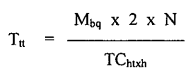
Where:
a) Itt: Duration of receipt of monthly allowances (months);
b) Mbq: Average wage used as the basis for mandatory social insurance contributions calculated according to Article 72 of the Social Insurance Law and Article 15 of this Decree for those participating in mandatory social insurance, or the average income and wage used as the basis for social insurance contributions calculated according to Clause 5, Article 17 of this Decree for those with both voluntary and mandatory social insurance contribution periods (VND/month);
c) N: number of years of social insurance contributions. In cases where the social insurance contribution period includes months from 01 to 06, it is counted as half a year, and from 07 to 11 months, it is counted as one year;
d) TChtxh: The amount of monthly social old-age allowance is calculated at the time of processing the allowance payment system (VND/month).
In cases where the calculation according to the above formula results in a partial month, it is rounded up to one month.
2. The duration of receipt of monthly allowances is determined within the period from the month the worker submits a written request upon reaching retirement age until they reach the age to receive social old-age allowance as prescribed by law at the time of processing the allowance payment system. If the duration of receipt of monthly allowances calculated according to the formula specified in Clause 1 of this Article exceeds the period until the worker reaches the age to receive social old-age allowance, the worker will be entitled to a higher monthly allowance rate as stipulated in Clause 2, Article 24 of this Decree.
3. If the duration of receipt of monthly allowances calculated according to the formula specified in Clause 1 of this Article is insufficient for the worker to receive monthly allowances until they reach the age to receive social old-age allowance, and if the worker wishes to do so, they may make a one-time payment for the remaining period to receive allowances until they reach the age to receive social old-age allowance. The amount of the one-time payment for the remaining period to receive allowances until the worker reaches the age to receive social old-age allowance is calculated according to the following formula:
STmlct = (Tdt - Ttt) x TChtxh
Where:
a) STmlct: Amount of one-time payment for the remaining period (VND);
b) Tdt Period from the month the worker submits a written request until they reach the age to receive social old-age allowance (months);
c) Ttt: Duration of receipt of monthly allowances calculated according to the formula specified in Clause 1 of this Article (months);
d) TChtxh: Amount of monthly social old-age allowance calculated at the time of processing the allowance payment system (VND/month). In cases where the worker does not make a one-time payment for the remaining period immediately at the time of processing the allowance payment system, the amount of monthly social old-age allowance is calculated at the time the worker makes the one-time payment for the remaining period.
4. In cases where there is a change in policy or the worker's conditions during the period of receipt of monthly allowances that affects the age for receiving monthly social old-age allowance, the worker continues to receive monthly allowances according to the period already resolved. In cases where the period of receipt of monthly allowances already resolved has expired and the worker has not yet reached the age to receive social old-age allowance, and the worker wishes to make a one-time payment for the remaining period to receive allowances until they reach the age to receive social old-age allowance, the provisions of Clause 3 of this Article shall apply.
Article 24. Monthly Allowance Rate
1. The monthly allowance rate shall be calculated based on the social pension allowance rate stipulated in Clause 1, Article 22 of the Social Insurance Law at the time of granting the monthly allowance.
2. In cases where the duration for receiving the monthly allowance calculated according to the formula specified in Clause 1, Article 23 of this Decree exceeds the period until the age for receiving the social pension allowance, the worker shall be entitled to a higher monthly allowance rate than the social pension allowance rate at the time of settlement. The higher monthly allowance rate compared to the social pension allowance rate shall be determined according to the following formula:
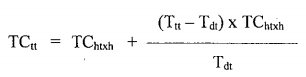
Where:
a) TCtt: Higher monthly allowance rate at the time of settlement (VND/month);
b) TChtxh: Monthly social pension allowance rate calculated at the time of settling the monthly allowance benefit (VND/month);
c) Ttt: Duration for receiving the monthly allowance calculated according to the formula prescribed in Clause 3 of this Article (months);
d) Tdt: Period from the month the worker submits the request letter to the month they reach the age for receiving the social pension allowance (months).
3. The monthly allowance rate shall be adjusted when the Government adjusts the pension according to Article 67 of the Social Insurance Law.
4. The application for the monthly allowance of workers shall be carried out according to the form issued by the Vietnam Social Security.
Article 25. Provisions for Dependents of Workers Receiving Monthly Allowances Who Die Before the End of the Allowance Period
1. If a worker dies while still within the period for receiving the monthly allowance, their dependents shall be entitled to a one-time allowance for the months the worker had not yet received. The amount of the one-time allowance shall be calculated by multiplying the number of months not yet received by the monthly allowance rate the worker was receiving before death.
2. If a worker who is receiving the monthly allowance falls under any of the following circumstances and dies, their dependents shall be entitled to a one-time funeral allowance as stipulated in Clause 2, Article 85 of the Social Insurance Law:
a) Those with at least 12 months of mandatory social insurance contributions;
b) Having voluntarily contributed to social insurance for at least 60 months;
c) Having a total contribution period of at least 60 months between voluntary and mandatory social insurance if either the mandatory or voluntary contribution period does not meet the conditions set forth in points a and b of this clause.
3. The application dossier for the one-time allowance and funeral allowance as stipulated in Clauses 1 and 2 of this Article includes:
a) A copy of the death certificate or extract from the death registration or a copy of the death notice or a copy of the court decision declaring death;
b) The dependent's declaration form according to the model issued by the Vietnam Social Security.
4. The settlement of the one-time allowance and funeral allowance as stipulated in Clauses 1 and 2 of this Article shall be conducted as follows:
a) Within 90 days from the date the person receiving the monthly allowance dies, the dependents must submit the dossier as stipulated in Clause 3 of this Article to the social insurance agency;
b) Within 10 working days from the date all required documents are received, the social insurance agency shall have the responsibility to settle the case; if it does not settle the case, it must provide a written response with clear reasons.
Chapter V
RETIREMENT AND FUNERAL BENEFITS FOR WORKERS IN CASES WHERE THE EMPLOYER IS NO LONGER ABLE TO CONTRIBUTE
Article 26. Scope of Application
1. Workers in cases where employers are unable to pay social insurance for workers before July 1, 2024.
2. Employers who are unable to pay social insurance for workers as stipulated in Clause 1 of this Article shall fall under one of the following situations:
a) The employer has been declared bankrupt by the Court according to the provisions of the Bankruptcy Law.
b) The employer is currently undergoing bankruptcy proceedings.
c) The employer is currently undergoing dissolution procedures.
d) The employer has been identified by the tax management agency as no longer operating at the registered address.
đ) The business registration certificate has been revoked.
e) The employer does not have a legal representative or a person authorized to exercise the rights and obligations of the legal representative.
Article 27. Confirmation of Social Insurance Contribution Periods for Workers as Basis for Retirement and Death Benefits
1. The period of social insurance contributions of workers as stipulated in Clause 1 of Article 26 of this Decree shall be confirmed as the basis for resolving and adjusting retirement and death benefits, including periods of late payment and evasion of mandatory social insurance contributions before July 1, 2024, for cases where the employer falls under the circumstances specified in Clause 2 of Article 26 of this Decree.
2. The period of late payment and evasion of mandatory social insurance contributions before July 1, 2024, of workers as stipulated in Clause 1 of this Article shall not include periods when workers are on leave without pay for 14 working days or more in a month, except for periods of maternity leave counted as social insurance contribution periods according to the provisions of the Social Insurance Law.
Article 28. Basis for Confirming Social Insurance Contribution Periods
1. Basis for determining that the employer is unable to pay social insurance for workers:
a) The Court's decision declaring bankruptcy for cases where there is a Court decision declaring bankruptcy according to the provisions of the Bankruptcy Law.
b) The Court's decision initiating bankruptcy proceedings for cases where the employer is currently undergoing bankruptcy proceedings.
c) Notification from the business registration authority regarding the enterprise being in dissolution procedures for cases where the employer is currently undergoing dissolution procedures.
d) Information about the legal status "No longer operating at the registered address" of the enterprise in the National Enterprise Registration Database.
đ) Decision revoking the Business Registration Certificate for cases where the Business Registration Certificate has been revoked.
e) Notification from the specialized agency responsible for business registration under the provincial People's Committee for cases where there is no legal representative.
2. Basis for determining the period during which workers worked at the employing unit during periods of late payment and evasion of mandatory social insurance contributions.
a) Management data of the social insurance agency. The social insurance agency reviews and cross-checks management data to ensure accurate determination of the period during which workers worked at the employing unit during periods of late payment and evasion of mandatory social insurance contributions.
b) In cases where there is no such data in the management database of the social insurance agency, the provincial People's Committee directs the social insurance agency and related agencies to review and determine the period during which workers worked at the employing unit during periods of late payment and evasion of mandatory social insurance contributions.
Article 29. Procedures for Confirming Social Insurance Contribution Periods
1. The employee specified in Clause 1 of Article 26 of this Decree or the relative of the employee in case the employee has died shall submit a request for confirming the social insurance contribution periods according to the form issued by the social insurance agency to the social insurance agency.
2. Within fifteen working days from the date of receipt of the employee's or the relative's request, the social insurance agency shall confirm the social insurance contribution periods of the employee; if it is necessary to verify the contribution period again, the deadline shall not exceed forty-five days; if confirmation is not made, a written response with clear reasons must be provided.
Article 30. Resolution of Retirement and Survivor Benefits for Employees
1. The resolution of retirement and survivor benefits for employees in cases where the employer is unable to pay social insurance contributions for the employee before July 1, 2024 shall be carried out in accordance with the provisions of the Social Insurance Law and detailed regulations and guidance on implementing certain articles of the Social Insurance Law.
2. For cases where employees have already been granted retirement and survivor benefits but have not yet been credited for the late or missed mandatory social insurance contribution periods confirmed under Article 29 of this Decree, the social insurance agency shall adjust the benefit levels based on the additional confirmed contribution periods, providing higher benefits when applicable, as follows:
a) For those currently receiving pensions, the new pension amount shall be calculated according to the policy at the time the employee began receiving the pension, and the difference shall be paid to the employee.
In cases where the employee has chosen to voluntarily contribute social insurance in one lump sum for the remaining years needed to qualify for a pension, the new pension level shall be adjusted based on the additional confirmed contribution periods and the previously granted pension contribution periods, without refunding the voluntary social insurance contributions made by the employee;
b) For employees who have received a one-time social insurance payment, no adjustment shall be made, but the additional confirmed contribution periods shall be retained;
c) For those who have received a one-time survivor benefit, the new benefit amount shall be calculated according to the policy at the time of the employee's death, and the difference shall be paid to the employee's relatives.
Article 31. Source of Funding for Implementation
1. The funding to ensure the confirmed social insurance contribution periods of employees as the basis for resolving retirement and survivor benefits is the amount of late or missed mandatory social insurance contributions that should be paid into the retirement and survivor fund by the employee and the employer for the confirmed period.
2. The source of funding under Clause 1 of this Article comes from interest income from employers required to pay according to Clause 3 of Article 122 of the Social Insurance Law No. 58/2014/QH13 and 0.03% per day collected according to Clause 1 of Article 40 and Clause 1 of Article 41 of the Social Insurance Law No. 41/2024/QH15.
3. The social insurance agency and competent authorities are responsible for recovering funds into the social insurance fund and handling violations according to the law when discovering that employers still have the ability to pay social insurance contributions for employees.
Chapter VI
TRANSITIONAL PROVISIONS
Article 32. Regional Allowance for Persons Receiving Social Insurance
a) Cadres, civil servants, public officials, and workers as stipulated in Article 2 of Decree No. 178/2024/NĐ-CP dated December 31, 2024 (amended and supplemented by Decree No. 67/2025/NĐ-CP dated March 15, 2025) of the Government on policies and treatment for cadres, civil servants, public officials, workers, and armed forces personnel in the process of organizational restructuring of the political system, having a total mandatory social insurance contribution period of at least 15 years when working in heavy, hazardous, or dangerous jobs or extremely heavy, hazardous, or dangerous jobs listed by the agency under the Government responsible for labor administration, or working in areas with particularly difficult socio-economic conditions including time worked in places with regional allowances of coefficient 0.7 or higher before January 1, 2021, and reaching the retirement age as specified in Appendix II issued together with Decree No. 135/2020/NĐ-CP, ceasing work immediately due to direct impact from organizational restructuring and implementation of the two-level local government model;
a) Workers who are participating in or suspending their social insurance contribution period and have worked before January 1, 1995, at places with regional allowances, which are counted as social insurance contribution periods, or have contributed to social insurance including regional allowances before January 1, 2007;
b) Persons currently receiving monthly pension, disability allowance, occupational accident allowance, or occupational disease allowance, and simultaneously receiving monthly regional allowances at their place of residence with regional allowances before July 1, 2025.
2. Benefit Regulations
a) Workers specified in point a, Clause 1 of this Article, when retiring and receiving a pension or a one-time social insurance benefit, in addition to receiving the pension or one-time social insurance benefit according to regulations, shall also be entitled to a one-time allowance corresponding to the time and amount of regional allowances paid into the social insurance fund.
When workers specified in point a, Clause 1 of this Article die, their dependents, in addition to receiving funeral benefits according to regulations, shall also be entitled to a one-time allowance corresponding to the time and amount of regional allowances that the subject specified in point a, Clause 1 of this Article has paid into the social insurance fund;
b) The subjects specified in point b, Clause 1 of this Article continue to receive regional allowances at the current level. In case they change their place of residence and receive monthly pensions, disability allowances, occupational accident allowances, or occupational disease allowances at places with regional allowances, they will receive regional allowances at the level of regional allowances of the subjects currently enjoying them at the new place of residence; if the new place of residence does not have regional allowances, they will cease to receive regional allowances.
3. One-time Allowance Level
a) The level of one-time allowance for cases specified in point a, Clause 2 of this Article is calculated using the following formula:
M = (H x 15%) x Linternational x (1 - kcs)9. Travel distance is the distance traveled without using mechanical means (cars, motorcycles, motorboats) to reach locations for implementing technical forest management measures and patrolling to protect forests. M: the one-time allowance level for the time contributing to the social insurance fund including regional allowances;Maximum Downhill Gradient
Where:
H: the actual regional allowance coefficient actually contributed to the social insurance fund for the time contributing to the social insurance fund from January 1, 1995, to December 31, 2006; the regional allowance coefficient of localities and units according to the law on regional allowances at the time of resolution for the working time and participation in social insurance before January 1, 1995. For working time in battlefields B, C before April 30, 1975, and battlefield K before August 31, 1989, the regional allowance coefficient of 0.7 is applied. If the working time in battlefield B coincides with the place being defined as having regional allowances under the law on regional allowances, the higher regional allowance coefficient will be taken.
HinternationalL: the number of months contributing to the social insurance fund including regional allowances with coefficient H
d.1. Amount of taxable income in Vietnam:9. Travel distance is the distance traveled without using mechanical means (cars, motorcycles, motorboats) to reach locations for implementing technical forest management measures and patrolling to protect forests.15%: the rate of social insurance contributions to the retirement and death benefit fund based on the salary used as the basis for social insurance contributions;international;
L: the reference level at the month the worker begins to receive a pension or one-time social insurance benefit or the month the worker dies.
LMaximum Downhill Gradientb) For cases specified in point a, Clause 2 of this Article, if the time was spent as non-commissioned officers, soldiers of the People's Army, and police, eligible for rank allowances, the level of one-time allowance for the time contributing to the social insurance fund including regional allowances during this period is calculated using the following formula:
N = (0.4 x H x T)
N: the one-time allowance level for the time as non-commissioned officers, soldiers of the People's Army, and police contributing to the social insurance fund including regional allowances;international x (1 - kcs)9. Travel distance is the distance traveled without using mechanical means (cars, motorcycles, motorboats) to reach locations for implementing technical forest management measures and patrolling to protect forests. M: the one-time allowance level for the time contributing to the social insurance fund including regional allowances;Maximum Downhill Gradient
Where:
H: the regional allowance coefficient of the place where non-commissioned officers, soldiers of the People's Army, and police contribute to the social insurance fund and are eligible for rank allowances;
HinternationalT: the time as non-commissioned officers, soldiers of the People's Army, and police;
d.1. Amount of taxable income in Vietnam:9. Travel distance is the distance traveled without using mechanical means (cars, motorcycles, motorboats) to reach locations for implementing technical forest management measures and patrolling to protect forests.15%: the rate of social insurance contributions to the retirement and death benefit fund based on the salary used as the basis for social insurance contributions;international 0.4: the rank allowance coefficient for second-grade non-commissioned officer;
L: the reference level at the month beginning to receive a pension or one-time social insurance benefit or the month the worker dies.
LMaximum Downhill Gradient4. Source of Funds for Implementing the Payment of One-time Allowances and Regional Allowances for Subjects Specified in Clause 1 of this Article is as Follows:
a) The State budget pays the one-time allowance for work and participation in social insurance before January 1, 1995, at places with regional allowances; the regional allowance system for persons currently receiving monthly pensions, disability allowances, and occupational accident allowances or occupational disease allowances, which are guaranteed by the State budget;
b) The social insurance fund pays the one-time allowance system for the time contributing to social insurance including regional allowances from January 1, 1995, onwards; the regional allowance system for persons currently receiving monthly pensions, occupational accident allowances, or occupational disease allowances, which are guaranteed by the social insurance fund.
b) The Social Insurance Fund shall pay a one-time allowance for the period of social insurance contributions including regional allowances from January 1, 1995 onwards; the regional allowance regime for those receiving monthly pension, accident compensation, or occupational disease benefits, which are covered by the Social Insurance Fund.
Article 33. Funeral benefits for dependents of persons receiving disability allowances, monthly allowances after the expiration of disability allowance period, monthly allowances for rubber workers, and monthly allowances for village, ward, town cadres who have retired and died.
1. Persons receiving monthly disability allowances before July 1, 2025 who die from July 1, 2025 onwards shall:
a) Organizations and individuals responsible for funeral arrangements shall receive a one-time funeral allowance as prescribed in Clause 2 of Article 85 of the Social Insurance Law;
b) Dependents meeting the conditions stipulated in Clauses 2 and 3 of Article 86 of the Social Insurance Law shall be entitled to receive monthly survivor's pension as prescribed in Article 87 of the Social Insurance Law;
c) In cases where there are no dependents meeting the conditions stipulated in Clauses 2 and 3 of Article 86 of the Social Insurance Law, or where there are dependents meeting the conditions but wish to receive a one-time survivor's benefit, such dependents shall be entitled to receive a one-time survivor's benefit equivalent to three months of the monthly disability allowance being received prior to death.
2. Persons receiving monthly allowances under Decree No. 09/1998/ND-CP before July 1, 2025 who die from July 1, 2025 onwards shall:
a) Organizations and individuals responsible for funeral arrangements shall receive a one-time funeral allowance as prescribed in Clause 2 of Article 85 of the Social Insurance Law;
b) Dependents meeting the conditions stipulated in Clauses 2 and 3 of Article 86 of the Social Insurance Law shall be entitled to receive monthly survivor's pension as prescribed in Article 87 of the Social Insurance Law;
c) In cases where there are no dependents meeting the conditions stipulated in Clauses 2 and 3 of Article 86 of the Social Insurance Law, or where there are dependents meeting the conditions but wish to receive a one-time survivor's benefit, such dependents shall be entitled to receive a one-time survivor's benefit calculated as prescribed in Clause 2 of Article 89 of the Social Insurance Law.
3. Persons receiving monthly allowances after the expiration of the disability allowance period, and monthly allowances for rubber workers before July 1, 2025 who die from July 1, 2025 onwards shall:
a) Organizations and individuals responsible for funeral arrangements shall receive a one-time funeral allowance as prescribed in Clause 2 of Article 85 of the Social Insurance Law;
b) Dependents shall be entitled to receive a one-time survivor's benefit equivalent to three months of the monthly allowance being received prior to death.
Article 34. Calculation of working time before January 1, 1995 for social insurance purposes
1. Workers with working time in the state sector before January 1, 1995 that has been counted as continuous working time, actual working time but not yet settled for severance pay or one-time compensation, or social insurance in one lump sum shall be considered as time already paid for social insurance, specifically as follows:
a) Workers who worked continuously in the state sector until January 1, 1995 without having been settled for severance pay or one-time compensation, or social insurance in one lump sum, the working time before January 1, 1995 shall be considered as time already paid for social insurance;
b) Workers with interrupted working time or who stopped working before January 1, 1995, the determination of continuous working time, actual working time for calculating social insurance benefits shall be carried out according to previous regulations on calculating working time before January 1, 1995 for social insurance benefits, except for the provisions in Article 3 of Government Decree No. 66/CP dated September 30, 1993 on temporary social insurance benefits for armed forces; Article 3 of Government Decree No. 43/CP dated June 22, 1993 on temporary social insurance benefits; Article 54 of the Social Insurance Regulations issued together with Government Decree No. 12/CP dated January 26, 1995; Article 49 of the Social Insurance Regulations for officers, professional military personnel, non-commissioned officers, and soldiers of the People's Army and People's Police issued together with Government Decree No. 45/CP dated July 15, 1995; Clause 4 of Article 139 of the 2006 Social Insurance Law; Clause 6 of Article 123 of the 2014 Social Insurance Law; Article 23 of Government Decree No. 115/2015/ND-CP dated November 11, 2015 detailing certain provisions of the Social Insurance Law on mandatory social insurance; Clauses 7, 8, and 9 of Article 38 of Government Decree No. 33/2023/ND-CP dated June 10, 2023 on civil servants and non-professional staff at commune level and those working part-time at commune level, village, and neighborhood associations; Clauses 2 and 3 of Article 16 of Government Decree No. 92/2009/ND-CP dated October 22, 2009 on positions, number, and some policies for civil servants and public officials at commune, ward, and town levels and those working part-time at commune level; Clause 2 of Article 1 of Government Decree No. 29/2013/ND-CP dated April 8, 2013 amending and supplementing some articles of Government Decree No. 92/2009/ND-CP dated October 22, 2009 on positions, number, and some policies for civil servants and public officials at commune, ward, and town levels and those working part-time at commune level; Clause 8 of Article 2 of Government Decree No. 34/2019/ND-CP dated April 24, 2019 on amendments and supplements to some provisions on civil servants and non-professional staff at commune level and those working part-time at commune level, village, and neighborhood associations;
c) Persons receiving disability benefits who subsequently participate in work and pay social insurance contributions shall, in addition to disability benefits, also be entitled to social insurance benefits. The time for calculating social insurance benefits is the time already paid for social insurance in accordance with the law on social insurance; the working time for calculating disability benefits shall not be counted towards social insurance benefits.
2. Workers with working time as military personnel or police personnel who were demobilized, discharged, or retired before December 15, 1993, and then worked and participated in mandatory social insurance at agencies, units, enterprises belonging to various economic sectors (including those working in health care at commune, ward, and town levels, kindergarten teachers, or holding positions at commune, ward, and town levels before January 1, 1995 which have been recognized as time already paid for social insurance) and individuals hiring laborers, the actual working time in the military or police before that period shall be added to the working time with social insurance contributions made later to calculate social insurance benefits, except in cases where they have already received benefits as prescribed below:
a) Decision No. 47/2002/QĐ-TTg dated April 11, 2002 of the Government Chairman on the regime for military personnel, defense workers who participated in the resistance against France and were retired (discharged, resigned) before December 31, 1960;
b) Point a Clause 1 Article 1 of Decision No. 290/2005/QĐ-TTg dated November 8, 2005 of the Government Chairman on the regime and policies for certain subjects directly participating in the resistance against America to save the country but not yet enjoying the regime and policies of the Party and State;
c) Decision No. 92/2005/QĐ-TTg dated April 29, 2005 of the Government Chairman on implementing the regime for military personnel belonging to ethnic minorities in Military Zone 7, Military Zone 9, who participated in the resistance against America and returned to their localities before January 10, 1982;
d) Decision No. 142/2008/QĐ-TTg dated October 27, 2008 of the Government Chairman on implementing the regime for military personnel who participated in the resistance against America to save the country with less than 20 years of service in the military and were retired, discharged back to their localities;
đ) Decision No. 38/2010/QĐ-TTg dated May 6, 2010 of the Government Chairman on amending and supplementing Decision No. 142/2008/QĐ-TTg dated October 27, 2008 of the Government Chairman on implementing the regime for military personnel who participated in the resistance against America to save the country with less than 20 years of service in the military and were retired, discharged back to their localities;
e) Decision No. 53/2010/QĐ-TTg dated August 20, 2010 of the Government Chairman on the regime for police officers of the People's Public Security Force who participated in the resistance against America with less than 20 years of service in the People's Public Security Force and were discharged, retired back to their localities;
g) Decision No. 62/2011/QĐ-TTg dated November 9, 2011 of the Government Chairman on the regime and policies for subjects participating in the war to protect the homeland and international missions in Cambodia, helping Laos after April 30, 1975 and were retired, discharged, resigned;
In the case where the worker has worked as a military personnel or public security personnel and was retired, discharged, resigned before December 15, 1993, and voluntarily joined social insurance after that, then subsequently joined mandatory social insurance, such time of work shall be applied under this provision to enjoy social insurance benefits.
3. Workers who have worked as military personnel or public security personnel and were retired, discharged, resigned during the period from December 15, 1993 to December 31, 1994 without having been settled for severance pay or lump-sum compensation, discharge, retirement, or one-time social insurance shall have their actual working time in the military or public security personnel counted for social insurance benefits.
4. In the case where the worker does not have original documents showing the working time in the state sector before January 1, 1995, the social insurance agency shall consider and decide whether to count or not count the working time before January 1, 1995 for social insurance benefits based on the worker's request letter, confirmation letter from the direct managing agency or unit, and related files and papers regarding the working time requested for social insurance benefits. If necessary, the social insurance agency may cooperate with relevant agencies at the local level to review and compare the worker's files to clarify related issues before making a decision.
a) The content of the confirmation letter from the direct managing agency or unit must clearly state the reason for the lack of original documents of the worker, the recruitment date, the course of employment, the salary progression of the worker; the fact that the worker has not been settled for severance pay or lump-sum compensation, the reason for not being settled; the reason for interruption or resignation and the responsibility of the managing agency or unit in settling the regime at the time of resignation for workers with interrupted working time or who had resigned before January 1, 1995. In cases where the direct managing agency or unit no longer exists, the higher-level managing agency shall confirm;
b) Related files and papers concerning the working time requested for social insurance benefits include those proving and reflecting the working time in the state sector before January 1, 1995, such as: Party member history, Youth League member history, labor book, labor list, tracking book, salary payment list, food ration book, commendation certificates, awards, commemorative medals, diplomas, certificates, files for settling the regime of workers when state-owned enterprises undergo shareholding reform, and other papers reflecting the working time and salary of the worker;
The direct managing agency or unit of the worker or the higher-level managing agency of the worker must base their confirmation on the related files and papers specified in point b of this clause and bear legal responsibility for the contents confirmed as stipulated in point a of this clause.
Article 35. Calculation of working time for workers who went abroad for labor cooperation before January 1, 1995
1. Workers belonging to the establishment of state agencies, political organizations, socio-political organizations, state-owned enterprises, military units, who were dispatched by the agency or unit to work, study, or perform tasks with a fixed term and have legally exited the country, returned but not within the specified period, or returned on time but the old unit could not arrange employment shall have their working time in the country prior to going abroad for work, study, or performance tasks, and their time abroad within the permitted period before January 1, 1995, if not yet resolved for severance pay or lump-sum compensation, demobilization allowance, discharge allowance, or one-time social insurance, counted towards enjoying retirement benefits and survivor benefits. The calculation of working time before January 1, 1995, for social insurance benefits shall be implemented according to the provisions of Article 34 of this Decree.
Social workers dispatched for labor cooperation after returning to the country and continuing to participate in mandatory social insurance shall have their working time abroad within the permitted period before January 1, 1995, if not yet resolved for severance pay or lump-sum compensation, counted towards enjoying retirement benefits and survivor benefits.
2. Working time, studying, and working time abroad within the permitted period stipulated in Clause 1 of this Article includes:
a) Actual working, studying, and working time recorded in the decision of the dispatching unit for work, study, or performance tasks abroad, including extended time allowed by the dispatching unit;
b) In cases where a person has multiple trips abroad for work, study, or performance tasks, the time spent abroad within the permitted period for each trip shall be combined to calculate working time for enjoying retirement benefits and survivor benefits;
c) Workers currently working in the country, dispatched to improve skills abroad, then transferred to labor cooperation under Government Agreements, shall have their skill improvement time counted towards enjoying retirement benefits and survivor benefits;
d) Social workers who are vocational students transferred to labor cooperation under Government Agreements shall have their labor cooperation time under Government Agreements counted towards enjoying retirement benefits and survivor benefits; vocational training time shall not be counted towards social insurance benefits.
3. The provisions of Clause 1 of this Article shall not apply to cases of violating laws abroad resulting in expulsion or disciplinary dismissal to return to the country or imprisonment before January 1, 1995.
4. Average wage level for calculating social insurance contributions
a) The average wage level for calculating social insurance contributions to determine pension, lump-sum compensation upon retirement, one-time social insurance, and one-time survivor benefit for the subjects stipulated in Clause 1 of this Article shall be calculated according to the provisions of Article 72 of the Social Insurance Law and Article 15 of this Decree;
b) For cases involving working time in the military or public security forces followed by labor cooperation abroad, after returning to the country and being transferred to work at state agencies, units, or state-owned enterprises eligible for adding years-of-service allowances in pensions according to regulations, the military or public security years-of-service allowance shall be based on the officer's salary, professional military personnel salary, and public security officer and non-commissioned officer salaries at the time before going abroad for labor cooperation, converted according to the salary system at the time of benefit resolution;
c) For workers who were receiving state-specified wages before going abroad for labor cooperation and whose final years for calculating the average wage level for social insurance contributions include time working abroad, the social insurance contribution wage for the time working abroad shall be based on the wage at the time before going abroad as the basis for calculating the pension and social insurance compensation;
For social workers whose labor cooperation time is counted towards enjoying retirement benefits and survivor benefits as stipulated in Clause 1 of this Article, the social insurance contribution wage for the labor cooperation time serving as the basis for calculating the average wage level for social insurance contributions shall be twice the reference level at the time of social insurance enjoyment.
Article 36. Documents for Proposing Calculation of Working Time for Workers Engaged in Labor Cooperation Before January 1, 1995
1. The documents for cases where workers have worked abroad under Government Agreements and those who were team leaders, interpreters, or foreign-paid regional officers include:
a) Original curriculum vitae, supplementary curriculum vitae (if any), original documents related to working time and wages before going to work abroad; decision on re-employment for workers returning to work before January 1, 1995. In case there is no re-employment decision, it can be replaced by the original curriculum vitae filled out when re-employed or the curriculum vitae confirmed by the re-employing unit;
b) Original "Notification of Transfer" or "Decision on Transfer" issued by the International Cooperation Department (now the Overseas Labor Management Department).
If the original "Notification of Transfer" or "Decision on Transfer" is not available, a confirmation letter regarding the labor cooperation period for social insurance benefits must be provided by the Overseas Labor Management Department based on the worker's application (according to Model No. 01 and No. 02 attached as Appendix II to this Decree);
c) Confirmation letter from the direct management agency or unit stating that the worker has not received severance pay or lump-sum payment (or lump-sum payment, demobilization allowance for military personnel and police officers demobilized or retired between December 15, 1993, and December 31, 1994) after returning to the country. If the agency or unit has been dissolved, the superior managing agency or unit shall confirm;
For workers who were social workers, state employees, police officers, or military personnel who had received severance pay or demobilization allowances before going abroad for labor cooperation, and military personnel, defense workers who had their demobilization or retirement procedures processed separately by the Ministry of Defense for the period before going abroad, and were issued a "Certificate of Abroad Labor Cooperation Period," the confirmation shall be made by the Department of Home Affairs;
d) Application for calculation of working time for pension or survivor benefits for workers who have retired;
2. The documents for cases where workers were sent abroad for work directly through cooperation agreements between government ministries or localities and foreign economic organizations include:
a) Documents specified in points a, c, and d of Clause 1 of this Article;
b) Original Decision on Sending to Work Abroad for a Limited Period or a certified copy of the Decision if the worker was sent abroad for a limited period under a joint Decision for multiple people;
If the original Decision on Sending to Work Abroad for a Limited Period is unavailable, it can be replaced by a certified copy of the Decision with confirmation by the main managing department for workers sent abroad through departmental cooperation or by the Department of Home Affairs for workers sent abroad by localities;
In cases where there is no Decision on Sending to Work Abroad for a Limited Period, a written confirmation by the head of the sending agency or unit must be provided, clearly stating the period during which the worker was sent abroad for work and bearing legal responsibility for the content of the confirmation. If the sending agency or unit no longer exists, the superior managing agency or unit shall confirm and bear legal responsibility for the content of the confirmation;
3. The documents for cases where workers went abroad for study or internship include:
a) Documents specified in points a, c, and d of Clause 1 of this Article;
b) Original Decision on Sending to Study or Intern Abroad for a Limited Period or a certified copy of the Decision if the worker was sent abroad for study or internship under a joint Decision for multiple people;
If the original Decision on Sending to Study or Intern Abroad for a Limited Period is unavailable, it can be replaced by a certified copy of the Decision with confirmation by the sending unit;
In cases where there is no Decision on Sending to Study or Intern Abroad for a Limited Period, a written confirmation by the head of the sending agency or unit must be provided, clearly stating the period during which the worker was sent abroad for study or internship and bearing legal responsibility for the content of the confirmation. If the sending agency or unit no longer exists, the superior managing agency or unit shall confirm and bear legal responsibility for the content of the confirmation;
4. The documents for cases where workers were sent abroad as experts under Government Agreements include:
a) Documents specified in points a, c, and d of Clause 1 of this Article;
b) Original Decision on Sending to Work as an Expert Abroad or a certified copy of the Decision if the worker was sent abroad as an expert under a joint Decision for multiple people;
If the original Decision on Sending to Work as an Expert Abroad is unavailable, it can be replaced by a certified copy of the Decision with confirmation by the sending unit;
In cases where there is no Decision on Sending to Work as an Expert Abroad, a written confirmation by the head of the sending agency or unit must be provided, clearly stating the period during which the worker was sent abroad as an expert and bearing legal responsibility for the content of the confirmation. If the sending agency or unit no longer exists, the superior managing agency or unit shall confirm and bear legal responsibility for the content of the confirmation;
c) Confirmation letter from the expert management agency stating that the expert has fulfilled the obligation to contribute to the state budget and social insurance according to the regulations during the working period abroad.
Article 37. Settlement of Working Time for Workers Engaged in Labor Cooperation Before January 1, 1995
1. In cases where workers have retired from work:
a) The worker submits the application file stipulated in Article 36 of this Decree to the last managing unit where the worker worked. If the last managing unit no longer exists, the worker submits the file to the directly superior management agency;
b) The last managing unit of the worker or the directly superior management agency if the last managing unit no longer exists shall be responsible for receiving the file and transferring it along with a request letter to the social insurance agency where the unit pays social insurance contributions;
c) The social insurance agency shall be responsible for receiving the file from the employer or the worker to process the recording of social insurance contribution time for the worker within fifteen working days from the date of receipt of the complete file as prescribed; if not processed, a written response must be provided with clear reasons stated.
2. In cases where workers are currently paying social insurance:
a) The worker is responsible for supplementing the application file stipulated in Article 36 of this Decree when requested by the employer;
b) The employer is responsible for transferring the worker's file along with a request letter to the social insurance agency where the unit pays social insurance contributions;
c) The social insurance agency is responsible for receiving the file and processing it according to point c, Clause 1 of this Article.
3. In cases where workers have died after returning to the country but their relatives have not yet received funeral benefits:
a) The relatives of the worker submit the application file as prescribed in Article 36 of this Decree, Clause 1, Article 90 of the Social Insurance Law, together with a request for funeral benefit processing to the last managing unit of the worker (in accordance with Model No. 03 Appendix II issued together with this Decree). If the last managing unit no longer exists, the relatives of the worker submit the file to the directly superior management agency;
b) The last managing unit of the worker or the directly superior management agency if the last managing unit no longer exists shall be responsible for receiving, guiding the relatives of the worker to complete the file and transfer it to the social insurance agency where the unit pays social insurance contributions along with a letter requesting benefit processing;
c) The social insurance agency is responsible for receiving the file and processing funeral benefits for the relatives of the worker within the time limit specified in Clause 3, Article 91 of the Social Insurance Law. If not processed, the social insurance agency must provide a written response with clear reasons stated.
Article 38. Calculation of Working Time for Social Insurance Benefits for Workers in the State Sector Who Were on Standby Leave from November 1, 1987 to Before January 1, 1995
1. Workers in the state sector who were on standby leave from November 1, 1987 to before January 1, 1995 due to enterprises, agencies, organizations being unable to arrange employment, without having been granted severance pay or one-time social insurance, and whose names were still listed in the unit's labor roster as of December 31, 1994, shall be eligible to have their working time prior to standby leave counted towards social insurance benefits. For village cadres with tenure according to Decision No. 09/1998/NĐ-CP, the calculation of working time for social insurance benefits shall be carried out in accordance with Article 39 of this Decree.
2. The application file for calculating working time prior to standby leave includes:
a) The registration form for social insurance participation of the worker;
b) Original and supplementary resumes (if any) of the worker, appointment decisions, labor contracts, related documents such as salary grade adjustment decisions, job transfer or reassignment decisions, demobilization discharge certificates, job change certificates, termination of salary payment certificates;
c) Roster of the unit listing the worker's name as of December 31, 1994, or other documents confirming that the worker was listed in the unit's roster as of December 31, 1994;
d) Standby leave decision. If there is no standby leave decision, a written confirmation by the unit head at the time of applying for the social insurance book must be provided, ensuring that the worker was listed in the unit's roster at the time of the standby leave decision and had not been granted severance pay or one-time social insurance. If the unit has been dissolved, the confirmation shall be made by the directly superior management agency.
3. Procedure and time limit for processing:
a) The worker and the employer complete the application file stipulated in Clause 2 of this Article and submit it to the social insurance agency;
b) Within fifteen working days from the date of receipt of the file from the employer, the social insurance agency must process it; if not processed, a written response must be provided with clear reasons stated.
Article 39. Calculation of working time for social insurance for commune-level officials with tenure under Decree No. 09/1998/ND-CP
1. Commune-level officials who held positions under Decree No. 09/1998/ND-CP (including other positions within the approved staffing plan as stipulated in Clause 5, Article 3 of Decree No. 09/1998/ND-CP), if they worked continuously until January 1, 1998 and received living expenses according to Decree No. 09/1998/ND-CP, then the working time before January 1, 1998 will be counted as the time contributing to social insurance.
a) In cases where individuals who were state workers or civil servants without receiving one-time retirement benefits or one-time social insurance benefits were transferred to communes to hold positions under Decree No. 09/1998/ND-CP, their time as state workers or civil servants can be combined with their time holding positions under Decree No. 09/1998/ND-CP to calculate social insurance benefits.
b) For commune-level officials holding positions defined in Decree No. 09/1998/ND-CP, if they were dispatched by competent authorities to study specialized or political courses before January 1, 1998, and continued to hold positions under Decree No. 09/1998/ND-CP after completing their courses, this study period will be counted as continuous working time to calculate social insurance benefits.
2. Workers who held positions (including other positions within the approved staffing plan as stipulated in Clause 5, Article 3 of Decree No. 09/1998/ND-CP) subject to social insurance contributions under Decree No. 09/1998/ND-CP, and were transferred, recruited into the People's Army, Public Security Force, or worked in state agencies, units, enterprises, political organizations, or political-social organizations before January 1, 1998, their working time in these positions will be counted as time contributing to social insurance to be combined with their subsequent social insurance contributions to calculate social insurance benefits.
3. For commune-level officials holding positions under Decree No. 09/1998/ND-CP (including other positions within the approved staffing plan as stipulated in Clause 5, Article 3 of Decree No. 09/1998/ND-CP) who had a break in service not exceeding 12 months before January 1, 1998, their working time before and after the break can be combined to calculate social insurance benefits.
Article 40. Treatment for those currently receiving monthly allowances but have social insurance contribution periods not yet counted for social insurance benefits
Workers currently receiving monthly disability allowances and those eligible for monthly allowances under Decision No. 91/2000/QD-TTg and Decision No. 613/QD-TTg, who have social insurance contribution periods not yet counted for social insurance benefits, shall be handled as follows:
1. Workers with social insurance contribution periods (excluding working time already counted for disability allowance) meeting the conditions for pension benefits may choose one of the following options:
a) In case of choosing to receive a pension, the monthly disability allowance and monthly allowance will be discontinued from the month the pension is received.
b) In case of choosing to continue receiving the monthly disability allowance and monthly allowance, they will be entitled to receive a one-time social insurance benefit for the time contributed to social insurance.
2. Workers with social insurance contribution periods but not meeting the conditions for pension benefits will be entitled to receive a one-time social insurance benefit for the time contributed to social insurance, excluding working time already counted for disability allowance.
Article 41. Treatment for workers who have been decided to stop working pending retirement benefits or monthly allowances
The treatment for workers who have been decided to stop working pending retirement benefits or monthly allowances shall be implemented according to Clause 10, Article 141 of the Social Insurance Law and is detailed as follows:
1. Workers with at least 15 years of social insurance contributions and having a document from the social insurance agency confirming their waiting period to meet the age requirement for retirement benefits under Decree No. 12/CP dated January 26, 1995, amended and supplemented by Decree No. 01/2003/NĐ-CP dated January 9, 2003 of the Government (hereinafter referred to as Decree No. 12/CP), shall receive retirement benefits when men reach 60 years old and women reach 55 years old. The amount of retirement benefit shall be calculated according to the provisions of Decree No. 12/CP and adjusted according to the regulations on adjusting retirement benefits, social insurance allowances, and monthly allowances during each period.
During the period when workers are on leave awaiting retirement benefits and die, their dependents shall be granted funeral benefits according to the provisions of the Social Insurance Law.
2. Village cadres falling within the scope regulated by Decree No. 09/1998/NĐ-CP who have a decision or certificate confirming their waiting period to meet the age requirement for monthly allowances from the social insurance agency shall receive monthly allowances when men reach 55 years old and women reach 50 years old. The amount of monthly allowance shall be calculated according to the provisions of Decree No. 09/1998/NĐ-CP and adjusted according to the regulations on adjusting retirement benefits, social insurance allowances, and monthly allowances during each period.
During the period when village cadres are on leave awaiting monthly allowances and die, their dependents shall be granted funeral benefits according to the provisions of the Social Insurance Law. The one-time funeral allowance shall be calculated based on the average living expenses of the last five years before retirement, converted according to the minimum wage at the month of the village cadre's death. From the date the minimum wage was abolished, it shall be converted accordingly according to the reference level.
3. In cases where workers continue to participate in social insurance during the waiting period to meet the age requirement for retirement benefits or monthly allowances, the time of service recorded in the decision or certificate confirming the waiting period for retirement benefits or monthly allowances shall be combined with subsequent social insurance contribution periods to calculate social insurance benefits according to the provisions of the Social Insurance Law.
4. For subjects specified in Clause 1 and Clause 2 of this Article, if the time of service prior to January 1, 1995, for those waiting for retirement benefits and prior to January 1, 1998, for those waiting for monthly allowances is combined to calculate social insurance benefits, the ratio of retirement benefits or monthly allowances shall still be calculated according to the policy at the time the worker stopped working.
Article 42. Treatment for workers currently on leave receiving sickness benefits due to long-term treatment diseases or on leave receiving maternity benefits according to the Social Insurance Law No. 58/2014/QH13
1. Workers on leave due to diseases listed in the Long-Term Treatment Diseases List issued by the Ministry of Health, who were receiving sickness benefits before July 1, 2025, and continue to be on leave receiving sickness benefits from July 1, 2025 onwards, shall continue to implement sickness benefits according to the Social Insurance Law No. 58/2014/QH13.
For cases of receiving sickness benefits due to diseases listed in the Long-Term Treatment Diseases List issued by the Ministry of Health, where the application for benefits starts from July 1, 2025 onwards, the provisions of the Social Insurance Law No. 41/2024/QH15 shall apply.
2. Workers currently on leave receiving maternity benefits before July 1, 2025, and continue to receive maternity benefits from July 1, 2025 onwards, shall continue to implement maternity benefits according to the provisions of Section 2, Chapter III of the Social Insurance Law No. 58/2014/QH13.
Chapter VII
IMPLEMENTING PROVISIONS
Article 43. Amending and supplementing certain legal normative documents related to social insurance
1. Amending and supplementing some articles of Decree No. 88/2020/ND-CP dated July 28, 2020 of the Government detailing and guiding the implementation of some provisions of the Labor Safety and Health Law on mandatory occupational accident and occupational disease insurance as follows:
a) Amending and supplementing Clause 1, Article 2 as follows:
“1. Workers specified in points a, b, c, d, đ, e, i and l of Clause 1, Article 2 of the Social Insurance Law shall participate in mandatory occupational accident and occupational disease insurance.
Foreign workers working in Vietnam specified in Clause 2, Article 2 of the Social Insurance Law shall participate in mandatory occupational accident and occupational disease insurance and implement the occupational accident and occupational disease insurance regime as prescribed in Section 3 of the Labor Safety and Health Law and this Decree.”
b) Amending point b and point c of Clause 3, Article 11 as follows:
“b) The period for enjoying maternity leave benefits of workers who terminate their labor contracts, employment contracts, or cease work before the childbirth or adoption of a child under six months old as stipulated in Clause 4, Article 50 of the Social Insurance Law shall not be counted as the time they have contributed to the Occupational Accident and Occupational Disease Insurance Fund;
c) In cases where female workers return to work before the end of their maternity leave period according to Clause 4, Article 139 of the Labor Code, the period from when they stop working to enjoy maternity leave until they return to work shall be counted as the time they have contributed to the Occupational Accident and Occupational Disease Insurance Fund. From the date of returning to work, female workers will continue to receive maternity allowance until the end of the period prescribed in Clause 1, Article 53 of the Social Insurance Law, but the employer must contribute to the Occupational Accident and Occupational Disease Insurance Fund.”
c) Amending Article 39 as follows:
“Article 39. Expenses for organizing and operating occupational accident and occupational disease insurance
Expenses for organizing and operating occupational accident and occupational disease insurance shall be implemented in accordance with Article 120 of the Social Insurance Law and the financial management regulations applicable to the Vietnam Social Security.”
2. Amending and supplementing some articles of Decree No. 58/2020/ND-CP dated May 27, 2020 of the Government specifying the contribution rate for mandatory social insurance into the Occupational Accident and Occupational Disease Insurance Fund as follows:
a) Amend and supplement Clause 1 of Article 4 as follows:
“1. Employers shall monthly contribute based on the salary used as the basis for mandatory social insurance contributions for the subjects specified in points a, b, c, d, đ, e, i and l of Clause 1, Article 2 and Clause 2, Article 2 of the Social Insurance Law at one of the following rates:
a) A normal contribution rate of 0.5% of the salary used as the basis for mandatory social insurance contributions; simultaneously applicable to civil servants, public officials, employees, and those belonging to armed forces units under Party and State agencies, political-social organizations, military, police, and public institutions funded by the state budget;
b) A contribution rate of 0.3% of the salary used as the basis for mandatory social insurance contributions, applicable to enterprises meeting the conditions stipulated in Article 5 of this Decree.”
b) Removing Clause 2, Article 4.
Article 44. Effective date of implementation
1. This Decree takes effect from July 1, 2025.
2. From the date this Decree takes effect, the following Government Decrees and clauses shall cease to be effective:
a) Decree No. 115/2015/ND-CP dated November 11, 2015 of the Government detailing some provisions of the Social Insurance Law on mandatory social insurance;
b) Decree No. 143/2018/ND-CP dated October 15, 2018 of the Government detailing the Social Insurance Law and the Labor Safety and Health Law on mandatory social insurance for foreign workers working in Vietnam;
c) Clause 2, Article 3; Clauses 1 and 3, Article 7 and Clause 2, Article 8 of Decree No. 135/2020/ND-CP dated November 18, 2020 of the Government on retirement age;
Appendix III promulgated together with Decree No. 135/2020/ND-CP dated November 18, 2020 of the Government on retirement age;
d) Clauses 7, 8 and 9, Article 38 of Decree No. 33/2023/ND-CP dated June 10, 2023 of the Government on village-level cadres and non-professional staff at the commune level, ward level, and neighborhood level.
Article 45. Responsibility for Implementation
1. The Minister of Interior shall be responsible for guiding the implementation of this Decree.
2. The Minister of Finance shall be responsible for directing:
a) Annually, the General Statistics Office shall be responsible for promptly providing to the Vietnam Social Security the average consumer price index for the year calculated based on the 1994 base year to determine the salary adjustment factor as the basis for social insurance contributions as stipulated in Clause 2, Article 16 of this Decree;
b) Annually, the Vietnam Social Security shall be responsible for publicly disclosing the salary adjustment factor as the basis for social insurance contributions as stipulated in Clause 2, Article 16 of this Decree.
3. The Ministers, Heads of Ministries equivalent to ministries, Heads of government agencies, Chairpersons of People's Committees at all levels, and other organizations and individuals related thereto shall be responsible for implementing this Decree./.
|
Place of Receipt: |
PRIME MINISTER (Signed) Ho Duc Phoc |
Appendix I
UNDERGROUND COAL MINING WORK
(Attached to Decree No. 158/2025/NĐ-CP dated June 25, 2025 of the Government)
1. Underground coal mine exploitation.
2. Hand-held drill drilling in underground mines.
3. Mine rescue team member.
4. Electrical and mechanical repair in underground mines.
5. Operation of compressed air, electric, diesel, and battery charging stations in underground mines.
6. Blacksmith and drainage worker in underground mines.
7. Coal transportation in underground mines.
8. Gas measurement, wind measurement, ventilation door guarding, surveying, and quality control in underground mines.
9. Operator and repairer of equipment in underground mines.
10. Operation and auxiliary work for electric and battery-powered trains in underground mines.
11. Operation, repair, and battery charging in underground mines.
12. Inspection of products in underground mines.
13. Storekeeper of various types in underground mines.
14. Warehouse security in underground mines.
15. Cleaning of underground mines and sludge removal in underground mines.
16. Material transportation in underground mines.
17. Signal guard duty in underground mines.
18. Service and support in underground mines.
19. Installation and repair of communication systems in underground mines.
20. Network station operation in underground mines.
21. Ventilation door guard duty in underground mines.
22. Direct technical guidance in underground mines.
23. Direct production management in underground mines (foreman, deputy foreman, shift leader, section leader).
24. Safety supervisors in underground mines.
Seal Registration Certificate
LIST OF FORMS AND VOUCHERS
(Attached to Decree No. 158/2025/NĐ-CP dated June 25, 2025 of the Government)
|
Serial number |
Sample number |
Le Minh Ngan |
|
1 |
Form No. 01 |
Application for Confirmation |
|
2 |
Form No. 02 |
Confirmation Certificate |
|
3 |
Implementation Report of Production Projects of Supporting Industry Products Confirmed with Incentives |
Application for Processing Pension Benefits |
Sample No. 01(For workers)
SOCIALIST REPUBLIC OF VIETNAM
Independence - Freedom - Happiness
---------------
APPLICATION FOR CONFIRMATION
Regarding the period of labor cooperation to process social insurance benefits
(For those working abroad under Government Agreements, including team leaders, interpreters, regional officers)
Respectfully submitted to: Overseas Labor Management Department.
My name is …
Born on:...
The unit sending me for labor cooperation:…
Managing agency (Ministry, sector):……………………………………………….
Country for labor cooperation:…
Name of the unit, factory where I worked:…
Period of labor cooperation according to the Agreement from…to…
Date of return to the country: day…month…year…
Reason for returning:…
To be transferred back to the unit:…
Attached documents (if any) include:…
…………………………………………………………………………………..
…………………………………………………………………………………..
Upon returning to the country, I have not been granted severance pay as stipulated in Circular No. 12/TT-LB dated August 3, 1992 and Circular No. 24/LB-TT dated September 19, 1994 of the Ministry of Labor - Invalids and Social Affairs - Finance.
I hereby solemnly declare that the above statements are true. I am willing to bear legal responsibility for my declarations.
|
…, day…month…year…… |
Form No. 02
|
MINISTRY OF HOME AFFAIRS |
SOCIALIST REPUBLIC OF VIET NAM |
|
No.: …/CQLLĐNN-XN |
Hanoi, day …… month … year …. |
CERTIFICATE
Regarding the period of labor cooperation to process social insurance benefits
(For those working abroad under Government Agreements, including team leaders, interpreters, regional officers)
Based on the documents presented by the worker (if any) and the stored records, the Overseas Labor Management Department confirms:
Mr. (Mrs.):…
Born on:...
Worked cooperatively in…from…to…
Date of return to the country: day…month………year…
Returned with the reason:…
To be transferred back to the unit:…
Mr./Ms. …(yes or no)…is listed in the roster approved by the Overseas Labor Management Department to receive severance pay as stipulated in Circular No. 12/TT-LB dated August 3, 1992 and Circular No. 24/LB-TT dated September 19, 1994 of the Ministry of Labor - Invalids and Social Affairs - Finance.
This confirmation has the value of replacing the Certificate issued by the Overseas Labor Management Board in …and the Notification of Transfer issued by the Overseas Labor Management Department for considering the working time for social insurance benefits.
|
|
DIRECTOR |
Implementation Report of Production Projects of Supporting Industry Products Confirmed with Incentives (For relatives of workers)
SOCIALIST REPUBLIC OF VIETNAM
Independence - Freedom - Happiness
---------------
APPLICATION FOR PROCESSING PENSION BENEFITS
For workers sent abroad for work, study, or training with a fixed term who died after returning to the country but whose relatives have not yet received pension benefits
My name is…Citizen ID/…
---------------
Respectfully submitted to: ...
Permanent residence:…is a relative
(specify the relationship between the relative and the worker): of Mr./Ms. …Born on:………………. Sent for
(labor cooperation, study, internship, expert work):… (name of the unit, organization, and country) in Sending unit:…...............................................................
Duration of work recorded in the decision of the sending unit: from …to…
Managing agency (Ministry, sector): .......................................................................
Mr./Ms. …died on day…month…year…
Date of return to the country: day…month…year…
Reason for returning:…
To be transferred back to the unit:…
From the date of return to the country until the date of death, Mr./Ms. …has not been processed for severance pay or social insurance benefits.
Request …to establish a file and process the pension benefits for Mr./Ms. …
I hereby solemnly declare that the above statements are true. I am willing to bear legal responsibility for my declarations.
…, day …… month…….year…….
|
Confirmation of the People's Committee of the commune, ward where the applicant resides |
- This form applies to relatives of workers who died after returning to the country but have not yet received pension benefits; |
Note:
- The People's Committee of the commune, ward confirms the relationship between the applicant and the worker.
- The People's Committee of the commune or ward shall certify the relationship between the person submitting the application and the worker.
원본 문서(PDF)
관계도
문서를 클릭하면 열립니다. 빨간 테두리=효력을 변경하는 관계.