
This Circular stipulates the titles and crew complements for fishing vessels and fisheries service vessels in Vietnam. It also sets forth the responsibilities of agencies such as the General Department of Fisheries and Departments of Agriculture and Rural Development in guiding, inspecting, and implementing related regulations.
Đối tượng áp dụng
This Circular applies to fishing vessels and fisheries service vessels in Vietnam. It also affects training institutions for crew members and other relevant units.
Các điểm cốt lõi
- Regulations on titles and crew complements for fishing vessels and fisheries service vessels
- Responsibilities of the General Department of Fisheries in guiding and inspecting the implementation of regulations on titles and crew complements
- Responsibilities of Departments of Agriculture and Rural Development in disseminating and popularizing regulations and organizing training and issuing professional certificates for fishing vessel crew members at local levels.
- Requirement to report training results and issuance of crew member certificates to the General Department of Fisheries.
- Regulations on the minimum number of crew members for each type of vessel according to the maximum length of the vessel
🌐 Tác động xã hội từ văn bản này
- Strengthen management and supervision of the implementation of regulations on titles and crew complements
- Enhance professional knowledge and occupational skills of crew members
- Ensure labor safety on fishing vessels and fisheries service vessels
❓ Câu hỏi thường gặp
Does this Circular apply to all types of watercraft?
No, this Circular only applies to fishing vessels and fisheries service vessels.
What is the minimum number of crew members required on each vessel?
The minimum number of crew members depends on the maximum length of the vessel. Specifically: Group III from 15m to less than 24m requires at least 6 people, Group II from 24m to less than 50m requires at least 10 people, and Group I from 50m and above requires at least 12 people.
Who is primarily responsible for guiding and inspecting the implementation of regulations on titles and crew complements?
The General Department of Fisheries is the main agency organizing guidance and inspection of the implementation of these regulations.
Toàn văn
|
MINISTRY OF AGRICULTURE AND RURAL DEVELOPMENT - Office of the Government (for publication in the Official Gazette and posting on the |
SOCIALIST REPUBLIC OF VIET NAM |
|
Number: 22/2018/TT-BNNPTNT |
Hanoi, November 15, 2018 |
CIRCULAR
REGULATIONS ON SEAFARERS OF FISHING BOATS AND FISHERIES SERVICE VESSELS
Pursuant to Decree No. 15/2017/NĐ-CP dated February 17, 2017 of the Government stipulating the functions, tasks, powers, and organizational structure of the Ministry of Agriculture and Rural Development;
Pursuant to the Fisheries Law 2017;
Pursuant to the Law on Vocational Education 2014;
Animal Feed - Maximum Allowable Levels of Safety Indicators in Animal Feed and Raw Materials for Aquafeed Production.
The Minister of Agriculture and Rural Development issues this Circular regulating seafarers of fishing boats and fisheries service vessels.
PART I
GENERAL PROVISIONS
Article 1. Scope of Regulation
This Circular stipulates the positions, duties according to positions, crew complements, professional standards, and professional certificates of seafarers of fishing boats; standards for foreign seafarers working on Vietnamese fishing boats; positions, duties according to positions, and crew complements of seafarers of fisheries service vessels.
Article 2. Applicability
This Circular applies to ship owners, seafarers of fishing boats and fisheries service vessels, and organizations and individuals related to the management, training, and use of seafarers of fishing boats and fisheries service vessels.
Article 3. Explanation of Terms
In this Circular, the following terms are understood as follows:
1. Crew complement is the minimum number of seafarers assigned to positions on board the vessel to ensure safe operation of fishing boats and fisheries service vessels.
2. Seafarer standards are the health, professional, and vocational standards prescribed in accordance with the position and duties on fishing boats and fisheries service vessels.
3. Positions of seafarers of fishing boats and fisheries service vessels are titles assigned to seafarers based on their job positions on board the vessel, consistent with the responsibilities, duties, and standards prescribed in this Circular.
Chapter II
POSITIONS, DUTIES ACCORDING TO POSITIONS, CREW COMPLEMENTS, PROFESSIONAL STANDARDS, AND PROFESSIONAL CERTIFICATES OF SEAFARERS OF FISHING BOATS; STANDARDS FOR FOREIGN SEAFARERS WORKING ON VIETNAMESE FISHING BOATS
Article 4. Positions of seafarers of fishing boats
Positions of seafarers of fishing boats include captain, deputy captain, chief engineer, engineer, and deckhand.
Article 5. Captain
1. Responsibilities:
a) The captain of a fishing boat is the highest commander on the fishing boat, commanding the vessel under the chief executive system;
b) The captain is responsible before the law and the ship owner for managing and operating the vessel, directing seafarers on the vessel to perform tasks related to fishing, protecting aquatic resources, purchasing, processing, transporting, and transshipping aquatic products in compliance with regulations, ensuring safe and effective production.
2. Tasks:
The captain of a fishing boat performs the tasks prescribed in Clause 3 of Article 74 and Clauses 3 and 4 of Article 75 of the Fisheries Law.
a) Meeting the seafarer standards prescribed in Clause 1 of Article 74 of the Fisheries Law;
b) Within the working age as prescribed by law;
c) Holding a health certificate issued by a competent medical facility;
d) Possessing the professional qualifications and certificates prescribed in Clause 1 of Article 11 of this Circular.
Article 6. Deputy Captain
1. Responsibilities:
The deputy captain assists and supports the captain, is managed and directed by the captain, and performs tasks assigned and delegated by the captain.
2. Tasks:
a) Directly organizing the management of fishing and post-harvest services, overseeing the maintenance and repair of fishing boats, and the living conditions of seafarers on board. In the absence of the captain or if the captain cannot command the vessel, the deputy captain takes over the captain's responsibilities for general operations of the vessel; issuing orders on behalf of the captain related to the performance of seafarers' duties;
b) Regularly inspecting and monitoring the implementation of procedures and techniques during vessel operation and fishing activities, ensuring labor safety and food safety on fishing boats;
c) Organizing and implementing repairs and maintenance of equipment, machinery, and fishing gear on board; overseeing logistics, caring for the material and spiritual life of seafarers; supervising cleanliness on board;
d) Before the vessel departs from the port, reporting to the captain the number of seafarers, the condition of maritime safety equipment, communication systems, nautical charts, fuel, fishing gear, supplies, fresh water, food to ensure the safe and efficient operation of the fishing boat at sea;
đ) Performing other tasks as assigned by the captain.
3. Seafarer standards, professional certificates:
a) Within the working age as prescribed by law;
b) Holding a health certificate issued by a competent medical facility;
c) Possessing the professional qualifications and certificates prescribed in Clause 1 of Article 11 of this Circular.
Article 7. Chief Engineer
1. Responsibilities:
The Chief Engineer is the person directly managed and supervised by the Captain; he is responsible for the technical operation of the entire propulsion system of the vessel, including the machinery, electrical, and refrigeration systems to ensure safe and efficient operations.
2. Tasks:
a) Organize inspections, safe and effective exploitation of all machinery and equipment on board according to procedures and regulations; ensure technical safety in the use, maintenance, repair, and preservation of machines and systems managed by other departments such as anchor winches, steering gear mechanisms, cranes, and hoisting systems.
b) Organize the establishment and guidance of internal rules, conduct safety and hygiene inspections, manage the use of machinery, electrical, and refrigeration equipment, and prevent fires and explosions on fishing vessels.
c) Record operational logs and fuel logs; promptly address malfunctions and repairs of machinery and equipment, including anchor winches, steering gear, pipeline systems, and ventilation systems to ensure regular maintenance and upkeep schedules.
d) Provide professional training and guidance on the use of equipment for new crew members.
đ) Carry out other tasks assigned by the Captain.
3. Seafarer standards, professional certificates:
a) Within the working age as prescribed by law;
b) Holding a health certificate issued by a competent medical facility;
c) Possessing the professional qualifications and certificates prescribed in Clause 1 of Article 11 of this Circular.
Article 8. Engineer
1. Responsibilities:
The Engineer advises and assists the Chief Engineer, and is under the management and supervision of both the Chief Engineer and the Captain.
2. Tasks:
a) Manage the main engine, generator, propeller shaft system (including clutches and reducers), air compressors, compressed air systems, machine tool facilities, firefighting equipment, and hull integrity protection systems such as fire pumps, machinery space fire extinguishing systems, lubricating oil systems, auxiliary equipment, steering systems, and drive mechanisms.
b) Ensure the safe and effective operation of electrical, refrigeration, and air conditioning systems on board.
c) Achieve high economic efficiency in the operation of machinery and equipment while ensuring they operate within current technical standards and procedures.
d) Prepare and submit to the Chief Engineer plans for raw materials and supplies based on production and repair schedules, replacement parts, and equipment. Perform emergency repairs, scheduled maintenance, and regular upkeep of machinery and equipment.
đ) Before departure, inspect machinery and equipment, oils, water, and anticipate potential adverse situations to propose timely solutions and corrective measures to the Chief Engineer.
e) Monitor and record technical parameters and items that have been repaired or maintained. Manage technical files and various engine logs.
g) Carry out other tasks assigned by the Chief Engineer and the Captain.
3. Seafarer standards, professional certificates:
a) Within the working age as prescribed by law;
b) Holding a health certificate issued by a competent medical facility;
c) Possessing the professional qualifications and certificates prescribed in Clause 1 of Article 11 of this Circular.
Article 9. Deckhand
1. Responsibilities:
The Deckhand is directly managed and supervised by the Captain and the First Mate, performing tasks related to operating machinery, equipment, fishing gear, and tools on deck as assigned.
2. Tasks:
Fulfill duties as prescribed in Clause 3 of Article 74 of the Fisheries Law and the following additional tasks:
a) Prior to each voyage, prepare fishing gear and equipment, raw materials and supplies, personal protective equipment, and safety devices against fires and explosions.
b) Carry out tasks related to fishing gear exploitation, preservation, initial processing, and product preservation.
c) Efficiently use and maintain machinery and equipment for fishing activities, raw materials and supplies, and personal protective equipment.
d) Adhere to laws and regulations ensuring the safety of personnel and fishing vessels.
đ) Perform watchkeeping duties on board and other tasks as assigned.
3. Crew Member Requirements:
a) Within the working age as prescribed by law;
b) Holding a health certificate issued by a competent medical facility;
c) Possess identification documents as required by law.
Article 10. Minimum Safety Crewing for Fishing Vessels
1. Provisions on Classification of Fishing Vessels for Crewing Purposes
Based on the maximum length of fishing vessels, the classification of fishing vessels is as follows:
a) Group IV: Fishing vessels with a maximum length from 06 meters to less than 12 meters;
b) Group III: Fishing vessels with a maximum length from 12 meters to less than 15 meters;
c) Group II: Fishing vessels with a maximum length from 15 meters to less than 24 meters;
d) Group I: Fishing vessels with a maximum length of 24 meters or more.
2. Positions and Minimum Safety Crewing for Fishing Vessels
a) Positions and Minimum Safety Crewing for Fishing Vessels:
|
No. |
Position |
Classification of fishing vessels based on maximum length (m) |
|||
|
Group IV from 06 -<12m |
Group III from 12 -<15m |
Group II from 15 -<24m |
Group I from 24m and above |
||
|
1 |
Master |
01 |
01 |
01 |
01 |
|
2 |
Second Officer |
- |
- |
- |
01 |
|
3 |
Chief Engineer |
- |
01 |
01 |
01 |
|
4 |
Engineer |
- |
- |
01 |
01 |
|
5 |
Seaman |
01 |
01 |
01 |
02 |
|
Total |
02 |
03 |
04 |
06 |
|
b) In addition to the minimum number of crew members as prescribed in point a, Clause 2 of this Article, the ship owner or captain shall decide to supplement the number of crew members according to their positions on fishing vessels to ensure safety and efficiency based on the characteristics of the fishing industry.
1. Regulations on Certificates and Diplomas of Fishing Vessel Crew Members
a) Fishing vessel captains, second officers, chief engineers, and engineers must have certificates and diplomas corresponding to their ranks according to the group of fishing vessels as follows:
b) Individuals holding certificates and diplomas for fishing vessel captains and chief engineers of Class I are eligible to hold positions as captains and chief engineers of Classes II and III; individuals holding certificates and diplomas for fishing vessel captains and chief engineers of Class II are eligible to hold positions as captains and chief engineers of Class III; individuals holding certificates and diplomas for fishing vessel captains of Class II are eligible to hold positions as second officers of Class I.
2. Standards for Students Participating in Training Programs for Issuing Certificates and Diplomas for Fishing Vessel Captains, Chief Engineers, and Engineers:
a) General standards: Vietnamese citizens, clear criminal records, at least 15 years old, appropriate educational level and health condition for the position of crew member they wish to train for; valid application forms, payment of tuition fees as prescribed;
b) Standards for students participating in training programs for Class I fishing vessel captains. In addition to meeting the general standards prescribed in point a, Clause 2 of this Article, students must have certificates and diplomas for Class II fishing vessel captains;
c) Standards for students participating in training programs for Class I fishing vessel chief engineers: In addition to meeting the general standards prescribed in point a, Clause 2 of this Article, students must have certificates and diplomas for Class II fishing vessel chief engineers.
3. Students must be trained and issued certificates and diplomas at training institutions with qualified teaching staff in terms of professional expertise and vocational training programs suitable for the position of fishing vessel crew members.
4. The content and framework of training programs for fishing vessel captains, chief engineers, and engineers are stipulated in Appendix I attached to this Circular.
5. On the basis of the framework training program stipulated in Clause 4 of this Article, training institutions shall develop detailed training programs and textbooks; organize admissions, training, and further education; conduct examinations and issue certificates for fishing vessel captains, chief engineers, and engineers according to the unified certificate templates specified in Appendix II attached to this Circular.
|
No. |
Position |
Classification of Certificates and Diplomas According to Groups of Fishing Vessels |
|||
|
Group IV from 06 - < 12m |
Group III from 12 - <15m |
Group II from 15 -<24m |
Group I from 24m and above |
||
|
1 |
Master |
Master of Class III Fishing Vessel |
Master of Class III Fishing Vessel |
Master of Class II Fishing Vessel |
Master's Duties |
|
2 |
Second Officer |
- |
- |
- |
Master of Class II Fishing Vessel |
|
3 |
Chief Engineer |
- |
Master of Class III Fishing Vessel |
Master of Class II Fishing Vessel |
Master of Class I Fishing Vessel |
|
4 |
Engineer |
- |
- |
Fishing Vessel Mechanic |
Fishing Vessel Mechanic |
Article 12. Standards for foreign seafarers working on Vietnamese fishing vessels
1. Foreign seafarers working on Vietnamese fishing vessels must meet the following standards:
a) Meeting the conditions and standards prescribed in Article 9 of Decree No. 11/2016/NĐ-CP dated February 3, 2016, of the Government detailing certain provisions of the Labor Code regarding foreign labor working in Vietnam;
b) Possessing the ability to use Vietnamese at level 2 (equivalent to A2 level of the Common European Framework of Reference for Languages - CEFR) or higher according to the Vietnamese Language Proficiency Framework stipulated in Circular No. 17/2015/TT-BGDĐT dated September 1, 2015, issued by the Ministry of Education and Training.
In cases where a foreign language is used, there must be an interpreter accompanying the voyage or at least one seafarer who knows that foreign language must also be present on the vessel.
2. Foreign seafarers working on Vietnamese fishing vessels must meet the seafarer standards and professional certificates corresponding to their positions and tasks assigned, in accordance with the provisions of Clause 3, Article 5, Article 6, Article 7, Article 8, and Article 9 of this Circular.
Chapter III
POSITIONS AND TASKS ACCORDING TO POSITION, FIXED STAFF OF FISHERY SERVICE VESSELS
Section 1.
POSITIONS AND TASKS ACCORDING TO POSITION, FIXED STAFF OF FISH INSPECTION VESSELS, VESSELS IMPLEMENTING INSPECTION, PATROL, INSPECTION, CONTROL, SUPERVISION OF FISHERY ACTIVITIES
Article 13. Positions of seafarers on fish inspection vessels, vessels implementing inspection, patrol, inspection, control, supervision of fishery activities
1. The positions of seafarers on fish inspection vessels, vessels implementing inspection, patrol, inspection, control, supervision of fishery activities with engine power of 1,000 HP or more include captain, first mate, second mate, third mate, chief engineer, first assistant engineer, second assistant engineer, third assistant engineer, mechanic, boatswain, able seaman, radio operator, electrician, medical officer, steward.
2. The positions of seafarers on fish inspection vessels, vessels implementing inspection, patrol, inspection, control, supervision of fishery activities with engine power under 1,000 HP include captain, first mate, second mate, chief engineer, assistant engineer, mechanic, able seaman, radio operator.
Article 14. Captain
1. Responsibilities:
a) The captain is the highest commander for seafarers on the vessel. The captain is responsible before the law and the management authority of the vessel for the operation of the vessel and seafarers within the scope of management;
b) The captain directly manages and directs seafarers to serve the mission of fish inspection vessels, vessels implementing inspection, patrol, inspection, control, supervision of fishery activities; manages and uses the vessel to ensure safety and efficiency.
2. Tasks:
a) Implementing command orders from competent authorities in the dispatching of the vessel and the assignment of seafarers on the vessel to perform tasks; preparing necessary conditions for the operation of the vessel; developing voyage plans according to assigned tasks;
b) Establishing watchkeeping shifts when the vessel is on duty or anchored and checking compliance with these regulations;
c) Organizing efficient management and use of machinery, equipment, and means installed on the vessel;
d) Regularly conducting comprehensive inspections of the vessel and equipment on board; organizing supervision, urging progress in repairs, and organizing technical acceptance and handover of the vessel after repair;
đ) The captain must personally be present in the bridge, applying necessary measures to ensure safety for the vessel and seafarers in situations such as navigating through narrow channels, bad weather conditions, limited visibility, areas with many obstacles, high density of vessel traffic, boarding another vessel for inspection, or other dangerous situations;
e) Managing weapons and support tools equipped on the vessel;
g) Participating in planning and budgeting for the purchase and distribution of weapons and support tools equipped on the vessel;
h) In case it is necessary to abandon the vessel, the captain must organize for seafarers to leave the vessel carrying important documents. The captain must be the last person to leave the vessel and then prepare a detailed report on the accident and establish legal files according to current laws as a basis for handling the accident;
i) Participating in building the vessel's operational plan; maintenance and repair plan; proposing measures for using the vessel, managing seafarers, ensuring safety and efficiency;
k) Participating in disaster prevention, search and rescue operations as directed by competent authorities. When discovering a vessel in distress, the captain has the responsibility to quickly dispatch the vessel to rescue if the rescue does not pose a serious danger to the vessel and its crew;
l) Reporting to the management authority about the vessel's and seafarers' situation after each mission; proposing plans for using the vessel, ensuring safety and efficiency of the vessel in the future;
m) Performing other tasks assigned by competent authorities.
Article 15. First Officer
1. Responsibilities:
a) The First Officer is subject to direct management and command by the Captain. In the absence of the Captain, the First Officer shall represent the Captain in overseeing the general operations of the vessel;
b) The First Officer is responsible under the law and to the Captain for performing duties within the scope assigned to them;
c) The First Officer directly commands the deck department, service department, and medical department on board the vessel.
2. Tasks:
a) Organize inspections to ensure compliance with procedures and technical regulations regarding the preservation of the hull, deck, superstructure, living quarters, workrooms, and deck equipment such as anchors, steering gear, winches, mooring lines, water level gauges, ventilation systems, anti-collision devices, anti-penetration devices, and life-saving and fire-fighting equipment;
b) Develop plans for the procurement of technical supplies, fuel, fresh water, food, charts, and other ship documents; directly manage and utilize materials of the deck department;
c) Inspect and urge the recording of logs by various departments; preserve logs, charts, and other important ship documents;
d) Be responsible for establishing internal rules to manage crew members on board; oversee logistics, ensuring the material and spiritual well-being of crew members;
đ) Organize training for crew members on firefighting, lifesaving, ship penetration prevention, and handling situations that arise during patrols, inspections, and control activities;
e) Oversee occupational safety and health, and medical services on board;
g) Inspect bilge water tanks, ballast tanks, and fresh water tanks; direct adjustments to maintain the vessel's balance;
h) Regularly inspect the operational status of machines, equipment, and other items belonging to the deck section;
i) Prepare cost reports for sea voyages;
k) Assist the Captain in planning repairs, urging, inspecting, and accepting the repair of deck equipment;
l) When the vessel is navigating or performing tasks in special situations such as narrow channels, bad weather, limited visibility, areas with numerous obstacles (floating or submerged), high density of vessel traffic, alongside vessels suspected of violations for inspection, or other dangerous situations, the First Officer must be present at the bow of the vessel to command and execute the Captain's orders;
m) Stand watch during the day as assigned by the Captain;
n) Perform other tasks assigned by the Captain.
Article 16. Second Officer
1. Responsibilities:
a) The Second Officer is subject to direct leadership by the Captain. With the Captain's consent, the Second Officer may replace the First Officer when the First Officer is absent or in other necessary cases;
b) The Second Officer is responsible under the law and to the Captain for performing duties within the scope assigned to them;
c) The Second Officer directly oversees and organizes crew members to maintain and service marine equipment, charts, and maritime literature, and tools on board.
2. Tasks:
a) Manage the bridge, chart room, and maritime logbook; preserve and update charts and other received documents. Prepare maritime charts and literature for sea voyages; inspect navigation lights, equipment, and tools within their responsibility;
b) Directly oversee the maintenance and servicing of life-saving equipment such as lifeboats, self-inflating life rafts, circular life rafts, and personal flotation devices to ensure they are always ready for safe and convenient use in emergencies;
c) Be responsible for supervising, storing, and preserving seized evidence;
d) Directly oversee the maintenance, servicing, and calibration of measuring equipment, maritime equipment, and navigational aids; manage the maritime logbook and related maritime documents;
đ) When the vessel is navigating or performing tasks in special situations such as narrow channels, bad weather, limited visibility, areas with numerous obstacles (floating or submerged), high density of vessel traffic, alongside vessels suspected of violations for inspection, or other dangerous situations, the Second Officer must be present at the helm or at a position designated by the Captain to command and execute the Captain's orders;
c) Assist the Captain in planning repairs; urge, inspect, and accept the repair of maritime equipment and life-saving equipment within their responsibility;
g) Stand watch during the day as assigned by the Captain;
h) Perform the duties of the Third Officer when the Third Officer is absent or the vessel does not have a Third Officer;
i) Perform other tasks assigned by the Captain.
Article 17. Third Officer
1. Responsibilities:
a) The Third Officer is subject to direct management and command by the Master. With the Master's consent, the Third Officer may replace the Second Officer when the Second Officer is absent or in other necessary situations;
b) The Third Officer is responsible under the law and to the Master for performing tasks within the scope assigned to them;
c) The Third Officer directly directs fire prevention and explosion control work on board the ship, manages firefighting and explosion prevention equipment properly, supervises and urges crew members to strictly comply with fire prevention and explosion control regulations;
2. Tasks:
a) Responsible for fire prevention and explosion control work on board the ship, manage firefighting and explosion prevention equipment properly; supervise and urge crew members to strictly comply with fire prevention and explosion control regulations;
b) Implement management, use, installation and disassembly of weapons and support tools equipped on the ship;
c) Properly store weapons and support tools equipped on the ship and other means of transportation assigned for use;
d) When the ship is navigating or performing tasks in special situations such as narrow channels, bad weather, limited visibility, areas with many obstacles (floating or submerged), areas with high density of vessel operations, alongside vessels in violation for inspection, or other dangerous situations, the Third Officer must be present in the bridge to execute the Master's orders, record navigation logs, determine the ship's position, and perform other maritime duties;
đ) Prepare documents for ship entry and departure procedures;
e) Participate in inspecting and maintaining salvage equipment; maintain, adjust maritime equipment, calibrate nautical charts and other guiding materials;
g) Stand watch during the day as assigned by the Captain;
h) Perform other tasks assigned by the Master;
Article 18. Chief Engineer
1. Responsibilities:
a) The Chief Engineer is subject to direct management and command by the Master; is responsible for the technical condition of the entire propulsion system of the ship;
b) The Chief Engineer is responsible under the law and to the Master for performing tasks within the scope assigned to them;
c) The Chief Engineer directly directs crew members of the engine and electrical departments to ensure safe and efficient operation of the ship's propulsion system;
2. Tasks:
a) Organize inspections, safe and effective exploitation of all machines according to current procedures and regulations; ensure technical safety in the use, maintenance, repair, and upkeep of machines and systems managed by other departments such as anchor machines, mechanical parts of steering gear, winches, towing systems, piping systems, ventilation systems, and other systems, and guide crew members of these departments to operate correctly according to procedures and regulations;
b) Develop usage rules for machinery and electrical equipment; regularly monitor and oversee the implementation of technical procedures and labor hygiene regulations within their responsibility;
c) Organize labor management and implement working schedules, shift duties, and rest periods for crew members of the engine and electrical departments;
d) Regularly supervise and monitor the implementation of fire prevention and explosion control regulations in the engine room, generator room, workroom, living quarters, and other areas managed by the engine and electrical departments;
đ) Daily check the recording of engine logs, fuel logs, and other activity tracking books of machines and equipment managed by the engine and electrical departments;
e) Organize prompt repairs for machine and equipment malfunctions and maintain regular maintenance schedules for machines and equipment;
g) Be responsible for technical safety in the use, maintenance, repair, and upkeep of machines and systems managed by other departments such as anchor machines, steering gear, piping systems, and ventilation systems;
h) In cases where crew members of the engine and electrical departments cause damage to machines or equipment, the Chief Engineer has the right to suspend their work and promptly report this to the Master;
i) Before each voyage, check the preparation of the engine department regarding the main engine, electrical equipment, facilities, fuel, and report the preparation status of the engine department to the Master;
k) Directly control the engine when the ship navigates or performs tasks in special situations such as narrow channels, bad weather, limited visibility, areas with many obstacles (floating or submerged), areas with high density of vessel operations, alongside vessels in violation for inspection, or other dangerous situations, following the Master's orders, and only leave the engine room with permission from the Master, handing over control to the First Assistant Engineer;
l) Promptly and accurately execute the Master's navigation orders. If unable to execute or if execution is delayed, promptly report this to the Master for handling;
m) Report to the Master on the status of the ship's machinery and equipment according to the prescribed schedule;
n) Assist the Master in planning repairs for machinery and equipment within their responsibility and supervise the inspection and acceptance of repairs according to approved plans;
o) Manage files and records of the ship's propulsion system, piping systems, and other machinery equipment managed by their department;
p) Perform other tasks assigned by the Master.
Article 19. First Assistant Engineer
1. Responsibilities:
a) The First Assistant Engineer is directly managed and supervised by the Chief Engineer. With the consent of the Captain, the First Assistant Engineer may replace the Chief Engineer when the Chief Engineer is absent or in other necessary situations;
b) The First Assistant Engineer is responsible under the law and to the Captain and Chief Engineer for performing tasks within the scope assigned to them;
c) The First Assistant Engineer directs and manages the operation of machinery and equipment by the engine room crew to achieve efficiency, safety, and compliance with technical requirements, procedures, and regulations within their assigned scope.
2. Tasks:
a) Directly manage and operate the main engine and other machines and equipment according to technical standards and procedures; regularly carry out maintenance and repair of damages and sudden malfunctions of machines and equipment under their responsibility;
b) Ensure the technical condition and normal operation of the main engine, propeller shaft system, mechanical part of the steering gear, steering gear, fire-fighting machines and equipment in the engine room, air bottles for starting the engine, machinery and equipment on deck, oil-water separators, sewage treatment equipment, ship's oily water treatment systems, tools and instruments for testing, measuring, and sampling, as well as other technical equipment serving the machines and equipment under their responsibility;
c) Be present during the start-up of the main engine, disengagement of the propeller shaft, and other important machines;
d) Prepare and submit to the Chief Engineer the content of repairs, maintenance, and spare parts procurement plans for the main engine and equipment under their management; organize the implementation of repairs and maintenance according to the approved plan;
đ) Monitor and record technical parameters of the machines and equipment under their responsibility; manage technical files and logs of various types of machines;
e) Calculate, forecast, receive, store, distribute, and adjust materials and fuel according to the vessel's operational plan;
g) Stand watch as assigned by the Chief Engineer;
h) Perform other tasks assigned by the Chief Engineer.
Article 20. Second Assistant Engineer
1. Responsibilities:
a) The Second Assistant Engineer is directly led by the Chief Engineer. With the consent of the Chief Engineer, the Second Assistant Engineer may replace the First Assistant Engineer when the First Assistant Engineer is absent or in other necessary situations.
b) The Second Assistant Engineer is responsible under the law and to the Captain and Chief Engineer for performing tasks within the scope assigned to them;
c) The Second Assistant Engineer directs and manages the engine room workers and electricians during their shift to operate the electrical system and other assigned equipment efficiently, safely, and in accordance with technical requirements, procedures, and regulations within their assigned scope.
2. Tasks:
a) Manage and direct the engine room workers during their shift to operate the machine and equipment capacity efficiently and in accordance with technical requirements, procedures, and regulations;
b) Directly manage and operate the generator set and electrical equipment on board;
c) Be responsible for ensuring the technical operation of electrical equipment and air conditioning systems;
d) Organize the receipt, storage, distribution, and adjustment of fuel for the vessel;
đ) Prepare and submit to the Chief Engineer the repair and maintenance plan for the machines and equipment under their management and organize the implementation of repairs according to the approved plan;
e) Forecast technical materials for the machines and equipment under their management and organize the management and use of technical materials in accordance with current regulations;
g) Monitor and record technical parameters and manage the files and documents of the machines and equipment under their responsibility;
h) Be responsible for the cleaning work in the engine room;
i) Stand watch as assigned by the Chief Engineer;
k) Perform other tasks assigned by the Chief Engineer.
Article 21. Third Assistant Engineer
1. Responsibilities:
a) The Third Assistant Engineer is directly led by the Chief Engineer. With the consent of the Chief Engineer, the Third Assistant Engineer may replace the Second Assistant Engineer when the Second Assistant Engineer is absent or in other necessary circumstances;
b) The Third Assistant Engineer is responsible under the law and to the Captain and Chief Engineer for performing tasks within the scope assigned to them;
c) The Third Assistant Engineer directs and manages the engine room workers during their shifts in operating the ship's pipeline system, the air compressor system, bilge pumps, water pumps, and other auxiliary equipment on the ship's boats and tenders (if available) according to technical procedures and regulations.
2. Tasks:
a) Operate the engine capacity to achieve high efficiency and ensure the technical condition and operational mode of the machinery and equipment in accordance with current procedures and regulations;
b) Directly manage and operate the pipeline system, the air compressor system, bilge pumps, water pumps, and auxiliary equipment for these systems; the ventilation pipe system, the potable water and sanitation system, auxiliary boilers, lifeboat engines, independent pumps (including oil transfer pumps in cargo holds), and deck equipment such as anchor windlasses, cargo winches, and sound signal systems;
c) Prepare and submit to the Chief Engineer plans for repairing and maintaining machinery and equipment under their management, and organize the implementation of repairs according to approved plans;
d) Forecast technical materials for machinery and equipment under their management and organize the management and use of allocated materials in accordance with current regulations;
đ) Monitor and record technical parameters and manage the documentation files of machinery and equipment under their responsibility;
e) Assist and guide engine room workers on professional matters;
g) Stand watch as assigned by the Chief Engineer;
h) Perform other tasks assigned by the Chief Engineer.
Article 22. Boatswain
1. Responsibilities:
a) The Boatswain is directly managed and directed by the First Officer. The Boatswain is responsible for directing the activities of the deck crew on the deck;
b) The Boatswain is responsible under the law and to the Captain and First Officer for performing tasks within the scope assigned to them;
c) The Boatswain directly organizes, monitors, and inspects the work of maintaining the ship, using boats; supervises the activities of the deck crew on board.
2. Tasks:
a) Command the deck crew to assist fisheries inspectors and auditors in carrying out inspection, control, and handling of entities violating state regulations on protecting and developing aquatic resources;
b) Assign and direct the work of the deck crew; urge the deck crew on duty to complete their shift duties well;
c) Directly manage and direct the deck crew to perform tasks according to the instructions of the First Officer;
d) Inspect and monitor the maintenance of the hull, various ropes, equipment of mooring systems, cranes, life-saving, firefighting, salvage equipment, stores for tools and spare parts, and other assets managed by the deck department;
đ) Monitor and inspect the deck pipeline system, bilge sounding holes, water valves;
e) Check order and cleanliness on the deck; guide the deck crew to comply with safety requirements on board, especially when working at heights, along the sides of the ship, in cargo holds, ballast tanks, and tanks, and when entering and leaving ports;
g) Prepare and submit to the First Officer daily work plans for the deck department and organize the effective implementation of these tasks;
h) Manage and use various tools, machines, and equipment under their management according to technical procedures;
i) Safely and effectively manage and use boats and tenders accompanying the ship in its mission;
k) Prepare and submit to the First Officer forecasts of technical materials managed by the deck department and organize the reasonable use of allocated materials;
l) Participate with the First Officer in preparing repair plans, urging, inspecting, and accepting the completion of repairs of deck machinery and equipment;
m) When the ship is navigating or performing special missions such as in narrow channels, bad weather, limited visibility, areas with many obstacles (floating or submerged), areas with high density of vessel traffic, alongside vessels for inspection, or in other dangerous situations, the Boatswain will be present at the bow of the ship as assigned by the First Officer or at positions designated by the Captain;
n) Perform other tasks assigned by the Captain and First Officer.
Article 23. Communication Information
1. Responsibilities:
a) Communication information shall be directly directed by the captain regarding the management and exploitation of the ship's radio communication equipment system according to procedures and regulations; managing and directing radio communication work;
b) Communication information shall be responsible under the law and to the captain for performing tasks within the scope entrusted.
2. Tasks:
a) Guide the use, maintenance, and organization of exploitation and management of marine radio equipment such as depth sounders, fish finders, electric compasses, radars, radio direction finders, and other communication equipment on board;
b) Ensure the technical condition and normal operation mode of the ship's radio machine and equipment systems; regularly inspect the technical condition and certificates of radio communication equipment and promptly report to the captain; promptly repair any malfunctions of radio machines and equipment and ensure their normal operation;
c) Ensure uninterrupted radio communication of the ship according to maritime communication rules; maintain the correct reception regime for weather forecast and maritime notice bulletins;
d) Implement encryption of information to ensure information confidentiality as prescribed;
đ) Prepare and submit to the captain the content for repairing and maintaining radio machines and equipment, and organize the implementation of approved repair contents;
e) In case the ship encounters an accident or receives an emergency signal from the automatic alarm device, immediately report to the captain;
g) Record various types of radio communication logs;
h) Upon receiving duties on board, must accept detailed information about radio communication equipment, telephones, lifeboat radio sets, technical supplies, technical documents, and various types of radio communication logs, minutes;
k) Perform communication watch duty as prescribed;
l) Carry out other tasks assigned by the captain.
Article 24. Crew Members
1. Responsibilities:
a) Crew members shall be directly managed and directed by the chief crew member. Crew members shall be responsible under the law and to the captain and chief crew member for performing tasks within the scope entrusted;
b) Crew members shall directly perform watch duties, maintain, and clean the ship, and use deck equipment according to the division of labor by superiors;
2. Tasks:
a) Perform watch and duty shifts, comply with orders from superiors;
b) Properly maintain tools, machines, equipment, raw materials, protective gear, and other means assigned for use; maintain the hull, deck, machines, and other equipment according to the division of labor by the chief crew member;
c) When the ship is underway, promptly execute all orders from superiors. If assigned to steer the ship, steer accurately according to commands and the planned route;
d) Participate in managing and using tools and equipment on board according to the division of labor by authorized authorities;
đ) Regularly clean the bridge and deck according to the division of labor by the chief crew member;
e) Perform other tasks assigned by the captain and watch officers.
Article 25. Engineers
1. Responsibilities:
a) Engineers shall be directly managed and directed by the second engineer, and shall be responsible under the law and to the captain and chief engineer for performing tasks within the scope entrusted;
b) Engineers have the responsibility to exploit the capacity of machines and equipment to achieve high efficiency and ensure technical requirements and operating modes of machines and equipment according to technical procedures and regulations;
2. Tasks:
a) Prepare and check machines and equipment under their charge before each voyage and during operation;
b) During the voyage, follow the guidance of the chief engineer and the watch engineer to operate and monitor machines and equipment in the engine room according to technical procedures and regulations;
c) Timely record parameters into the machine operation logbook (including incidents and other developments) as prescribed by maritime law;
d) Quickly repair and fix simple malfunctions of machines, water pump systems, and electrical equipment according to the guidance of the watch engineer;
đ) Assist the chief engineer in developing plans for regular maintenance and repair of machines and equipment used on board; inspect, supervise, and approve repaired machines and equipment;
e) Stand watch according to the division of labor by the chief engineer;
g) Perform other tasks assigned by the chief engineer.
Article 26. Electrician
1. Responsibilities:
a) The electrician is directly managed and supervised by the second engineer, and is responsible under the law and to the captain and chief engineer for performing tasks within the scope assigned;
b) The electrician is responsible for operating, ensuring the technical condition and normal working regime of electrical machines and equipment on board the ship.
2. Tasks:
a) The electrician works in shifts according to the operational regime of electrical machines and equipment on board the ship;
b) Ensuring the working regime of electrical machines and other electrical equipment in accordance with technical procedures. Ensuring continuous power supply to the entire ship. When abnormal operation of electrical machines and equipment is detected, timely report must be made to the on-duty second engineer to take corrective measures;
c) Ensuring the operation of electrical generators, emergency generators, crane motors, winch motors, auxiliary diesel engine electrical systems, emergency batteries, automatic boiler electrical systems, electric fans, other electrical equipment, and lighting systems on board the ship in accordance with technical procedures;
d) Preparing and submitting to the chief engineer plans for repairing and maintaining the electrical machinery and equipment on board the ship;
đ) Preparing technical material reserves for the electrical machinery and equipment on board the ship and being responsible for managing and using the allocated technical materials;
e) Maintaining electrical equipment such as automatic steering gear equipment, telephone communication equipment, repairing and replacing living electrical equipment according to the chief engineer's instructions;
g) Performing other tasks assigned by the captain and chief engineer.
Article 27. Medical Care
1. Responsibilities:
Medical care on board the ship is directly led by the first mate, and is responsible under the law and to the captain and first mate for the health of crew members and others on board, providing first aid and treatment for illnesses;
2. Tasks:
a) Responsible for medical care and hygiene on board the ship, monitoring health, providing first aid and treating illnesses for all members on board; if necessary, allowing sick crew members to rest or sending them to a hospital for treatment;
b) Inspecting the quality of food, water, and other consumables used on board the ship and conducting inspections to ensure kitchen hygiene. Participating in preparing daily menus for all members on board. Directly inspecting and reporting to the first mate the hygiene conditions of crew quarters, dining rooms, and other public areas;
c) Regularly organizing health check-ups for crew members, reporting to the captain those suffering from infectious diseases or substance abuse; checking and monitoring environmental pollution prevention efforts;
d) Receiving and treating patients on board the ship, reporting to the first mate about the patient's treatment situation;
đ) Guiding crew members on first aid methods when accidents occur and basic knowledge about disease prevention and hygiene;
e) Managing the infirmary, medical equipment, and medicines. Preparing supplementary and replacement medical supplies and medicines; monthly and quarterly inventory checks of the medicine cabinet and reporting to the captain; properly storing and preserving medicines and medical equipment according to regulations;
g) After each voyage, compiling and reporting the health status of all members on board;
h) Performing other tasks assigned by the first mate.
1. Responsibilities:
Provisioning on board the ship is directly led by the first mate, and is responsible under the law and to the captain and first mate for organizing daily meals for all members on board;
2. Tasks:
a) Managing the food warehouse, kitchen utensils, and equipment. Organizing repairs for damaged items and preparing plans for purchasing and replacing these items;
b) Cooking meals and ensuring hygiene standards for all members on board;
c) Properly storing and using the correct quantities of food and provisions for the daily life of all members on board;
d) Receiving and planning the use of food and provisions for daily meals;
đ) Maintaining kitchen hygiene, kitchen utensils, and dining room equipment;
e) Performing other tasks assigned by the captain and first mate.
Article 29. Crew Composition of Fisheries Surveillance Vessels, Inspection, Patrol, Supervision, and Monitoring Vessels with Main Engine Power of 1,000 HP or More
1. Grouping of Vessels
Based on the vessel's gross tonnage and total main engine power, the classification of fisheries surveillance vessels, inspection, patrol, supervision, and monitoring vessels is as follows:
a) Grouping by Gross Tonnage: Vessels under 300 tons; from 300 to less than 700 tons; and 700 tons or more;
b) Grouping by Main Engine Power: Vessels from 1,000 HP to less than 3,000 HP; from 3,000 HP to less than 6,000 HP; and 6,000 HP or more.
2. Crew Composition of Fisheries Surveillance Vessels, Inspection, Patrol, Supervision, and Monitoring Vessels
a) Deck Crew Composition Based on Vessel Gross Tonnage
|
No. |
Position |
Number of crew members for each group based on gross tonnage (People) |
||
|
Less than 300 tons |
From 300 to less than 700 tons |
700 tons or more |
||
|
1 |
Master |
1 |
1 |
1 |
|
2 |
Second Officer |
2 |
3 |
3 |
|
3 |
Master Mariner |
1 |
1 |
1 |
|
4 |
Seaman |
4 |
6 |
8 |
|
5 |
Communication Officer |
1 |
2 |
2 |
|
(thousand dong/year) |
9 |
13 |
15 |
|
b) Engine Room Crew Composition Based on Total Main Engine Power
|
No. |
Position |
Number of crew members for each group based on total main engine power (People) |
||
|
From 1,000 (HP) to less than 3,000 (HP) |
From 3,000 (HP) to less than 6,000 (HP) |
6,000 (HP) or more |
||
|
1 |
Chief Engineer |
1 |
1 |
1 |
|
2 |
Chief Engineer |
2 |
3 |
3 |
|
3 |
Engineer |
2 |
3 |
4 |
|
4 |
Electrician |
1 |
2 |
3 |
|
(thousand dong/year) |
6 |
9 |
11 |
|
c) Service Crew Composition
|
No. |
Position |
Total number of permanent staff on board the vessel |
|
|
Less than 25 people |
25 people or more |
||
|
1 |
"d) The original or a certified copy of the discharge summary or a summary of the medical record as prescribed in Appendix 3 and Appendix 4 issued together with this Circular. If the worker has not been hospitalized or treated as an outpatient, they must have documents related to the examination and treatment of occupational injuries or diseases corresponding to the time of the accident and the injury for which assessment is requested. |
1 |
1 |
|
2 |
Maintenance |
1 |
2 |
|
(thousand dong/year) |
2 |
3 |
|
Article 30. Crew Composition of Fisheries Surveillance Vessels, Inspection, Patrol, Supervision, and Monitoring Vessels with Main Engine Power Under 1,000 HP
1. Provisions on Classification of Fishing Vessels for Crewing Purposes
Based on the main engine power of fisheries surveillance vessels, inspection, patrol, supervision, and monitoring vessels, the following groups are defined:
a) Group IV: Vessels with main engine power under 150 HP;
b) Group III: Vessels with main engine power from 150 HP to less than 500 HP;
c) Group II: Vessels with main engine power from 500 HP to less than 750 HP;
d) Group I: Vessels with main engine power from 750 HP to less than 1,000 HP.
2. Positions, Minimum Crew Composition for Safe Operation of Fisheries Surveillance Vessels, Inspection, Patrol, Supervision, and Monitoring Vessels with Main Engine Power Under 1,000 (HP) are Defined as Follows:
|
No. |
Position |
Minimum number of crew members for each group based on total main engine power (People) |
|||
|
Group IV under 150 (HP) |
Group III from 150 (HP) to less than 500 (HP) |
Group II from 500 (HP) to less than 750 (HP) |
Group I from 750 (HP) to less than 1,000 (HP) |
||
|
1 |
Master |
1 |
1 |
1 |
1 |
|
2 |
Second Officer |
1 |
1 |
1 |
2 |
|
3 |
Chief Engineer |
1 |
1 |
1 |
1 |
|
4 |
Chief Engineer |
- |
- |
1 |
1 |
|
5 |
Engineer |
1 |
2 |
2 |
2 |
|
6 |
Seaman |
1 |
2 |
3 |
4 |
|
7 |
Communication Officer |
- |
- |
- |
1 |
|
Total (people) |
5 |
7 |
9 |
12 |
|
Section 2.
POSITION, RESPONSIBILITIES BY POSITION, CREW COMPOSITION OF VESSELS IMPLEMENTING INVESTIGATION AND ASSESSMENT OF FISHERIES RESOURCES
Article 31. Positions of Crew Members on Vessels Implementing Investigation and Assessment of Fisheries Resources
The positions of crew members on vessels implementing investigation and assessment of fisheries resources include master, first mate, second mate, chief engineer, assistant engineer, mechanic, boatswain, seaman, refrigeration technician.
Article 32. Master
1. Responsibilities:
a) The master is the highest commander for crew members on board the vessel. The master is responsible before the law and manages the operation of the vessel and crew members on board;
b) The master directly manages and directs crew members on vessels implementing investigation and assessment of fisheries resources to serve the research investigation and assessment of fisheries resources tasks; manages and uses the vessel safely and effectively.
2. Tasks:
a) Responsible before the law and leading the management agency of investigation and assessment vessels;
b) Organizes efficient management and use of machinery, equipment, and means equipped on the vessel;
c) Participates in building the vessel's operational plan, maintenance and repair plans;
d) Implements the assignment and allocation of crew members on the vessel during the investigation and assessment of fisheries resources mission or when the vessel is moored;
đ) Establishes watchkeeping schedules while the vessel is operating at sea or moored;
e) Participates and collaborates with scientific research organizations and individuals;
g) Performs other tasks within the scope and authority.
Article 33. First Officer
1. Responsibilities:
The first officer on the survey vessel shall perform duties according to Clause 1 of Article 15 of this Circular.
2. Tasks:
a) Organize inspections to ensure compliance with procedures and technical regulations for preserving the hull, deck, superstructure, and living quarters, as well as workspaces and equipment systems on the deck.
b) Develop plans for the procurement of technical supplies, fuel, fresh water, food, charts, and other ship documents; directly manage and utilize materials of the deck department;
c) Inspect and supervise the logging of logs by various departments, preserve logs, nautical charts, and other important documents of the vessel.
d) Organize training for crew members on firefighting, life-saving, ship salvage, and handling situations that arise during patrols, inspections, and controls.
đ) Participate in conducting surveys and assessments of resources in maritime areas.
e) Perform other tasks assigned by the captain.
Article 34. Second Officer
1. Responsibilities:
The second officer on the survey vessel shall perform duties according to Clause 1 of Article 16 of this Circular.
2. Tasks:
a) Manage the bridge, chart room, and navigation log; preserve and update nautical charts and other materials received. Prepare nautical charts and maritime documents for the voyage; inspect navigation lights, equipment, and instruments within their responsibility.
b) Develop repair plans; supervise, inspect, and accept repairs to maritime equipment and lifesaving devices within their responsibility.
c) Participate in developing the vessel's operational plan and repair plan; propose measures for safe and efficient use of the vessel and management of crew members.
d) Participate in conducting surveys and assessments of resources in maritime areas.
đ) Carry out other tasks assigned by the Captain.
Article 35. Chief Engineer
1. Responsibilities:
The chief engineer on the survey vessel shall perform duties according to Clause 1 of Article 18 of this Circular.
2. Tasks:
The chief engineer on the survey vessel shall perform duties according to Clause 2 of Article 18 of this Circular.
Article 36. Assistant Engineer
1. Responsibilities:
The assistant engineer on the survey vessel shall perform duties according to Clause 1 of Article 19 of this Circular.
2. Tasks:
The assistant engineer on the survey vessel shall perform duties according to Clause 2 of Article 19 of this Circular.
Article 37. Boatswain
1. Responsibilities:
The boatswain on the survey vessel shall perform duties according to Clause 1 of Article 22 of this Circular. Additionally, the boatswain assumes the role of net master to ensure the normal technical operation and working conditions of fishing gear on board.
2. Tasks:
a) Directly manage and command the crew in performing tasks under the direction of the captain and officers.
b) Directly direct the process of deploying and retrieving nets from the deck.
c) Inspect and monitor the preservation of the hull, various types of mooring ropes, equipment of mooring systems, lifesaving and firefighting equipment, anti-leakage equipment, stores for spare parts, tools, and technical supplies managed by the deck department.
d) Effectively organize the work of the deck department.
đ) Inspect cleanliness on the deck; guide crew members to comply with safety and hygiene requirements on board.
e) Manage and use machinery and equipment under their control according to technical procedures.
g) Safely manage and effectively use boats and dinghies accompanying the vessel on missions.
h) Draft and submit to the first officer a forecast of technical supplies managed by the deck department and organize the reasonable use of supplied materials.
i) Participate with the first officer in developing repair plans, supervise, inspect, and accept repairs to machinery and equipment on the deck.
k) Assign and urge watchkeepers to complete watchkeeping duties.
l) Perform other tasks assigned by the captain and officers.
Article 38. Crew Members
1. Responsibilities:
The crew members of the survey vessel shall perform their duties according to Clause 1 of Article 24 of this Circular.
2. Tasks:
a) Directly carry out tasks assigned by the chief officer and participate in coordinating safety and security activities on board the vessel;
b) Maintain the hull, mooring ropes, equipment of anchoring systems, life-saving and fire-fighting equipment, anti-leakage equipment, stores for spare parts and technical materials managed by the deck department;
c) Use tools, machinery, and equipment under their management in accordance with technical procedures;
d) Participate in repairing machinery and equipment on deck;
đ) Stand watch as assigned by the chief officer;
e) Carry out other tasks assigned by the captain, deputy captains, and chief officers.
Article 39. Engineers
1. Responsibilities:
The engineers on the survey vessel shall perform their duties according to Clause 1 of Article 25 of this Circular.
2. Tasks:
The engineers on the survey vessel shall perform their tasks according to Clause 2 of Article 25 of this Circular.
Article 40. Refrigeration Technicians
1. Responsibilities:
The refrigeration technicians on the survey vessel shall perform their duties according to Clause 1 of Article 26 of this Circular. Additionally, they are responsible for ensuring the technical condition and normal operation mode of refrigeration machines and equipment, air conditioning systems on board the vessel.
2. Tasks:
The tasks and authorities of the refrigeration technicians on the survey vessel performing investigation and evaluation of fishery resources are fully carried out according to Clause 2 of Article 26 of this Circular. In addition, they also perform the following tasks and authorities:
a) Directly manage and operate the refrigeration capacity to achieve high economic efficiency. Ensure the technical condition and operating mode of refrigeration machinery and equipment, air cooling systems, and temperature control systems on board the vessel in accordance with current regulations to not affect the quality of samples;
b) Prepare repair content, maintenance, reserve, and manage the use of refrigeration technical materials, organize the implementation of repairs for refrigeration machinery and equipment, temperature control systems on board the vessel as prescribed;
c) Participate in standing watch and directly manage technical documentation of the refrigeration system on board the vessel, record watch logs.
Article 41. Minimum Crewing for Survey Vessels
1. Provisions on Classification of Fishing Vessels for Crewing Purposes
Based on the maximum length of survey vessels for fishery resource investigation and assessment, the vessels are classified into groups as follows:
a) Group III: Vessels with a maximum length from 15 meters to less than 24 meters;
b) Group II: Vessels with a maximum length from 24 meters to less than 50 meters;
c) Group I: Vessels with a maximum length of 50 meters or more.
2. The minimum number of crew members for safe operation on survey vessels for fishery resource investigation and assessment is stipulated as follows:
|
No. |
Position |
The minimum number of crew members for each group of vessels based on the maximum length of the vessel (People) |
||
|
Group III from 15m -<24m |
Group II from 24m -<50m |
Group I from 50m or more |
||
|
1 |
Master |
1 |
1 |
1 |
|
2 |
First Deputy Captain |
1 |
1 |
1 |
|
3 |
Second Deputy Captain |
- |
- |
1 |
|
4 |
Chief Engineer |
1 |
1 |
1 |
|
5 |
Chief Engineer |
1 |
1 |
1 |
|
6 |
Engineer |
- |
1 |
1 |
|
7 |
Master Mariner |
1 |
1 |
1 |
|
8 |
Seaman |
1 |
3 |
4 |
|
9 |
Refrigeration Technician |
- |
1 |
1 |
|
(thousand dong/year) |
6 |
10 |
12 |
|
3. In cases where fishing vessels are used for fishery resource investigation and assessment, the minimum crewing regulations for fishing vessels shall be applied. The conditions, standards, professional qualifications, and number of researchers assigned to perform fishery resource investigation and assessment tasks on board the vessel shall be decided by the dispatching agency.
Chapter IV
RESPONSIBILITY AND IMPLEMENTATION PROVISIONS
1. Direct, guide, and inspect training institutions in the development of training programs, upgrading courses, and issuance of professional certificates for fishing vessel crew members in accordance with regulations.
2. Take the lead in organizing guidance and inspection of the implementation of regulations concerning positions and staffing levels of fishing vessel crew members.
Article 43. Responsibilities of the Department of Agriculture and Rural Development
1. Organize propaganda and dissemination of the provisions of this Circular to relevant entities; coordinate with training institutions to develop plans and organize upgrading courses and issuance of professional certificates for fishing vessel crew members in accordance with regulations.
2. Take the lead in coordinating with related units to organize inspections of the implementation of regulations concerning positions and staffing levels of fishing vessel crew members at the local level.
Article 44. Responsibilities of Training Institutions for Issuing Certificates for Fishing Vessel Captains, Chief Engineers, and Mechanics
1. Develop training programs, course contents, and teaching materials based on the framework training program for fishing vessel captains, chief engineers, and mechanics as stipulated in Appendix I attached to this Circular.
2. Organize the compilation and approval of textbooks or select appropriate textbooks as formal teaching and learning materials; organize examinations, print certificate forms, and issue certificates according to the model in Appendix II attached to this Circular.
Fishing vessel captain and chief engineer certificates issued before the effective date of this Circular shall continue to be valid and shall be governed by the following transitional provisions:
1. A small fishing vessel captain and chief engineer certificate is equivalent to a fishing vessel captain and chief engineer certificate of Class III as stipulated in this Circular.
2. A fifth-class captain and chief engineer certificate is equivalent to a fishing vessel captain and chief engineer certificate of Class II as stipulated in this Circular.
3. A fourth-class fishing vessel captain and chief engineer certificate is equivalent to a fishing vessel captain and chief engineer certificate of Class I as stipulated in this Circular.
Article 46. Effective Date
1. This Circular takes effect from January 1, 2019.
2. This Circular replaces and abolishes the following documents:
a) Replaces Decision No. 16/2002/QĐ-BTS dated May 17, 2002, of the Minister of Fisheries on standards for positions of fisheries vessel staff.
b) Replaces Decision No. 13/2004/QĐ-BTS dated May 31, 2004, of the Minister of Fisheries on standards for positions of fisheries patrol vessel crew members.
c) Replaces Decision No. 77/2008/QĐ-BNNPTNT dated June 30, 2008, of the Minister of Agriculture and Rural Development on regulations for upgrading and issuing certificates for fishing vessel captains, chief engineers, and crew member skills.
d) Abolishes Decision No. 4180/QĐ-BNN-TCCB dated October 14, 2016, of the Minister of Agriculture and Rural Development on regulations for fisheries patrol vessel groups and crew member staffing levels.
e) Abolishes Decision No. 4181/QĐ-BNN-TCCB dated October 14, 2016, of the Minister of Agriculture and Rural Development on duties, responsibilities, and authority of fisheries patrol vessel crew members.
|
Place of Receipt: |
DEPUTY MINISTER |
ANNEX I
CONTENT AND FRAMEWORK TRAINING PROGRAM FOR
FISHING VESSEL CAPTAINS, CHIEF ENGINEERS, AND MECHANICS
(Annexed to Circular No. 22/2018/TT-BNNPTNT dated November 15, 2018, of the Minister of Agriculture and Rural Development)
|
No. |
Subjects |
Master of Class I Fishing Vessel |
||| Time (class hours) |
||
|
Total |
||| Theory |
Practical Test |
|||
|
I |
Master's Duties |
150 |
90 |
60 |
|
|
1 |
- Master's duties |
- Sailor's responsibilities Laws and Related Regulations |
20 |
18 |
2 |
|
2 |
- Vietnam Maritime Law; |
- United Nations Convention on the Law of the Sea 1982; - The United Nations Convention on the Law of the Sea 1982; - Bilateral Agreements and Arrangements on Fisheries Cooperation, Delimitation of Exclusive Economic Zones, and Continental Shelves between Vietnam and neighboring countries; - The Maritime Law - The Fisheries Law 2017 and its guiding documents |
30 |
20 |
10 |
|
3 |
Marine Navigation Business |
- Vessel Dispatching - Marine Equipment and Communication Devices - Hydrographic Operations - Marine Geography and Ocean Meteorology - Marine Safety and Fishing Vessel Safety |
70 |
32 |
38 |
|
4 |
Fisheries Exploitation Business |
- Fishing Gear, Equipment, and Fishing Technology - Fish Product Preservation Techniques and Equipment on Fishing Vessels |
30 |
20 |
10 |
|
II |
Master of Class I Fishing Vessel |
150 |
90 |
60 |
|
|
1 |
Fishing Vessel Master Business |
- Master Business Laws and Related Regulations |
20 |
18 |
2 |
|
2 |
- Vietnam Maritime Law; |
- United Nations Convention on the Law of the Sea 1982; - The United Nations Convention on the Law of the Sea 1982; - Bilateral Agreements and Arrangements on Fisheries Cooperation, Delimitation of Exclusive Economic Zones, and Continental Shelves between Vietnam and neighboring countries; - The Maritime Law - The Fisheries Law 2017 and its guiding documents |
30 |
22 |
8 |
|
3 |
Machinery Operation Business |
- Main Engine - Auxiliary Engine and Power Transmission System - Major Fishing Equipment - Machinery Operation |
70 |
30 |
40 |
|
4 |
Electricity and Refrigeration |
- Ship Electrical System - Ship Refrigeration System |
30 |
20 |
10 |
|
III |
Master of Class II Fishing Vessel |
90 |
60 |
30 |
|
|
1 |
- Master's duties |
- Sailor's responsibilities Laws and Related Regulations |
20 |
18 |
2 |
|
2 |
- Vietnam Maritime Law; |
- The Law of the Sea - The Maritime Law - The Fisheries Law and its guiding documents |
20 |
15 |
5 |
|
3 |
Marine Navigation Business |
- Vessel Dispatching - Marine Equipment and Communication Devices - Hydrographic Operations - Marine Geography and Ocean Meteorology - Marine Safety and Fishing Vessel Safety |
25 |
13 |
12 |
|
4 |
Fisheries Exploitation Business |
- Fishing Gear, Equipment, and Fishing Technology - Fish Product Preservation Techniques and Equipment on Fishing Vessels |
25 |
14 |
11 |
|
IV |
Master of Class II Fishing Vessel |
90 |
60 |
30 |
|
|
1 |
Fishing Vessel Master Business |
- Master Business Laws and Related Regulations |
20 |
18 |
2 |
|
2 |
- Vietnam Maritime Law; |
- The Law of the Sea - The Fisheries Law and its guiding documents - Marine Safety and Fishing Vessel Safety |
20 |
15 |
5 |
|
3 |
Machinery Operation Business |
- Main Engine - Auxiliary Engine and Power Transmission System - Major Fishing Equipment - Machinery Operation |
30 |
15 |
15 |
|
4 |
Electricity and Refrigeration |
- Ship Electrical System - Ship Refrigeration System |
20 |
12 |
8 |
|
V |
Master of Class III Fishing Vessel |
48 |
28 |
20 |
|
|
1 |
- Master's duties |
- Sailor's responsibilities Laws and Related Regulations |
10 |
5 |
5 |
|
2 |
- Vietnam Maritime Law; |
- The Law of the Sea - The Maritime Law - The Fisheries Law and its guiding documents |
10 |
5 |
5 |
|
3 |
Marine Navigation Business |
- Vessel Dispatching - Marine Equipment and Communication Devices - Hydrographic Operations - Marine Geography and Ocean Meteorology - Marine Safety and Fishing Vessel Safety |
15 |
10 |
5 |
|
4 |
Fisheries Exploitation Business |
- Fishing Gear, Equipment, and Fishing Technology - Fish Product Preservation Techniques and Equipment on Fishing Vessels |
13 |
8 |
5 |
|
VI |
Master of Class III Fishing Vessel |
48 |
28 |
20 |
|
|
1 |
Master Business |
- Master Business Laws and Related Regulations |
10 |
5 |
5 |
|
2 |
- Vietnam Maritime Law; |
- The Law of the Sea - The Fisheries Law and its guiding documents - Marine Safety and Fishing Vessel Safety |
18 |
13 |
5 |
|
3 |
Machinery Operation Business |
- Main Engine - Auxiliary Engine and Power Transmission System - Major Fishing Equipment - Machinery Operation - Ship Electrical System, Refrigeration |
20 |
10 |
10 |
|
VII |
Fishing Vessel Mechanic |
24 |
16 |
8 |
|
|
1 |
General Provisions |
- Seafarer Responsibilities on Fishing Vessels - Mechanic Business - The Fisheries Law |
8 |
8 |
0 |
|
2 |
Fishing Vessel Machinery Operation Business |
- Basic Structure of Fishing Vessel Machinery (main engine, auxiliary engine) - Fishing Vessel Machinery Operation Procedures |
8 |
4 |
4 |
|
3 |
Safety Regulations |
- Occupational Safety on Ships - Machinery Operation Safety on Ships |
8 |
4 |
4 |
ANNEX II
SAMPLE CERTIFICATE FORMS FOR FISHING VESSEL CAPTAINS, CHIEF ENGINEERS, AND MECHANICS
(Annexed to Circular No. 22/2018/TT-BNNPTNT dated November 15, 2018, of the Minister of Agriculture and Rural Development)
1. Sample Captain Certificate Form
- Front Side Sample
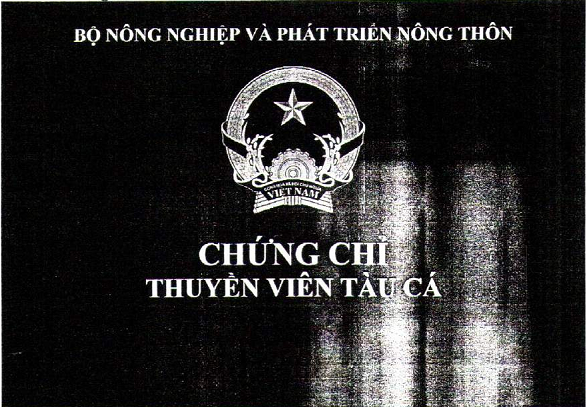
Back Side Sample
|
SOCIALIST REPUBLIC OF VIET NAM |
|||||
|
Image 3 x 4 cm |
a) Individuals belonging to consulting firms engaged in tendering or independent consultants specializing in tendering; FISHING VESSEL CAPTAIN Class … |
||||
|
Issued to: …Born on: Place of Birth: …ID Number/Citizen Identification Card Number Completed Course from: …..Month….. Year……… to …..Month….. Year….. Examination Board: Rating:
Serial Number:…/CCTVTC; Registration Number in Certificate Register: ……. P: protein content in the sample based on dry matter, % 1. Do not lend out. 2. Do not erase or alter. 3. Present the certificate when requested by port authorities. 4. Report loss of the certificate to relevant authorities. |
|||||
Note:
1. The fishing vessel captain certificate has a size of 15cm x 20cm made of hard cover.
2. The front side has a red background with the National Emblem, above the Emblem is the phrase "MINISTRY OF AGRICULTURE AND RURAL DEVELOPMENT" in yellow letters, below the Emblem is the phrase "FISHING VESSEL CREW MEMBER CERTIFICATE" in yellow letters.
3. The back side has a blank background with embossed printing. Information follows the sample format, presented in Times New Roman font. On the left side, there is a 3x4 cm photo of the certificate holder and a raised seal stamp of the training institution.
4. The phrase "DIRECTOR (or PRINCIPAL)": capitalized black bold letters. All other text is regular black letters.
5. Fishing vessel chief engineer and mechanic certificates are similar to fishing vessel captain certificates but replace "CAPTAIN" with "CHIEF ENGINEER" or "MECHANIC".
6. Training institutions present the font size and print certificates in accordance with the specified certificate size.
Văn bản gốc (PDF)
Tải văn bản
Bản đồ quan hệ
Bấm vào một văn bản để mở. Viền đỏ = quan hệ làm thay đổi hiệu lực.
Bản dịch
Văn bản này có sẵn ở các ngôn ngữ sau: