
This Circular stipulates internal laboratory testing in geological and solid mineral sample analysis to ensure the accuracy and reliability of analytical results.
적용 범위
Units under the Ministry of Natural Resources and Environment, Provincial Departments of Natural Resources and Environment, and organizations and individuals related to the field of geological and solid minerals.
핵심 사항
- Internal laboratory testing regulations include parallel testing, comparative testing, standard sample testing, and inter-laboratory analysis testing.
- Technical requirements for each type of testing are detailed in the relevant Articles.
- Regulations on record keeping, reporting, and document retention are also specified.
- hieulucthihanhvaquyduyettatcauhoiungdungcuaquanlynhom10va12trongchuong3cuacongvan
- chitietdieutruyenhanvachitrachnhiemthihanh
🌐 이 문서의 사회적 영향
- To help ensure the quality and accuracy of geological and solid mineral sample analysis results.
- To support effective management of mineral resources.
❓ 자주 묻는 질문
When does this Circular take effect?
This Circular takes effect from August 20, 2015.
When does Decision No. 51/QD-BCN cease to be effective?
Decision No. 51/QD-BCN ceases to be effective from the date this Circular takes effect, which is August 20, 2015.
전문
CIRCULAR
Technical regulations on internal laboratory testing for geological sample analysis and solid mineral products
Pursuant to the Law on Minerals No. 60/2010/QH12 dated November 17, 2010;
Pursuant to Decree No. 15/2012/NĐ-CP dated March 9, 2012 of the Government detailing the implementation of certain provisions of the Law on Minerals;
Pursuant to Decree No. 21/2013/NĐ-CP dated March 4, 2013, promulgated by the Government, stipulating the functions, tasks, powers, and organizational structure of the Ministry of Natural Resources and Environment;
At the proposal of the Director General of the Vietnam Geological and Mineral Resources Administration, the Director of the Science and Technology Department, and the Director of the Legal Department;
The Minister of Natural Resources and Environment promulgates this Circular to stipulate technical regulations on internal laboratory testing for geological sample analysis and solid mineral products.
PART I
GENERAL PROVISIONS
Article 1. Scope of Regulation
This Circular stipulates the work of quality control for quantitative analysis of geological samples and solid mineral products within laboratories, serving basic geological surveys and mineral exploration activities.
Article 2. Applicability
This Circular applies to state management agencies for minerals; organizations and individuals participating in mineral activities, and laboratories conducting geological sample and solid mineral product analysis.
Article 3. Explanation of Terms
In this Circular, the following terms shall be understood as follows:
1. Internal Testing Laboratory internal testing is a form of testing the repeatability of quantitative analysis results to assess random errors between test sample results and base sample results.
Laboratory internal testing is conducted through the following forms: parallel testing, comparative testing, standard sample testing, and inter-laboratory analysis testing.
2. Parallel Testing is a form where the laboratory self-tests when analyzing a batch of base samples and comparative test samples.
3. Comparative Testing within the laboratory is a form of testing the results of analysis performed by two different analysts using the same method under independent conditions or by two different methods with the same sample.
4. Standard Sample Testing is a form where the laboratory self-tests by adding appropriate standard samples to the batch of samples being analyzed.
5. Inter-Laboratory Analysis Testing involves checking the results of analysis from different analytical laboratories.
6. Batch Samples refers to a set of samples sent simultaneously with the same analysis request; a batch does not exceed 30 samples.
7. Base Sample is a processed sample taken out in a representative portion for analysis according to the sender's requirements.
8. Analytical Retained Sample is a processed sample that meets the analysis requirements and is the remaining part after taking a sample for analysis.
Chapter II
b) Welding materials must produce welds with a tensile strength no less than that of the base material used to manufacture the cylinders.
Article 4. General Provisions on Sample Collection for Testing
1. Base analysis samples, parallel test samples, and comparative test samples must be processed to meet analysis requirements.
2. Parallel test samples are taken from base samples. Parallel test samples in a batch must have the same size, shape, and weight. Test samples are numbered or marked, kept secret from the analyst, and interspersed with base samples.
4. Internal laboratory test samples are collected according to the following provisions:
|
Serial Number |
Number of base samples in a batch |
Number of parallel test samples |
Number of comparative test samples |
Number of accompanying standard samples |
|
1 |
2 ÷ 8 |
2 |
1 |
1 |
|
2 |
9 ÷ 15 |
3 |
2 |
1 |
|
3 |
16 ÷ 30 |
6 |
3 |
1 |
Article 5. Parallel Testing
1. The purpose of analyzing parallel test samples is to evaluate the repeatability of analysis results performed by one person to identify and eliminate gross errors in analysis results.
2. Parallel test analysis must be carried out under the same conditions as the base samples.
3. Comparison and processing of parallel test analysis results:
a) Calculate relative error:
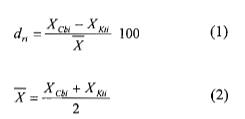
Where:
For coal-fired thermal power plants where the enterprise holds 100% of the registered capital and uses 100% of its own capital to invest in the project approved by the competent authority, E is determined as 100%;ri is the ith relative error
XCbi: is the result of base sample analysis
XKti: is the corresponding result of parallel test sample analysis
 : is the average result
b) Evaluate test results:
- Evaluate parallel test analysis results by comparing the relative error (dr) between the parallel test sample analysis results and the base sample analysis results with the permissible relative error value D (%)
+ Result meets requirements: dri ≤ Di
+ Result does not meet requirements:dri > Di
- The permissible relative error is specified in the Appendix attached to this Circular.
c) Post-evaluation error handling:
- When the parallel test analysis results meet requirements ( dri ≤ Di), the batch sample analysis results are accepted.
- When the parallel test analysis results do not meet requirements (dri > Di), then:
+ Calculate the average difference ( ) according to the formula:
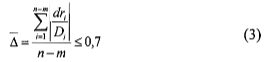
Where: i = 1, 2, 3,...
n: is the number of test samples
m: is the number of erroneous samples
+ When there is only one sample exceeding the limit, but the average difference ( ) of the remaining pairs of results is less than or equal to 0.7, the batch base sample analysis results are still accepted.
The analysis result of the pair of samples with error is calculated by taking the average of the base sample analysis result and the parallel test sample analysis result.
+ When there is only one sample exceeding the limit, but the average difference ( ) of the remaining pairs of results is greater than 0.7 or the number of erroneous samples is two or more, the batch base sample analysis results are not accepted.
Article 6. Comparative Testing
1. The purpose of comparative testing is to detect systematic errors within the laboratory.
2. Comparative testing analysis uses a method different from the basic sample analysis method but must have equal or higher accuracy than the basic sample analysis method. Comparative testing samples are conducted when there is no suitable standard sample accompanying the batch of samples for analysis.
3. Handling results of comparative testing analysis:
a) Calculate relative error:

Wherein:
XCbi a) Is the result of basic sample analysis
XDsi b) Is the result of comparative testing sample analysis corresponding to it
For coal-fired thermal power plants where the enterprise holds 100% of the registered capital and uses 100% of its own capital to invest in the project approved by the competent authority, E is determined as 100%;ri is the ith relative error
b) Handling after evaluating errors:
- When the result of basic sample analysis and the result of comparative testing sample analysis do not have systematic errors (dri ≤ Di), then the analysis result of the batch of samples is accepted.
- When the relative error of the result of basic sample analysis and the result of comparative testing sample analysis exceeds the allowable error (dri> Di), then take samples from the retained samples for re-analysis for those samples with comparative testing analysis results exceeding the allowable error, form a new batch of samples, number or mark the new samples, and conduct re-analysis using the comparative testing analysis method.
Error evaluation is carried out according to the provisions at point a, Clause 3 of this Article.
+ When the result of basic sample analysis and the result of comparative testing sample analysis the second time do not have systematic errors (dri ≤ Di), then the analysis result of the batch of samples is accepted.
+ When the result of basic sample analysis and the result of comparative testing sample analysis the second time have systematic errors (dri> Di), then the analysis result of the batch of samples is not accepted.
+ When the result of comparative testing sample analysis the second time and the result of comparative testing sample analysis the first time do not have systematic errors (dri ≤ Di), then the basic batch of samples is not accepted.
Article 7. Standard Sample Testing
1. The purpose of standard sample testing is to evaluate the accuracy of the batch of sample analyses.
2. Technical requirements for standard samples included in the batch of sample analyses and the comparison, handling, and evaluation of standard sample results according to the batch are implemented according to the provisions at QCVN 48:2012/BTNMT issued by Circular No. 24/2012/TT-BTNMT dated December 28, 2012 of the Minister of Natural Resources and Environment.
Article 8. Inter-laboratory Analysis Testing
1. The purpose of inter-laboratory analysis testing is to compare and evaluate the quality of sample analysis between different laboratories.
2. Technical requirements for inter-laboratory analysis testing:
a) The ratio of samples sent for inter-laboratory analysis testing annually shall not be less than one percent (1%) of the total number of basic samples analyzed;
b) Samples selected for sending must be those that have passed internal laboratory testing;
c) The analytical methods applied for inter-laboratory analysis testing may be the same or different from the analytical methods being used by the laboratory sending the samples.
3. Handling results of inter-laboratory analysis testing:
a) Evaluating errors:
- Calculate the absolute deviation di between the basic analysis result and the inter-laboratory testing result of the sample under consideration i:

- Calculate the average content of the set of basic samples and inter-laboratory testing samples, excluding the sample under consideration:
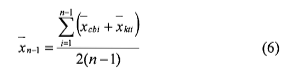
- A sample is considered to have an error when:

Where:
 : Average content of the basic sample i
: Average content of the inter-laboratory testing sample i
di: Is the absolute error between the basic analysis result and the inter-laboratory testing analysis result.
d: Allowable error at the corresponding content level, found in the Appendix attached to this Circular.
b) Handling after evaluating errors:
- If the inter-laboratory testing analysis result does not have an error, the analytical method used by the laboratory is evaluated as having a reliable analysis result.
- If the inter-laboratory testing analysis result has an error, the analysis result of the laboratory is evaluated as unreliable.
Article 9. Provisions on recording files, reports, and retaining documents
1. After completing the analysis and testing, the analysis results must be recorded with full information as follows:
a) Sample form name;
b) Analyzing unit;
c) Analysis and testing requirements;
d) Number of samples tested;
đ) Number of erroneous samples;
e) Conclusion of the tester;
g) Date of testing;
h) Signature of the analyst;
i) Signature of the tester.
2. Files, documents, and related reports concerning internal laboratory testing must be retained and preserved in accordance with regulations.
Chapter III
IMPLEMENTATION PROVISIONS
Article 10. Effective Date
1. This Circular takes effect from August 20, 2015.
2. Decision No. 51/QĐ-BCN dated August 2, 1999 of the Ministry of Industry on the issuance of "Regulations on the use of standard samples in geological-mineral solid sample analysis and internal quality control procedures for laboratories in geological-mineral solid sample analysis" shall cease to be effective from the date this Circular takes effect.
Article 11. Responsibility for Implementation
1. Internal laboratory testing is conducted independently from quality control activities carried out by state management agencies or basic geological surveys on minerals, mineral exploration projects.
2. The Director of the Vietnam Geological and Mineral Resources General Department, heads of units under the Ministry of Natural Resources and Environment, Directors of Provincial and Central City Departments of Natural Resources and Environment, and relevant organizations and individuals are responsible for implementing this Circular.
3. The Vietnam Geological and Mineral Resources General Department is responsible for guiding and supervising the implementation of this Circular.
4. In the course of implementation, if any difficulties arise, organizations and individuals are requested to promptly report to the Ministry of Natural Resources and Environment for research and appropriate amendments.
| Place of Receipt: - Government Office; - Ministries, ministerial-level agencies; - State Audit Agency; - Provincial and municipal People's Committees directly under the central government; - Departments of Natural Resources and Environment of provinces and centrally governed cities; - Ministry of Justice (Department of Legal Review); - Minister, Deputy Ministers; - Official Gazette, Government Portal; - Units under the Ministry of Natural Resources and Environment, the Ministry's website; - Units under the Vietnam Geological and Mineral Resources General Department; - File: VT, DCKS, KHCN, PC. |
DEPUTY MINISTER
DEPUTY MINISTER
(Signed)
TRAN HONG HA
|
원본 문서(PDF)
관계도
문서를 클릭하면 열립니다. 빨간 테두리=효력을 변경하는 관계.