
This Circular stipulates the ranking of enterprises based on specific criteria and indicators. Enterprises are ranked from Class II to Class IV by the Ministry managing the industry or field, or the People's Committee of provinces/cities directly under the Central Government; enterprises of Class I will be reviewed and decided upon by the Joint Ministry of Labor, War Invalids and Social Affairs - Finance based on the proposals of the aforementioned agencies. The Circular also stipulates the determination of salary grades for managerial positions based on the enterprise's established class.
Scope of application
Enterprises under the management of the Ministry managing the industry or field, the People's Committee of provinces/cities directly under the Central Government, and the Board of Directors of General Corporation 91/TTg.
Key points
- Specifies standards and indicators for ranking enterprises from Class II to Class IV.
- Procedures for reviewing and deciding on the class for Class I enterprises.
- Method for calculating points excluding inflation factors when evaluating the economic efficiency of enterprises.
- Guidelines for determining salary grades for managerial positions based on the enterprise's established class.
- Provisions regarding the organization of implementation and responsibilities of relevant parties during the enterprise ranking process.
🌐 Social impact of this document
- Establishing a clear legal basis for assessing the economic performance of enterprises.
- Ensuring fairness and transparency in determining and adjusting the class of enterprises.
- Assisting management units in having grounds to make policy decisions for each enterprise.
❓ Frequently asked questions
What criteria are used to rank enterprises?
Revenue, tax payment, and profit are important indicators used to calculate the ranking points of enterprises.
What is the procedure for reviewing the class for Class I enterprises?
For Class I enterprises, based on the proposals of the Ministries managing the industry or field, the People's Committee of provinces/cities directly under the Central Government, and the Board of Directors of General Corporation 91/TTg, the Ministry of Labor, War Invalids and Social Affairs reviews and issues a joint document after consulting with the Ministry of Finance.
This Circular replaces which provisions?
This Circular replaces Circular No. 21/LB-TT dated June 17, 1993 of the Joint Ministry of Labor, War Invalids and Social Affairs - Finance and Circulars of the Ministries managing the industry or field guiding the ranking of enterprises.
Full text
|
JOINT CIRCULAR LABOUR AND SOCIAL AFFAIRS - MINISTRY OF FINANCE RESOLUTION |
SOCIALIST REPUBLIC OF VIET NAM |
|
No.: 17/1998/TTLT-BLDTBXH-BTC |
Hanoi, December 31, 1998 |
CIRCULAR
CỦA MINISTRY OF LABOR-SOCIAL AFFAIRS AND WAR INVALIDS LABOUR AND SOCIAL AFFAIRS - MINISTRY OF FINANCE
NUMBER 17/1998/TTLT-BLDTBXH-BTC DATE DECEMBER 31, 1998
GUIDELINES FOR RANKING STATE ENTERPRISES
To implement Article 11 of Decree No. 26/CP dated May 23, 1993 of the Government on the temporary regulations for new wage systems in state enterprises, the Ministry of Labour, Invalids and Social Affairs and the Ministry of Finance issued Circular No. 21/LB-TT dated June 17, 1993 to guide the ranking of state enterprises. After more than four years of implementation, it is necessary to amend the criteria and indicators for ranking state enterprises to be consistent with current realities. The Ministry of Labour, Invalids and Social Affairs and the Ministry of Finance hereby provide guidelines for ranking state enterprises as follows:
I - SCOPE AND OBJECTS
1. State enterprises engaged in production and business activities under the Law on State Enterprises and Decree No. 59/CP dated October 3, 1996 guiding this Law;
2. State enterprises engaged in public services under the Law on State Enterprises and Decree No. 56/CP dated October 2, 1996 of the Government guiding the Law on State Enterprises.
Hereinafter referred to collectively as state enterprises.
The ranking and wage setting for management officials of State Corporations established pursuant to Decisions No. 90/TTg and 91/TTg dated March 7, 1994 of the Prime Minister shall be carried out in accordance with Decision No. 185/TTg dated March 28, 1996 of the Prime Minister and Decree No. 110/CP dated November 18, 1997 of the Government, and are not subject to this Circular, except for member enterprises of special category corporations which still follow the provisions and guidance set forth in this Circular.
II - CONDITIONS FOR CONSIDERING RANKING
State enterprises can only be considered for ranking if they meet all of the following conditions:
1. They have a state capital (shareholders' equity) amounting to at least one billion VND at the time of ranking.
2. State enterprises not included in the list for changing ownership forms such as shareholding, merger, dissolution, bankruptcy.
III - PRINCIPLES FOR RANKING
1. The ranking of state enterprises is determined based on two groups of indicators: complexity of management and effectiveness of production and business operations.
2. When calculating points for ranking state enterprises, revenue (sales), profit, and tax payment at the time of application must exclude inflation factors (if any) according to the announcement of the General Statistics Office compared to the original standards and indicators issued together with this Circular. If a state enterprise does not make a profit, it will not earn points for the profit indicator, and if it incurs losses, it will lose points.
3. All state enterprises that have been ranked and had their wages set according to Circular No. 21/LB-TT dated June 17, 1993 must reassess and rank again according to the provisions of this Circular.
4. Three years (36 months) after the date of the ranking decision, the authority issuing the ranking decision is responsible for reviewing and re-ranking the enterprise.
5. Management and leadership officials of state enterprises who are ranked at a certain level will have their managerial salary and leadership position allowances set and received according to that level. The previous level's salary and leadership position allowance will not be retained.In cases where they transfer to other positions, their salaries must be reassessed based on the new job and position.
IV - CRITERIA AND STANDARDS FOR RANKING
A. RANKING CRITERIA
The ranking criteria and weight of each group of criteria are specified as follows:
1. The complexity of management group accounts for 50% - 60% of total points, including specific indicators:
a) Production and business capital (shareholders' equity): is the total capital owned by the state managed by the enterprise at the time of ranking, including:
- Business capital (code 411 in the enterprise's balance sheet);
- Development investment fund (code 414 in the enterprise's balance sheet);
- Basic construction investment capital (code 418 in the enterprise's balance sheet);
- Financial reserve fund (code 415 in the enterprise's balance sheet);
b) Revenue:is determined according to Articles 20 and 21, Chapter III, Financial Management and Business Accounting Regulations for State Enterprises issued together with Decree No. 59/CP dated October 3, 1996 and Decree No. 56/CP dated October 2, 1996 of the Government, and Points 1 and 2, Section A, Circular No. 76 TC/TCDN dated November 15, 1996 of the Ministry of Finance.
c) Affiliated units reason:are the number of dependent accounting units or directly affiliated accounting units of the enterprise.
d) Level of production technology:
The level of production technology is based on the generation of machinery, equipment, and production technology, divided into three levels:
- High technology: Using modern machinery, equipment, and production technology reaching the level of developed countries and countries in the region.
- Medium technology: Using machinery, equipment, and production technology reaching the medium level of developed countries and countries in the region.
- Low technology: Using remaining machinery, equipment, and production technology.
Ministries and sectors need to specify this indicator in line with the actual production and business situation of the sector after consulting with the Joint Ministries.
e) Number of employees: Is the average number of employees actually employed annually.
2. The production and business efficiency group accounts for 40 - 50% of total points, including specific indicators:
a) Realized profit: is determined according to Article 30, Chapter III, Financial Management and Business Accounting Regulations for State Enterprises issued together with Decree No. 59/CP dated October 3, 1996 of the Government, including: - Operating profit (code 20);
- Financial activity income (code 40);
- Unusual income (code 50).
Details of these profits and incomes are reflected in Form B02, results of production and business activities in the financial reporting system issued with Decision No. 1141TC/QD/CĐKT dated November 1, 1995 of the Ministry of Finance.
Tax payment to the state budget:
b) reflects the actual amount paid into the state budget during the period (excluding the shortage from the previous period paid in this period) including various taxes and other payments as prescribed by the state in the reporting year (excluding import-export duties, social insurance contributions, health insurance contributions, trade union fees, fines, surcharges). c) Profit margin:
c) Profit rate:is the percentage ratio between the profit realized on the State capital existing at the end of the fiscal year at the enterprise (applicable to State enterprises engaged in production and business activities).
For State enterprises engaged in public welfare activities, the points for the group of production and business efficiency indicators are calculated as follows:
- If the enterprise has budget contribution targets and profits: the group of efficiency indicators is scored according to the provisions at items a and b, point 2 above;
- If the enterprise solely engages in public welfare activities without budget contribution targets and does not generate profits, then the points for this group of indicators are specifically listed in the standard criteria and ranking indicators for enterprises issued together with this Circular.
The data used to calculate the ranking score of the enterprise is based on the financial settlement reports of the two consecutive years prior to the year for which the ranking is requested, while also having actual performance data up to the time of request for reference.
Ex ample: Enterprise A submitted a document requesting ranking in July 1999. The data used to calculate the ranking score is based on the financial settlement reports of 1997 and 1998. Reference data is the performance data for the first six months of 1999.
For newly established enterprises that do not have sufficient data to calculate ranking scores, the competent authority shall base on economic and technical justifications and balance with already ranked enterprises, temporarily issue a decision to rank from Class II downwards within a period not exceeding two years, and send it back to the Joint Ministries for monitoring and inspection. Subsequently, guide the enterprise to implement ranking in accordance with the regulations and guidance stipulated in this Circular.
B. RATING STANDARDS
1 Ranking Standards Table:
Based on the financial settlement data and in accordance with the ranking criteria mentioned above, to ensure consistent state management and balance in enterprise ranking standards, the Joint Ministries promulgate Appendix No. 01 attached to this Circular "Enterprise Ranking Standards for Industry or Group of Industries" applicable nationwide.
2. Method of calculating points when the indicators fall within the minimum and maximum point limits of the ranking table, using the following formula:

Where:
Ddn - Points calculated according to the indicator.
Tdn - Value of the indicator being scored for the enterprise.
Tmin - Minimum value of the scoring indicator in the standard table;
Tmax - Maximum value of the scoring indicator in the standard table:
Dmax - Maximum points of the scoring indicator in the standard table;
Dmin - Minimum points of the scoring indicator in the standard table.
Ex ample: Enterprise A in the construction industry has a revenue indicator (Tdn) of 25 billion VND for the reporting year to consider enterprise ranking; Tmin is 5 billion VND; Tmax is 40 billion VND; Dmin is 5 points; Dmax is 14 points. According to the above formula, the points for Enterprise A's revenue indicator will be:

3. For enterprises engaged in diversified production and business activities across multiple industries and trades, on the basis of permitted industries and trades, select the standard for ranking based on the product with the largest revenue (sales) share.
Example: Enterprise B in the machinery industry, within its main functions and tasks approved by the competent authority to produce machinery products, steel construction materials, and equipment sales. Machinery product revenues account for 25% of total revenue, steel construction material revenues account for 40% of total revenue, and equipment sales revenues account for 35% of the enterprise's total revenue. According to the above provision, Enterprise B selects the metallurgy industry ranking standard corresponding to the largest revenue share of 40% for ranking consideration.
4. Cases where additional points are awarded:
a) Enterprises (headquarters of enterprises) located in areas with regional allowances:
- Areas with a regional allowance rate of 0.3 and 0.4: add 3 points;
- Areas with a regional allowance rate of 0.5: add 5 points;
- Areas with a regional allowance rate of 0.7 or higher: add 7 points.
b) Enterprises exceeding the profit level specified:
- Actual profit exceeds the maximum profit level in the standard table by 10% to less than 30%, then add 1 point;
- Actual profit exceeds the maximum profit level in the standard table by 30% to less than 50%, then add 2 points:
- Actual profit exceeds the maximum profit level in the standard table by 50% to less than 100%, then add 3 points;
- Actual profit exceeds the maximum profit level in the standard table by 100% or more, then add 4 points.
5. In cases where enterprises incur losses, points are deducted as follows:
- If the incurred loss ratio is below 30% of the State capital, deduct 2 points;
- If the incurred loss ratio is 30% or more of the State capital, deduct 4 points.
V - PROCEDURES AND MANAGEMENT OF ENTERPRISE RANKING
1. Procedures and documents for requesting enterprise ranking:
a) Responsibilities of the enterprise: based on the provisions and guidelines in this Circular, the enterprise calculates its own points according to the proposed ranking criteria and sends a letter to the competent authority responsible for determining the ranking (local enterprises send to the People's Committee of the province or centrally-administered city; central enterprises send to the Ministry managing the industry or sector; enterprises directly under the General Corporation established by Decision 91/TTg dated March 7, 1994 send to the Board of Directors of the General Corporation). The application documents for ranking include:
- The enterprise's letter requesting ranking;
- The enterprise's scoring table according to the criteria;
- Copies of the financial settlement reports of the two preceding years before the year for which ranking is requested (certified by a notary) and the actual performance data of the criteria up to the time of the ranking request.
b) Responsibilities of the Ministry managing the industry or sector; Provincial People's Committees; Management Boards of General Corporations established by Decision 91/TTg dated March 7, 1994 (referred to as the competent authority responsible for determining the enterprise ranking):
- Receive, review, and inspect the enterprise's ranking application documents, calculate points according to the guidelines, and issue a decision to rank the enterprise from Class II downwards.
Within thirty days from the date of receipt of complete documents, a decision on ranking must be issued or the enterprise must be informed of the reasons for not ranking. If the response is overdue beyond thirty days, the enterprise is ranked according to the class it requested.
- Receive, examine, and review the application file for classification level I of enterprises, score according to the guidelines, and issue a letter of recommendation attached to the enterprise's file to be sent back to the Ministry of Labor - Invalids and Social Affairs for examination and agreement before the competent authority issues the classification decision.
c) Responsibilities of the Joint Ministry of Labor - Invalids and Social Affairs - Ministry of Finance:
1 - The Ministry of Labor - Invalids and Social Affairs is responsible for receiving and appraising the application file for classification level I. Within ten days from the date of receipt of the complete application file, it shall send a document seeking the opinion of the Ministry of Finance.
2 - The Ministry of Finance is responsible for checking the financial settlement report data of the enterprise and sending a reply document to the Ministry of Labor - Invalids and Social Affairs within fifteen days from the date of receipt of the document from the Ministry of Labor - Invalids and Social Affairs.
After thirty days from the date of receipt of the complete application file for classification, the Joint Ministry must issue a document responding to the competent authority issuing the classification decision. Beyond the aforementioned thirty-day period, the Ministry Managing the Industry, Sector, Provincial People's Committee, Decision No. 91/TTg has the right to issue the classification decision according to the proposed level.
2. Management of enterprises that have been classified:
Three years after the date of classification, enterprises and the competent authorities issuing the classification decision must compile and report on the implementation of classification criteria over three years to consider upgrading, downgrading, or maintaining the classification level as follows:
a) For enterprises: must compile data according to the classification criteria (according to form number 1) and report to the competent authority issuing the classification decision (Ministry managing the industry, sector, provincial people's committee; Board of Directors of the State-owned Enterprise established by Decision No. 91/TTg dated March 7, 1994).
b) For the competent authorities deciding the classification of enterprises:
- Based on the enterprise's report, they are responsible for checking and compiling data of all enterprises from level I to level IV under their management authority (according to form number 2) and sending the report to the Ministry of Labor - Invalids and Social Affairs.
- Based on the reported data of enterprises, recalculate the points of the classification criteria according to the regulations, then adjust or maintain the classification level according to the points achieved by the enterprise. Specifically, for enterprises requesting to be upgraded to level I, the procedure and file submission to the Joint Ministry still follow point 1, section V above.
If enterprises fail to submit reports as required by the deadline, the competent authority deciding the classification will issue a document downgrading them by one level and continue this process until the enterprise submits complete reports, at which time the actual achieved points will be considered for reclassification.
VI - SALARY CLASSIFICATION FOR ENTERPRISE MANAGEMENT OFFICIALS
1. Salary classification based on enterprise level for enterprise management officials.
The salary classification for enterprise management officials must be based on the enterprise level assigned and the current salary coefficient to classify according to the regulations, specifically as follows:
a) If the current position salary coefficient or the professional and vocational salary coefficient plus the position allowance and retention differential coefficient (if any) is lower than the first-level salary coefficient, then transfer to the first-level salary coefficient and the next salary increment review period starts from the date of the enterprise classification decision.
Example 1: Ms. B is the head of a department in a level II enterprise, classified at grade 2, specialist rank with a salary coefficient of 3.54 and enjoying a leadership position allowance of 0.3; the total current salary coefficient is 3.84 (3.54 + 0.3). In March 1999, Ms. B was appointed Deputy Director of the said enterprise. She was classified at grade 1, Deputy Director position in a level II enterprise, with a salary coefficient of 4.32. The next salary increment review period starts from the date of the Deputy Director classification decision. + In case the total salary coefficient (including the salary coefficient plus the position allowance and retention differential coefficient, if any) currently enjoyed is equal to or lower than the first-level salary coefficient, but the difference is less than 70% of the difference between the first-level and second-level salary coefficients, then the next salary increment review period starts from the date of the previous salary classification decision.
Mr. C is a specialist in a level I enterprise, classified at grade 6, specialist rank, with a salary coefficient of 4.66 since June 1997 and a retention differential coefficient of 0.18; the total current salary coefficient is 4.84. In April 1998, Mr. C was appointed Deputy Director of the said enterprise, then he was classified at grade 1, Deputy Director position in a level I enterprise, with a salary coefficient of 4.98. The next salary increment review period starts from June 1997, because:
Example 2: b) If the current position salary coefficient or the professional and vocational salary coefficient plus the position allowance and retention differential coefficient (if any) is higher than the first-level salary coefficient but lower than the second-level salary coefficient, then classify at grade 1 and enjoy the retention differential coefficient, the next salary increment review period starts from the date of the previous salary classification decision. When promoted to grade 2, stop enjoying the retention differential coefficient.
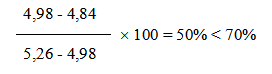
Mr. N is the head of a department in a ministry, classified at grade 6, specialist rank, with a salary coefficient of 4.75 since October 1998 and a position allowance of 0.4; the total current salary coefficient is 5.15 (4.75 + 0.4). In January 1999, Mr. N was appointed Director of a level II enterprise, then he was classified at grade 1, Director position in a level II enterprise, with a salary coefficient of 4.98 and enjoying a retention differential coefficient of 0.17 (5.15 - 4.98). The next salary increment review period for Mr. N starts from October 1998.
Example 3: d) If the current position salary coefficient or the professional and vocational salary coefficient plus the position allowance and retention differential coefficient (if any) is equal to the second-level salary coefficient, then transfer to grade 2. In case the total current salary coefficient is higher than the second-level salary coefficient, still classify at the second-level salary coefficient and retain the retention differential coefficient. + Mr. D is a Department Head, classified at grade 3, senior specialist rank with a salary coefficient of 5.54 and a position allowance of 0.8; the total current salary coefficient is 5.54 + 0.8 = 6.34; when Mr. D was appointed Director of a level 1 enterprise, he was classified at grade 2 with a salary coefficient of 6.03 and retaining a retention differential coefficient of 0.31 (6.34 - 6.03).
d) If the position salary coefficient or the specialty vocational salary coefficient plus the position allowance and the retention difference coefficient (if any) currently enjoyed equals the grade 2 salary coefficient, then the salary grade shall be transferred to grade 2. In cases where the total current salary coefficient is higher than the grade 2 salary coefficient, it shall still be classified under the grade 2 salary coefficient and retain the retention difference system.
Example 4: Mr. D is the Director of a Department, with a grade 3 salary, senior specialist rank, a salary coefficient of 5.54, and a position allowance coefficient of 0.8; the total current salary coefficient is 5.54 + 0.8 = 6.34. + When Mr. D was appointed as the General Director of a Class 1 enterprise, he was reclassified to grade 2 with a salary coefficient of 6.03 and retains a retention difference coefficient of 0.31 (6.34 - 6.03).
2. Reorganize the salary of management civil servants (Directors, Deputy Directors, Chief Accountants) and position allowances for leadership roles when the enterprise's category changes.
When the enterprise's category changes, the salary coefficient and leadership position allowance of the management civil servants shall be reorganized according to the lower category without retaining the salary coefficient and leadership position allowance of the previous category.
a) In cases where the enterprise is upgraded or downgraded in category: demotion: when the enterprise decides to upgrade or downgrade its category, the salary coefficient of the management positions (Director, Deputy Director, Chief Accountant) shall be reorganized according to the principle that the first grade of the old category corresponds to the first grade of the new category, and the second grade of the old category corresponds to the second grade of the new category.
Example 5: Mr. X is the Director of a Category II enterprise, currently at Grade 2 with a salary coefficient of 5.26. In 1999, his enterprise was upgraded to Category I, so Mr. X was reorganized to Grade 2 of Category I enterprises, with a salary coefficient of 6.03.
Example 6Ms. Y is the Director of a Category I enterprise, currently at Grade 1 with a salary coefficient of 5.72. In 1999, her enterprise was downgraded to Category II, so Ms. Y was reorganized to Grade 1 of Category II enterprises, with a salary coefficient of 4.98.
For enterprises that must downgrade, the Ministry managing the industry or sector, the People's Committee of provinces or centrally governed cities, and the Board of Directors of the General Corporation established under Decision 91/TTg dated March 7, 1994, based on the specific situation and development trend of the enterprise, may consider allowing the enterprise to retain its original category for no more than one year. Afterward, they will assess points and reclassify according to the regulations.
In special cases, management civil servants (Directors, Deputy Directors, Chief Accountants) who have long service records, have held multiple leadership positions, and are approaching retirement age (over 57 years old for men and over 52 years old for women), should report to the competent authority for classification and salary adjustment to retain their previous salary until retirement.
b) In cases where the enterprise retains its original category:then the salaries of the management positions shall remain unchanged and be considered for promotion according to the regulations.
3. Reorganization of salary when management civil servants change jobs:
When management civil servants cease to hold management positions and transfer to other work, their salaries shall be reorganized according to the principle: "performing what job, holding what position, receiving salary for that job and position",not retaining the previous salary level or transferring to an equivalent new salary level.
Upon taking up new work, based on the professional and vocational requirements of the new job and the standards specified in Circular No. 04/1998/TT-BLDTBXH dated April 4, 1998, the salary shall be reorganized. Before the reorganization, subtract the leadership position allowance coefficient designed within the current salary coefficient from the current salary coefficient. The remaining salary coefficient shall be transferred to the nearest grade with an equivalent salary coefficient among the professional and vocational staff grades in the enterprise's salary table. Promotion time is calculated from the date of the initial salary coefficient before reorganization.
Example 7: Mr. A is the Deputy Director of a Category II enterprise under the General Corporation X, currently at Grade 1/2 of the Deputy Director position, with a salary coefficient of 4.32 since May 1997. Mr. A was transferred to Head of Planning Department of the General Corporation from September 1999. His salary reorganization is carried out as follows:
- Subtract the current salary coefficient of 4.32 minus the leadership position allowance coefficient designed within it of 0.5, resulting in a coefficient of 3.82 (4.32 - 0.5 = 3.82).
- Assign the remaining coefficient of 3.82 to Grade 3 of the Senior Specialist rank, with a salary coefficient of 3.82 in the professional and vocational staff salary table of the enterprise. Additionally, Mr. A also receives the Head of Department position allowance according to the category of the General Corporation. Promotion time is calculated from May 1997.
Example 8Ms. B is the Director of a Category I enterprise under the General Corporation Y, currently at Grade 2/2 of the Director position, with a salary coefficient of 6.03 since December 1996. In May 1999, Ms. B was transferred to serve as a Specialist at the General Corporation's Office. Similar to the above example, Ms. B is assigned to Grade 3 of the Senior Specialist rank in the professional and vocational staff salary table of the enterprise, with a salary coefficient of 5.15 (since 6.03 - 0.8 = 5.23, which is close to 5.15). Promotion time is calculated from December 1996.
In special cases, management civil servants with long service records, having held multiple leadership positions, and approaching retirement age (over 57 years old for men and over 52 years old for women) shall be handled specifically as stipulated in point 2 above.
VII- IMPLEMENTATION
Based on the criteria and standards prescribed and guided in this Circular, the Ministries managing industries or sectors, the Chairmen of Provincial People's Committees, and the Chairmen of the Boards of Directors of General Corporations 91/TTg shall guide enterprises to calculate points according to the regulations, review, and issue decisions to classify from Category II to Category IV for enterprises under their management based on the points achieved by the enterprises.
For Category I enterprises, based on the proposals of the Ministries managing industries or sectors, the People's Committees of provinces or centrally governed cities, and the Chairmen of the Boards of Directors of General Corporations 91/TTg, the Ministry of Labor, Invalids, and Social Affairs shall consider and issue a consensus document after exchanging opinions with the Ministry of Finance.
In cases where enterprises do not meet the conditions for classification according to Article II of this Circular or do not have enough points for Category IV classification, the Ministries managing industries or sectors, the People's Committees of provinces or centrally governed cities, and the Boards of Directors of General Corporations 91/TTg shall consider organizing salaries for the highest management position according to the principle: the salary coefficient (including position allowance) cannot be higher than the salary coefficient of the Deputy Director of a Category IV enterprise. The salary coefficients of the remaining management and leadership positions must be lower than that of the highest management position.
In the case where the enterprise is on the list for shareholding reform, dissolution, bankruptcy, or merger, the managerial staff of the enterprise shall retain their salary and position allowances (if any) until the enterprise undergoes shareholding reform, dissolution, merger, or bankruptcy. At that time, the managerial staff will be reassigned a salary according to the job or position they hold in the new unit.
2. After issuing the ranking decision for enterprises under the management of the Ministry in charge of the industry or sector, the People's Committee of the province or centrally governed city, and the Board of Directors of State Corporation 91/TTg, these entities shall send one copy of the ranking decision and the scoring data based on the enterprise ranking criteria (according to Form No. 3) to the Ministry of Labor, Invalids, and Social Affairs for monitoring and inspection.
Based on the scoring calculation and the ranking decision issued by the Ministry in charge of the industry or sector, the People's Committee of the province or centrally governed city, and the Board of Directors of State Corporation 91/TTg, - the Joint Ministries will organize inspections and handle violations according to current regulations.
The head of the Ministry in charge of the industry or sector, the Chairman of the People's Committee of the province or centrally governed city, and the Chairman of the Board of Directors of State Corporation 91/TTg are responsible before the Government and the Joint Ministries for the enterprise ranking as prescribed.
3. For member units directly subordinate to Class I enterprises or lower: the managerial staff of the member units shall be assigned a professional and vocational salary and enjoy position allowances equivalent to those of Deputy Directors and Assistant Directors according to the enterprise class assigned. If necessary, a report must be submitted to the Joint Ministries for specific review and handling.
4. For enterprises without ranking standards, the Ministries in charge of the industry or sector, the People's Committee of the province or centrally governed city, and the Board of Directors of State Corporation 91/TTg need to develop supplementary standards or apply the standards stipulated in this Circular. Before implementation, a document requesting agreement or supplementary provisions from the Joint Ministries must be submitted.
5. Starting from 1999, when calculating points for ranking or reviewing and adjusting the enterprise class, revenue, tax payment, and profit must exclude inflation factors based on price indices compared to 1998 as published by the General Statistics Office. The formula for excluding inflation factors is as follows:
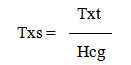
In :
- Txs is the index x after excluding inflation factors;
- Txt is the index x before excluding inflation factors.
- Hcg is the price index of the year proposed for ranking compared to 1998.
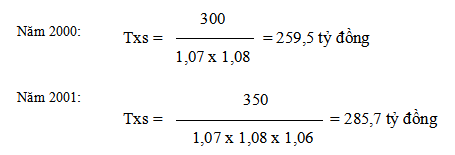
Ex ample: According to the financial settlement, Enterprise A achieved a revenue of 300 billion VND in 2000 and 350 billion VND in 2001. In June 2002, the enterprise requested a reclassification. According to the announcement of the General Statistics Office, the price indices for each year were as follows:
- Year 1999 was 1.07 (i.e., increased by 7%) compared to 1998.
- Year 2000 was 1.08 (i.e., increased by 8%) compared to 1999;
- Year 2001 was 1.06 (i.e., increased by 6%) compared to 2000.
Therefore, the revenue index for calculating points according to the ranking standard criteria for Enterprise A, after excluding inflation factors for each year, will be:
6. This Circular takes effect fifteen days after its issuance and replaces Circular No. 21/LB-TT dated June 17, 1993, of the Joint Ministries of Labor, Invalids, and Social Affairs - Finance, and the Circulars of the Ministries in charge of the industry or sector regarding guidance on enterprise ranking.
During implementation, if there are any difficulties, please report them to the Joint Ministries of Labor, Invalids, and Social Affairs - Finance for consideration and resolution./
|
SIGNATURE OF THE MINISTER MINISTRY OF FINANCE DEPUTY MINISTER TRAN VAN TA |
SIGNATURE OF THE MINISTER MINISTRY OF LABOR - INVALIDS AND SOCIAL AFFAIRS DEPUTY MINISTER Lê Duy Đồng |
Relations map
Click a document to open. A red border = a relation that changes validity.
Translations
This document is available in the following languages: