
Circular No. 19/2020/TT-BTNMT stipulates the use of dispersants in responding to oil spills in Vietnam's marine areas. This circular provides a list of permitted dispersants, technical requirements for them, and guidelines on how to spray or spread dispersants from ships and aircraft.
适用范围
This circular applies to ministries, ministerial-level agencies, government-affiliated agencies, provincial People's Committees located in coastal central cities, and organizations and individuals involved in responding to oil spills in Vietnam's marine areas.
要点
- List of dispersants permitted for use in responding to oil spills
- Technical requirements for dispersants include dispersion efficiency, acute toxicity, and biodegradability
- Guidelines on conditions for application and methods of spraying or spreading dispersants from ships and aircraft.
- Regulations on reporting the results of using dispersants after responding to oil spills.
- This circular takes effect from February 15, 2021
🌐 本文件的社会影响
- To protect the marine environment from the impact of oil spills
- To ensure safety for marine life and coastal communities
- To improve the effectiveness in responding to oil spills
❓ 常见问题
What dispersants are permitted for use according to this circular?
The specific list of permitted dispersants is not detailed in the circular, but technical requirements for them include a minimum oil dispersion efficiency of 35%, acute toxicity on Skeletonema costatum algae and Penaeus monodon shrimp larvae must be greater than or equal to 10 mg/L, and aerobic biodegradability after 28 days must be greater than or equal to 50%.
What are the technical requirements for dispersants?
Technical requirements include a minimum oil dispersion efficiency of 35%, acute toxicity on Skeletonema costatum algae and Penaeus monodon shrimp larvae must be greater than or equal to 10 mg/L, and aerobic biodegradability after 28 days must be greater than or equal to 50%.
Does this circular provide guidelines on how to spray or spread dispersants from ships and aircraft?
Yes, the circular provides detailed guidelines on conditions for application and methods of spraying or spreading dispersants from both ships and aircraft.
When does this circular take effect?
Circular No. 19/2020/TT-BTNMT takes effect from February 15, 2021.
全文
|
MINISTRY OF NATURAL RESOURCES AND ENVIRONMENT |
SOCIALIST REPUBLIC OF VIET NAM |
|
Number: 19/2020/TT-BTNMT |
Hanoi, December 30, 2020 |
CIRCULAR
On the basis of Law on Marine and Island Resources and Environment dated June 25, 2015;
On the basis of Law on Environmental Protection dated June 23, 2014;
On the basis of Decree No. 96/2022/NĐ-CP dated November 29, 2022 of the Government stipulating functions, tasks, powers, and organizational structure of the Ministry of Industry and Trade;
Decree No. Decree No. 30/2017/NĐ-CP dated March 21, 2017 of the Government stipulating organization and operation for response to incidents, natural disasters, and search and rescue operations;
Decree No. Decision No. 36/2017/NĐ-CP dated April 4, 2017 of the Government stipulating functions, tasks, powers, and organizational structure of the Ministry of Natural Resources and Environment;
Pursuant to Decision No. The Minister of Natural Resources and Environment issues this Circular on issuing the List of Dispersants Permitted for Use in Vietnam's Territorial Waters and Guidelines on the Procedure for Using Dispersants in Oil Spill Response.
This Circular stipulates the List of Dispersants Permitted for Use in Vietnam's Territorial Waters and Guidelines on the Procedure for Using Dispersants in Oil Spill Response.
This Circular applies to agencies, organizations, individuals within and outside Vietnam involved in activities related to the use of dispersants in oil spill response in Vietnam's territorial waters.
PART I
GENERAL PROVISIONS
Article 1. Scope of Regulation
Dispersant
Article 2. Applicability
is a chemical compound applied to break down the film structure of oil slicks into smaller oil droplets, causing the oil to dissolve and disperse into small particles in the water column.
Article 3. Explanation of Terms
1. cSt is a unit of kinematic viscosity determined according to National Standard TCVN 3171:2011 (ASTM D445-11).
2. Dispersant Efficiency is the ability of a dispersant to disperse a type of oil under specified test conditions.
3. EC50 72h (Effective Concentration) is the concentration of the test substance that causes a 50% reduction in the growth rate of Skeletonema costatum algae after 72 hours of exposure to the test substance.
4. LC50 96h (Lethal Concentration) is the concentration of the test substance that causes the death of 50% of Penaeus monodon shrimp larvae after 96 hours of exposure to the test substance. Flash Point is the lowest temperature at atmospheric pressure at which the sample ignites when a flame appears and spreads rapidly over the surface of the sample.
5. Aerobic Biodegradation Rate After 28 Days of Testing is the degree of organic matter degradation under aerobic conditions caused by the activity of natural microorganisms present in seawater after 28 days of testing. LIST OF DISPERSANTS PERMITTED FOR USE IN OIL SPILL RESPONSE IN VIETNAM'S TERRITORIAL WATERS Article 4. List of Dispersants Permitted for Use in Oil Spill Response in Vietnam's Territorial Waters
6. 1. The List of Dispersants Permitted for Use in Oil Spill Response in Vietnam's Territorial Waters includes: Name of Dispersant Type
7. Corexit® EC9500A Corexit® EC9527A
Chapter II
Radiagreen OSD
Seacare OSD
Seagreen 805
|
No. |
Slickgone EW |
|---|---|
|
1 |
Super Dispersant 25 |
|
2 |
2. The List of Dispersants shall be updated by the Ministry of Natural Resources and Environment based on practical requirements and must meet the technical requirements set out in Appendix I attached to this Circular. |
|
3 |
PROCEDURE FOR USING DISPERSANTS IN OIL SPILL RESPONSE IN VIETNAM'S TERRITORIAL WATERS |
|
4 |
Article 5. Procedure for Using Dispersants in Oil Spill Response in Vietnam's Territorial Waters |
|
5 |
1. Regulations on the use of dispersants in oil spill response in Vietnam's territorial waters. |
|
6 |
2. Determining the amount of dispersant needed. |
|
7 |
3. Spraying or spreading dispersants to respond to oil spills. |
Chapter III
5. Monitoring environmental quality after using dispersants.
6. Reporting after using dispersants.
1. Provisions on the use of dispersants in responding to oil spills in Vietnam's marine areas.
2. Determination of the amount of dispersant to be used.
3. Spraying or spreading dispersants to respond to oil spills.
4. Monitoring the effectiveness of oil dispersion during spraying or spreading of dispersants.
5. Monitoring environmental quality after the use of dispersants.
6. Reporting after the use of dispersants.
Article 6. Provisions on the use of dispersants in oil spill response in Vietnam's marine areas
Units, organizations, and individuals using dispersants in oil spill response in Vietnam's marine areas must comply with all the following regulations:
1. Adhere to the provisions of Article 5 of the Chemicals Law and Clauses 1, 2, 3, and 4 of Article 24 of the Oil Spill Response Operation Regulations issued together with Decision No. 02/2013/QĐ-TTg dated January 14, 2013, of the Government Prime Minister.
2. Dispersants may only be used within 72 hours from the time of the oil spill; dispersants shall not be used when most of the spilled oil has undergone weathering or natural dispersion.
3. The use of dispersants shall only apply when the spilled oil has a viscosity of less than or equal to 5,000 cSt, except for light oils such as gasoline, kerosene, and diesel fuel. In cases where the spilled oil viscosity ranges from above 5,000 cSt to below 10,000 cSt, dispersants may only be used for large-scale treatment if the oil dispersion efficiency exceeds or equals 35%.
4. Dispersants may only be used under sea weather conditions with wave height less than 3 meters and oil layer thickness on the sea surface greater than 0.06 mm.
Article 7. Determination of the amount of dispersant required
1. The amount of dispersant needed for oil spill response at sea is determined based on the volume of the oil spill and the type of dispersant used.
2. The volume of oil spill at sea is determined based on the color of the oil slick according to five main oil codes specified in the table below:
|
Oil Code |
External Description |
Oil Layer Thickness (µm) |
Liters of Oil/km² |
|---|---|---|---|
|
1 |
Silver/Grey |
From 0.04 to less than 0.3 |
From 40 to less than 300 |
|
2 |
Rainbow |
From 0.3 to less than 5 |
From 300 to less than 5,000 |
|
3 |
Metallic Shine |
From 5 to less than 50 |
From 5,000 to less than 50,000 |
|
4 |
Intermittent Oil Color |
From 50 to less than 200 |
From 50,000 to less than 200,000 |
|
5 |
Continuous Oil Color |
≥ 200 |
≥ 200.000 |
3. Based on the volume of oil spill determined in Clause 2 of this Article and the usage instructions for each type of dispersant, the amount of dispersant required is determined.
Article 8. Spraying or spreading dispersants for oil spill response
1. Preparation work
Preparation work for using dispersants in oil spill response at sea includes the following contents:
a) Preparing the type of dispersant used for oil spill response: name of the dispersant, quantity of dispersant needed, transportation means;
b) Preparing human resources and equipment serving the spraying or spreading process of dispersants: aircraft, ships, spraying equipment, labor protection tools;
c) Identifying additional supply depots for dispersants and transportation plans when a larger quantity of dispersants is required than the supply capacity of the facility.
2. Methods of spraying or spreading dispersants
a) Conditions for application and methods of spraying or spreading dispersants from ships as stipulated in Appendix II issued together with this Circular;
b) Conditions for application and methods of spraying or spreading dispersants from aircraft as stipulated in Appendix III issued together with this Circular.
Article 9. Monitoring the effectiveness of oil dispersion during the spraying or spreading of dispersants
1. Units, organizations, and individuals using dispersants in oil spill response at sea are responsible for monitoring the effectiveness of oil dispersion of the dispersants during the spraying or spreading process.
2. The effectiveness of oil dispersion during the oil spill treatment process must be monitored and continuously updated through satellite images, surveillance vessels, or surveillance aircraft.
3. During the spraying or spreading of dispersants, if the oil dispersion efficiency is less than 35%, the use of dispersants must be stopped and other methods must be used to treat the oil spill.
Article 10. Monitoring environmental quality after using dispersants
1. Units, organizations, and individuals must conduct environmental quality monitoring immediately after completing oil spill response operations using dispersants.
2. Environmental quality monitoring after using dispersants shall be carried out in accordance with the provisions of Chapter II of Circular No. 33/2018/TT-BTNMT dated December 26, 2018, issued by the Minister of Natural Resources and Environment on procedures for remedying consequences of oil spills at sea (hereinafter referred to as Circular No. 33/2018/TT-BTNMT).
Article 11. Reports after using dispersants
1. Report on the situation of using dispersants
b) The contents of the report on the situation of using dispersants include the following main information:
- Name of the agency or organization using dispersants;
- Location, time, and scale of the oil spill incident;
- Geographic, topographic, meteorological, hydrological, and oceanographic conditions in the area where the oil spill occurred;
- Name, quantity, and basic characteristics of the dispersants used;
- Methods, location, dosage, start and end times of dispersant application;
- Effectiveness of dispersant use in responding to the oil spill;
- Conclusions and recommendations.
2. Report on the results of environmental quality monitoring after using dispersants
b) The contents of the report on the results of environmental quality monitoring shall be implemented according to the provisions set forth in Appendix 04 of Circular No. 33/2018/TT-BTNMT.
Chapter IV
IMPLEMENTING PROVISIONS
Article 12. Effective Date
This Circular takes effect from February 15, 2021.
Article 13. Implementation Organization
1. Ministries, agencies equivalent to ministries, government agencies, People's Committees of provinces and centrally governed cities with coastal areas, and related organizations and individuals are responsible for implementing this Circular.
|
Place of Receipt: |
DEPUTY MINISTER |
ANNEX I
(Adopted together with Circular No. 19/2020/TT-BTNMT dated December 30, 2020, issued by the Minister of Natural Resources and Environment)
Technical requirements for dispersants permitted for use in responding to oil spills in Vietnam's territorial waters
|
Serial number |
Parameter name |
Specific requirements |
Analysis method/standard number |
|
1 |
Oil dispersion efficiency (%): In cases where the type of oil to be used for testing has not been determined, crude oil from Vietnam with viscosity less than 10,000 cSt and freezing point of 32°C or higher shall be used as the test object. |
≥ 35% |
Method 40 CFR Part 300 - Appendix C of EPA - Dispersant effectiveness test using Swirling Flask or Baffled Flask. |
|
2 |
Acute aquatic phase toxicity on Marine Algae Skeletonema costatum (EC50 72h) and Juvenile Shrimp Penaeus monodon (LC50 96h) for dispersants. |
≥ 10 mg/L |
ISO 10253:2016 Water quality -Marine algal growth inhibition test with Skeletonema costatum and Phaeodactylum tricornutum ISO 14669:1999 - Water quality - Determination of acute lethal toxicity to marine copepods (Copepoda, Crustacea). |
|
Acute aquatic phase toxicity on Marine Algae Skeletonema costatum (EC50 72h) and Juvenile Shrimp Penaeus monodon (LC50 96h) for the mixture of dispersant and crude oil at a ratio of 1/10. |
≥ 100 mg/L |
||
|
3 |
Aerobic biodegradability after 28 days. |
≥ 50% |
OECD 306 - Determination of aerobic biodegradability in seawater. BODIS Marine- BOD Test for Insoluble Substances- Two Phase Closed Bottle Test (TC/147.SC5/WG4 N141). |
|
4 |
Flash point. |
≥ 60°C |
Method for determining flash point: TCVN 2693 (ASTM D 93) - Petroleum products - Method for determining flash point by Pensky-Martens closed cup apparatus. |
ANNEX II
(Adopted together with Circular No. 19/2020/TT-BTNMT dated December 30, 2020, issued by the Minister of Natural Resources and Environment)
Conditions for application and methods of spraying or spreading dispersants from vessels
1. Application conditions
a) Using vessels to spray or spread dispersants when meteorological and hydrographic conditions are suitable for vessel operations: weather conditions do not permit the use of aircraft;
b) Concentrated dispersant types can be used either undiluted or diluted when sprayed or spread from vessels.
2. Methods of spraying or spreading dispersants
a) Dispersants can be sprayed or spread from vessels in two ways: perpendicular to the wind direction or with the wind direction. The spraying or spreading system is placed at the front, middle, or rear of the vessel.
b) To achieve a treatment volume of 5,000-10,000 liters/kilometer,2the vessel speed must be adjusted appropriately to meet the requirements of the spraying or spreading system.
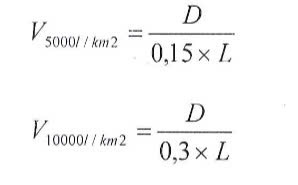
Where:
V: is the vessel speed (nautical miles/hour);
Domestic air passenger transport service on regular basic economy class: is the spraying or spreading flow rate (liters/minute);
L: is the effective treatment width (meters).
ANNEX III
(Adopted together with Circular No. 19/2020/TT-BTNMT dated December 30, 2020, issued by the Minister of Natural Resources and Environment)
Conditions for application and methods of spraying or spreading dispersants from aircraft
1. Application conditions
a) Using aircraft to spray or spread dispersants when meteorological and hydrographic conditions are unsuitable for vessel operations; weather conditions do not permit the use of vessels;
b) Only concentrated dispersant types without dilution shall be used when sprayed or spread from aircraft;
c) The best dispersant is sprayed or spread at a height of 10 to 30 meters above sea level;
d) Spraying or spreading equipment with dispersant particle sizes ranging from 400 to 700µm shall be used.
2. Methods of spraying or spreading dispersants from aircraft
a) The distance from the start point of spraying or spreading to the edge of the oil slick is estimated as follows:
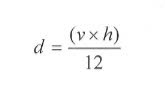
Where:
For coal-fired thermal power plants where the enterprise holds 100% of the registered capital and uses 100% of its own capital to invest in the project approved by the competent authority, E is determined as 100%; is the distance from the start point of spraying or spreading dispersants to the edge of the oil slick (meters);
v is the wind speed (kilometers/hour);
h is the spraying or spreading height (meters).
b) In cases where the distance cannot be determined according to the provision in point a of this section, spraying or spreading of dispersants should begin 60 meters before reaching the edge of the oil slick.
c) Control the area of spraying or spreading dispersants by adjusting the flow rate through the use of different spraying or spreading nozzles, adjusting spraying pressure, or multiple spraying or spreading in cases of thickly spread oil slicks.
d) To achieve a treatment volume of 5,000-10,000 liters/kilometer2, the aircraft speed must be adjusted appropriately to meet the requirements of the spraying or spreading system.
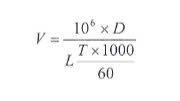
Where:
V is the aircraft speed (kilometers/hour);
T is the amount of dispersant/kilometer2 (liters/kilometer);2);
Domestic air passenger transport service on regular basic economy class is the spraying or spreading flow rate (liters/minute);
L is the effective treatment width (meters).
原始文件(PDF)
关系图
点击文件即可打开。红色边框=改变效力的关系。
译本
本文件提供以下语言版本: