
This Circular stipulates the investigation of production costs and calculation of the price of raw Basa fish to ensure fairness in the aquatic product market. Relevant agencies such as the Ministry of Finance, the Ministry of Agriculture and Rural Development, provincial People's Committees, and the Vietnam Pangasius Association are responsible for implementing these regulations.
Đối tượng áp dụng
Basa fish breeding facilities, the Vietnam Pangasius Association, provincial Departments of Finance, Departments of Agriculture and Rural Development under central cities and provinces
Các điểm cốt lõi
- Coordination between the Ministry of Finance and the Ministry of Agriculture to guide provincial People's Committees in conducting production cost investigations.
- Supervise the organization and implementation by provincial People's Committees of production cost investigations and the calculation of the price of raw Basa fish according to economic and technical norms.
- Provincial People's Committees direct provincial Departments of Finance and Departments of Agriculture and Rural Development to cooperate with related units to organize production cost investigations and surveys for the calculation of the price of raw Basa fish.
- The Vietnam Pangasius Association compiles and publishes the floor price of raw Basa fish for exporters.
- Basa fish breeding facilities must provide truthful information about actual area, actual yield, and actual production costs when investigated, surveyed, or interviewed.
🌐 Tác động xã hội từ văn bản này
- Ensuring fairness in the aquatic product market
- Supporting Basa fish breeding facilities to operate more effectively
- Providing accurate information on the price of raw Basa fish to support government management and operation
❓ Câu hỏi thường gặp
When does this Circular take effect?
This Circular takes effect from February 15, 2015.
What should Basa fish breeding facilities do to comply with this Circular?
Basa fish breeding facilities must provide truthful information about actual area, actual yield, and actual production costs when investigated, surveyed, or interviewed.
Who is responsible for compiling and publishing the floor price of raw Basa fish?
The Vietnam Pangasius Association is responsible for compiling and publishing the floor price of raw Basa fish for exporters.
Toàn văn
CIRCULAR
Guidelines for calculating the production cost of raw Basa fish
_____________
Pursuant to the Price Law No. 11/2012/QH13 dated June 20, 2012;
Pursuant to the Government's Decree No. 177/2013/NĐ-CP dated November 14, 2013 detailing and guiding the implementation of certain provisions of the Law on Prices;
Pursuant to Decree No. 36/2014/NĐ-CP dated April 29, 2014 of the Government on breeding, processing, and exporting Basa fish products (hereinafter referred to as Decree No. 36/2014/NĐ-CP);
Pursuant to Decree No. 215/2013/NĐ-CP dated December 23, 2013 of the Government stipulating the functions, tasks, powers, and organizational structure of the Ministry of Finance;
At the proposal of the Director of the Price Management Department;
The Minister of Finance issues this Circular guiding the method for calculating the production cost of raw Basa fish.
PART I
GENERAL PROVISIONS
Article 1. Scope of Regulation
This Circular guides the method for investigating, determining production costs, and calculating the actual production cost of raw Basa fish under normal production conditions without natural disasters or epidemics.
Article 2. Applicability
This Circular applies to agencies, organizations, and individuals related to the management, production, and trading of raw Basa fish in Vietnam.
Article 3. Principles for determining production costs and calculating the actual production cost of raw Basa fish.
Conducting investigations, surveys, and compiling investigation and survey data to determine production costs and calculate the actual production cost of raw Basa fish must be based on the following principles:
1. Production capacity and conditions, specifically production scale, technical infrastructure, supply of materials; quantity and quality of labor; difficulties and advantages during the production process;
2. Ensuring the accuracy and completeness of the actual production costs of Basa fish breeding facilities; aligning with policies and economic-technical norms, cost standards issued by competent authorities. In cases where there are no specific economic-technical norms for Basa fish, the actual reasonable costs incurred should be used as the basis for investigation and calculation;
3. Documentation, interviews, investigations, and direct verification from breeding facilities and workers;
4. Statistical data over the maximum three consecutive years;
5. Market prices at the time or closest to the time when production costs need to be determined and the production cost of raw Basa fish needs to be calculated;
6. Production costs converted to per hectare (VND/ha water surface). Each item of production costs for calculating the production cost of raw Basa fish must be clearly analyzed and identified regarding quantity, value, time, and location of expenditure;
7. The unit of measurement for Basa fish yield is ton/ha water surface;
8. The unit of measurement for the production cost of raw Basa fish is VND/kg and is determined at the place of production.
CHAPTER II
SPECIFIC PROVISIONS
Article 4. Methods for conducting investigations, surveys, and compiling investigation and survey results.
Clause 1. Investigation and Survey Methods
a) Applying the representative sampling method to select survey subjects, specifically:
Selecting survey areas within a province: including a minimum of 3 districts/province;
Selecting survey areas within a district: including a minimum of 3 communes/district.
The selection of these survey areas must meet the general criteria chosen by the Provincial People's Committee representing the three actual regions that breed Basa fish, including: regions with favorable breeding conditions, regions with average breeding conditions, and regions with difficult breeding conditions.
Selecting survey subjects as Basa fish breeding facilities within the selected commune area to collect data. Each commune area needs to select a minimum of 10 Basa fish breeding facilities according to the criteria chosen by the Provincial People's Committee representing three groups of breeding facilities (each group accounting for approximately 33% of the total number of selected breeding facilities): including high-yield breeding facilities, medium-yield breeding facilities, and low-yield breeding facilities, combined with criteria related to Basa fish quality.
For localities without a minimum of 3 districts/province, 3 communes/district, and a minimum of 10 Basa fish breeding facilities in each commune area, a comprehensive investigation and survey of all actual Basa fish breeding facilities in the area will be conducted.
b) Applying the method of compiling initial recorded data, the method of interviewing breeding facilities about past events, combined with verifying actual production and business conditions, market situation, and comparing with economic-technical norms in the survey area (if applicable).
c) Applying the comparison method: Comparing and cross-referencing actual investigation results with statistical data and market prices at the time or closest to the time when production costs need to be determined and the production cost of raw Basa fish needs to be calculated.
If material and labor costs have market prices, they should be taken from the market price. If the market price cannot be determined, the average between the maximum three-year statistical data and the average of the costs provided by surveyed and interviewed breeding facilities should be taken.
Clause 2. Method for Compiling Data
a) Compile investigation and survey results in one commune
- Compiling production costs: Summing up each factor of production costs spent on Basa fish breeding by all surveyed breeding facilities, then dividing by the total cumulative area of surveyed breeding facilities to find the average production cost per factor and the total average production cost per hectare.
- Compiling the cost per unit product: Summing up the total Basa fish raw material yield of all surveyed breeding facilities, then dividing by the total cumulative area of surveyed breeding facilities to find the average yield per hectare. Then divide the average production cost per hectare by the average yield per hectare to find the average cost per kilogram of raw Basa fish.
b) Compile investigation and survey results in one district
- Compile production costs: Take the calculated average production cost per commune, sum it up, and divide by the number of surveyed communes (for each cost factor and total cost per hectare).
- Consolidating the cost of one unit of product: Sum the average product cost calculation results of each commune and divide by the average.
c) Consolidating the survey results in one province
- Consolidating production costs: Sum the average production cost calculation results of each district and divide by the number of surveyed districts (each cost factor and total cost for one hectare).
- Compiling the cost per unit product: Taking the average product cost calculation results of each district and averaging them.
d) For localities without a minimum of 3 districts/province, 3 communes/district, and a minimum of 10 Basa fish breeding facilities in each commune area, the compilation of investigation and survey results shall be as follows:
- Compiling production costs: Taking the average production cost calculation results of the entire locality and dividing by the number of surveyed areas (for each factor of production cost and the total cost per hectare).
- Compiling the cost per unit product: Taking the average product cost calculation results of each locality and averaging them.
Article 5. Actual yield and actual production costs of raw Pangasius
1. Actual yield
The actual yield of raw Pangasius is determined as follows:

When calculating the actual yield of raw Pangasius, it is necessary to collect data from accounting records and conduct direct interviews with production facilities; consider statistical figures on yields of recent harvests provided by the statistical agency; examine the relationship between investment rates and Pangasius yields with economic-technical norms (if applicable) and practical monitoring experiences over many years by agricultural agencies, statistical agencies...
2. Calculation of actual production costs for raw Pangasius
The actual production costs for raw Pangasius are determined based on cost factors as shown in the following table:
Table 1. Table for calculating actual production costs of raw Pangasius
|
Serial number |
Production and business costs |
Code |
|
I |
Material costs |
Cvc |
|
1 |
Costs of Pangasius fry |
|
|
2 |
Feeding costs |
|
|
3 |
Medication and chemical costs |
|
|
4 |
Pond renovation costs |
|
|
5 |
Pond rental costs (If applicable) |
|
|
6 |
Depreciation costs of fixed assets |
|
|
7 |
Harvesting costs |
|
|
8 |
Bank loan interest costs |
|
|
9 |
Other costs (If applicable) |
|
|
II |
Labor costs |
CLD |
|
III |
Subsidies received (If applicable) |
HT |
|
Total actual production costs of raw Pangasius (Material costs + Labor costs) - HT |
Economic life of the power plant as specified in the Appendix attached to this Circular (years). |
The content of each cost item above is determined according to current laws, specifically as follows:
a) Material costs (Cvc) include all actual and reasonable material costs incurred during one production cycle, including costs of Pangasius fry, feeding costs, medication and chemical costs, pond renovation costs, pond rental costs (if applicable), depreciation costs of fixed assets, harvesting costs, bank loan interest costs, other costs (if applicable). The method of determination is as follows:
- Costs of Pangasius fry
The costs of Pangasius fry are all actual costs incurred by the breeding facility to purchase Pangasius fry:

Where:
+ Quantity of Pangasius fry: determined according to economic-technical norms (if applicable). In cases where there are no economic-technical norms, the actual quantity generated by the breeding facility is used.
+ Unit price of Pangasius fry: Depending on the type of fry according to specified standards (if applicable), the unit price is determined based on the principle of being consistent with market prices at the time of purchase, including: actual purchase prices of breeding facilities; announced prices of companies producing and selling fry in the local area; market purchase prices and transportation costs to the breeding facilities (if applicable).
In cases where the breeding facility produces its own fry, the market price or mutual purchase and sale prices among breeding facilities are applied.
- Feeding costs
Feeding costs are all actual feeding costs incurred by the breeding facility to purchase feed from the time of stocking fish until harvest.

Where:
+ Quantity of feed is determined through invoices, receipts when the breeding facility purchases feed, recorded in accounting books, or recalled by the breeding facility at the time of investment.
+ Unit price of feed is determined based on the actual purchase price consistent with market prices at the time of purchase and transportation costs to the breeding facility (if applicable).
+ Quality of feed according to specified standards (if applicable). In cases where there are no standards, the actual quality generated by the breeding facility is used.
- Medication and chemical costs
Medication and chemical costs are determined based on the quantity of medications and chemicals and their unit prices.

Where:
+ Quantity of medications and chemicals is determined through accounting records, invoices, receipts when the breeding facility purchases them, recorded in accounting books, or recalled by the breeding facility at the time of investment.
+ Unit price of medications and chemicals is determined based on the actual purchase price consistent with market prices at the time of purchase and transportation costs to the breeding facility (if applicable).
- Pond renovation costs
Pond renovation costs are all actual and reasonable costs incurred by the breeding facility to renovate and improve pond quality during one breeding cycle such as costs for clearing grass around the pond, pumping out water and suctioning bottom mud, lime fertilization, pest control... consistent with market prices at the time of pond renovation.
In cases where the breeding facility must rent pumps, the rental cost is calculated based on the actual rental price consistent with the market rate at the time of breeding.
In cases where the breeding facility uses its own pump, it is necessary to verify whether the pump runs on gasoline or diesel. Based on this, determine the amount of fuel consumed and the unit price of fuel at the time of pond renovation to calculate the fuel costs incurred for this work.
- Pond rental costs
Pond rental costs are the actual costs that the breeding facility must pay to rent water surface for one breeding cycle. Pond rental costs for breeding facilities are determined through economic contracts or agreements between the renting facility and the organization or individual providing the lease. If breeding facilities do not need to rent ponds, this cost is not calculated.
- Depreciation costs of fixed assets
Follow the regulations of the Ministry of Finance regarding management, use, and depreciation of fixed assets applicable to enterprises.
When calculating depreciation costs of fixed assets, it is necessary to classify fixed assets into groups and types according to the principle of using and depreciating only those in use, and not depreciating assets serving other needs for Pangasius production. In cases where the breeding facility rents fixed assets for production, the actual rental price at the time of investment is used.
- Harvesting costs
Harvesting costs are all actual and reasonable costs incurred by the breeding facility to harvest Pangasius during one breeding cycle such as net pulling, catching fish, transportation, hiring harvesting teams... consistent with market prices at the time of harvest.
- Bank loan interest costs
These are all interest payments on the total actual borrowed capital for Pangasius production that the breeding facility must pay for one production cycle.
For cases where the breeding facility borrows from a bank, the interest on loans is calculated based on the loan amount, interest rate, and loan period stipulated in the credit agreement signed between the breeding facility and the local commercial bank. For cases where the breeding facility borrows from other sources (individual loans, agents selling materials on credit with interest, cooperative society loans), the maximum interest rate is calculated based on the annual lending rate of the local commercial bank at the time of borrowing.
In the case where the breeding facility borrows money from the bank for purposes other than intended, this expense shall not be included in the production costs of Basa fish.
- Other costs
It includes all actual and reasonable expenses incurred in relation to a Basa fish breeding operation, other than those already mentioned, such as management, feeding equipment, standard certification, etc.
b) Labor costs (CLĐ)
These are all actual and reasonable labor costs incurred, including wages for various tasks (such as releasing fish, pond renovation, pond cleaning, feeding, grass cutting around the pond, transportation, harvesting, and other tasks), which the breeding facility has paid out during a breeding cycle, consistent with the prevailing market wage rates at the time of hiring.
Expenses that have been accounted for under material costs shall not be counted under this category.

Where:
- Determining the number of workdays for each type of work:
The actual number of workdays invested must be determined: Since the amount of labor time spent on each type of work and each stage within a day varies, it needs to be converted to an 8-hour workday (standard workday).
The conversion method is as follows:
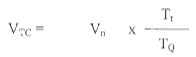
(tonnes CO
- V (VND/year): is the total investment capital allocated annually for the usable area of social housing for rent, ensuring the preservation of capital, calculated according to the following formula:Economic life of the power plant as specified in the Appendix attached to this Circular (years). is the standard workday;
- V (VND/year): is the total investment capital allocated annually for the usable area of social housing for rent, ensuring the preservation of capital, calculated according to the following formula:For power plants invested under the Build-Operate-Transfer (BOT) model, n is determined according to the operational period of the power plant stipulated in the BOT contract. is the actual workday invested;
- Torganize credit institutions, foreign bank branches are responsible for organizing the implementation of this Circular. is the actual working hours in the workday recorded by the breeding facility (or documented);
- TArticle 24 is the standardized 8-hour workday.
Example:
- In the case where the production facility actually works 6 hours per workday, the conversion to an 8-hour workday would be as follows:

- In the case where the production facility actually works 12 hours per workday, the conversion to an 8-hour workday would be as follows:

The method to determine the actual number of working days for conversion is as follows:
If there are established workday standards in economic and technical norms according to regulations, they should be followed.
If there are no established economic and technical norms, the actual workdays invested by the breeding facility should be based on survey results or the most recent statistical data.
- Determining the unit price of labor: When the Basa fish breeding facility hires labor or performs work themselves, the labor cost unit price is calculated based on the actual market rental rate at the time of production, corresponding to each stage of work.
c) Supported amounts (if any)
If the breeding facility receives support for Basa fish production according to state regulations, this amount must be deducted when calculating the cost of raw Basa fish.
Facilities that do not receive support shall not deduct this amount.
Article 6. Method for Calculating the Cost of Raw Basa Fish
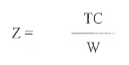
The cost of raw Basa fish is determined using the following formula:
Where:
- Z is the production cost per kilogram of Basa fish;
- TC is the total actual production costs of raw Basa fish per hectare of water surface;
- W is the actual harvest yield of raw Basa fish.
The average cost of raw Basa fish, serving as the basis for determining the minimum selling price of raw Basa fish, is calculated as the arithmetic mean of the costs of raw Basa fish from different provinces.
Chapter III
IMPLEMENTATION
Article 7. Implementation Organization
1. The Ministry of Finance
Coordinate with the Ministry of Agriculture and Rural Development to guide provincial People's Committees in implementing the contents of this Circular.
2. Ministry of Agriculture and Rural Development
Monitor the implementation by provincial People's Committees of surveys on production costs and calculation of the cost of raw Basa fish according to economic and technical norms.
3. Provincial People's Committees
Based on the guidance provided in this Circular, direct the Provincial Finance Departments and Provincial Departments of Agriculture and Rural Development to cooperate with relevant units to conduct surveys and investigations on production costs and calculation of the cost of raw Basa fish at least twice a year; compile and submit the results of these surveys and investigations according to the attached annexes to the Ministry of Finance, the Ministry of Agriculture and Rural Development on June 1st and December 1st each year, and the Vietnam Pangasius Association for the compilation and announcement of the minimum selling price of raw Basa fish as stipulated in Decree No. 36/2014/NĐ-CP.
4. Vietnam Pangasius Association
Compile and announce the minimum selling price of raw Basa fish for exporters purchasing raw Basa fish. Report periodically monthly, quarterly, and annually to the Ministry of Finance, the Ministry of Agriculture and Rural Development, and the Ministry of Industry and Trade on the situation of breeding, processing, export, prices of raw Basa fish, and export prices of Basa fish.
5. Basa Fish Breeding Facility
Provide complete and truthful information about actual area, actual yield, and actual production costs when surveyed, investigated, or interviewed.
Article 8. Implementation funds
The budget for conducting surveys and determining production costs and calculating the cost of raw Basa fish shall be applied according to current regulations on managing, using, and settling accounts for funds allocated from the central government budget for such surveys.
Article 9. Effective Date
This Circular takes effect from February 15, 2015. During implementation, if difficulties arise, please report to the Ministry of Finance for timely guidance and resolution.
|
Place of Receipt: |
DEPUTY MINISTER |
Văn bản gốc (PDF)
Bản đồ quan hệ
Bấm vào một văn bản để mở. Viền đỏ = quan hệ làm thay đổi hiệu lực.
Bản dịch
Văn bản này có sẵn ở các ngôn ngữ sau: