
This Decision stipulates principles, criteria, and allocation quotas for state budget capital for public investment in the period from 2021 to 2025. The allocation is based on criteria such as population, level of socio-economic development, natural area, district administrative units, and other supplementary criteria.
适用范围
This Decision applies to Ministers, Heads of central agencies, and People's Committees of provinces and centrally governed cities in planning medium-term and annual public investment plans using state budget funds in the period from 2021 to 2025.
要点
- Public investment capital is allocated based on the principles of concentration, synchronization, quality, thrift, efficiency, and suitability with the ability to balance resources.
- Allocation criteria include population, level of socio-economic development, natural area, district administrative units, and other supplementary criteria.
- Allocation quotas are calculated based on the total amount of public investment capital and the total points of all provinces and cities.
- The plan for local state budget public investment capital in the period from 2021 to 2025 is oriented towards increasing by an average of 5% to 6% annually.
- Capital allocation must ensure transparency and accountability before the Prime Minister.
🌐 本文件的社会影响
- Enhance the effectiveness of public investment capital utilization.
- Support balanced economic and social development across regions.
- Reduce waste in the management and use of public investment capital.
❓ 常见问题
On what criteria is public investment capital allocated?
Based on population, level of socio-economic development, natural area, district administrative units, and other supplementary criteria.
How are allocation quotas for public investment capital determined?
Allocation quotas are calculated based on the total amount of public investment capital and the total points of all provinces and cities.
全文
|
PRIME MINISTER |
SOCIALIST REPUBLIC OF VIET NAM |
|
Number: 26/2020/QĐ-TTg |
Hanoi, September 14, 2020 |
Pursuant to …;
Detailed Implementation Regulations for Certain Provisions of Resolution No. 973/2020/UBTVQH14 dated July 8, 2020 of the Standing Committee of the National Assembly on Principles, Criteria, and Allocation Standards for State Budget Capital for Public Investment Projects for the 2021-2025 Period
Pursuant to the Law on Organization of the State Administration dated June 19, 2015; the Law Amending and Supplementing Certain Provisions of the Law on Organization of the State Administration and the Law on Organization of Local Administration dated November 22, 2019;
Pursuant to the Law on Public Investment dated June 13, 2019;
Pursuant to the State Budget Law dated June 25, 2015;
Pursuant to Resolution No. 973/2020/UBTVQH14 dated July 8, 7 2020 of the Standing Committee of the National Assembly;
At the proposal of the Minister of Planning and Investment;
The Prime Minister issues this Decision detailing the implementation of certain provisions of Resolution No. 973/2020/UBTVQH14 dated July 8, 2020 of the Standing Committee of the National Assembly on Principles, Criteria, and Allocation Standards for State Budget Capital for Public Investment Projects for the 2021-2025 Period.
Article 1. Scope of Regulation and Applicability
1. This Decision details the implementation of certain provisions of Resolution No. 973/2020/UBTVQH14 dated July 8, 2020 of the Standing Committee of the National Assembly on Principles, Criteria, and Allocation Standards for State Budget Capital for Public Investment Projects for the 2021-2025 Period (hereinafter referred to as Resolution No. 973/2020/UBTVQH14).
第二条 组织和实施奖励工作的支出水平,如政府第152/2025/NĐ-CP号决定关于分级授权和奖励领域的分权规定
a) Ministries, central agencies, and localities as prescribed in Clause 4, Article 4 of the Law on Public Investment.
b) Organizations and individuals related to the preparation of medium-term and annual public investment plans from the state budget for the 2021-2025 period.
Article 2. Principles for Applying Criteria and Standards for Allocation of Public Investment Capital
1. The principles, criteria, and standards for allocating state budget capital for public investment projects for the 2021-2025 period shall be implemented in accordance with Resolution No. 973/2020/UBTVQH14 and this Decision, serving as the basis for preparing medium-term and annual public investment plans from the state budget for the 2021-2025 period at the national level, all levels, sectors, and units using state budget funds; they also serve as the basis for managing, supervising, inspecting, auditing, and monitoring the implementation of medium-term and annual public investment plans.
2. All levels and sectors must actively restructure public investment, reasonably calculate the structure of central and local state budget resources, ensuring that the central budget plays a leading role.
Article 3. Sectors and Fields Using Public Investment Capital from the State Budget for the 2021-2025 Period
Public investment capital from the state budget will be allocated to the objects specified in Article 5 of the Law on Public Investment and distributed according to the sectors and fields stipulated in Article 36 of the State Budget Law, specifically as follows:
1. Defense: Tasks, programs, and projects within industries and fields serving defense objectives, cryptology, disaster response, and search and rescue operations of central and local specialized units according to their respective levels; developing dual-use defense industry.
2. Security and Social Order: Tasks, programs, and projects within industries and fields serving security and social order objectives, fire prevention and firefighting, criminal investigation, execution of criminal sentences, disaster response, and search and rescue operations of central and local specialized units according to their respective levels.
3. Education and Training, Vocational Education: Tasks, programs, and projects for constructing infrastructure, material facilities, and equipment serving educational and training objectives from preschool to university levels.
4. Science and Technology: Tasks, programs, and projects for constructing infrastructure, material facilities, equipment, and technology serving science and technology development, experimentation, analysis, testing, standardization, measurement, quality control, intellectual property, specialized design in natural sciences and engineering, application and transfer of technology, innovation centers, research and development, industrial development support, high-tech zones, agricultural, forestry, and aquaculture zones applying high technology.
5. Health, Population, and Family: Tasks, programs, and projects for constructing infrastructure, material facilities, and equipment serving health objectives (including preventive healthcare; medical treatment, emergency care, rehabilitation; traditional medicine; forensic medical, psychiatric, and pharmaceutical product testing activities), population, family, reproductive health, food safety.
6. Culture and Information: Tasks, programs, and projects serving the following objectives:
a) Culture: Protecting and preserving tangible and intangible cultural heritage, ethnic culture; developing literature, arts, film, libraries, museums, community culture, performing arts; developing cultural systems and cultural works;
b) Information: Infrastructure, material facilities, and equipment serving state publication and press activities.
7. Broadcasting, Television, and News Agencies: Tasks, programs, and projects for constructing infrastructure, material facilities, and equipment serving broadcasting, television, and news agency objectives to fulfill political tasks, social tasks, and essential public services.
8. Physical Education and Sports: Tasks, programs, and projects for constructing infrastructure, material facilities, and equipment serving physical education and sports development objectives.
9. Environmental Protection: Tasks, programs, and projects serving the following objectives:
a) Environment: Infrastructure, material facilities, and equipment for environmental monitoring, warning, resource protection, pollution remediation, waste management, green growth, climate change response, and sustainable development;
b) Natural Resources: Infrastructure, material facilities, and equipment for surveying, mapping, meteorology, hydrology, geological exploration, and natural resource protection.
10. Economic Activities: Tasks, programs, and projects serving the following objectives:
a) Agriculture, forestry, fishery, water conservancy, and aquaculture: infrastructure, material assets, equipment for agriculture, forestry, fishery, water conservancy, and aquaculture; rural economy (including new rural construction, clean water supply, and environmental sanitation in rural areas, development of rural crafts and village industries linked to households and cooperatives, resettlement of rural residents, stable settlement, free migration stabilization, and relocation); development of crop and livestock breeds; afforestation, forest protection, and forest development; prevention, control, and mitigation of natural disasters, forest fires, and epidemics;
b) Industry: rural, mountainous, and island electricity supply; tasks and projects in the oil and gas sector as decided by the Prime Minister; material assets and equipment for printing and minting;
c) Transportation: road, railway, inland waterway, maritime, and air transportation infrastructure;
d) Industrial zones and economic zones: coastal economic zone infrastructure, border economic zone infrastructure, industrial park infrastructure, and industrial cluster infrastructure;
đ) Commerce: people's markets, wholesale markets, logistics centers, exhibition and trade fair centers, export and import infrastructure;
e) Water supply and drainage;
g) Warehousing: warehousing infrastructure, material assets, and equipment for specialized warehouses, national reserve warehouses, file and document storage, evidence storage;
h) Tourism: infrastructure aimed at sustainable tourism development in tourist areas and sites;
i) Telecommunications: telecommunications infrastructure, material assets, materials, and equipment serving telecommunications objectives to fulfill political, social, and essential public service tasks;
k) Postal services: postal infrastructure, material assets, materials, and equipment serving postal objectives to fulfill political, social, and essential public service tasks;
l) Information technology: digital information infrastructure, digital economy; modernization of information technology in Party and State agencies; application and development of information technology, databases; national shared platforms, applications, and services; cybersecurity and network security;
m) Planning: planning tasks;
n) Public works in urban areas, technical infrastructure in new urban areas;
o) Capital contribution to policy banks and state financial funds outside the budget; interest rate subsidy compensation, management fee support; support for enterprises investing in agriculture and rural areas; support for small and medium-sized enterprises according to the Law on Small and Medium Enterprises; support for cooperatives according to the Law on Cooperatives;
11. Activities of state administrative agencies, public service units, political organizations, and political-social organizations: Tasks, programs, and projects serving the goals of building, renovating, upgrading office premises, civil servant residences, and purchasing equipment for agencies within the political system and the state; projects for purchasing, constructing, and renovating office premises, renovating and upgrading housing, and purchasing equipment for Vietnamese representative offices abroad;
12. Social affairs: tasks, programs, and projects for investment in building, renovating, and upgrading infrastructure, material assets, and purchasing equipment for rehabilitation facilities, functional recovery facilities, and care facilities for war veterans; employment support; health care and rehabilitation for workers; construction, renovation, and upgrading of memorials for fallen soldiers; drug rehabilitation facilities and other social assistance facilities;
13. Other tasks, programs, and projects as prescribed by law: Investment support for other target groups and policies as decided by the Prime Minister; tasks, programs, and projects under public investment that cannot be classified into the above 12 sectors and fields;
In cases where a project has multiple components belonging to different sectors and fields, the classification of the project according to sectors and fields will be based on the main objectives of the project. For projects with multiple components belonging to different sectors and fields, including defense and security objectives but not as the main objectives, the project will be classified according to the defense, security, and public order and social safety sectors.
Article 4. General principles and priority order for allocating state budget capital for public investment during the 2021-2025 period
1. The general principles and priority order for allocating state budget capital for public investment during the 2021-2025 period and annually shall be implemented in accordance with the provisions of Article 4 of Resolution No. 973/2020/UBTVQH14.
2. During the process of managing the state budget, additional revenue and savings from state budget expenditure shall be used in accordance with the provisions of Article 59 of the State Budget Law. For the portion of capital allocated for development investment (if any), a report must be submitted to the competent authority for permission to prioritize allocation to settle outstanding construction debts, recover advance payments within the medium-term public investment plan of ministries, central agencies, and localities as prescribed.
Article 5. Principles, criteria, and standards for allocating central government budget capital for public investment
1. Allocation principles
a) The allocation of central government budget capital for public investment shall be carried out in accordance with the principles stipulated in Clause 1 of Article 5 of Resolution No. 973/2020/UBTVQH14.
b) Central government budget capital for ministries, central agencies, and localities shall be allocated by sector and field as provided for in Article 3 of this Decision.
2. Criteria and standards for allocating central government budget capital for public investment:
a) Central government budget capital allocated for tasks, programs, and projects under the state budget's investment expenditures as prescribed by laws on the state budget and within the scope of public investment as defined in Article 5 of the Public Investment Law.
b) For domestic central government budget capital for public investment:
- Allocate up to a maximum of 30% for targeted supplementation to localities and allocate according to sectors and fields, excluding capital for projects under the National Target Program.
- The remaining capital shall be allocated as follows:
+ Allocate to ministries, central agencies by sector and field. Ministries and central agencies are responsible for specifically allocating to programs and projects in accordance with the law and the principles and priority order specified in this Decision.
+ Allocate to specific tasks, programs, and projects including: national target programs, important national projects, connecting programs and projects with regional impact that promote rapid and sustainable economic and social development, health care for the people, national overall planning tasks, national marine space planning, national land use planning, national industry planning, regional planning, central government payment obligations, other policies using central government budget public investment capital as prescribed by law.
c) For ODA and preferential loans from foreign donors:
Allocate based on the orientation for attracting and utilizing ODA and preferential loans from foreign donors during the 2021-2025 period, the needs of ministries, central agencies, and localities for ongoing projects, transitional projects, and projects with investment approval decisions according to sectors and fields as provided for in Article 3 of this Decision.
Article 6. Principles and criteria for allocating state budget capital for central ministries and agencies
1. Implement as prescribed in Article 5 of this Decision and allocate according to the following specific principles and criteria:
a) Prioritize allocating capital for mid-term investment plans that are still lacking for projects included in the mid-term public investment plan for the period 2016-2020, carried over to the period 2021-2025, recovering advance capital, specifically as follows:
- Repaying advance capital under the responsibility of the central state budget but without available sources for repayment and permitted by competent authorities to defer repayment during the period 2016-2020.
- The remaining mid-term public investment capital from the central state budget for the period 2016-2020 not allocated in the annual plans of projects assigned mid-term and annual public investment plans by competent authorities.
b) Allocate the remaining capital to new projects in sectors and fields specified in Article 3 of this Decision, prioritized as prescribed in Clause 8, Article 4 of Resolution No. 973/2020/UBTVQH14.
2. Central state budget capital allocated to central ministries and agencies as prescribed in Clause 4, Article 4 of the Public Investment Law shall be allocated according to sectors and fields specified in Article 3 of this Decision.
Article 7. Principles, criteria, and allocation standards for additional targeted capital from the central state budget for localities
1. Allocation principle: The allocation of additional targeted capital from the central state budget for localities shall be implemented according to the principles prescribed in Clause 1, Article 8 of Resolution No. 973/2020/UBTVQH14 and Clause 1, Article 6 of this Decision.
2. Criteria and allocation standards for additional targeted capital from the central state budget for localities shall be implemented as prescribed in Clause 2, Article 8 of Resolution No. 973/2020/UBTVQH14.
3. Determine the number of points for each specific criterion:
a) Population criterion: including average population and ethnic minority population in 2019. Calculation method as follows:
(1) Points for the average population criterion
|
Average population |
Currency Exchange Agent No. 1 |
|
Localities with an average population up to 500,000 people |
10 |
|
Localities with an average population above 500,000 to 1,000,000 people, from 0 to 500,000 people are counted as 10 points, the remainder every additional 100,000 people is counted |
2 |
|
Localities with an average population above 1,000,000 to 2,000,000 people, from 0 to 1,000,000 people are counted as 20 points, the remainder every additional 100,000 people is counted |
1 |
|
Localities with an average population above 2,000,000 people, from 0 to 2,000,000 people are counted as 30 points, the remainder every additional 100,000 people is counted |
0,5 |
The average population of localities for calculating points is determined based on the data published by the General Statistics Office in 2019.
Specifically, Hanoi and Ho Chi Minh City apply 10 points.
(2) Points for the ethnic minority population criterion
|
Ethnic minority population |
Currency Exchange Agent No. 1 |
|
Every 100,000 ethnic minority people are |
0,5 |
The ethnic minority population of localities for calculating points is determined based on the data published by the General Statistics Office in 2019.
b) Development level criterion, including four criteria: poverty rate, domestic revenue (excluding land use revenue and lottery revenue), central government's share ratio, and supplementary balance ratio from the central government's budget to the local budget. Calculation method as follows:
(1) Points for the poverty rate criterion:
|
Poverty rate |
Currency Exchange Agent No. 1 |
|
Every 1% poverty rate is |
0,1 |
The poverty rate for calculating points is determined based on the data published by the Ministry of Labor, Invalids and Social Affairs in 2019.
(2) Points for the domestic revenue criterion (excluding land use revenue and lottery revenue):
|
Domestic revenue |
Currency Exchange Agent No. 1 |
|
Localities with domestic revenue from 0 to 5,000 billion VND |
4 |
|
Localities with domestic revenue above 5,000 billion VND to 40,000 billion VND |
3 |
|
Localities with domestic revenue above 40,000 billion VND to 80,000 billion VND |
2 |
|
Localities with domestic revenue above 80,000 billion VND to 100,000 billion VND |
1 |
|
Localities with domestic revenue above 100,000 billion VND |
0,5 |
Domestic revenue (excluding land use revenue and lottery revenue) for calculating points is determined based on the State budget revenue estimate for 2020 assigned by the Prime Minister.
(3) Points for the central government's share ratio criterion:
|
Central government's share ratio |
Currency Exchange Agent No. 1 |
|
Localities with a central government's share ratio above 0% to 5% |
3 |
|
Localities with a central government's share ratio above 5% to 20% |
2 |
|
Localities with a central government's share ratio above 20% to 50% |
1 |
|
Localities with a central government's share ratio above 50% |
0,5 |
The central government's share ratio for calculating points is determined based on the central government budget estimate for 2020 decided by the National Assembly.
(4) Points for the supplementary balance ratio from the central government's budget compared to total local government expenditure:
|
Supplementary balance ratio from the central government's budget |
Currency Exchange Agent No. 1 |
|
Localities with a supplementary balance ratio from the central government's budget above 0% to 10% are counted |
10 |
|
Localities with a supplementary balance ratio from the central government's budget above 10% to 30%, from 0% to 10% are counted as 10 points, the remainder every additional 2% is counted |
3 |
|
Localities with a supplementary balance ratio from the central government's budget above 30% to 50%, from 0% to 30% are counted as 40 points, the remainder every additional 2% is counted |
1 |
|
Localities with a supplementary balance ratio from the central government's budget above 50% and above, from 0% to 50% are counted as 50 points, the remainder every additional 2% is counted |
0,5 |
The supplementary balance ratio from the central government's budget compared to total local government expenditure for calculating points is determined based on the central government budget estimate for 2020 decided by the National Assembly.
c) Area criterion: including natural land area and forest coverage ratio of localities. Calculation method as follows:
(1) Points for the natural land area criterion:
|
Natural land area |
Currency Exchange Agent No. 1 |
|
Localities with a natural land area up to 2,000 |
|
|
Localities with a natural land area above 2,000 km2 to 5,000 km2 are counted as 8 points, the remainder every additional 1,000 km2 is counted2 |
4 |
|
Localities with a natural land area above 5,000 km2 to 10,000 km2 are from 0 to 5,000 km2is calculated as 20 points, the remainder at a rate of 1 point for every 1,000 km2 |
2 |
|
Provinces with a natural land area exceeding 10,000 km2from 0 to 10,000 km2is calculated as 30 points, the remainder at a rate of 1 point for every 1,000 km2 |
0,5 |
The natural land area of provinces for calculating points is determined based on the data published by the General Statistics Office in 2019.
(2) Points for the forest coverage ratio criterion of provinces:
|
Forest coverage ratio |
Currency Exchange Agent No. 1 |
|
Provinces with a forest coverage ratio up to 10% |
0,5 |
|
Provinces with a forest coverage ratio over 10% but not exceeding 50% |
1 |
|
Provinces with a forest coverage ratio of 50% or more |
2 |
The forest coverage ratio of provinces for calculating points is determined based on the data published by the Ministry of Agriculture and Rural Development in 2019.
d) Administrative unit criteria at the county level, including four criteria: administrative units at the county level (including the number of districts, counties, towns, and cities under provinces); mountainous counties; highland and island counties; border counties.
(1) Points for the administrative unit criteria at the county level:
|
District-Level Administrative Units |
Currency Exchange Agent No. 1 |
|
Each county is counted |
0,5 |
The number of administrative units at the county level for calculating points is determined based on the data published by the Ministry of Home Affairs regarding the number of administrative units at the county level as of August 31, 2020.
(2) Points for the mountainous county administrative unit criteria:
|
Administrative units at the county level in mountainous areas |
Currency Exchange Agent No. 1 |
|
Each county is counted |
0,2 |
The number of administrative units at the county level in mountainous areas for calculating points is determined based on the data published by the Committee for Ethnic Minorities regarding the number of administrative units at the county level in mountainous areas as of August 31, 2020.
(3) Points for the highland and island county administrative unit criteria:
|
Administrative units at the county level in highlands and islands |
Currency Exchange Agent No. 1 |
|
Each county is counted |
0,2 |
The number of administrative units at the county level in highlands and islands for calculating points is determined based on the data published by the Committee for Ethnic Minorities regarding the number of administrative units at the county level in highlands and islands as of August 31, 2020.
(4) Points for the border county administrative unit criteria:
|
Administrative units at the county level along the border |
Currency Exchange Agent No. 1 |
|
Each county is counted |
0,2 |
The number of administrative units at the county level along the border for calculating points is determined based on the data published by the Ministry of Foreign Affairs regarding the number of administrative units at the county level along the border as of August 31, 2020.
e) Additional criteria
|
Location |
Currency Exchange Agent No. 1 |
|
One island commune |
0,1 |
|
One land border commune (China-Vietnam, Laos-Vietnam, Cambodia-Vietnam) |
0,1 |
|
One commune in the revolutionary base area ATK resistance (historical ATK) |
0,1 |
|
Province in the Mekong Delta Region |
50 |
|
Province in the Northern Mountainous Region |
18 |
|
Province in the Central Highlands Region |
18 |
|
Province in the North Central Coast and Central Coast Region |
15 |
|
Province in the Red River Delta Region |
2 |
|
Province in the Southeast Region |
2 |
|
Province in the Key Economic Zone |
2 |
The number of island communes for calculating points is determined based on the data provided by the Ministry of Home Affairs as of August 31, 2020.
The number of land border communes (communes along the China-Vietnam border and communes along the Laos-Vietnam and Cambodia-Vietnam borders for calculating points is determined based on the data provided by the Ministry of Foreign Affairs as of August 31, 2020.
The number of communes in the revolutionary base area ATK resistance of provinces for calculating points is determined based on the data provided by the Ministry of Home Affairs as of August 31, 2020.
In case there is a change in regional division, the Ministry of Planning and Investment shall report to the Prime Minister for consideration and decision on adjusting the score of the regional criteria.
4. Method for calculating the amount of capital allocated
a) Based on the above criteria to calculate the number of points for each province and city and the total number of points for 63 provinces and cities as the basis for allocating central government budget capital for targeted supplementary funding to local budgets, according to the following formulas:
- Points for the population criterion:
+ Let the total points for the population criterion of province i be Ai
+ Let the average points for the population criterion of province i be hi.
+ Let the points for the ethnic minority population criterion of province i be ki.
The points for the population criterion of province i will be:
Ai= hi+ ki
- Points for the development level criterion:
+ Let the total points for the development level criterion of province i be Bi
+ Let the points for the poverty ratio criterion of province i be ni.
+ Let the points for the domestic revenue criterion (excluding land use revenue and lottery revenue) of province i be pi
+ Let the points for the fiscal adjustment ratio to the central government budget criterion of province i be qi
+ Let the points for the ratio of supplementary balance from the central government budget to the total local government expenditure criterion of province i be ri.
The points for the development level criterion of province i will be:
Bi= ni+ pi+ qiLoan interest rate determined according to Point a of this Clause (%);i
- Points for the area criterion:
+ Let the total points for the area criterion of province i be Ci
+ Let the points for the natural land area criterion of province i be mi
+ Let the points for the forest coverage ratio criterion of province i be li
The points for the area criterion of province i will be:
Ci= mi+ li
- Points for the administrative unit criterion at the county level:
+ Let the total points for the administrative unit criterion at the county level of province i be Di
+ Let the points for the administrative unit criterion at the county level of province i be si
+ Let the points for the mountainous county administrative unit criterion of province i be ti.
+ Let the points for the highland and island county administrative unit criterion of province i be ui.
+ Let the points for the border county administrative unit criterion of province i be vi.
The points for the administrative unit criterion at the county level of province i will be:
Domestic air passenger transport service on regular basic economy classi= si+ ti+ ui+ vi
- Points for the additional criteria:
+ Let the total points for the additional criteria of province i be Li
+ Let the points for the island commune criterion be Ei.
+ Let the points for the land border commune criterion be Fi.
+ Let the points for the commune in the revolutionary base area ATK resistance criterion be Gi.
+ Let the points for the region criterion be Hi.
The points for the additional criteria of province i will be:
Li= Ei+ Fi+ Gi+ Hi
- Total points for province i:
+ Let the total points for province i be Xi:
Xi = Pi+ Bi(VND) from direct and indirect power plants participating in the electricity market;i+ Di+ Li
- The total points for 63 provinces and cities is Y, we have:
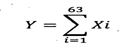
b) The standard amount of capital for 1 allocation point is calculated according to the formula:
Let K be the total amount of central government budget capital for targeted supplementary funding to local budgets.
Let Z be the standard amount of capital for one allocation point, we have:
|
Z= |
K |
|
Re |
c) The total amount of central state budget capital for targeted supplementary domestic investment to local budgets of each locality shall be calculated according to the following formula:
Let Vi be the amount of central state budget capital for targeted supplementary domestic investment to local budgets:
Vi = Z x Xi
Article 8. Principles, criteria, and allocation standards for local state budget public investment capital
1. Local state budget public investment capital shall be allocated by sector and field in accordance with the provisions of Article 3 of this Decision and the principles stipulated in Article 4 of this Decision.
2. The plan for local state budget public investment capital (excluding land revenue, lottery proceeds, and local budget deficit) for the period 2021-2025 shall be oriented towards an average growth rate of 5% - 6%, with the year 2021 implemented in accordance with Clause 2, Article 9 of Resolution No. 973/2020/UBTVQH14.
This orientation shall be applied to build the medium-term public investment plan for local state budget capital for the period 2021-2025; the actual amount of local state budget public investment capital for the years 2021-2025 shall be decided by the National Assembly and be consistent with the national budget balance capacity.
Article 9. Transitional Provisions
Implementation shall be carried out in accordance with Article 13 of Resolution No. 973/2020/UBTVQH14 dated July 8, 2020 of the Standing Committee of the National Assembly.
Article 10. Implementation Organization
1. Based on the principles, criteria, and allocation standards for state budget public investment capital for the period 2021-2025 stipulated in this Decision, the Minister, Head of Central Agencies, and People's Committees of provinces and centrally governed cities shall organize the preparation of the medium-term and annual public investment plans from the state budget for the period 2021-2025.
2. Based on the principles, criteria, and allocation standards for state budget public investment capital for the period 2021-2025 stipulated in this Decision, financial capacity, and specific conditions of the locality, People's Committees of provinces and centrally governed cities shall submit to the Provincial People's Councils to issue the principles, criteria, and allocation standards for local state budget public investment capital for the period 2021-2025.
3. During the allocation of state budget public investment capital, the Minister, Head of Central Agencies, and localities must strictly implement the concentration of capital allocation, avoiding dispersion and wasteful distribution, ensuring synchronization, quality, thriftiness, efficiency, and consistency with the capacity to balance resources; preventing loss and waste; ensuring transparency; and being responsible before the Prime Minister and inspection, audit agencies regarding the accuracy of information, figures, and the amount of capital allocated to projects in the medium-term and annual public investment plans of Ministries, central agencies, and localities managing state budget public investment capital for the period 2021-2025.
Article 11. Effective Date
This Decision takes effect from the date of issuance.
Article 12. Responsibility for Implementation
The Minister of Planning and Investment, Ministers, Heads of Ministries at the level of ministries, Heads of government agencies, and other central agencies, Chairmen of People's Committees of provinces and centrally governed cities, and Heads of units using state budget public investment capital for the period 2021-2025 are responsible for implementing this Decision./.
|
Place of Receipt: |
PRIME MINISTER |
原始文件(PDF)
关系图
点击文件即可打开。红色边框=改变效力的关系。
译本
本文件提供以下语言版本: