
This Circular stipulates open market operations at the State Bank of Vietnam, applicable to units under the State Bank of Vietnam and credit organizations, foreign bank branches recognized as members. It provides detailed regulations on the purchase and sale of securities, bidding, payment, violation handling, and the responsibilities of parties involved in transactions.
Đối tượng áp dụng
Units under the State Bank of Vietnam; credit organizations, foreign bank branches recognized as members of open market operations.
Các điểm cốt lõi
- The organization implementing open market operations at the State Bank of Vietnam (Management Board), applicable to units under the State Bank of Vietnam and members.
- Members must have a Vietnamese dong settlement account at the State Bank of Vietnam and be assigned a bank code.
- Methods of purchasing/selling securities include: buying with a term, selling with a term, outright purchase, and outright sale; applying quantity or interest rate bidding.
- The State Bank of Vietnam announces purchases/sales of securities, members submit bid applications, the State Bank of Vietnam organizes the evaluation and announces the results.
- Payment and transfer of ownership of securities are carried out on the nearest working day when it does not coincide with the due date for payment of the securities.
🌐 Tác động xã hội từ văn bản này
- Creating a transparent and fair mechanism for the purchase/sale of securities between the State Bank of Vietnam and members.
- Reducing risks for the State Bank of Vietnam through regulations on interest rate and quantity bidding.
- Credit organizations, foreign bank branches benefit from opportunities to participate in open market operations.
- Enhancing risk management for members through regulations on payment and transfer of ownership of securities.
- Dependent on information technology systems, requiring credit organizations to invest in technology to participate.
❓ Câu hỏi thường gặp
What conditions must members of open market operations meet?
Having a Vietnamese dong settlement account at the State Bank of Vietnam and being assigned a bank code.
What methods are there for purchasing/selling securities?
Buying with a term, selling with a term, outright purchase, and outright sale; applying quantity or interest rate bidding.
How does the State Bank of Vietnam announce transactions?
Announcing the bidding date, bidding method, evaluation method, purchase/sale method, quantity of securities to be purchased or sold.
What is the payment and transfer of ownership period for securities?
Payment and transfer of ownership are carried out on the nearest working day when it does not coincide with the due date for payment of the securities.
How will members who fail to comply with specific contracts be handled?
Members must bear overdue interest rates and the State Bank of Vietnam has the right to deduct funds from the settlement account to recover outstanding amounts.
Toàn văn
|
STATE BANK OF VIETNAM |
SOCIALIST REPUBLIC OF VIET NAM |
|
Number: 42/2015/TT-NHNN |
Hanoi, December 31, 2015 |
CIRCULAR
REGULATIONS ON OPEN MARKET OPERATIONS
On the basis of Law on the State Bank of Vietnam No. 46/2010/QH12 dated June 16, 2010;
On the basis of Law on Credit Institutions No. 47/2010/QH12 dated June 16, 2010;
Decree No. Decision No. 156/2013/NĐ-CP dated November 11, 2013, of the Government stipulating the functions, tasks, powers, and organizational structure of the State Bank of Vietnam;
Article 1.
The Governor of the State Bank of Vietnam issues this Circular to regulate open market operations at the State Bank of Vietnam.
PART I
GENERAL PROVISIONS
Article 1. Scope of Regulation
This Circular stipulates the organization and implementation of open market operations at the State Bank of Vietnam (hereinafter referred to as the State Bank).
Article 2. Applicability
1. Units under the State Bank.
2. Credit institutions, foreign bank branches established and operating under the Law on Credit Institutions (excluding microfinance organizations and people's credit funds) and recognized by the State Bank as members of open market operations (hereinafter referred to as members).
Article 3. Explanation of Terms
1. Open market operations refer to the State Bank’s activities of purchasing and selling securities with members.
2. Term purchase refers to the State Bank’s purchase of securities and receipt of ownership rights over such securities from members, while members commit to repurchasing those securities after a certain period.
3. Term sale refers to the State Bank’s sale of securities and transfer of ownership rights over such securities to members, while committing to repurchasing those securities after a certain period.
4. Full purchase refers to the State Bank’s purchase of securities and receipt of ownership rights over such securities from members without any commitment to resell them.
5. Full sale refers to the State Bank’s sale of securities and transfer of ownership rights over such securities to members without any commitment to repurchase them.
6. Quantity tendering involves evaluating tenders based on the quantity of securities tendered by members, the quantity of securities needed for purchase or sale by the State Bank, and the interest rate announced by the State Bank.
7. Rate tendering involves evaluating tenders based on the interest rate tendered, the quantity of securities tendered by members, and the evaluation interest rate of the State Bank, as well as the quantity of securities needed for purchase or sale by the State Bank.
8. Single-price tendering method refers to the method where the entire successful tender volume is calculated uniformly according to a single winning interest rate.
9. Multiple-price tendering method refers to the method where each level of successful tender volume is calculated correspondingly with each level of tendered interest rate considered as the winning interest rate.
10. Announcement date refers to the day when the State Bank announces the purchase or sale of securities.
11. Tender date refers to the day when the State Bank organizes the tender, evaluates tenders, and announces the tender results.
12. Purchase date refers to the day when the securities are transferred by the Seller to the Buyer and the Buyer pays the purchase price to the Seller.
13. Repurchase date refers to the day when the Buyer transfers back the ownership of the purchased securities (for term purchase and sale transactions) to the Seller and the Seller pays the repurchase price to the Buyer according to the repurchase price.
14. Discount ratio between the value of securities at the valuation point and the payment price (haircut) is the percentage difference between the value of securities at the valuation point in term purchase and sale transactions and the payment price between the State Bank and members, as specified by the State Bank during each period.
15. Transaction ratio of various types of securities is the proportion of transaction value (payment price between the State Bank and members) of various types of securities participating in open market operations transactions.
16. Term of term purchase and sale of securities is the period counted from the day following the purchase date to the repurchase date, including holidays and public holidays, and is calculated in days.
17. Remaining term of securities is the period counted from the day of the purchase or sale session to the maturity date for full repayment of the principal of such securities.
Article 4. Market Operations Management Board
1. The Market Operations Management Board (hereinafter referred to as the Management Board) shall represent the Governor of the State Bank of Vietnam to manage market operations in accordance with this Circular. The Governor of the State Bank of Vietnam decides on the establishment and operation of the Management Board.
2. The Management Board has the following tasks and powers:
a) Managing market operations;
b) Deciding on the direction of managing market operations during each period;
c) Handling issues arising during the management of market operations.
Article 5. Conditions for Market Operations Members
Credit organizations and foreign bank branches (excluding microfinance institutions and people's credit funds) shall be recognized as members when they fully meet the following conditions:
1. Having a Vietnamese dong settlement account at the State Bank of Vietnam.
2. Being granted a bank code by the State Bank of Vietnam.
Article 6. Procedures for Recognizing Market Operations Members
1. Credit organizations and foreign bank branches wishing to participate in market operations shall submit directly or via postal service an application to participate in market operations according to Appendix No. 01/TTM attached to this Circular to the State Bank of Vietnam for consideration of issuance of a membership recognition certificate for market operations.
2. Within five working days from the date of receipt of the application to participate in market operations from credit organizations and foreign bank branches, the State Bank of Vietnam shall issue a membership recognition certificate for market operations when the conditions stipulated in Article 5 of this Circular are met, or send a written response to credit organizations and foreign bank branches if the conditions are not met.
3. The procedure for re-recognition of members in cases where members have ceased their membership status as prescribed in Point b Clause 1 and Clause 2 Article 7 of this Circular shall be carried out like the initial recognition procedure for members.
Article 7. Termination of Membership Status
1. Members will have their membership status terminated in the following cases:
a) A member will automatically have their membership status terminated when the member undergoes merger, consolidation, division, dissolution, or bankruptcy;
b) When the Vietnamese dong settlement account of the member at the State Bank of Vietnam is closed, the State Bank of Vietnam shall notify the member about the termination of their membership status in writing.
2. Members who wish to terminate their membership status and fulfill all obligations towards the State Bank of Vietnam in market operations transactions shall submit directly or via postal service a request to terminate membership status according to Appendix No. 02/TTM attached to this Circular to the State Bank of Vietnam. Within five working days from the date of receipt of the request to terminate membership status, the State Bank of Vietnam shall notify the member about the termination of their membership status in writing.
3. Upon termination of membership status, the Trading Department of the State Bank of Vietnam (hereinafter referred to as the Trading Department) shall notify the Information Technology Department to recover the access code and digital signature code of the member.
Article 8. Authority to Sign in Market Operations Transactions
1. The person authorized to sign on behalf of credit organizations and foreign bank branches for applications to recognize, terminate membership status, and documents related to the implementation of market operations transactions with the State Bank of Vietnam is the legitimate representative of the credit organization or foreign bank branch.
2. The Director of the Trading Department is the authorized person (or may delegate authority to the Deputy Director of the Trading Department and bear responsibility for such delegation) to sign documents related to recognizing, terminating membership status, and documents related to implementing market operations transactions with members.
Article 9. Issuance of Access Codes, Digital Signature Codes, and Authorization for Members
When a credit organization or foreign bank branch is recognized as a member, the State Bank shall issue access codes, digital signature codes, and grant permissions to personnel involved in open market operations transactions upon the member's request.
The issuance of access codes and digital signature codes shall be carried out by the Information Technology Department in accordance with the State Bank’s regulations on the management and use of digital signatures, digital certificates, and the State Bank’s digital signature certification services. The authorization for personnel involved in open market operations transactions of members shall be conducted by the Trading Department according to the Open Market Operations Procedures.
Article 10. Securities Eligible for Open Market Operations Transactions
1. Types of securities eligible for open market operations transactions accepted by the State Bank must meet the following conditions:
a) They must be transferable and included in the List of securities eligible for open market operations transactions;
b) They must be legally owned by the member;
c) They must be issued in Vietnamese Dong;
d) They must be directly registered at the State Bank or registered in the customer account of the State Bank at the Vietnam Securities Depository before registering for sale to the State Bank;
đ) The remaining term of the security in the purchase or sale transaction with a fixed term must be longer than the transaction period announced by the State Bank; Securities can only be registered for pre-sale before the final payment date of the maturing securities.
2. The List of securities eligible for open market operations transactions and the difference ratio between the valuation value and the payment value of the securities at the time of valuation shall be decided by the Governor of the State Bank.
Article 11. Methods of Purchasing or Selling Securities
1. Purchase with a fixed term.
2. Sale with a fixed term.
3. Purchase outright.
4. Sale outright.
Article 12. Trading Date
Open market operations transactions shall be conducted on working days. In cases where the repurchase date or the maturity date of the security does not coincide with a working day, the settlement and transfer of ownership of the security shall be carried out on the next working day and interest shall only be calculated based on the actual trading period.
Article 13. Open Market Operations Procedures
1. The Open Market Operations Procedures guide the following basic contents:
a) Recognition and termination of membership status in open market operations;
b) The State Bank and members sign, deliver, and receive framework contracts for purchasing/selling securities;
c) The State Bank (Trading Department) announces purchases and sales of securities;
d) Members register securities;
đ) Members submit tender applications;
e) The State Bank (Trading Department) organizes tenders;
g) The State Bank (Trading Department) announces tender results;
h) The State Bank and members sign, deliver, and receive specific contracts for purchasing/selling securities with a fixed term;
i) Payment and transfer of ownership of securities;
k) Handling cases where members fail to settle payments or comply with the contract;
l) Handling other issues.
2. The specific content of the Open Market Operations Procedures shall be decided by the Governor of the State Bank.
Chapter II
SPECIFIC PROVISIONS
Article 14. Auction Method
Open market operations shall be conducted through either quantity auction or interest rate auction methods. Based on the Monetary Policy Operation Objectives during each period, the State Bank selects the appropriate auction method.
1. Quantity Auction
a) The State Bank announces to members the interest rates for buying or selling negotiable instruments;
b) The State Bank decides whether to announce or not to announce the quantity of negotiable instruments that it intends to buy or sell in the auction announcement for each open market operation transaction session;
c) Members register to bid for quantities of negotiable instruments they wish to buy or sell at the interest rates announced by the State Bank;
d) In cases where the total quantity bid by members equals or is less than the quantity of negotiable instruments intended to be bought or sold by the State Bank, the winning bid quantity will equal the total quantity bid by members, and the winning bid quantity for each member will be the quantity bid by that member;
đ) In cases where the total quantity bid by members exceeds the quantity of negotiable instruments intended to be bought or sold by the State Bank, the winning bid quantity for each member will be allocated proportionally to their bid quantity and correspondingly rounded down to the nearest multiple of the face value of the negotiable instruments; the total winning bid quantity will equal the total winning bid quantity of all members and will not exceed the quantity of negotiable instruments intended to be bought or sold by the State Bank;
e) In cases where a winning bidder registers to buy or sell multiple types of negotiable instruments:
(i) If it does not include types of negotiable instruments for which the State Bank has specified trading ratios in each open market operation transaction session, the State Bank will review bids to determine the priority order of each type of negotiable instrument as follows:
- Negotiable instruments with shorter remaining terms;
- Negotiable instruments registered for sale or purchase with larger quantities;
(ii) If it includes types of negotiable instruments with specified trading ratios and types without specified trading ratios, the State Bank will review bids according to the principle that the ratio of winning bid negotiable instruments corresponds to the trading ratio of the negotiable instruments registered in the bid form as stipulated by the State Bank. The determination of the priority order for reviewing bids among negotiable instruments without specified trading ratios and those with specified trading ratios is carried out according to the provisions of paragraph (i) of Point e Clause 1 of this Article.
2. Interest Rate Auction
a) The State Bank decides whether to announce or not to announce the quantity of negotiable instruments intended to be bought or sold by the State Bank in the auction announcement for each open market operation transaction session;
b) The State Bank decides on the application of single-price or multi-price bidding methods;
c) Members register to bid at various interest rates (maximum three interest rates for one term of buying or selling negotiable instruments in one bid form) and the corresponding quantity of negotiable instruments they wish to buy or sell at those interest rates. Bidding interest rates are calculated as percentages per annum and rounded to two decimal places;
d) Bid forms from members are ranked in descending order of bidding interest rates when the State Bank buys negotiable instruments, or in ascending order of bidding interest rates when the State Bank sells negotiable instruments;
đ) The State Bank reviews bids in descending order from the highest bidding interest rate to the lowest bidding interest rate (when the State Bank buys negotiable instruments) or in ascending order from the lowest bidding interest rate to the highest bidding interest rate (when the State Bank sells negotiable instruments) within the minimum or maximum bidding interest rate range set by the State Bank where the quantity of negotiable instruments intended to be bought or sold by the State Bank is achieved;
(i) For single-price bidding method: The winning bid interest rate is the lowest bidding interest rate (when the State Bank buys negotiable instruments) or the highest bidding interest rate (when the State Bank sells negotiable instruments) within the minimum or maximum bidding interest rate range set by the State Bank where the quantity of negotiable instruments intended to be bought or sold by the State Bank is achieved;
(ii) For multi-price bidding method: The winning bid interest rate for each successful bidder is the bidding interest rates of that bidder;
e) The winning bid quantity for each member is the quantity of bids with interest rates equal to or higher than the winning bid interest rate (when the State Bank buys negotiable instruments) or with bidding interest rates equal to or lower than the winning bid interest rate (when the State Bank sells negotiable instruments);
g) In cases where the total quantity bid by members at the winning bid interest rate exceeds the remaining quantity of negotiable instruments intended to be bought or sold by the State Bank, the winning bid quantity for each member will be allocated proportionally to their bid quantity at the winning bid interest rate and correspondingly rounded down to the nearest multiple of the face value of the negotiable instruments;
h) In cases where a member has multiple types of negotiable instruments to buy or sell at the winning bid interest rate, the State Bank will review bids to determine the order of each type of negotiable instrument as stipulated in Point e Clause 1 of this Article.
Article 15. Notice of Purchase and Sale of Valuable Papers
Prior to each open market operation auction session, the State Bank (Trading Department) shall notify the purchase or sale of valuable papers to members according to the following main contents:
1. Auction date.
2. Auction method.
3. Bid evaluation method.
4. Purchase or sale method.
5. Quantity of valuable papers needed for purchase or sale calculated based on settlement price or face value (except in cases where the State Bank does not pre-announce the quantity of valuable papers needed for purchase or sale).
6. Types of valuable papers needed for purchase or sale.
7. Transaction ratio of various types of valuable papers (in case the State Bank purchases).
8. Tenor of valuable papers.
9. Issuance date of valuable papers (in case the State Bank sells).
10. Interest payment method of valuable papers (in case the State Bank sells).
11. Due date for payment of valuable papers (in case the State Bank sells).
12. Remaining term of valuable papers (in case the State Bank sells).
13. Purchase and sale period (number of days).
14. Interest rate applied by the State Bank when purchasing or selling (in case of volume bidding).
15. Primary market issuance interest rate of valuable papers (in case the State Bank sells).
16. Time for receiving bid applications from members.
17. Closing time for bids.
Article 16. Bid Application of Members
1. Based on the notice of purchase and sale of valuable papers issued by the State Bank, members submit bid applications to register for purchasing or selling valuable papers through a computer network connected to the State Bank (Trading Department), including the following main contents:
a) Types of valuable papers needed for purchase or sale;
b) Tenor of valuable papers;
c) Quantity of valuable papers needed for purchase or sale calculated based on settlement price or face value;
d) Bidding interest rates for each type of valuable papers needed for purchase or sale (in case of interest rate bidding);
đ) Issuance date of valuable papers (in case the member sells);
e) Interest payment method of valuable papers (in case the member sells);
g) Due date for payment of valuable papers (in case the member sells);
h) Remaining term of valuable papers (in case the member sells);
i) Purchase or sale method;
k) Purchase and sale period (number of days);
l) Primary market issuance interest rate of valuable papers (in case the member sells).
2. During the submission period for bid applications, members may cancel their bid applications or replace old bid applications with new ones.
3. The total quantity of valuable papers registered for purchase or sale by a member in a single bid application must be at least VND 1,000,000,000 (One billion dong).
Article 17. Invalid Bid Applications
A member's bid application shall be deemed invalid if it falls under any of the following circumstances:
1. The electronic signature of the member's representative in the bid application is incorrect.
2. The bid application sets more interest rates than stipulated.
3. The bidding interest rate is not rounded off to two decimal places.
4. The total quantity of valuable papers recorded in a single bid application is less than one billion dong.
5. A member selling valuable papers does not have, or does not have enough valuable papers deposited in accordance with regulations.
6. The remaining term of valuable papers registered for sale is shorter than the term of the purchase and sale agreement.
7. Valuable papers registered for sale do not belong to the types of valuable papers that the State Bank needs to purchase/sell or valuable papers registered for sale after the final registration date for interest and principal repayment of maturing valuable papers.
8. The transaction ratio of various types of valuable papers registered does not comply with the announcement of the State Bank.
9. The detailed quantity of valuable papers registered for sale by members does not match the detailed quantity deposited in accordance with Point d Clause 1 Article 10 of this Circular (in case the State Bank purchases).
10. The bid quantity exceeds the quantity of valuable papers needed for purchase or sale announced by the State Bank (in case the State Bank announces the quantity of valuable papers needed for purchase or sale).
11. Contents in the bid application are not filled out in accordance with the Open Market Operations Procedures.
Article 18. Tender Evaluation Organization
1. The State Bank (Trading Department) shall organize tender evaluation according to the content of the notice on purchasing and selling negotiable instruments for each tender session as stipulated in this Circular and the Open Market Operations Procedures.
2. The State Bank (Trading Department) shall not conduct tender evaluation for invalid bids as specified in Article 17 and shall notify members with invalid bids at the end of the tender session.
Article 19. Determination of Purchase or Sale Price of Negotiable Instruments
1. In case of purchase or sale with term
1.1. Value of negotiable instruments at the valuation point
1.1.1. For short-term negotiable instruments:
a) Short-term negotiable instruments paying interest immediately upon issuance:
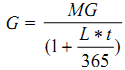
G: Value of negotiable instruments at the valuation point
MG: Face value of negotiable instruments
L: Interest rate according to the tender evaluation method of single price or multiple prices (in the case of interest rate tender) or the interest rate announced by the State Bank (in the case of quantity tender) at the tender session (per annum %)
t: Remaining term of negotiable instruments (number of days).
b) Short-term negotiable instruments, paying principal and interest once at maturity:
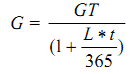
Where:
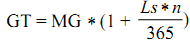
G: Value of negotiable instruments at the valuation point
GT: Value of negotiable instruments at maturity including face value and interest
MG: Face value of negotiable instruments
L: Interest rate according to the tender evaluation method of single price or multiple prices (in the case of interest rate tender) or the interest rate announced by the State Bank (in the case of quantity tender) at the tender session (per annum %)
t: Remaining term of negotiable instruments (number of days)
Ls: Issuance interest rate of negotiable instruments (per annum %)
n: Term of negotiable instruments (number of days).
1.1.2. For long-term negotiable instruments:
a) For long-term negotiable instruments paying interest immediately upon issuance:
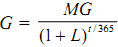
Where:
G: Value of negotiable instruments at the valuation point
MG: Face value of negotiable instruments
L: Interest rate according to the tender evaluation method of single price or multiple prices (in the case of interest rate tender) or the interest rate announced by the State Bank (in the case of quantity tender) at the tender session (per annum %)
t: Remaining term of negotiable instruments (number of days).
b) For long-term negotiable instruments paying principal and interest once at maturity (interest not capitalized):
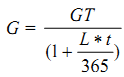
Where:
GT = MG * [1 + (Ls * n)]
G: Value of negotiable instruments at the valuation point
GT: Value of negotiable instruments at maturity including face value and interest;
MG: Face value of negotiable instruments
L: Interest rate according to the tender evaluation method of single price or multiple prices (in the case of interest rate tender) or the interest rate announced by the State Bank (in the case of quantity tender) at the tender session (per annum %)
t: Remaining term of negotiable instruments (number of days)
Ls: Issuance interest rate of negotiable instruments (per annum %)
n: Term of negotiable instruments (years).
c) For long-term negotiable instruments paying principal and interest once at maturity (interest capitalized):
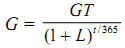
Where:
GT = MG * (1 + Ls)n
G: Value of negotiable instruments at the valuation point
GT: Value of negotiable instruments at maturity including face value and interest;
MG: Face value of negotiable instruments
L: Interest rate according to the tender evaluation method of single price or multiple prices (in the case of interest rate tender) or the interest rate announced by the State Bank (in the case of quantity tender) at the tender session (per annum %)
t: Remaining term of negotiable instruments (number of days)
Ls: Issuance interest rate of negotiable instruments (per annum %)
n: Term of negotiable instruments (years).
d) For long-term negotiable instruments paying periodic interest:
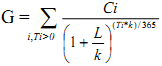
Where:
G: Value of negotiable instruments at the valuation point
CANNEX I.A[31]: Amount of periodic interest and principal payment i (excluding the amount of interest and principal payment on the last registration date for interest and principal before the valuation date).
i: Periodic interest and principal payment i
L: Interest rate according to the tender evaluation method of single price or multiple prices (in the case of interest rate tender) or the interest rate announced by the State Bank (in the case of quantity tender) at the tender session (per annum %)
TANNEX I.A[31]: Time period from the valuation date to the first periodic interest and principal payment due date (number of days).
k: Number of periodic interest payments per year.
1.2. Settlement price between the State Bank and members is determined according to the following formula:
GNo. = G * (1 - h)
Where:
GNo.: Settlement price
G: Value of negotiable instruments at the valuation point
h: Spread ratio between the value of negotiable instruments at the valuation point and the settlement price.
1.3. Repurchase price of negotiable instruments between the State Bank and members is determined according to the following formula:
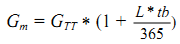
Where:
Gm: Repurchase price
GNo.: Settlement price
L: Interest rate according to the tender evaluation method of single price or multiple prices (in the case of interest rate tender) or the interest rate announced by the State Bank (in the case of quantity tender) at the tender session (per annum %)
tb: Purchase and sale term (number of days).
1.4. The right to receive periodic interest and other income (if any) from negotiable instruments in term purchase or sale transactions belongs to the Seller. In case the Buyer receives periodic interest and other income (if any) during the term of the term purchase or sale transaction, the Buyer shall be responsible for returning the received periodic interest and other income (if any) to the Seller on the repurchase date. The portion of periodic interest and other income (if any) from negotiable instruments in term purchase or sale transactions will not accrue interest during the holding period of the Buyer.
2. In case of outright purchase or sale of negotiable instruments:
The outright purchase or sale price of negotiable instruments between the State Bank and members shall be applied as stipulated in Point 1.1 Clause 1 of this Article.
Article 20. Notification of Auction Results
1. On the day of the auction, the State Bank (Trading Department) shall notify each participant of the auction results through computer networks, including the following basic contents:
a) The date of the auction;
b) The quantity won;
c) The quantity not won;
d) The purchase/sale date (in case of forward purchase or sale);
đ) The winning bid interest rate;
e) The amount to be paid.
2. The notification of auction results serves as the basis for the execution of payment and transfer of ownership of securities in cases of outright purchase or sale, and simultaneously serves as the basis for establishing specific contracts in cases of forward purchase or sale.
Article 21. Framework Purchase/Sale Contracts of Securities and Specific Forward Purchase/Sale Contracts of Securities
1. The State Bank (Trading Department) and participants shall sign framework purchase/sale contracts of securities (Framework Contract) and specific forward purchase/sale contracts of securities (Specific Contract) to execute transactions of purchasing and selling securities. The signing, delivery, and receipt of Framework Contracts and Specific Contracts shall be carried out according to the guidelines set forth in the Open Market Operations Procedures.
2. The Framework Contract attached as Appendix No. 03/TTM to this Circular shall be signed after the State Bank recognizes credit institutions and foreign bank branches as participants. This Framework Contract applies uniformly to all transactions of purchasing and selling securities between the State Bank and participants.
3. The Specific Contract attached as Appendix No. 04/TTM to this Circular applies to each forward transaction of purchasing and selling securities between the State Bank and participants and is an inseparable part of the Framework Contract. Participants are responsible for signing the Specific Contract upon receipt of the auction result notification.
4. The Framework Contract and Specific Contract serve as the basis for executing payment and transferring ownership of securities between the State Bank and participants in transactions of purchasing and selling securities.
Article 22. Payment and Transfer of Ownership of Securities
1. Upon receiving the notification of auction results (for outright transactions) or the Specific Contract (for forward transactions) that have been signed by both parties, the Seller shall carry out the procedures for transferring ownership of securities to the Buyer in accordance with regulations (if the Seller is a participant, the State Bank shall perform the procedures for transferring ownership of securities on behalf of the participant under the Framework Contract), while the Buyer shall pay the Seller the purchase price on the day of the auction.
2. For forward transactions, the Buyer and Seller will carry out the procedures for transferring ownership of securities and payment according to the commitments made by both parties in the Specific Contract on the final day of the transaction period.
Article 23. Handling Cases Where Participants Do Not Sign Specific Contracts, Do Not Pay, or Do Not Fulfill Commitments
1. In the event that a participant does not sign a Specific Contract in a forward transaction of purchasing securities, the State Bank will cancel the auction results of that participant.
2. In the event that a participant who wins the bid to purchase securities does not pay or pays insufficiently the amount due, the State Bank (Trading Department) will automatically deduct from the Participant's Settlement Account at the State Bank the amount necessary to cover the outstanding payment corresponding to the quantity won by the participant and notify the participant. If, after deducting from the Participant's Settlement Account at the State Bank, the amount still falls short of the required payment, the State Bank (Trading Department) will cancel the unfulfilled portion of the winning bid of the participant; the priority order for each type of security will be implemented according to Point e Clause 1 Article 14 of this Circular.
3. In the event that a participant fails to pay or pays insufficiently the amount due for repurchasing securities by the due date, the State Bank (Trading Department) will automatically deduct from the Participant's Settlement Account at the State Bank the amount necessary to cover the outstanding payment as agreed in the Specific Contract and notify the participant. If the Participant's Settlement Account at the State Bank lacks sufficient funds, the State Bank will transfer the remaining amount due of the participant to overdue debt and the participant must bear the penalty for overdue debt as stipulated in Clause 5 of this Article; simultaneously, the State Bank will temporarily hold the entire quantity of securities and continue to deduct from the Participant's Settlement Account at the State Bank to recover the outstanding amount (including overdue interest) when the Participant's Settlement Account at the State Bank has sufficient funds and return the securities to the participant once the full outstanding amount has been recovered, or the State Bank may consider selling the securities before their maturity date, or paying the issuer at the maturity date of the securities to recover the outstanding amount (including overdue interest).
4. In the event that a participant does not have sufficient securities to sell back to the State Bank on the due date, the State Bank will require the participant to supplement the missing quantity of securities to sell back to the State Bank. After five working days from the due date for selling back securities, if the participant still does not have sufficient securities to sell back to the State Bank, the State Bank has the right to use the received funds without having to pay interest to the participant; the State Bank will not repurchase securities from the participant and will convert the forward sale to an outright sale of securities to the participant. At the same time, the participant must still repay the State Bank the periodic interest and other income (if any) as stipulated in Point 1.4 Clause 1 Article 19 of this Circular during the forward sale transaction period.
5. The overdue payment penalty amount specified in Clause 3 of this Article is calculated using the following formula:
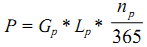
Where:
Gt,: The outstanding amount to be paid
nh cơt,: Overdue interest rate (the overdue interest rate is calculated at 150% of the winning bid interest rate in the Specific Contract)
nt,: Number of overdue days. The number of overdue days is calculated from the due date for repurchasing securities to the date of calculating the overdue payment penalty.
6. The State Bank (Trading Department) shall issue a notification to members falling under the provisions of Clause 1, Clause 2, Clause 3, or Clause 4 of this Article.
Article 24. Suspension of Purchase and Sale Transactions of Valuable Papers
The State Bank shall suspend purchase and sale transactions of valuable papers with members for three consecutive trading sessions in the following cases:
1. A member does not sign a specific contract in the purchase and sale transaction of valuable papers with a term.
2. A member fails to pay or pays insufficiently the amount due upon winning a bid to purchase valuable papers, upon the maturity date to repurchase valuable papers, or a member lacks valuable papers to sell back according to the commitment from the second time onwards, except in cases of force majeure and the member has notified the State Bank (Trading Department) thereof.
Chapter III
IMPLEMENTING PROVISIONS
Article 25. Responsibilities of Units
1. Monetary Policy Department
a) To take the lead and coordinate with units to submit to the Governor of the State Bank for decision on the List of types of valuable papers that can be traded, the difference ratio between the value of valuable papers at the valuation time and the payment price through open market operations during each period;
b) To propose and submit to the Head of the Management Board for decision on the types of valuable papers needed to buy/sell, the volume of buying/selling, the method of buying/selling, the bidding method, the tender evaluation method, the required timeframe for buying/selling, and the anticipated interest rates to apply when buying/selling valuable papers;
c) To take the lead and coordinate with units to submit to the Governor for issuance of a Decision on the organization and operation of the Management Board for open market operations.
2. Trading Department
a) To take the lead in drafting and submitting to the Governor of the State Bank for issuance of the Procedures for open market operations in accordance with the provisions of this Circular;
b) To monitor, review, and recognize credit organizations, foreign bank branches as members, terminate membership status, and delegate trading authority to personnel of members;
c) To execute signing, delivering, and receiving framework contracts, specific contracts with members and handle within its authority cases where members fail to comply with framework contracts and specific contracts;
d) To organize the implementation of purchase and sale transactions of valuable papers between the State Bank and members according to the approval of the Head of the Management Board;
đ) To implement payment, collect interest (including overdue interest), and accounting entries in accordance with regulations;
e) To carry out procedures for transferring ownership of valuable papers between the State Bank and members;
g) After each open market operations trading session, the Trading Department shall report the results of open market operations to the Governor of the State Bank, the Head of the Management Board for open market operations, and the Monetary Policy Department; for other units, providing information about the results of open market operations shall be carried out after obtaining the consent of the Governor of the State Bank;
h) To be responsible for handling difficulties and obstacles arising during the implementation of open market operations trading activities.
3. Information Technology Bureau
a) To be the focal point and coordinate with the Trading Department and related units to design and build software programs, install software programs, perform regular maintenance and upkeep of software programs, and ensure stable, smooth, secure, and confidential network infrastructure for open market operations; guide members to connect their networks with the State Bank to conduct open market operations trading;
b) To guide the issuance and recovery of access codes, electronic signature codes for members.
4. Department of Finance and Accounting
Guide accounting entries for transactions under open market operations and other issues arising.
5. Banking Inspection and Supervision Authority
Provide the names of credit organizations, foreign bank branches that have been merged, consolidated, split, dissolved, and bankrupted to the Trading Department and the Information Technology Bureau.
6. Cadre and Civil Servant Organization Department
To be the focal point and coordinate with units to submit to the Governor for issuance of a Decision on the establishment of the Management Board for open market operations.
Article 26. Responsibilities of Members
1. Prior to participating in open market operations, members must connect to the State Bank of Vietnam's network and bear full responsibility for ensuring personnel, technical, technological, and equipment matters during transactions.
2. Fulfill other responsibilities as prescribed in this Circular.
Article 27. Effective Date
1. This Circular takes effect from April 30, 2016.
2. From the date this Circular takes effect, the following documents shall cease to be effective:
a) Decision No. 01/2007/QD-NHNN dated January 5, 2007 of the Governor of the State Bank of Vietnam on the issuance of the Open Market Operations Regulation;
b) Decision No. 27/2008/QD-NHNN dated September 30, 2008 of the Governor of the State Bank of Vietnam on amending and supplementing certain Articles of the Open Market Operations Regulation issued together with Decision No. 01/2007/QD-NHNN dated January 5, 2007 of the Governor of the State Bank of Vietnam;
c) Article 2 of Circular No. 26/2011/TT-NHNN dated August 31, 2011 of the Governor of the State Bank of Vietnam on implementing the plan to simplify administrative procedures in the monetary activities sector according to Government Resolutions on simplifying administrative procedures within the scope of management functions of the State Bank of Vietnam;
d) Article 12 of Decision No. 362/1999/QĐ-NHNN1 dated October 8, 1999 on the issuance of the Central Bank Treasury Bill Issuance Regulation.
Article 28. Transitional Provisions
1. Credit organizations and foreign bank branches recognized as members pursuant to Decision No. 01/2007/QD-NHNN dated January 5, 2007 and Decision No. 27/2008/QD-NHNN dated September 30, 2008 shall continue to be members under this Circular without having to re-register their membership status.
2. Transactions carried out before this Circular takes effect based on forward purchase and sale contracts of negotiable instruments signed between the State Bank of Vietnam and members shall continue to be implemented in accordance with the agreed terms.
Article 29. Implementation Organization
The Director of the Office, the Head of the Monetary Policy Department, Heads of relevant units under the State Bank of Vietnam, Governors of the State Bank of Vietnam branches in centrally administered cities and provinces, Chairmen of Management Councils, Chairmen of Member Councils, and General Directors (Directors) of credit organizations and foreign bank branches are responsible for organizing the implementation of this Circular./.
|
Place of Receipt: - As Article 29; - SBV Leadership; - Government Office; - Ministry of Justice (for verification) ANNEXED TO THIS CIRCULAR (Circular No. 209/2016/TT-BTC dated October 10, 2016 of the Minister of Finance) - Website of the State Bank; - To be filed: Office, Planning and Finance Department, Monetary Policy Department (5). |
DIRECTOR |
ANNEX NO. 01/TTM
|
NAME OF CREDIT ORGANIZATION, FOREIGN BANK BRANCH |
SOCIALIST REPUBLIC OF VIET NAM |
|
No.:... |
… day … month … year … |
APPLICATION FOR EXCHANGE
PARTICIPATING IN OPEN MARKET OPERATIONS
Respected: State Bank of Vietnam
(Trading Floor)
Name of credit organization, foreign bank branch:...
Address...
Telephone...FAX:...
Bank code:...
SWIFT CODE:...
VND settlement account number:...at...
We hereby apply to participate in open market operations at the State Bank of Vietnam. We request the State Bank of Vietnam to issue a certificate of membership in open market operations, and we commit to fully comply with all regulations stipulated in the Circular on open market operations.
|
LEGAL REPRESENTATIVE (Signature, stamp) |
ANNEX NO. 02/TTM
|
NAME OF CREDIT ORGANIZATION, FOREIGN BANK BRANCH |
SOCIALIST REPUBLIC OF VIET NAM |
|
No.:... |
… day … month … year … |
APPLICATION FOR EXCHANGE
Termination of Membership in Participation in Open Market Operations
To: State Bank of Vietnam
(Trading Floor)
Name of credit organization, foreign bank branch:...
Address...
Telephone...FAX:...
Bank code:...
SWIFT CODE:...
VND settlement account number:...at...
We request the State Bank of Vietnam to permit the termination of our membership in participation in open market operations.
|
LEGAL REPRESENTATIVE (Signature, stamp) |
ANNEX NO. 03/TTM
SOCIALIST REPUBLIC OF VIET NAM
Independence - Freedom - Happiness
---------------
FRAMEWORK CONTRACT FOR PURCHASE/SALE OF NEGOTIABLE INSTRUMENTS
No.:.../HDK
Date...month...year...
- Based on the Civil Code No. 33/2005/QH11 adopted by the XI National Assembly of the Socialist Republic of Vietnam on June 14, 2005;
- Based on Circular No....dated...regulating open market operations;
- Based on Decision No....dated...of the Governor of the State Bank of Vietnam regarding the List of types of negotiable instruments and the difference ratio between the valuation value and the payment value of negotiable instruments;
Party A: (State Bank of Vietnam)...
Address:…
Telephone:...FAX:...E-mail:...
VND settlement account number:...at...
Party B: (Member)...
Address:…
Telephone:...FAX:...E-mail:...
VND settlement account number:...at...
Both parties agree to enter into a Framework Contract for the purchase and sale of negotiable instruments (hereinafter referred to as "Contract") with the following Terms and Conditions:
Article 1. Scope and Applicability
This Contract is a framework agreement applicable to all transactions involving the purchase and sale of negotiable instruments as stipulated in the Circular regulating open market operations between the State Bank of Vietnam and... (name of member), who is a member of open market operations.
Article 2. Implementation of transactions
1. Transactions for buying and selling negotiable instruments may be conducted through networked computers between the State Bank (Trading Department) and ... (name of member) according to the open market business software program provided by the State Bank.
2. For transactions involving the purchase and sale of negotiable instruments with terms: After receiving the State Bank's tender result announcement, the Buyer and Seller confirm the term purchase and sale transaction of negotiable instruments by signing a specific contract containing the following basic contents:
a) The Seller;
b) The Buyer;
c) Information on the negotiable instruments being bought and sold: code number, issuance date, issuance interest rate in the primary market, periodic interest payment (if any), maturity date, quantity of negotiable instruments;
d) Repurchase price;
đ) Sale term;
e) Single or multiple interest rates (in case of interest rate tender) or the interest rate announced by the State Bank (in case of volume tender);
g) Repurchase date;
h) Late interest rate.
3. For transactions involving the outright purchase and sale of negotiable instruments: After receiving the State Bank's tender result announcement, the Buyer and Seller shall carry out payment and transfer ownership of the negotiable instruments according to the tender result announcement.
4. All payments between the parties shall be made in Vietnamese Dong and transferred into the accounts of the parties specified in this Contract. The payment and transfer of ownership of negotiable instruments shall be carried out in accordance with the Circular on Open Market Operations Business, the Open Market Operations Procedures, and the commitments in this Contract.
Article 3. Agreement of the Parties
The two parties agree upon signing this Contract:
1. To comply with the Terms and Conditions of this Contract and relevant laws.
2. The representative signing this Contract on behalf of each party is the legal representative of that party.
3. The Seller has the full right to transfer ownership of the negotiable instruments to the Buyer at the time of ownership transfer, and the Buyer will have all rights and interests in those negotiable instruments without liability for any debt obligations, fees, or other liabilities. In the case where the Seller is a member, they will authorize the State Bank to handle the procedures for transferring ownership of negotiable instruments as prescribed.
4. The member agrees to allow the State Bank to deduct from their settlement account at the State Bank the amount won in purchasing negotiable instruments or the repurchase amount if the member fails to make payment as agreed with the State Bank.
5. To fully comply with the provisions of the Circular on Open Market Operations Business.
Article 4. Handling Violations
Handling violations of the commitments in this Contract shall be carried out in accordance with the Circular on Open Market Operations Business and related regulatory legal documents.
Article 5. Force Majeure
1. The parties shall not be held responsible for failing to perform or performing incompletely the responsibilities and obligations stipulated in this Contract when force majeure events occur, such as war, riot, natural disasters, strikes, etc., and other force majeure cases as prescribed by law.
2. Immediately after the occurrence of the force majeure events mentioned in Clause 1 of this Article, the party affected by the force majeure cause shall notify the other party in writing to discuss and resolve issues related to the performance of this Contract.
Article 6. Notice and Communication
1. All notices, requests, or exchanges related to this Contract must be made in written Vietnamese and sent through the market opening business software program, or sent by email, or fax, or handed over personally, or by post to the addresses of the parties mentioned at the beginning of this Contract.
2. Notices and communications shall be deemed received in the following cases:
- Immediately upon sending through the market opening business software program, sending by email or fax (provided that the sender receives confirmation of dispatch);
- The recipient receives the document when sent by post, but not later than seven working days after dispatch to the recipient;
- At the time of transfer in case the document is handed over personally during working hours.
3. Each party must notify the other party of any changes to its address, telephone number, fax number, or email address.
Article 7. Assignment
Neither party may assign its rights and obligations under this Contract to a third party without the prior written consent of the other party. The performance of this Contract is a mandatory right and obligation for the successor.
Article 8. Termination of the Contract
This Contract automatically terminates upon the termination of Party B's status as a market opening business member and Party B has fulfilled all obligations towards the State Bank of Vietnam in market opening business transactions.
Article 9. Governing Law and Dispute Resolution
1. This Contract shall be interpreted and governed by the laws of the Socialist Republic of Vietnam.
2. In the event of any dispute arising from or relating to this Contract, the parties shall first seek to resolve it through negotiation and mediation. If negotiation and mediation fail, either party may bring the dispute to the competent court in Vietnam for resolution. Court judgments and decisions with legal effect shall be binding on the parties, and the parties shall be obligated to enforce them. The losing party shall bear the litigation fees and attorney's fees.
Article 10. Effective Date
This Contract shall take effect from the date of signing. The Contract is made in two copies, each party holding one copy.
|
REPRESENTATIVE OF PARTY A Full name:… Position:… |
REPRESENTATIVE OF PARTY B Full name:… Position:… |
ANNEX NO. 04/TTM
SPECIFIC CONTRACT
This Specific Contract was established on...day...month...year by and between:
Party A: (State Bank of Vietnam)...
Address:…
Telephone:...FAX:...E-mail:...
Settlement Account number:...opened at...
Party B: (Member)...
Address:…
Telephone:...FAX:...E-mail:...
VND settlement account number:...at...
Based on the provisions of the Framework Agreement for the purchase/sale of securities number...on...day...month...year (Framework Agreement), the two parties agree and sign this Specific Contract with the following terms and conditions:
Article 1. Based on the tender result announcement number...on...of the State Bank of Vietnam,...(Seller) agrees to sell the following securities to...(Buyer) at a price of...(amount recorded according to payment value) within...(number of days)...(Seller) is responsible for transferring ownership of the securities to...(Buyer), while...(Buyer) is responsible for paying the full purchase price for the securities to...(Seller) on...(purchase day)...(Seller) commits to repurchasing the securities at a repurchase price of...(amount) on the repurchase day...(Buyer) is responsible for transferring ownership of the securities back to...(Seller), while...(Seller) is responsible for paying the full repurchase price for the securities on the repurchase day. Specifically as follows:
Unit: Vietnamese Dong
|
Security Code (name, form of issuance, interest payment form, term) |
Quantity of awarded securities (Dong) |
Repurchase Price (Dong) |
Sale Term (days) |
Tender interest rate in the term purchase/sale transaction (per annum %) |
Primary market issuance interest rate of the security |
Issue date of the security |
Interest payment period (for securities with periodic interest payments) |
Due date of the security |
Repurchase Date |
|
|
At par value |
According to the payment amount |
|||||||||
|
(1) |
(2) |
(3) |
(4) |
(5) |
(6) |
(7) |
(8) |
(9) |
(10) |
(11) |
In the case where the selling member and commits to repurchase the securities does not pay or pays insufficiently the amount due to the State Bank of Vietnam on the repurchase day, it shall bear the overdue interest rate as prescribed by the State Bank of Vietnam at a rate of...%/year calculated on the outstanding amount and the number of days overdue. This Specific Contract is an integral part of the Framework Agreement. This Specific Contract takes effect from the date of signing and terminates upon the completion of all commitments set out in Clause 1 of this Contract by the member.
Article 2. This Specific Contract together with the Framework Agreement constitutes a complete agreement between the two parties.
This Specific Contract is made in two copies of equal legal force, each party holding one copy.
REPRESENTATIVE OF BUYER
|
(Electronic Signature Approval) REPRESENTATIVE OF SELLER |
Date...month...year... REPRESENTATIVE OF THE SELLER REPRESENTATIVE OF SELLER |
Văn bản gốc (PDF)
Tải văn bản
Bản đồ quan hệ
Bấm vào một văn bản để mở. Viền đỏ = quan hệ làm thay đổi hiệu lực.
Bản dịch
Văn bản này có sẵn ở các ngôn ngữ sau: