
This Circular guides the provision of support to organizations and units employing laborers who are ethnic minorities in mountainous areas and particularly difficult regions pursuant to Decision No. 42/2012/QĐ-TTg of the Prime Minister. It stipulates the preparation of budgets and disbursement of funds for training and insurance support, as well as exemption from land rental fees for units employing ethnic minority laborers. This Circular takes effect from the fiscal year 2017 and replaces Circular No. 52/2013/TT-BTC.
Đối tượng áp dụng
Organizations and units employing laborers who are ethnic minorities in mountainous areas and particularly difficult regions.
Các điểm cốt lõi
- Guidance on the preparation of budgets and disbursement of funds for training and insurance support for units employing ethnic minority laborers.
- Provisions regarding exemption from land rental fees for units employing ethnic minority laborers residing in mountainous areas and particularly difficult regions.
- Handling violations in the implementation of preferential policies of the State for ethnic minority laborers.
- Provisions on the organization of implementation and the effectiveness of this Circular.
- This Circular replaces Circular No. 52/2013/TT-BTC.
🌐 Tác động xã hội từ văn bản này
- Strengthening support for ethnic minority laborers in mountainous areas and particularly difficult regions.
- Reducing the financial burden on units employing ethnic minority laborers through the exemption of land rental fees.
❓ Câu hỏi thường gặp
When does this Circular take effect?
This Circular takes effect 45 days after the date of issuance and applies from the fiscal year 2017.
Which Circular does this replace?
This Circular replaces Circular No. 52/2013/TT-BTC of the Ministry of Finance.
Toàn văn
CIRCULAR
Guidelines for certain financial support policies for organizations and units employing ethnic minority workers in mountainous areas and particularly difficult regions
Pursuant to the State Budget Law No. 83/2015/QH13 dated June 25, 2015;
Pursuant to Decree No. 163/2016/NĐ-CP dated December 21, 2016 of the Government guiding the implementation of certain provisions of the State Budget Law 2015;
Pursuant to Decree No. 215/2013/NĐ-CP dated December 23, 2013, promulgated by the Government stipulating the functions, tasks, powers, and organizational structure of the Ministry of Finance;
Pursuant to Decision No. 42/2012/QĐ-TTg dated October 8, 2012 of the Prime Minister on supporting organizations and units employing ethnic minority workers in mountainous areas and particularly difficult regions;
Pursuant to Decision No. 64/2015/QĐ-TTg dated December 17, 2015 of the Prime Minister amending and supplementing Decision No. 42/2012/QĐ-TTg dated October 8, 2012 of the Prime Minister on supporting organizations and units employing ethnic minority workers residing in mountainous areas and particularly difficult regions;
Pursuant to Decision No. 46/2015/QĐ-TTg dated September 28, 2015 of the Prime Minister stipulating the policy of financial support for short-term vocational training and training under three months;
At the proposal of the Director of the Enterprise Finance Department,
The Minister of Finance issues this Circular guiding certain financial support policies for organizations and units employing ethnic minority workers in mountainous areas and particularly difficult regions as follows:
Section 1
GENERAL PROVISIONS
1. The organization of receiving and processing administrative procedures electronically shall be carried out through the National Public Service Portal via the Linked Public Service Software, ensuring requirements for exploitation and restructuring of business processes towards integration and coordinated resolution, enhancing the quality of administrative services provided by relevant state agencies, facilitating business households, individuals, and related agencies and organizations in receiving and processing administrative procedures.
This Circular guides the financial support policy regarding social insurance, health insurance, unemployment insurance (hereinafter referred to as insurance), short-term vocational training, and land rental fees for organizations and units employing ethnic minority workers legally residing in the Central Highlands region, mountainous areas, and particularly difficult regions as prescribed in Decision No. 42/2012/QĐ-TTg dated October 8, 2012 of the Prime Minister and Decision No. 64/2015/QĐ-TTg dated December 17, 2015 of the Prime Minister amending and supplementing Decision No. 42/2012/QĐ-TTg (hereinafter collectively referred to as Decision No. 42/2012/QĐ-TTg).
Article 2. Applicability
1. State-owned single-member limited liability companies in agriculture, forestry, and fisheries;
2. Management boards of special-use forests and protective forests;
3. Cooperatives;
4. Non-state enterprises (including foreign-invested enterprises);
5. Relevant agencies, organizations, and individuals involved in implementing support for organizations and units employing ethnic minority workers in mountainous areas and particularly difficult regions.
The entities mentioned in Clause 1, Clause 2, Clause 3, and Clause 4 (hereinafter collectively referred to as using units) utilize land for agricultural, forestry, aquaculture purposes, and employ ethnic minority workers legally residing in the Central Highlands region, mountainous areas, and particularly difficult regions according to the list prescribed in Decision No. 42/2012/QĐ-TTg.
Section 2
SUPPORT POLICIES
Article 3. Short-term vocational training support policy
1. Principles of support:
a) Ethnic minority workers who must be trained according to the recruitment and training plan of the using unit shall be supported once for short-term vocational training (level of primary vocational qualification and training under three months).
b) Training support funds shall be directly allocated to the using unit according to the approved training plan by the superior management agency (state-owned economic groups and state-owned corporations for their affiliated units; ministries and sectors for units under their jurisdiction; provincial people's committees for units under local management including cooperatives, non-state enterprises, joint-stock companies converted from parent state-owned enterprises and subsidiaries of state-owned economic groups and state-owned corporations with headquarters located in the area).
c) Short-term vocational training for workers shall be conducted at educational institutions meeting the conditions for vocational education activities as prescribed by law.
d) The place of residence of workers for determining the level of training cost support as prescribed in this Circular shall be determined according to the Law on Residence and related guiding documents.
2. Supported subjects and levels of support:
a) Training cost support:
Ethnic minority households living in poverty: maximum level of 4 million VND per person per course.
Ethnic minorities: maximum level of 3 million VND per person per course.
b) Support for food and travel expenses:
Food support at 30,000 VND per person per day of actual study.
Travel support at 200,000 VND per person per course if the training location is more than 15 kilometers away from the place of residence.
For ethnic minority learners residing in communes, villages, or hamlets in difficult or particularly difficult regions as defined by the Prime Minister, travel support at 300,000 VND per person per course if the training location is more than 5 kilometers away from the place of residence.
3. In cases where the subject enjoys multiple support policies for the same content, they shall only enjoy the highest policy.
Article 4. Support Policy for Insurance
1. The state budget shall support the payment on behalf of employers for a maximum of five years for each worker.
2. The insurance support shall be provided to workers who are ethnic minority people under indefinite-term labor contracts, fixed-term labor contracts, seasonal labor contracts, or specific task labor contracts with a duration of at least three months but less than twelve months signed by the employer.
Article 5. Sources of Funding for Training and Insurance Support
1. The central government budget shall support 100% of the costs related to training, health insurance, social insurance, and unemployment insurance for ethnic minority workers.
2. Localities shall proactively allocate local budgets to coordinate with the central government budget to effectively implement policies for primary-level training and training lasting less than three months for ethnic minority workers.
3. Funds from integrated training programs, including national target programs for new rural development, and other projects within the locality shall be organized to provide primary-level training and training lasting less than three months for ethnic minority workers.
4. For public service units operating on a revenue-generating basis, if their self-management plan already includes a budget estimate for health insurance, social insurance, and unemployment insurance for ethnic minority workers, such units shall not receive state budget support as stipulated in Clause 1 of this Article.
Article 6. Exemption and Reduction of Land Rent
1. Principles of Exemption and Reduction:
a) Only land areas used for agricultural, forestry, and aquaculture production purposes will be considered for exemption or reduction of land rent.
b) Regularly present workers are those working according to the attendance records of the unit (excluding part-time workers and workers with contracts shorter than twelve months) and workers under contract-based assignment agreements (one contract-based assignment agreement replaces one labor contract, and the contract-based assignment agreement must have a term of at least twelve months).
c) Ethnic minority individuals in contract-based assignment agreements are those directly signing such agreements with the employing unit.
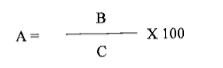
Where:
d) The ratio between the number of ethnic minority workers and the total number of regularly present workers in the unit, serving as the basis for land rent exemption and reduction, is determined using the following formula:
A: represents the percentage ratio between the number of ethnic minority workers and the number of regularly present workers in agriculture, forestry, and aquaculture.
B: represents the average annual number of ethnic minority workers, calculated by dividing the total number of ethnic minority workers with contracts or contract-based assignment agreements of at least twelve months in the field of agriculture, forestry, and aquaculture during the previous year by twelve.
C: represents the average annual number of regularly present workers, calculated by dividing the total number of regularly present workers in agriculture, forestry, and aquaculture (as defined in point b of Clause 1 of this Article) during the previous year by twelve.
In cases where enterprises start operations in the middle of the year, the number of months in the year is calculated based on the actual months of operation.
2. Levels of Exemption and Reduction:
a) Employing units that employ between thirty percent and less than fifty percent of ethnic minority workers compared to the total number of regularly present workers in the unit shall be granted a fifty percent reduction in land rent for the year for the area of land required to be rented according to the laws on land.
Section 3
b) Employing units that employ fifty percent or more of ethnic minority workers compared to the total number of regularly present workers in the unit shall be exempted from one hundred percent of land rent for the year for the area of land required to be rented according to the laws on land.
Article 7. Budget Preparation
PREPARATION, ISSUE, AND SETTLEMENT OF TRAINING AND INSURANCE FUNDS
1. Annually, along with the time for preparing the budget, based on the need for labor, including ethnic minority workers, and based on the approved training plans of the unit by the superior management agency, the employing unit shall prepare the budget for training support and insurance support as follows:
a) Training support budget: prepared according to Appendix No. 01 attached to this Circular, including:
- The number of ethnic minority workers requiring training.
- The trade or profession of training, the number of workers needed for each trade or profession.
- Duration of training (depending on the trade or profession, but not exceeding three months for one course).
- Training institution.
- Training costs (including training expenses, food allowance, travel expenses).
b) Insurance contribution support budget: prepared according to Appendix No. 02 attached to this Circular, including:
- The number of ethnic minority workers supported for insurance contributions.
- The number of months supported.
- Level of support.
c) Explanation and elaboration of data for the attached appendices.
2. The training and insurance budgets shall be submitted to the superior management agency mentioned in Clause 3 of this Article for consolidation.
3. Consolidation of Budgets:
a) State-owned economic groups and state-owned corporations shall receive the budgets of their subordinate units, consolidate them into their annual state budget expenditure plans, and submit them to the Ministry of Finance for inclusion in the consolidated central budget report to be reviewed and decided upon by the Government and the National Assembly in accordance with the State Budget Law.
c) The Department of Finance receives the budget estimates of units under local management (including cooperatives, private enterprises, joint-stock companies converted from state-owned companies, and member enterprises of state economic groups and state corporations whose headquarters are located within the locality), aggregates them, and reports to the provincial People's Committee.
The provincial People's Committee aggregates the training and insurance contribution budget estimates for units under local management and includes them in the annual budget expenditure plan of the locality, then submits it to the Ministry of Finance for consolidation in the national budget estimate report to be submitted to the Prime Minister for presentation to the National Assembly for consideration and decision.
4. Allocation and Distribution of Budget Estimates:
Based on the national budget estimate assigned by the Prime Minister and announced by the Ministry of Finance, ministries, sectors, state economic groups, state corporations, and localities allocate budget funds to labor-using units under their jurisdiction according to the provisions of the State Budget Law and related guiding documents.
Article 8. Issuance of Support Funds
1. For Central Units:
a) Based on the national budget estimate already assigned by the competent authority, upon the request of ministries, sectors, state economic groups, state corporations, the Ministry of Finance temporarily issues up to 70% of the allocated budget estimate in the first quarter of the planning year to allow ministries, sectors, state economic groups, state corporations to temporarily issue funds to labor-using units. The issuance of funds is carried out by the Ministry of Finance through payment orders.
b) At the end of the fiscal year, ministries, sectors, state economic groups, state corporations aggregate and report the final settlement of support funds for training costs and insurance costs to the Ministry of Finance for consideration of additional funding for any shortfall or recovery of unused funds to the state budget.
2. For Local Units:
a) Based on the national budget estimate already assigned by the competent authority, upon the request of the provincial People's Committee, the Ministry of Finance will consider temporarily issuing up to 70% of the allocated budget estimate in the first quarter of the planning year to enable the locality to implement support policies for labor-using units.
b) Based on the reports from labor-using units and the central government support funds, the Department of Finance reports to the provincial People's Committee for consideration to temporarily issue funds to labor-using units (including joint-stock companies converted from parent companies and member enterprises of state economic groups and state corporations). The issuance of funds is carried out by the Department of Finance through payment orders.
For insurance support funds, the Department of Finance issues funds to units employing ethnic minority workers, simultaneously transferring the funds directly to the insurance agency as stipulated in Clause 2, Article 3 of Decision No. 42/2012/QĐ-TTg, and notifies each unit after transferring the support funds to the insurance agency. If the labor-using unit has already paid insurance contributions to the insurance agency, the Department of Finance transfers the support funds to the labor-using unit corresponding to the amount already paid by the unit.
c) At the end of the fiscal year, the provincial People's Committee aggregates and reports the final settlement of support funds for training costs and insurance costs to the Ministry of Finance for supplementation in cases of insufficient funds or recovery of unused funds to the central government budget.
Article 9. Inspection and Settlement Work
1. At the end of each fiscal year, labor-using units must settle accounts for the training support funds and insurance with their superior management agencies. The settlement dossier includes:
a) Training expense support settlement: List of workers trained, level of training expense support for each worker, total training expenses requested to be supported by the state budget according to Appendix No. 03 attached to this Circular; training contracts, contract termination documents, payment vouchers for training costs between the labor-using unit and the vocational training institution.
b) Insurance expense support settlement: List of workers supported in insurance payments; social insurance, health insurance, unemployment insurance contribution levels for each worker; total insurance expenses requested to be supported by the state budget, confirmed by the insurance agency according to Appendix No. 04 attached to this Circular.
The settlement dossier must clearly record the total time each worker has been supported by the state budget for insurance payments (including the time supported in previous years before the reporting year and the time supported during the reporting year).
2. Inspection and Audit of Settlement
a) State-owned economic groups and state-owned corporations are responsible for inspecting and auditing the settlement of training and insurance expenses for their subordinate units and consolidating them to send to the Ministry of Finance to request additional funding or demand repayment of the state budget in cases where the funds are not fully utilized.
b) Ministries and sectors are responsible for inspecting and auditing the settlement of training and insurance expenses for their subordinate units and consolidating them to send to the Ministry of Finance to request additional funding or demand repayment of the state budget in cases where the funds are not fully utilized.
c) Local finance departments are responsible for inspecting and auditing the settlement of training and insurance expenses for units under local management (including cooperatives, non-state enterprises, joint-stock companies converted from parent companies and subsidiaries of state-owned economic groups and state-owned corporations headquartered within the locality) and submitting to the provincial People's Committee for decision.
Local finance departments are responsible for consolidating the settlement of training and insurance expenses for the locality and submitting them to the provincial People's Committee. Based on the consolidation results of the local finance department, the provincial People's Committee will issue a document to the Ministry of Finance (attached with the settlement dossier) to request additional funding or demand repayment of the state budget in cases where the funds are not fully utilized.
The settlement dossier submitted to the Ministry of Finance by the locality includes: the request for support of training expenses from the labor-using unit, the audit report on the settlement of support expenses issued by the local finance department for the labor-using unit, the decision approving the settlement of support expenses for the labor-using unit issued by the provincial People's Committee.
State budget funds supporting the implementation of policies pursuant to Decision No. 42/2012/QĐ-TTg shall be accounted for and consolidated into the local budget settlement in accordance with the provisions of the State Budget Law.
Article 10. Accounting Records
The accounting of training support funds and insurance expenses for labor-using units of ethnic minority people pursuant to Decision No. 42/2012/QĐ-TTg shall be carried out in accordance with current accounting regulations.
Section 4
EXEMPTION AND REDUCTION OF LAND RENT
Article 11. Exemption and Reduction of Land Rent Payment
1. Annually, the provincial People's Committee shall examine, appraise, and decide on the exemption or reduction of land rent payment for units employing ethnic minority workers residing in mountainous areas and particularly difficult regions according to Decision No. 42/2012/QĐ-TTg after the employing unit provides complete information as follows:
a) A letter requesting the Provincial People's Committee or the agency authorized by the Provincial People's Committee to decide on the exemption or reduction of land rent payment for the unit in accordance with Decision No. 42/2012/QĐ-TTg;
b) The number of ethnic minority workers and the number of workers regularly present at the unit;
c) Labor contracts (or contracts for work assignment) between the employing unit and workers (a copy stamped by the unit);
d) Land lease contracts for the area of land belonging to the unit that must be leased according to the laws on land (a copy stamped by the unit).
2. Annually, if the ratio of ethnic minority workers to the total number of workers regularly present at the unit does not change or changes but does not affect the level of exemption or reduction of land rent payment already decided by the competent authority of the province, then the unit only needs to submit a report on the situation of labor use in the planning year to relevant agencies for monitoring.
Section 5
VIOLATION HANDLING AND IMPLEMENTATION ORGANIZATION
Article 12. Handling Violations
1. If units or organizations take advantage of preferential policies of the State for ethnic minority workers stipulated in Decision No. 42/2012/QĐ-TTg to benefit the unit and individuals, they will be handled according to the law and the provisions below:
a) If the unit reports incorrectly the number of ethnic minority workers leading to overestimation of training costs and insurance costs, resulting in higher state support than actually received, the head of the unit must reimburse the state budget and be disciplined for misconduct in managing the state budget according to the State Budget Law and other related laws.
b) If the unit reports incorrectly the number of ethnic minority workers and the number of workers regularly present at the unit, leading to a change in the ratio of ethnic minority workers to the total number of workers regularly present to obtain exemptions or reductions in land rent payments, in addition to being required to pay back the land rent, the head of the unit will be disciplined for fraudulent tax declaration according to the Tax Administration Law and other related laws.
2. In cases where the planned budget for the planning year has significant discrepancies compared to the previous year's final accounts and the employing unit does not provide sufficient explanations for the changes, the financial agency will only consider provisional budget allocation based on the implementation level of the previous year.
3. In cases where organizations or employing units fail to prepare budgets and settle accounts in a timely manner as prescribed in Articles 7, 8, and 9 of this Circular within the two years prior, they will not be considered for provisional budget allocation for the planning year until all procedures are completed as prescribed.
Article 13. Implementation Organization
1. This Circular takes effect 45 days from the date of signature and applies from the 2017 fiscal year.
2. This Circular replaces Circular No. 52/2013/TT-BTC dated May 3, 2013, issued by the Ministry of Finance guiding support for organizations and units employing ethnic minority workers in mountainous areas and particularly difficult regions according to Decision No. 42/2012/QĐ-TTg dated October 8, 2012, of the Government.
3. The preparation of budgets, disbursement, and settlement of support funds for joint-stock companies converted from parent companies and member enterprises of state-owned economic groups and state-owned corporations according to point c, Clause 3, Article 7, point b, Clause 2, Article 8, and point c, Clause 2, Article 9 of this Circular shall be implemented starting from the year following the issuance of the first business registration certificate to the joint-stock company.
4. During the implementation process, if there are difficulties, agencies and units are requested to promptly reflect them to the Ministry of Finance for research, revision, and supplementation.
|
Place of Receipt: |
DEPUTY MINISTER |
Văn bản gốc (PDF)
Bản đồ quan hệ
Bấm vào một văn bản để mở. Viền đỏ = quan hệ làm thay đổi hiệu lực.
Bản dịch
Văn bản này có sẵn ở các ngôn ngữ sau: