
Circular No. 168/2011/TT-BTC guides State statistics on customs for exported and imported goods. It applies to organizations and individuals implementing and using this statistical information. It provides detailed regulations on scope, methods, data sources, timing, units of measurement, currency, trading partner countries/regions, information technology, collection, processing, analysis, forecasting, publication of statistical information, information security, responsibilities and authorities of related parties.
Scope of application
Organizations and individuals conducting statistics on exported and imported goods; organizations and individuals using this statistical information.
Key points
- This Circular applies to organizations and individuals implementing and using statistical information on customs for exported and imported goods.
- The scope of statistics includes all goods entering into or leaving the territory of Vietnam, except those that merely transit through the territory.
- Statistics on exported and imported goods are conducted according to the common trade system organized by the General Department of Customs.
- The statistical value of exported and imported goods is determined based on the FOB or CIF delivery terms.
- Statistical information must comply with the principles of completeness, timeliness, and accuracy, uniformity in statistical methods, transparency, and non-duplication.
- Organizations and individuals using statistical information must ensure the authenticity of the information, not distort data for personal purposes.
🌐 Social impact of this document
- Establish accurate statistical databases on exports and imports, supporting state management and policy planning.
- Reduce the burden on businesses when performing customs procedures.
- Provide useful information for organizations and individuals to analyze economic trends and make investment decisions.
❓ Frequently asked questions
What principles guide the statistics on exported and imported goods?
Statistics must ensure completeness, timeliness, and accuracy; uniformity in statistical methods, index systems, forms, and reporting regimes; transparency, independence, and non-duplication.
How is the statistical value of exported and imported goods determined?
The statistical value of exported goods is based on the FOB delivery term, while for imported goods it is CIF. In special cases, the value will be converted according to specific principles.
What requirements must organizations and individuals using statistical information comply with?
They must ensure the authenticity of the information, not distort data for personal purposes, and accurately cite the source of the information.
When is statistical information published?
Estimated information is published on the 25th of each month, preliminary information within five days after submission of the report, adjusted information regularly and irregularly at specific times.
Which organizations and individuals are responsible for implementing this Circular?
The General Department of Customs is responsible for issuing guidelines, organizing implementation, and evaluating statistical work. Units under the Ministry of Finance cooperate in implementation.
Full text
|
MINISTRY OF FINANCE
-------------- Number: 168/2011/TT-BTC |
SOCIALIST REPUBLIC OF VIETNAM Independence - Freedom - Happiness ------------------------------------- Hanoi, November 21, 2011 |
CIRCULAR
Guidelines for State Customs Statistics on Exported and Imported Goods
Pursuant to Decree No. 249/2001/ND-CP dated November 6, 2001, and the Law Amending and Supplementing Certain Provisions of the Customs Law No. 42/2005/QH11 dated June 14, 2005;
------------------
Pursuant to the Law on Statistics No. 04/2003/QH11 dated June 17, 2003;
Pursuant to the Law on Customs No. 29/2001/QH10 dated June 29, 2001 and the Law No. 42/2005/QH11 dated June 14, 2005 amending and supplementing certain articles of the Law on Customs; Pursuant to Decree No. 40/2004/NĐ-CP dated February 13, 2004 of the Government detailing and guiding the implementation of certain provisions of the Statistics Law 2003;
Pursuant to Decision No. 111/2008/QĐ-TTg dated August 15, 2008 of the Prime Minister on the Issuance of Reporting Systems for Comprehensive Statistics Applicable to Ministries and Sectoral Agencies;
Pursuant to Decree No. 118/2008/NĐ-CP dated November 27, 2008, of the Government stipulating the functions, tasks, powers, and organizational structure of the Ministry of Finance;
Pursuant to Decision No. 312/2010/QĐ-TTg dated March 2, 2010 of the Prime Minister approving the Project to Reform and Harmonize Statistical Indicators Systems;
Pursuant to Decision No. 43/2010/QĐ-TTg dated June 2, 2010 of the Prime Minister promulgating the National Statistical Indicator System,
The Ministry of Finance issues guidelines for State Customs Statistics on exported and imported goods as follows:
These Circulars guide the implementation of State Customs Statistics on exported and imported goods, the use of statistical information on exported and imported goods of Vietnam.
PART I
GENERAL PROVISIONS
Article 1. Scope of Regulation
1. Organizations and individuals implementing statistics on exported and imported goods of Vietnam.
Article 2. Applicability
2. Organizations and individuals using statistical information on exported and imported goods of Vietnam.
1. State Customs Statistics is a statistical activity organized and implemented by the Customs sector, including: statistics on exported and imported goods; statistics on taxes on exported and imported goods; number of violations of customs laws; means of transport exiting and entering the country and other business statistics.
Article 3. Explanation of Terms
In this Circular, the following terms are understood as follows:
State Customs Statistics on exported and imported goods (hereinafter referred to as statistics on exported and imported goods) is the process of collecting, processing, summarizing, analyzing, publishing, storing, cooperating, and exchanging information about the situation of exported and imported goods (information on commodity types, item codes, units of measurement, quantity, value, partner countries-regions...) of Vietnam organized and implemented by the General Department of Customs.
2. The terms "international trade statistics" and "foreign trade statistics" are understood to be the same as the term "statistics on exported and imported goods" mentioned in this Circular.
3. Statistical information on exported and imported goods is the product of statistical activities, including statistical data and analysis reports of such data.
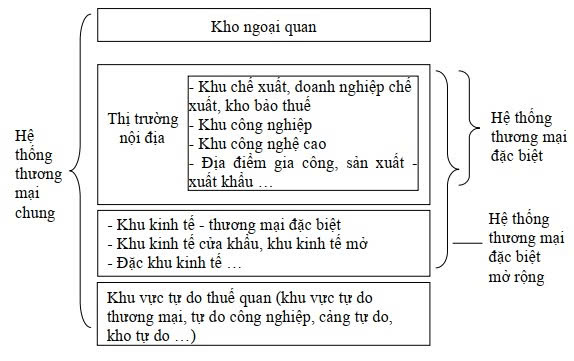
4. The trading system used in statistics on exported and imported goods to determine transactions that are included or excluded from statistics on exported and imported goods can be classified into three different trading systems based on the scope of transactions:
- The special trading system used in statistics on exported and imported goods includes goods entering or leaving the territory of Vietnam in the domestic market and industrial zones, export processing zones, high-tech zones, processing sites, production and export areas...
- The expanded special trading system used in statistics on exported and imported goods includes goods entering or leaving the territory of Vietnam according to the special trading system and additionally includes special economic and trade zones, border economic zones, special economic zones...
- The common trading system used in statistics on exported and imported goods includes goods entering or leaving the territory of Vietnam according to the expanded special trading system and additionally includes bonded warehouses, free trade zones (free trade areas, free industrial zones (free ports, free warehouses...).
Diagram: Description of Trading Systems in Exported and Imported Goods Statistics
5. Metadata for statistics on exported and imported goods: is a system of data describing the statistical data on exported and imported goods aimed at helping organizations and individuals using the information to better understand the data and analysis of statistical information; comparing statistical data on exported and imported goods between Vietnam and similar statistical data of other countries, regions.
export, import
6. Information release schedule: is a schedule prepared in advance to specifically determine the time for releasing statistical information on exported and imported goods.
7. Adjustment of statistical information: is the modification and supplementation of previously published statistical information on exported and imported goods when more complete and accurate information becomes available, or when there is a fundamental change in concepts, definitions, classification lists, and data sources to ensure the authenticity and comparability of statistical information over different periods.
7. Adjustment of statistical information: is the modification and supplementation of statistical information on exported and imported goods that have been published when there is more complete and accurate information available, or when there are fundamental changes in concepts, definitions, classification categories, and data sources to ensure the authenticity and comparability of statistical information over different periods.
Article 4. Principles for Statistics of Exported and Imported Goods
Statistics of exported and imported goods must comply with the following basic principles:
1. Ensuring the completeness, timeliness, and accuracy of statistical information on exported and imported goods.
2. Ensuring uniformity in statistical methods, index systems, forms, and reporting procedures for statistics of exported and imported goods nationwide.
3. Ensuring integrity, transparency, independence, non-duplication, and non-overlapping during the process of conducting statistics on exported and imported goods.
4. Ensuring comparability of statistical data on bilateral trade of Vietnam with similar statistical data from other countries and territories.
Article 5. Prohibited Acts in Statistics of Exported and Imported Goods
1. Not implementing, obstructing implementation, or improperly performing duties during the collection, processing, compilation, and reporting of statistical information on exported and imported goods.
2. Intentionally distorting statistical information or publishing false statistical information.
3. Disclosing state secrets classified statistical information to organizations or individuals without proper authority and purpose.
4. Disclosing specific statistical information on exported and imported goods linked to the name and address of each organization or individual without their consent to organizations or individuals without proper authority and purpose.
5. Engaging in other acts that violate laws on statistics.
Chapter II
STATISTICAL METHODS FOR EXPORTED AND IMPORTED GOODS
Article 6. Trade System in Statistics of Exported and Imported Goods
Statistics of exported and imported goods in Vietnam are conducted according to the general trade system organized and implemented by the General Department of Customs.
In certain cases for research, comparison, and analysis purposes, statistics of exported and imported goods in Vietnam may be carried out according to special trade systems or expanded special trade systems.
Article 7. Scope of Statistics of Exported and Imported Goods
1. All goods exiting the customs territory of Vietnam (exports) or entering the customs territory of Vietnam (imports), which reduce or increase the material resources of Vietnam, fall within the scope of statistics. Goods temporarily entering or exiting the customs territory of Vietnam without increasing or reducing the material resources of Vietnam are not included in the scope of statistics.
2. Exported goods include all domestically produced goods and re-exported goods that reduce Vietnam's material resources. Among them:
a) Domestically produced goods are those extracted, manufactured, and processed in Vietnam according to Vietnam’s rules of origin for goods;
b) Re-exported goods are those originally imported by Vietnam, subsequently re-exported in their original condition or only slightly processed, preserved, and repackaged without changing their fundamental nature.
3. Imported goods include all foreign-origin goods and re-imported goods that increase Vietnam's material resources. Among them:
a) Foreign-origin goods are those extracted, manufactured, and processed abroad according to Vietnam’s rules of origin for goods;
b) Re-imported goods are those originally exported by Vietnam, subsequently re-imported in their original condition or only slightly processed, preserved, and repackaged without changing their fundamental nature.
Article 8. Goods included in the statistics of goods exported from and imported into Vietnam
1. Goods bought and sold, exchanged between organizations and individuals in Vietnam and foreign organizations and individuals including the following types:
a) Goods exported and imported under sales contracts;
b) Goods exported and imported under the form of importing raw materials for production of export goods;
c) Goods exported and imported to implement processing contracts with foreign countries;
d) Goods exported and imported to implement investment projects;
e) Goods traded under the temporary import-re-export and temporary export-re-import forms (excluding goods mentioned in Article 9 of this Circular);
g) Goods brought into bonded warehouses from abroad and goods taken out of bonded warehouses to other countries;
h) Goods bought and sold, exchanged among border residents; goods exported and imported through borders without sales contracts;
i) Goods exceeding personal luggage standards as prescribed and subject to tax upon departure or entry;
k) Goods exported and imported under debt repayment and government aid and non-governmental organization forms of Vietnam and foreign countries;
l) Goods exported and imported as movable assets of organizations and individuals brought into Vietnam or taken out of the country;
2. Goods in certain special cases:
a) Non-monetary gold: gold in various forms such as bars, ingots, powder, chips, flakes... exported and imported by enterprises and commercial banks (except banks authorized by the State Bank of Vietnam to conduct transactions) for business, processing, manufacturing... purposes as prescribed by law;
b) Paper money, coins, unissued securities, not or not yet put into circulation; collections of paper money and coins;
c) Returned goods;
d) Goods under financial lease contracts, whereby the lessee has rights, responsibilities, risks... related to the goods. If the contract does not clearly specify these contents, it shall be based on a lease term of 12 months or more;
e) Gifts and donations of organizations and individuals;
g) Goods sent abroad to participate in exhibitions, trade fairs, sample presentations, educational and training materials, animals for breeding; animals and equipment for circus, artistic performances, sports competitions; transportation means subsequently sold or donated abroad and goods of foreign countries imported into our country for the above purposes, which are not re-exported;
h) Magnetic tapes, optical discs, CD-ROMs and other intermediate media recorded with audio, images, data or computer software intended for common use or typically purchased or sold with commercial nature (excluding those produced according to specific orders);
i) Electricity, water, gasoline, crude oil, and natural gas;
k) Goods exported and imported through electronic commerce methods: information exchange, ordering, signing of trade contracts and payment with foreign countries conducted via the Internet but the goods are physically moved into or out of Vietnam's territory, and regular customs procedures are carried out;
l) Goods traded under the barter form between countries and territories without payment;
m) Goods sent or received through postal services or express delivery services;
n) Goods supplied to aircraft, ships, and other transport means during international journeys.
Article 9. Goods not included in the statistics of export and import goods of Vietnam
1. Goods that merely transit through the territory of Vietnam for transportation purposes, including transshipment goods and through transport goods.
2. Temporary imported-reexported goods and temporary exported-reimported goods with a time limit such as: goods for exhibition, trade fairs; sample offers; educational and training materials; animals for breeding; animals and equipment for circus, art, and sports performances; means of transport brought in and then taken out of Vietnam and vice versa.
3. Goods purchased or sold from duty-free shops.
4. Goods moved from domestic areas to bonded warehouses awaiting export, and goods moved from bonded warehouses to domestic areas.
5. Goods under the form of export and import at place.
6. Goods circulating between industrial parks, export processing zones, high-tech zones, economic zones among themselves and with domestic areas (as they have already been counted in the statistics when goods enter or exit the customs territory).
7. Goods in certain special cases:
a) Monetary gold: gold exported or imported by the State Bank of Vietnam for reserve and national monetary balance purposes (monetary gold is classified in subheading 7108.20 according to the tariff nomenclature);
b) Circulating coins, banknotes, and issued cheques in circulation;
c) Goods sent or received by the government with diplomatic agencies and embassies;
d) Goods under lease contracts or operating leases (aircraft, ships, machinery, equipment...) with a term of less than twelve months;
e) Machinery and equipment temporarily imported-reexported or temporarily exported-reimported serving construction projects and investment programs;
g) Goods functioning as means or tools of transport such as: empty containers, boxes, bottles... solely for the purpose of transporting goods;
h) Digital products exchanged in electronic commerce (for example: films, music, downloadable or uploadable software...);
i) Goods entering or exiting the customs territory of Vietnam for repair or maintenance purposes if such activities do not change the origin of the goods;
k) Goods entering or exiting the customs territory of Vietnam illegally.
Article 10. Sources of data for statistics on export and import goods
1. The statistical data on export and import goods of Vietnam are collected from the following sources of data:
a) Export and import declaration forms; accompanying documents in the customs dossier including bills of lading, valuation declarations, certificates of origin (C/O) and other related documents;
b) Statistical reports on export and import goods of Customs Departments of provinces and cities, Customs Sub-departments, and other units under the Customs sector;
c) Other supplementary information sources.
2. When converting data for statistical purposes (for example: converting statistical value, quantity, unit of measurement, currency used in statistics...), organizations and individuals conducting statistics must not alter the customs business information.
Article 11. Time of Statistics for Export and Import Goods
1. The time of statistics is the time when the customs authority accepts the registration of the customs declaration form.
2. In cases where a single customs declaration form registers multiple exports or imports, the time of statistics is the time of declaration registration. During the process of exporting or importing, if there are changes compared to the initial declaration, the statistics will be adjusted based on the actual export and import.
3. For cases of correcting, adjusting customs declarations, or supplementing customs dossiers through business procedures, the time of statistics is the time of declaration registration. Any changes must be updated in the business information technology systems and adjusted during statistics.
4. In cases of replacing or canceling customs declarations, the data will be excluded from the previously compiled statistics.
5. Information changes stipulated in Clause 2, 3, and 4 of this Article are reflected in the cumulative figures of the current period and the reporting figures of the adjustment period.
Article 12. List of commodity classification for statistical purposes
1. Exported and imported goods in Vietnam's statistics shall be classified according to the current export tariff item list and import tariff item lists.
2. The Standard International Trade Classification (SITC) list and other classification lists recommended by the United Nations Statistical Office shall be used for economic analysis and other statistical purposes.
Article 13. Statistical value of exported and imported goods
1. The statistical value of exported and imported goods is the value established by organizations and individuals conducting statistics for the purpose of compilation and reporting, following the principles below: a) The statistical value of imported goods is the CIF value (i.e., the value under CIF delivery terms or equivalent);
b) The statistical value of exported goods is the FOB value (i.e., the value calculated under FOB delivery terms or equivalent).
In specific cases, the statistical value of exported and imported goods shall be established in accordance with the provisions of Clauses 2, 3, and 4 of this Article.
2. The statistical value for goods subject to taxation:
a) The statistical value is the taxable value if the goods have a value under FOB delivery terms or equivalent (for exported goods) and a value under CIF delivery terms or equivalent (for imported goods);
b) In the case of goods transported by road across land borders, the statistical value of exported and imported goods shall be calculated based on the DAF or DAP value.
3. For goods not subject to taxation, exempted from taxation, or considered for tax exemption, the statistical value is the value declared by the customs declarant according to the following principles:
a) For imported goods, based on the price at the first port of entry (CIF price, DAF price, DAP price);
b) For exported goods, based on the actual selling price at the port of exit (FOB price, DAF price, DAP price).
4. In cases where the statistical value of goods cannot be determined as prescribed in Clauses 2 and 3 of this Article, it shall be converted to the FOB value (for exported goods) and the CIF value (for imported goods). Organizations and individuals conducting statistics shall base their conversion on information in the customs declaration file and related information.
5. Determination of statistical value in special cases:
a) In the case where a customs declaration is registered once but involves multiple exports or imports, the statistical value is the actual value of the goods when exported or imported;
b) In the case where goods are allowed to be declared with provisional prices, the statistical value must be adjusted when the final price is available;
c) Paper money, metallic coins, and unissued negotiable instruments that have not been put into circulation have a statistical value equal to the production cost of paper money, metallic coins, and negotiable instruments (not the face value of these items);
d) Magnetic tapes, floppy disks, CD-ROMs, and other intermediate media containing recorded sound, images, data, or computer software, when exported or imported for commercial purposes, shall be statistically valued at the total transaction value of such goods (not just the value of the intermediate media without information), excluding separately identified copyright usage fees;
e) Finished products for export under processing contracts: the entire value composition of the product shall be valued at FOB, DAF, or DAP prices. If these values cannot be determined, they shall be calculated using the formula:
The price of one unit of processed goods for export equals (=) the total value of imported raw materials for one product plus (+) other costs (if any) for one product plus (+) the processing fee for one product;
g) Goods under financial lease contracts: the value of the goods shall be calculated based on the sale price, excluding services provided under the lease contract such as training costs, maintenance fees, and financial charges;
h) Goods accompanied by services: the statistical value shall be determined based on the FOB price (for exports) or CIF price (for imports) of the goods, excluding service fees;
i) Transactions not requiring value declaration (such as barter transactions, humanitarian aid goods, etc.), the statistical value of the goods shall be determined according to the principle of determining the customs value for exported and imported goods of Vietnam and the provisions set out in Clauses 2, 3, and 4 of this Article.
i) For transactions not subject to declaration of value (for example: barter trade, humanitarian aid...), the value of goods in the statistics shall be determined according to the principles for determining the customs value of exported and imported goods of Vietnam as stipulated in Clauses 2, 3, and 4 of this Article.
Article 14. Units of Measurement in Statistics
1. The units of measurement for export and import goods in statistics shall be uniformly applied according to the regulations applicable to customs declarations.
2. When converting different units of quantity for statistical purposes, it must be based on the gross weight, net weight, average unit price, and other indicators declared on the customs declaration and related documents.
Article 15. Partner Countries and Territories in Statistics
1. For Vietnamese exported goods: the final country or territory at the time of export, excluding countries or territories through which the goods transit.
2. For imported goods into Vietnam: the country or territory of origin of the goods according to Vietnam's origin regulations.
3. Additionally, the country or territory sending the goods (the country from which the goods are transferred into Vietnam) is also used for other statistical and analytical purposes.
4. The codes for countries and territories in export and import goods statistics shall comply with the international standard ISO 3166 code system.
Article 16. Currency and Exchange Rates Used in Statistics
1. The currencies used in the statistics of Vietnamese export and import goods are the Vietnamese Dong and the US Dollar.
2. Other foreign currencies when converted to Vietnamese Dong and US Dollar in export and import goods statistics shall be carried out according to the average transaction rate on the inter-bank foreign exchange market published by the State Bank of Vietnam at the time of registration of the customs declaration.
Article 17. Application of Information Technology in Export and Import Goods Statistics
1. General Department of Customs: develop plans, research, develop, and implement information technology applications in export and import goods statistics uniformly nationwide in accordance with the regulations.
2. Provincial and City Customs Departments: develop and improve information technology applications in statistics based on the provisions of this Circular.
Chapter III
COLLECTION, INVESTIGATION, PROCESSING, COMBINATION, ANALYSIS, DISSEMINATION AND STORAGE OF EXPORT AND IMPORT GOODS STATISTICAL INFORMATION EXPORTS AND IMPORTS
Article 18. Collection and Processing of Statistical Information on Export and Import Goods
Statistical information on export and import goods is organized to be collected and processed through the stages of the customs procedural process.
1. Customs Sub-departments are responsible for:
a) Checking the completeness of data on the customs declaration and related documents, and the accuracy of information through the stages of the customs procedural process;
b) Receiving, checking, correcting, and responding to suspected erroneous information and incorrect data on the customs declaration and related documents.
2. Provincial and City Customs Departments are responsible for:
a) Checking the completeness of the number of customs declarations and related documents, and the accuracy of information through the stages of the customs procedural process in the electronic database;
b) Checking and responding to suspected erroneous information and erroneous information between levels.
3. General Department of Customs is responsible for:
a) Checking the completeness of the number of customs declarations and related documents, and the accuracy of information through the stages of the customs procedural process in the national electronic database;
b) Checking, detecting, and guiding customs units at all levels to handle errors during the process of export and import goods statistics;
c) Organizing the collection of other information outside the customs file.
Article 19. Statistical Investigation
1. In cases where necessary, the Ministry of Finance shall issue a decision to conduct statistical investigations on organizations and individuals engaged in export and import activities.
2. Organizations and individuals within the scope of the statistical investigation must fully fulfill their responsibilities. The statistical investigation shall be conducted in accordance with the specialized methods prescribed by the Statistics Law.
Article 20. Reporting System for Export and Import Goods Statistics
1. The General Department of Customs shall be responsible for:
a) Regularly reporting statistical information on export and import goods to Party and State agencies according to the prescribed forms and other ad hoc statistical reports as required.
b) Coordinating with ministries and sectors to regularly revise and supplement the statistical forms for export and import goods to meet the requirements for using the information.
2. Provincial and municipal customs offices, and customs branches shall be responsible for reporting statistical information on export and import goods to the General Department of Customs when requested.
3. Heads of units within the Customs sector, organizations, and individuals who establish and approve statistical reports shall be responsible for the accuracy, completeness, and timeliness of the statistical information within their functional and operational scope.
Article 21. Analysis and Forecasting of Export and Import Goods Statistics
1. The General Department of Customs shall organize research, construction, and implementation of analysis and forecasting of export and import goods statistics.
2. Statistical analyses of export and import goods must truthfully and objectively reflect the situation of exports and imports.
Article 22. Adjustment of Statistical Information
1. The General Department of Customs shall be responsible for adjusting statistical information on export and import goods according to the following types of adjustments:
a) Regular adjustment: periodically adjust reported and published information when additional data is added, update information changes through various stages of customs procedures, and correct suspected erroneous or incorrect statistical information. There are three forms of regular adjustment:
- Immediate adjustment: adjust at the next reporting period for 15-day and monthly reports. Adjusted figures are reflected in cumulative figures;
- Mid-year adjustment: adjust within 60 days after completing the June monthly report for previously published periodic and monthly reports;
- Annual adjustment: adjust within 90 days after completing the annual report for previously published periodic, monthly, and annual reports. Information adjusted annually becomes official information.
Mid-year adjustment figures and annual adjustment figures are reflected in the reported figures and cumulative figures of each period, month, and year.
b) Irregular adjustment: implement adjustments to figures when there are fundamental changes in concepts, definitions, classification categories, and data sources. Adjusted figures may cover one or multiple years to ensure comparability of the data.
2. The General Department of Customs shall be responsible for explaining the reasons for adjustments to organizations and individuals using the data to prove the validity of the adjusted data and to be included in the plan for publishing export and import goods statistics information.
Article 23. Publication of Statistical Information
1. The General Department of Customs shall be responsible for developing and announcing plans to publish export and import statistical information and implementing such publication for organizations and individuals using it according to the plan.
2. Export and import commodity statistical information published includes aggregated statistical information.
3. The states of published information include estimated information, preliminary information, adjusted information, and official information.
4. Different publication times apply to different states of information:
a) Estimated information: published on the 25th day of each month;
b) Preliminary information: published within five days after submitting reports for periodic and monthly reports;
c) Adjusted information: different publication times apply to regular and non-regular adjusted information.
- The General Department of Customs publishes regular adjusted information at different times corresponding to three forms of regular adjustment:
+ Current adjustment: adjusted information is published in the next reporting period;
+ Mid-year adjustment: adjusted information is published before October 1st of the current year;
+ Annual adjustment: adjusted information is published before May 1st of the following year.
- The General Department of Customs immediately publishes non-regular adjusted information upon completion of adjustments.
5. Published information can be in electronic or paper form.
Article 24. Ensuring Quality of Export and Import Commodity Statistical Information
The General Department of Customs is responsible for ensuring the quality of export and import commodity statistical information based on the actual situation in Vietnam and in accordance with regional and international organization recommendations, specifically:
1. Developing a quality assurance framework for statistical information including measurement methods and quality indicators.
2. Establishing a feedback mechanism to incorporate opinions from organizations and individuals using export and import commodity statistical information.
3. Conducting annual reports on the quality assurance of export and import commodity statistical information.
Article 25. Metadata for Export and Import Commodity Statistical Information
The General Department of Customs is responsible for building and implementing metadata for export and import commodity statistical information, including descriptions of statistical data on exports and imports of Vietnam, specifically:
a) Legal regulations and guidance documents related thereto;
b) Concepts, definitions, and methodological descriptions;
c) Data collection and processing procedures; data sources, databases;
d) Standard statistical table categories; statistical forms, explanations of related information, and instructions for filling out forms; statistical products;
e) Regulations and guidance on: publication, adjustment, quality assurance, and information security;
f) Documents and materials from regional and international organizations related to export and import commodity statistics;
g) Information about organizations and individuals using statistical information.
Article 26. Cooperation, Provision, and Exchange of Export and Import Commodity Statistical Information with Partner Countries, Regional Organizations, and International Organizations
1. The General Department of Customs shall be responsible for:
a) Providing and exchanging export and import commodity statistical information with partner countries, regional organizations, and international organizations within the framework of bilateral, multilateral cooperation agreements, and Vietnamese legal provisions;
b) Developing and implementing technical cooperation plans, information exchange, and comparison of export and import commodity statistical data with partner countries, regional organizations, and international organizations;
2. Cooperation, provision, and exchange of information as stipulated in this Article must be carried out based on consistency with published indicators.
Article 27. Cooperation, Provision, and Exchange of Information with State Management Agencies and Other Parties
1. The General Department of Customs' cooperation, provision, and exchange of export and import commodity statistical information with state management agencies and other parties (research institutions, industry associations, media agencies...) is based on relevant legal provisions and cooperation, provision, and exchange of information documents signed between the competent authorities of both parties.
2. In cases where information is provided or exchanged outside the scope specified in Clause 1 of this Article, approval from the competent authorities is required.
3. Provided and exchanged statistical information is aggregated statistical information. In special cases, for the purpose of state management, the General Department of Customs provides detailed statistical information.
Article 28. Storage of Information
1. The General Department of Customs is responsible for establishing and managing a database of exported and imported goods.
2. The retention period for reports and statistical databases on exported and imported goods is in accordance with legal provisions.
Article 29. Confidentiality of Statistical Information
1. Confidential statistical information includes specific export and import commodity statistical information linked to the name and specific address of each organization and individual, and information listed in the State Secrets Catalogue (hereinafter referred to as confidential information in export and import commodity statistics).
2. The preservation, storage, publication, provision, and reporting of export and import commodity statistical information listed in the State Secrets Catalogue must be carried out in accordance with the provisions of the Ordinance on Protection of State Secrets and guiding documents for implementation.
3. The General Department of Customs, Customs Departments of provinces and cities, customs branches, and individuals involved in export and import commodity statistics activities and organizations and individuals using Vietnam's export and import commodity statistical information must perform as follows:
a) Not to publish confidential information in export and import commodity statistics;
b) When publishing export and import commodity information, ensure that confidential information in export and import commodity statistics is not disclosed;
c) Ensure the security of confidential information in export and import commodity statistics. Provision of confidential information in export and import commodity statistics must be carried out in accordance with current laws.
Chapter IV
RESPONSIBILITIES AND LIMITS OF ORGANIZATIONS AND INDIVIDUALS IMPLEMENTING STATISTICS AND USING STATISTICAL INFORMATION ON COMMODITIES EXPORTS AND IMPORTS
Article 30. System of Organizations for Export and Import Commodity Statistics in the Customs Sector
1. The system of organizations for export and import commodity statistics in the Customs sector consists of:
a) At the General Department of Customs: The Customs Information Technology and Statistics Bureau;
b) At the Customs Departments of provinces and cities: Data Centers and Information Technology Centers and customs officers engaged in statistics work at subordinate units;
c) At the Customs Branches: customs officers participating in the stages of customs business procedures and statistics work.
2. Customs officers engaged in statistics as specified in Points b and c, Clause 1 of this Article may be full-time or part-time.
Article 31. Responsibilities and Authorities of Units within the System of Export and Import Commodity Statistics in the Customs Sector
1. Responsibilities and authorities of the General Department of Customs:
a) Organizing and building statistical procedures; guiding and inspecting Customs Departments of provinces and cities to implement unified statistical work nationwide;
b) Issuing regulations on the system of reporting forms for export and import commodity statistics applicable throughout the Customs sector;
c) Building, managing, operating, storing, and utilizing databases on export and import commodities to serve statistical purposes;
d) Organizing the collection, processing, analysis, forecasting, provision, reporting, and publication of statistical data to users in accordance with the law;
e) Organizing and implementing statistical surveys when necessary;
g) Issuing the Customs Statistical Yearbook on Vietnam's export and import commodities;
h) Requesting organizations and individuals to submit reports providing information to serve the purpose of export and import commodity statistics;
i) Cooperating and exchanging export and import commodity statistical information with domestic and foreign organizations in accordance with the law;
k) Training, developing, and enhancing human resources for export and import commodity statistics work.
2. Responsibilities and authorities of Customs Departments of provinces and cities:
a) Implementing statistical work according to the guidance of the General Department of Customs;
b) Organizing guidance and inspection of the implementation of export and import commodity statistics work by Customs Branches and units under the Department;
c) Providing and reporting export and import commodity statistical information to organizations within their jurisdiction for local state management purposes in accordance with regulations.
3. Responsibilities and authorities of Customs Branches:
Implementing statistical work according to the guidance of the General Department of Customs and Customs Departments of provinces and cities.
Article 32. Responsibilities and Authorities of Organizations and Individuals Using Export and Import Goods Statistical Information
1. Organizations and individuals using export and import goods statistical information from the General Department of Customs must comply with the following regulations:
a) Information classified as state secrets and specific statistical information linked to the name and specific address of each organization and individual shall only be used for state management purposes. The use of such information must comply with current laws on information confidentiality;
b) Not to distort statistical data for personal purposes;
c) When using, ensure the authenticity of the information and cite the source of the General Department of Customs;
d) Not to use export and import goods statistical information to harm national interests, the interests of the information provider, and the interests of organizations and individuals providing the information.
2. Organizations and individuals using export and import goods statistical information have the following authorities:
a) All organizations and individuals are entitled to equal and facilitated access to and use of export and import goods statistical information that has been published by the General Department of Customs;
b) To reflect any concerns related to export and import goods statistical information that has been reported, provided, and published.
3. The responsibilities and authorities of organizations and individuals in exploiting export and import goods statistical information shall be carried out according to guiding documents on the use of export and import goods statistical information systems.
Chapter V
IMPLEMENTATION
Article 33. Responsibilities for implementation
1. The General Department of Customs bases this Circular to issue guiding documents, organize implementation, and evaluate the work of export and import goods statistics.
2. Units under the Ministry of Finance are responsible for coordinating with the General Department of Customs to implement this Circular.
3. Provincial Customs Departments are responsible for guiding and organizing the implementation down to subordinate units in accordance with this Circular and guidance from the General Department of Customs.
4. During the implementation of this Circular, if there are any difficulties or points that are no longer suitable with reality, the heads of units and individuals shall submit their opinions to the Ministry of Finance (General Department of Customs) for review and appropriate amendments.
Article 34. Handling Violations
Any organization or individual violating the provisions of this Circular will be subject to termination of information provision, disciplinary action, or penalties as prescribed, depending on the nature and severity of the violation.
Article 35. Effective Date
This Circular takes effect from January 15, 2012, replacing Decision No. 124/2003/QĐ-BTC dated August 1, 2003, of the Minister of Finance./.
|
Place of Receipt: - Prime Minister and Deputy Prime Ministers; - Central Party Office and Party committees; - National Assembly's Office; - President's Office; - Government Office; - Supreme People's Procuracy; - Supreme People's Court; - State Audit Agency; - Ministries, agencies equivalent to ministries, and government agencies; - Office of the Central Steering Committee on Anti-Corruption; - People's Committees of provinces and centrally governed cities; - Ministry of Justice's Legal Documents Inspection Department; - Units under the Ministry of Finance; - Official Gazette; Government Portal; Ministry of Finance Portal; - To be filed: VT, GDCS. |
DEPUTY MINISTER DEPUTY MINISTER
Do Hoang Anh Tuan |
Original document (PDF)
Relations map
Click a document to open. A red border = a relation that changes validity.
Translations
This document is available in the following languages: